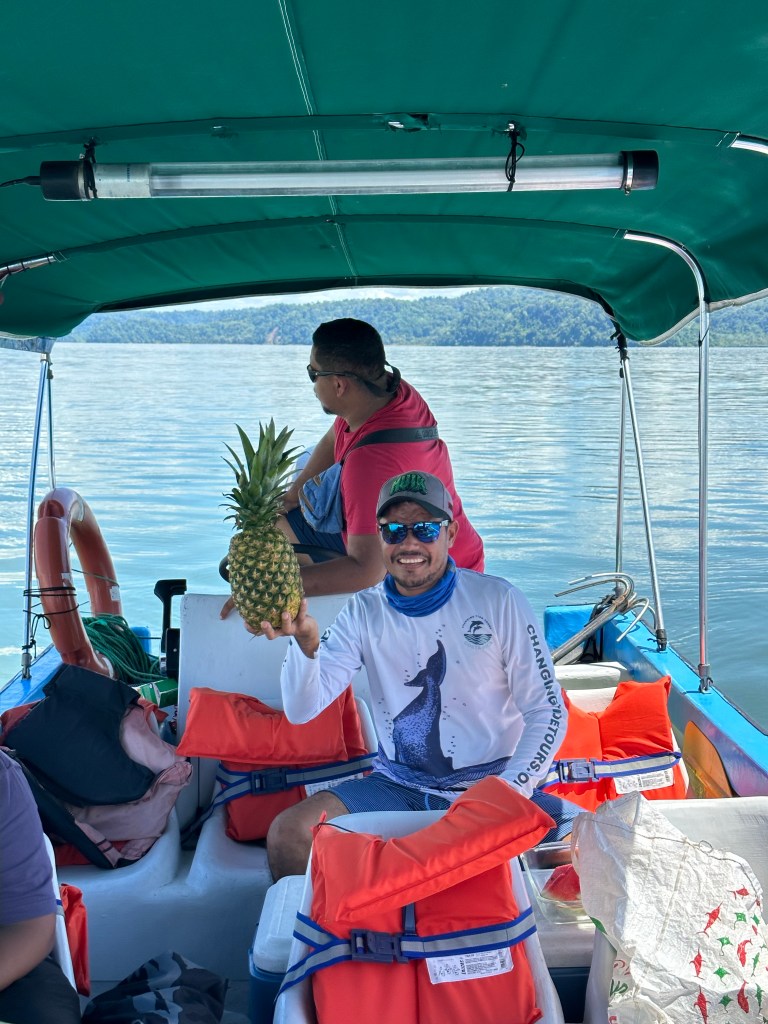
We begin our research every day at 8:00 am, joining the boat (pictured below) with our captain, and our host, David. Research ends around 12:00 pm and lunch is provided at 1:00 pm.

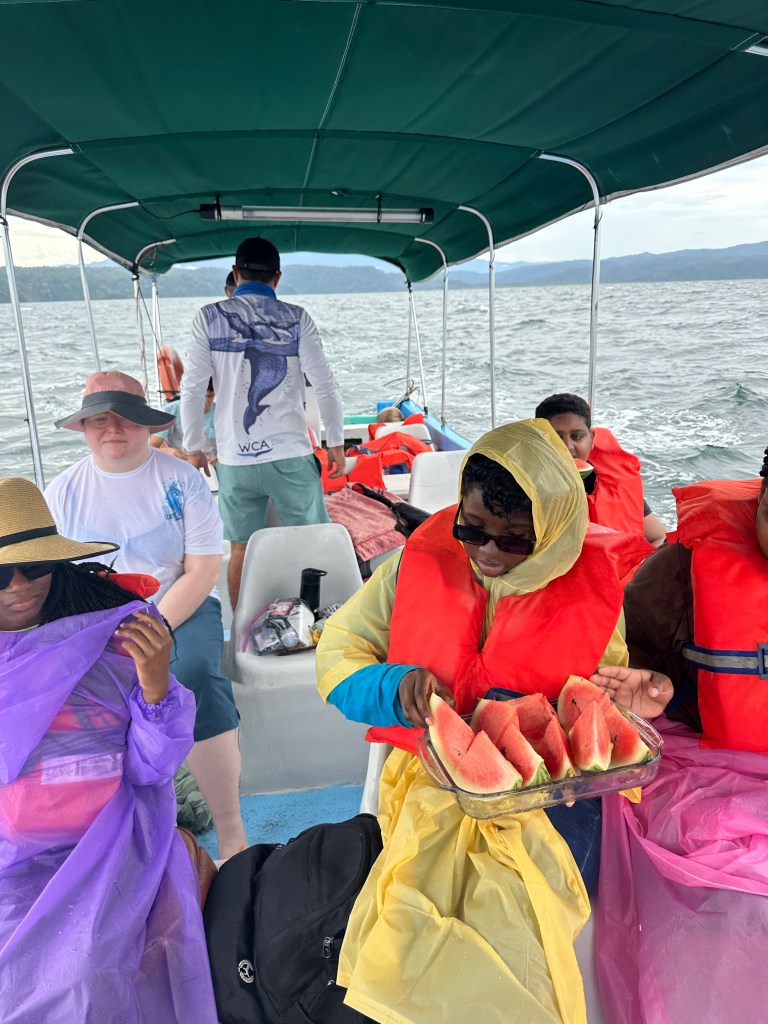
David takes care of us on the boat, while also taking pictures, managing all the data that we have been collecting, and telling the captain where to go for the day. He also takes care to ensure we are all comfortable during the four hours of sea exploration. It is important, when visiting the tropics, that you stay hydrated and David provides us with water and fruits to ensure we get what we need to stay healthy. He cuts fresh, cold, beautiful watermelon and pineapple right on the boat and serves them to us on a nice tray (see pictures below). David is an incredibly polite, thoughtful, and kind host! He shares fun facts and interesting information about the region and waters, as well as details about dolphins, orcas, whales, and other marine life we may encounter. He is very informative and an expert in his field as a Biologist! He manages all of the research by himself, never complaining even when things are difficult. He is a very passionate young scientist for sure!


DATA COLLECTION
In my previous post, I mentioned the photo identification method, which is used to identify individual dolphins. Once a dolphin is sighted, David uses his professional camera to capture photos of all of the dorsal fins in view. At 4:00pm, Dr. Lenin, the lead scientist, joins us from Mexico City via Google Meet, and we match dorsal fins with catalog images from previous boat surveys. If there’s a match, we say we encountered that specific dolphin. Scientists assign names and numbers to each dolphin, and when they are encountered or not using a zero/one coding system. Zeros in this case represent no sighting, while ones represent a sighting. If a dolphin is sighted more than once, this is considered a rate of occurrence that supports the belief that this dolphin is using Golfo Dulce regularly. This information becomes important when expanding research to mating and animal behavior patterns.
We also collect sea surface temperature, GPS location, sea state condition (SSC), whether dolphins are seen or not, and other relevant information. We measured sea surface temperature with a hand held thermometer, submerging the thermometer in the water for one minute and reading the results by eye. For the sea state condition, we look at the condition of the large body of water. There are six sea state conditions. If it is zero that means that the sea is calm and reflective, like a mirror. Scale one means there are small ripples, but no waves. Scale two means small waves and no whitecaps. Scale three means larger waves with the presence of white caps. Scale four is the presence of much larger waves and rough waters. Beyond scale four, we do not want to remain out on the water in the survey boat because conditions are too hazardous. So far, the highest level we have observed is scale two. Most of the time, the condition was either scale zero or one. While our boat surveys Golfo Dulce, it stops every 30 minutes to record all of the data at specific locations.
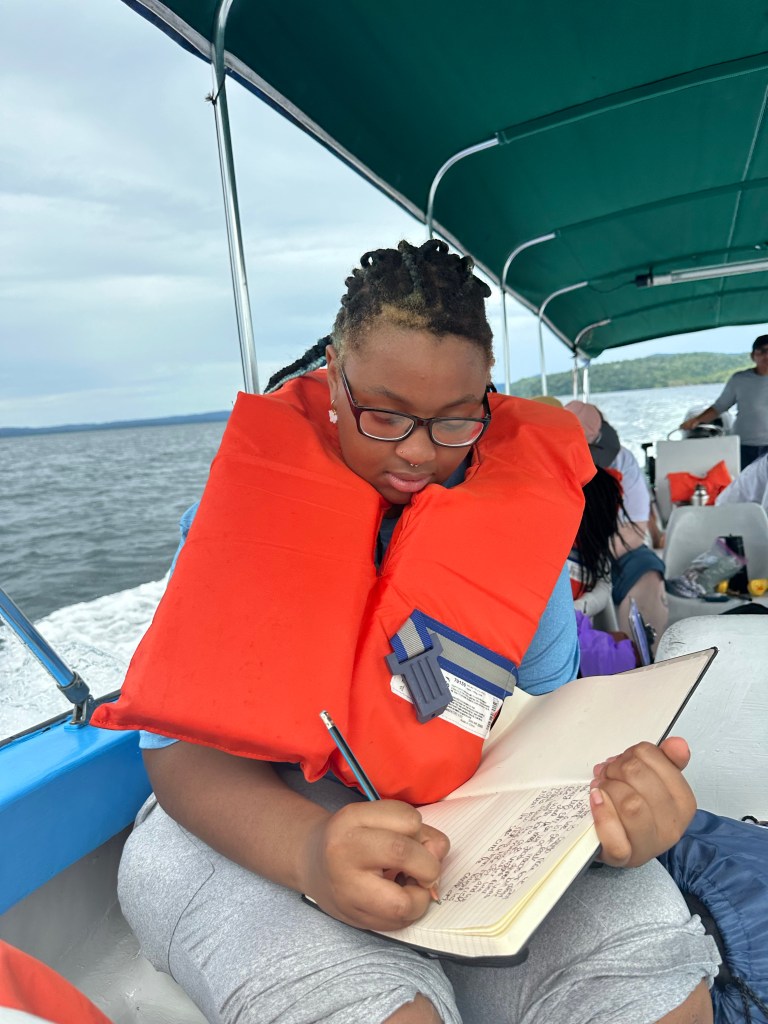
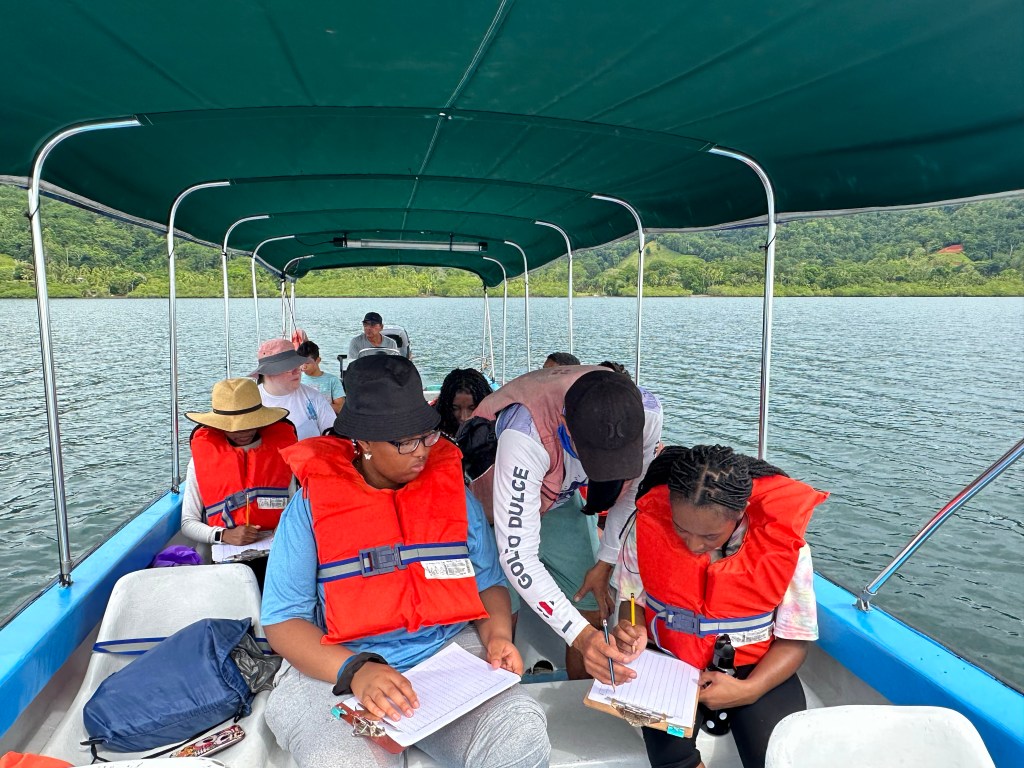

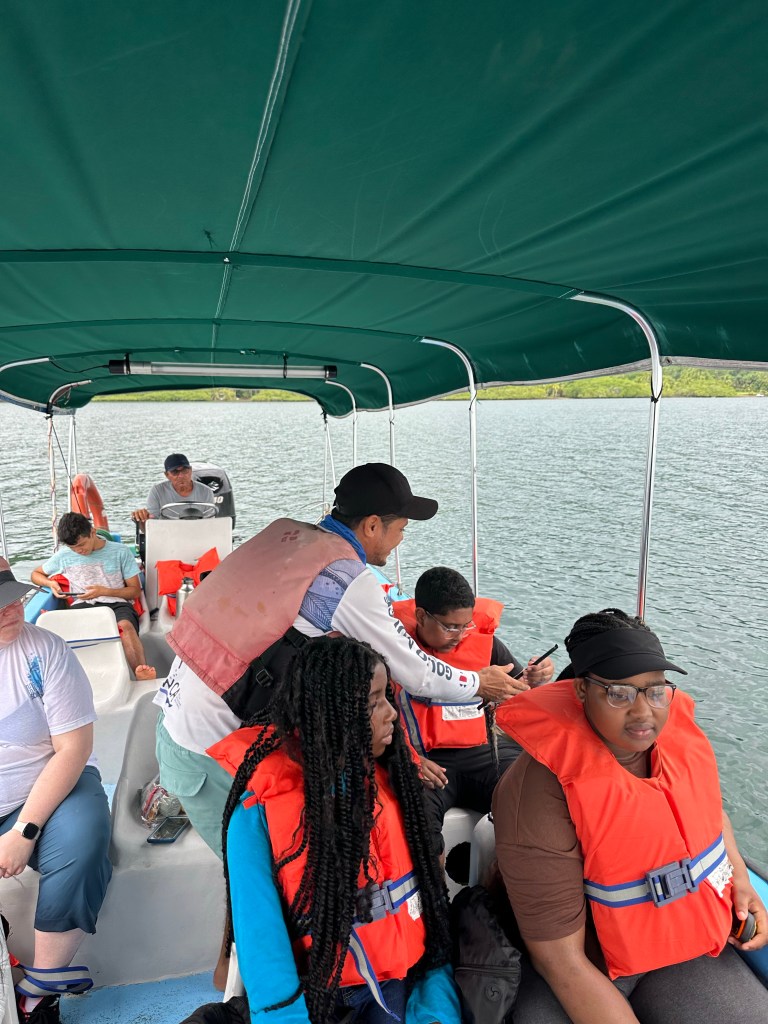


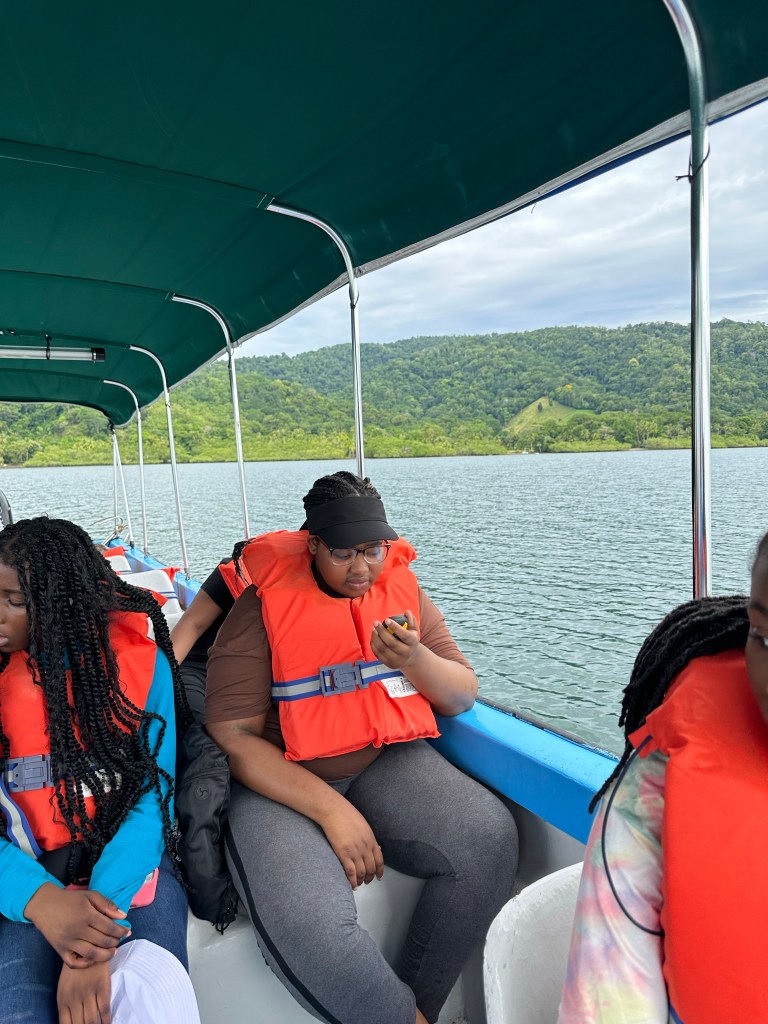
It’s incredible to see our students engaged in real science, while enjoying the beauty of Golfo Dulce. I must admit, there were times when the students felt hot, tired, and uncomfortable, but in the end, they understood the value of the work they did as citizen scientists. They know that their data will be used by the scientific community to help conserve dolphins in this part of the world. As their reflections showed me on our third day, they started to have more respect for the scientists and the work they do! They began to show more care about the natural world than they had before coming here. I will mention more about that in my future posts.
After lunch, we have about two hours until our science discussion with Dr. Lenin. Personally, I find it too much time to just sit around and relax until 4:00 pm, especially knowing that I am in paradise and may not come back here so, I try to make the most of my time by exploring Costa Rica!
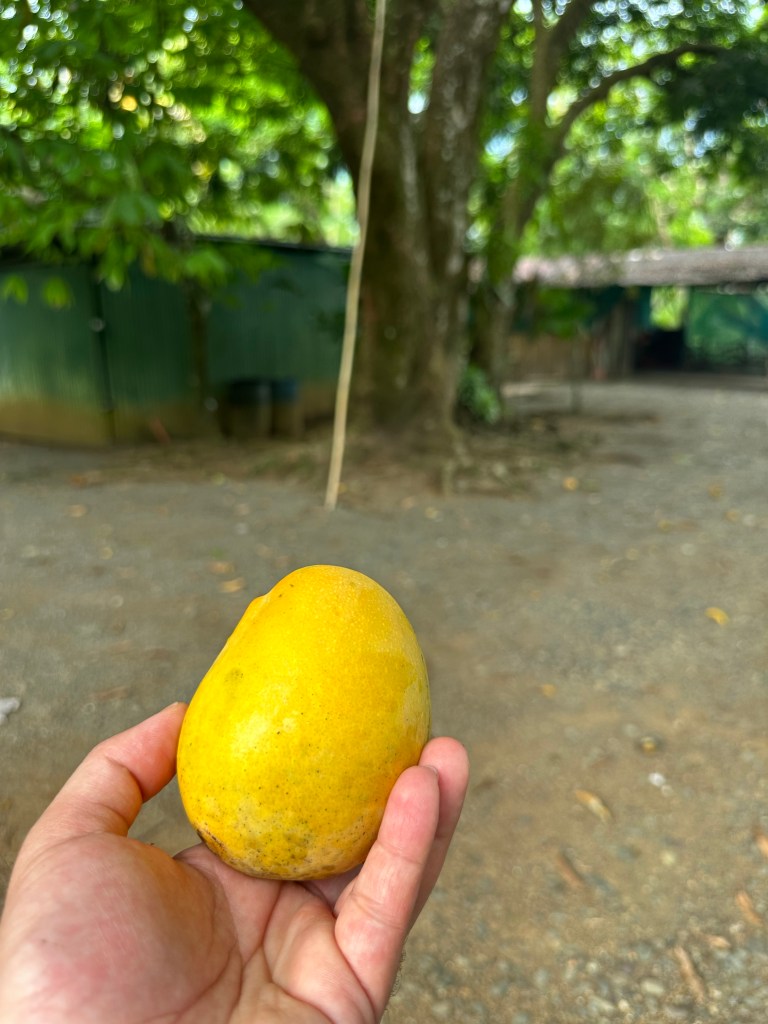
My next adventure was focused on other types of fruits. At our camp, we also have two types of mangoes, cacao trees, and banana trees. One type of mango is smaller in size and has a dark orange color when you cut it open. The other mango is huge, but since it is not ripe, I could not taste or open it. The bigger mango was so huge that everytime I passed under the tree to go to the ocean I was scared that one of them could fall while I was passing under. That could kill anyone if it hits. However, I have been collecting the smaller type mangoes that are scattered around the trees. I pick them up once they fall on the ground since I can’t climb the trees. Anyway, I asked David for a knife to peel the mango so I could eat it. But, he said I don’t need it and showed me how to peel a mango with my front teeth! I tried it, and it was so easy. I once again marveled at the fact that I had never eaten a mango like this before. It was incredibly sweet, juicy, and full of dark orange fiber!
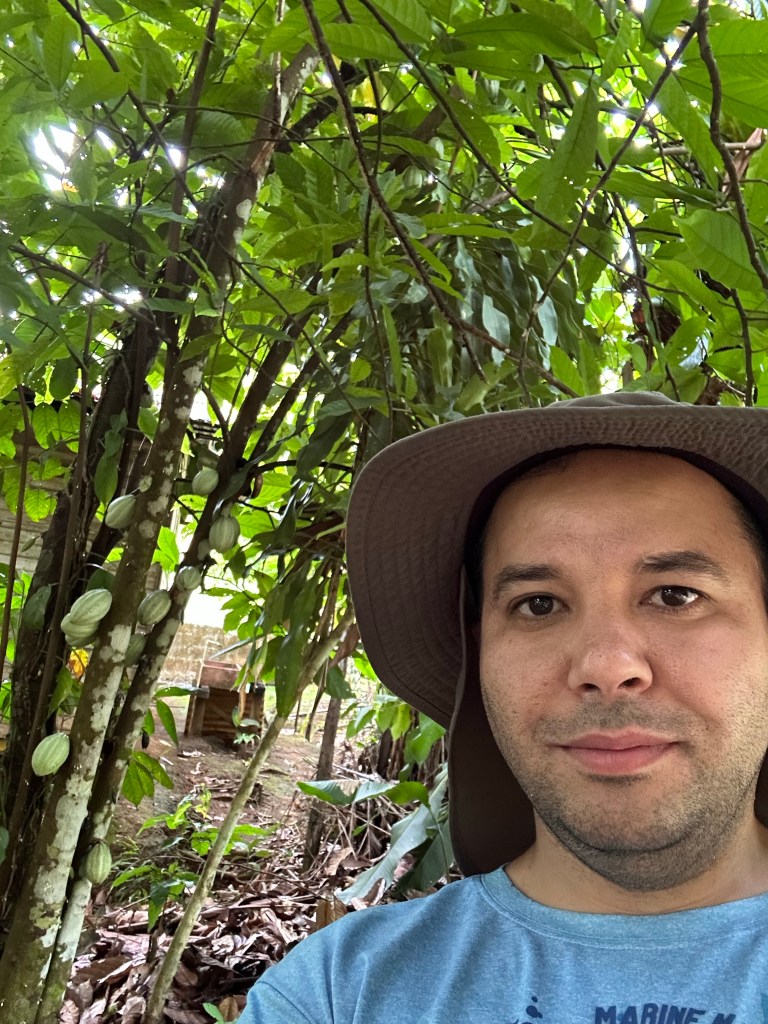



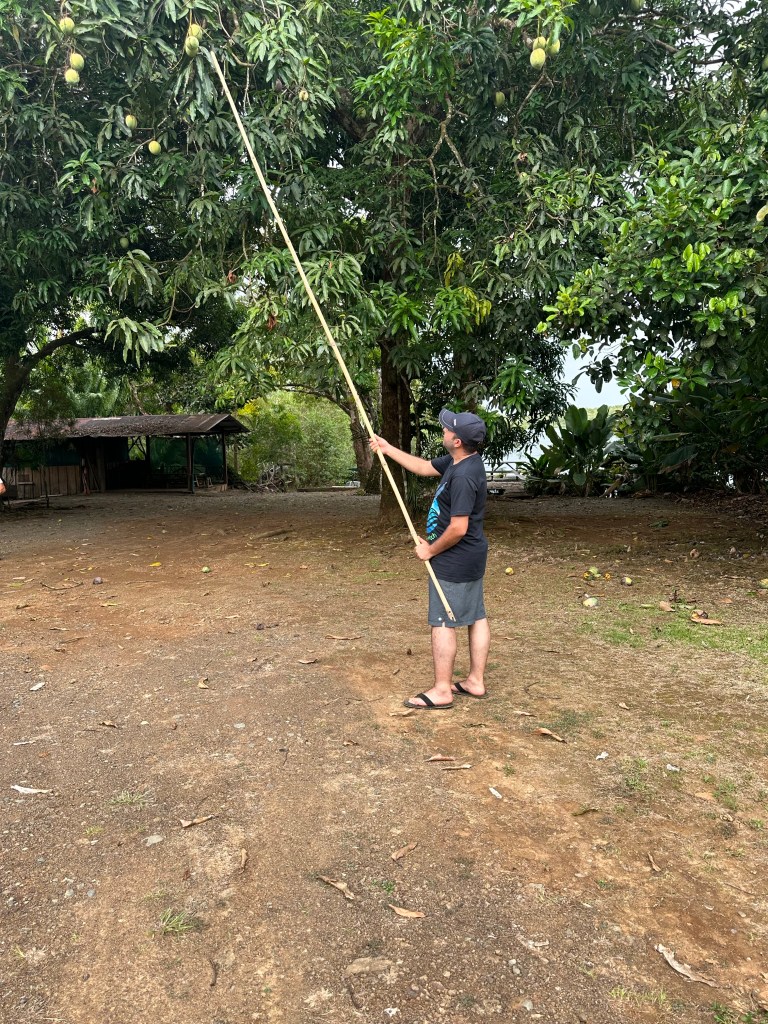
Then I went to the cacao tree to see if I could find a ripe fruit and check out how the chocolate seeds look. I had never tried one before. I looked around, but there were none. David told me that you have to be really quick to pick ripe cacao fruit because squirrels or other wild animals grab them quickly. So, I wasn’t lucky enough to find any ripe cacao yet!

 Expeditionary Learning
This is awesome!
LikeLike