Welcome educators, explorers, life-long learners and all the others who want the see the world in many perspectives,
I hope this part of my blog will serve you as a guide to become globally competent individual who wants to make a difference in the world.
All the resources that I have gathered adapted mainly from my Fulbright Teacher for Global Classroom (TGC) Global Education Course, one of the components of the Fulbright TGC program.
What is Global Education?
If you are reading this, you are likely ahead of the game, recognizing the importance of possessing globally competence. Congratulations- at least you’ve overcome the most challenging part!
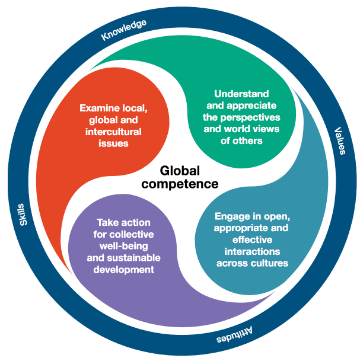
You might come across various definitions of Global Education, but one that I liked comes from the Programme for International Student Assessment (PISA):
“Global competence is the capacity to examine local, global, and
intercultural issues; to understand and appreciate the perspectives
and world views of others; to engage in open, appropriate, and
effective interactions with people from different cultures; and to
act for collective well-being and sustainable development.“
Part 1: Key Concepts in Global Learning
The Danger of a Single Story by Chimamanda Ngozi Adichie

Teaching for Global Competence in a Rapidly Changing World, by Asia Society
The. U.S. Department of Education’s International Strategies
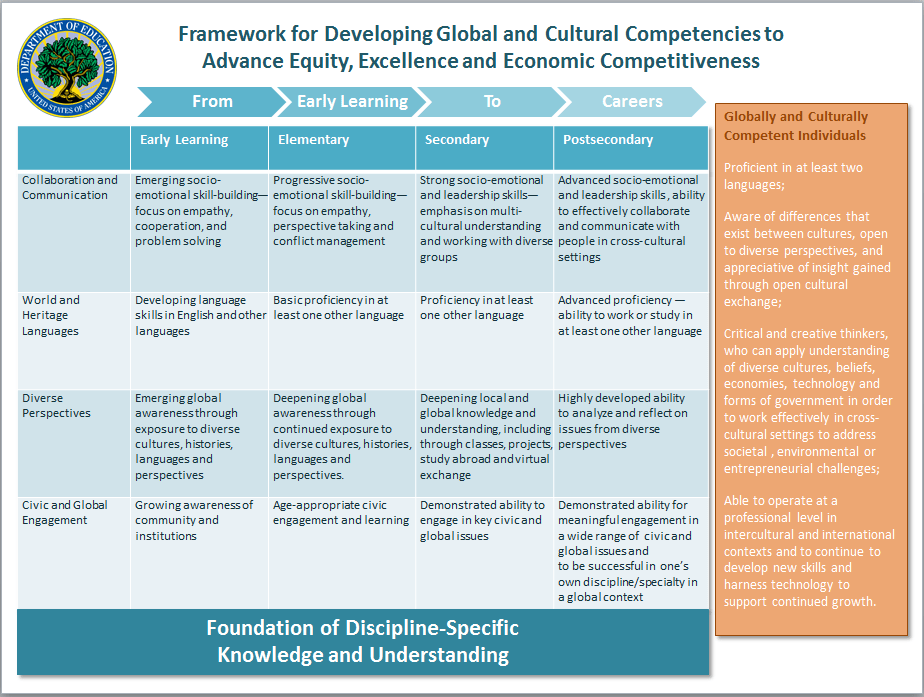

Preparing Our Youth to Engage the World by Asia Society

Global Competence Matrix by World Savvy
How to be a Global Thinker by Veronica Boix Mansilla
This article describes a number of global competence thinking routines, developed by Veronica and her research team at the Harvard Graduate School of Education. By incorporating these thinking routines into curriculum, educators would create a culture of curious and engaged students about the world.
A Global Perspective: Bringing the World Into Classroom by Ariel Tichnor-Wagner
This article summarizes the importance of developing global competence in students to prepare them for the interconnected world. It also suggests strategies for educators, like integrating global perspectives into various subjects, providing authentic engagement with global issues, and connecting students’ and teachers’ global experiences to the classroom.
Educating for Global Competence: 6 Reasons, 7 Competencies, 8 Strategies, 9 Innovations by Tom Vander Ark
This article presents six reasons why global competence matters, outlines seven key competencies that globally competent students should possess, eight strategies to promote global competence in education, and nine innovations transforming global education.
The Top 10 Characteristics of Globally Competent Teachers by Betty Soppelsa & Jennifer Manise
The article discusses the characteristics of globally competent teachers and the efforts to integrate these qualities into teaching standards.
How Teens Understand the Nuances of Culture by Liz Dawes Duraisingh
The article discusses the outcomes of a research study on the effects of intercultural digital exchange programs, particularly focusing on Out of Eden Learn, which connects young people from different parts of the world and how it offers opportunities for students.
Disclaimer
This website is not an official U.S. Department of State website. The views and information presented are the grantee’s own and do not represent the Teachers for Global Classrooms Program, IREX, or the U.S. Department of State.
 Expeditionary Learning