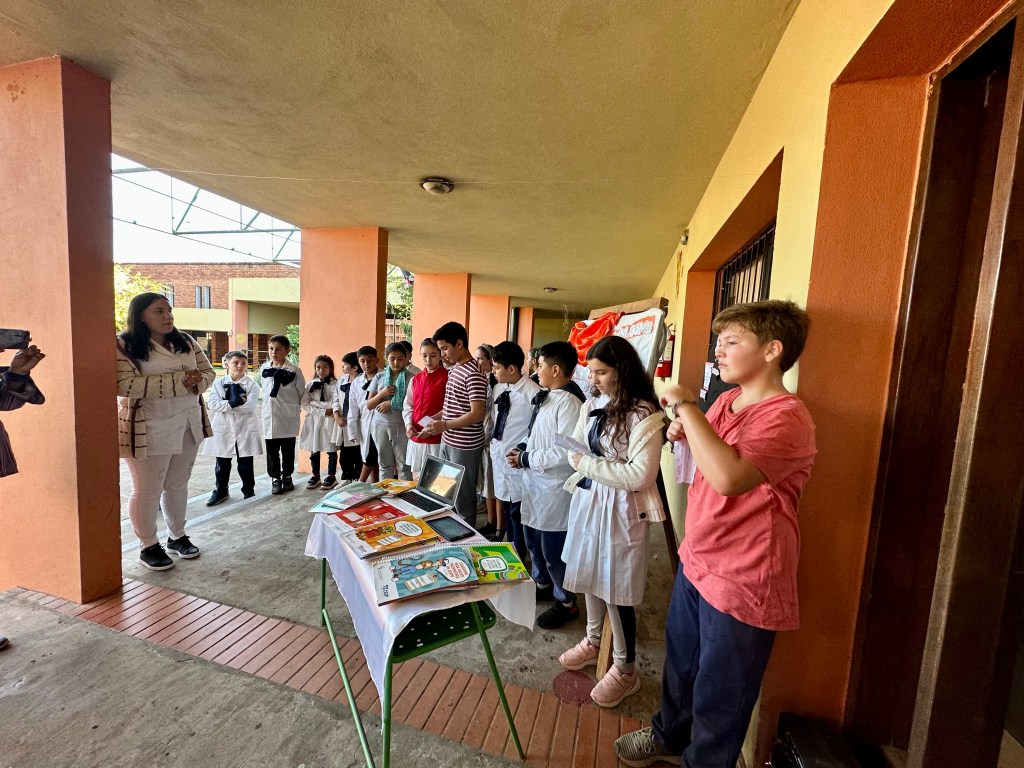
Before I embarked on my international component of the Fulbright Global Classroom Program in Uruguay, I had many ideas about what to do. Learning about their sustainable best practices was at the top of my list. While exploring my options in Uruguay, I had a defining moment. It happened when we visited a rural school in Salto, Escuela number 67, Pablo’s school, which was an hour away from the city. During this visit, the students presented their “future school” project, which included their incredible school design. After explaining this project, they also mentioned another project related to water that had made national news.
In this particular project, the students had analyzed their local water resources, which was a topic of great interest to them. I thought to myself, “This has to be it.” Uruguay has been grappling with water shortages, primarily due to climate change and other related factors. Given the country’s heavy reliance on agriculture and farming, water is at the heart of everything. Uruguayans have expressed concerns about the limited water resources and the increasing salinity of the available water, sparking protests and debates nationwide about whether the government is doing enough to ensure access to drinkable water.
To cut a long story short, this small rural community decided to address their local water issue. However, before delving into that, it’s crucial to understand why there were numerous health-related issues in their village. Both students and adults in the village had been falling ill, resulting in many missed school days. This prompted the students to investigate the root cause of these health problems. They embarked on an analysis of their water resources, collaborated with the governmental organization Ceibal, and presented their findings to local government authorities. Their research revealed that the illnesses were linked to the local water sources. Shortly thereafter, the school managed to install a chlorinator in the water pump accessible to the villagers, making the water drinkable. Thanks to the students’ project, the entire village now has access to clean water.
As a result of this project, the school has been nominated as one of the world’s Top 10 schools for Supporting Healthy Lives. I believe that soon, they will announce the World’s Best School Prize among these ten schools worldwide.
When I shared this story with my colleagues, I emphasized the importance of making a difference in the lives of students and communities, regardless of the resources and tools at our disposal. Empowering students to address local and global issues doesn’t always require extensive resources or a large team. In this case, two teachers and around 20 students in Pueblo Olivera, Salto, Uruguay made a significant impact, not only on themselves but also on their community. This experience was a truly inspiring and transformative learning opportunity for these students. It reflects the mindset I’ve been trying to instill in our own students and community, EXPERIENTIAL LEARNING and I will continue to do so.
During our Fulbright Teacher for Global Classroom Online Course, fellows were asked to create a global unit plan. In this post, I’m going to share my unit plan called “Go with the Flow.”
My driving question for the Global Unit Guide is, “How can we use data to effectively address water pollution and inspire others to join our efforts?” In this unit plan, our goal is to help students understand their local water sources by analyzing their physical and chemical properties. We started with data analysis because we believe that data is a powerful tool for comprehending the state of our local waterways and making informed decisions. Throughout the unit, students also had the opportunity to meet with local experts and learn from them about our local water resources.
After exploring their local environment, students took their learning to the next level by studying water resources worldwide. Some students had the chance to travel to Costa Rica to study marine mammals in Golfo Dulce, one of the world’s best marine sanctuaries for these creatures. Although not all students could participate in this once-in-a-lifetime opportunity, those who did shared their findings and experiences with their peers upon their return.
We are continually exploring options for creating local partnerships related to water sources, empowering us to take better care of our local waters and those around the world.
Local Resources
Global Scholars Diploma Program: The Global Scholars Diploma Program is a three-year initiative in which we have partnered to equip our students with global competence and prepare them for the competitive global economy. Throughout this program, students engage in a series of experiential learning activities, ultimately completing the program with a global perspective by the end of their third year.
Ohio STEM Learning Network (OSLN): Being a STEM school, we are an integral part of the larger network of STEM schools across the state of Ohio, which enables us to continually learn and grow in the field of STEM Education. During the initial phase of our global unit plan, where students were analyzing the physical and chemical properties of local water resources, we were fortunate to receive funding from the OSLN classroom grant. With the support provided by this grant, we were able to purchase water quality analysis kits for our project.
Fulbright TGC Salto Group with Student Teachers (Photo Credit: Sofia Beasley)
Today is our last day here in Salto. We visited a tertiary school, which is not a university but rather an institution that prepares students to become teachers. As I mentioned in my earliest posts, teacher training centers in Uruguay are not part of the four year degree in universities but rather an alternative path that leads you to become a teacher.
Students were greeting us at the front door (Photo Credit: Sofia Beasley)
The school was located a walking distance from our hotel. After a 10-15 minute walk in the city center, we arrived at our destination. Student teachers greeted us at the front door and guided us around the school, introducing us to their learning environment. They were all happy to see us! Even though they had planned a whole day for us, we had to leave by noon to catch our bus back to Montevideo. In the country where people are adaptive and flexible, they change the entire schedule for us.
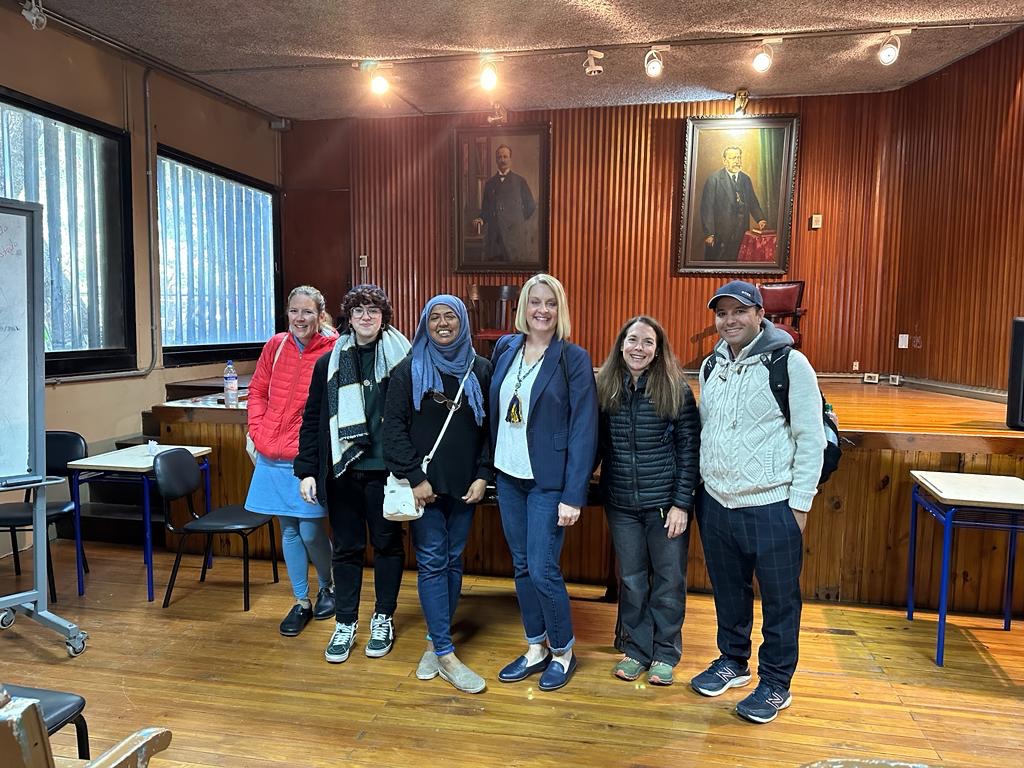
After touring the school, they gathered us in the conference room, where students delivered presentations about their school community, Salto, and Uruguay in general.
Students were presenting information about Salto (Photo Credit: Sofia Beasley)
After the student presentations, we took a coffee break (I loved those coffee breaks!). Along with cookies, teas, and coffees, some students brought homemade alfajores, which I was so kind to them. They were so delicious that I ended up having two and sneaked two more into my backpack!
Enjoying my alfajores during the break
Following the break, it was our turn to present our schools and share information about our respective states in the U.S. The students were genuinely excited to see schools from different states as we were from Alaska, Vermont, Florida and Ohio and we engaged in a question and answer session with them. They asked excellent questions, such as what motivated us to become teachers, what qualities make the best teachers, and what opportunities are available for teachers. It was a highly productive discussion, and I was impressed by the students’ motivation. I forgot to mention that our host teacher for this school was Virginia Reinoso, an English instructor for student teachers. I must admit that some of the students’ English skills were truly remarkable. Thank you Virginia and your team for having such a great English teacher program in your school.
It was my time to present about my school, and Ohio in general (Photo Credit: Sofia Beasley)
By noon, we left to catch our bus to Montevideo. I quickly returned to our hotel and took a taxi to the bus station. It was hard to believe that our adventures in Salto had come to an end. We had an incredible time in this place and made countless unforgettable memories.
The bus ride to Montevideo lasted around seven and a half hours. Although the distance wasn’t extensive, the bus made frequent stops to pick up or drop off passengers. Additionally, the roads were two lanes, often resulting in slower travel behind trucks.
Finally, we arrived in Montevideo around 8 pm and took a taxi to our hotel. Seeing Montevideo again made me feel as though we had never left. We were famished, so immediately after checking in, we headed to the hotel restaurant for dinner.
We were staying at the same hotel as before, but this time they upgraded my room. It was more spacious and located on the 8th floor instead of the 2nd. I absolutely loved it.
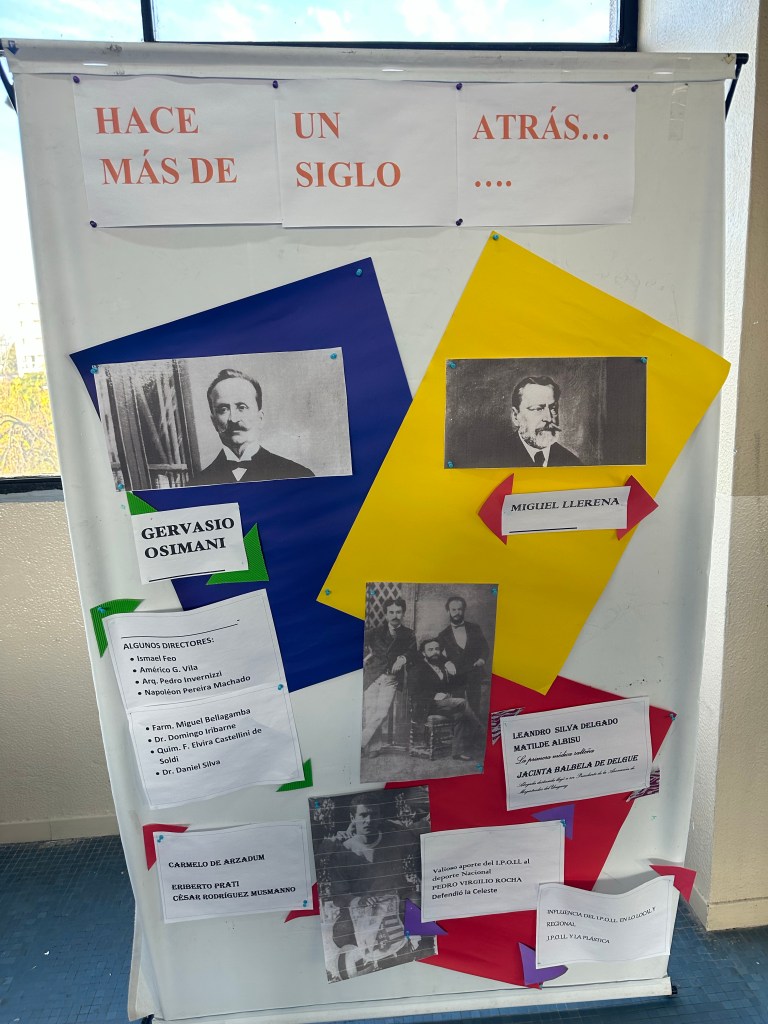
Today, we visited a secondary school called Instituto Politécnico Osimani y Llerena in the morning. This is one of the oldest schools here in Salto, dating back to 1873. Italian Gervasio Osimani and the Spanish Miguel Llerena, were the professors of the school and were also the first principals who took over the administration. When I first saw the name Osimani, I immediately thought that maybe he was from the Ottoman Empire and had Turkish descent. However, my search on the internet about him failed. The only thing I found was that he was from Italy. Anyway, Matias, an English teacher, guided us throughout the school.
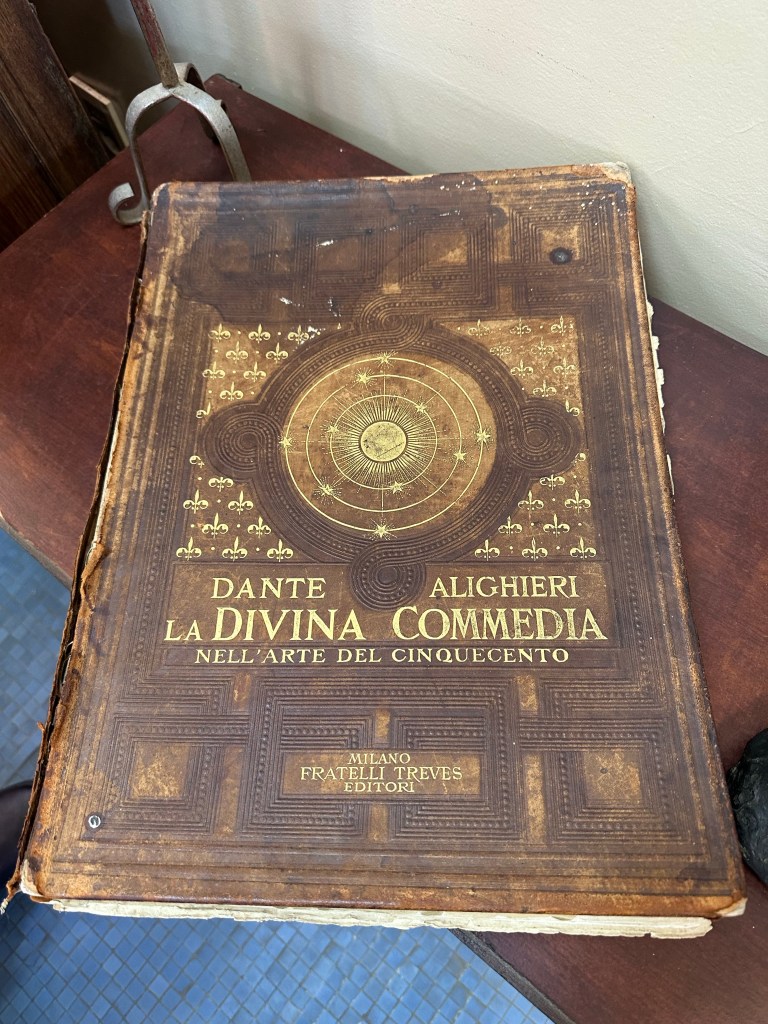
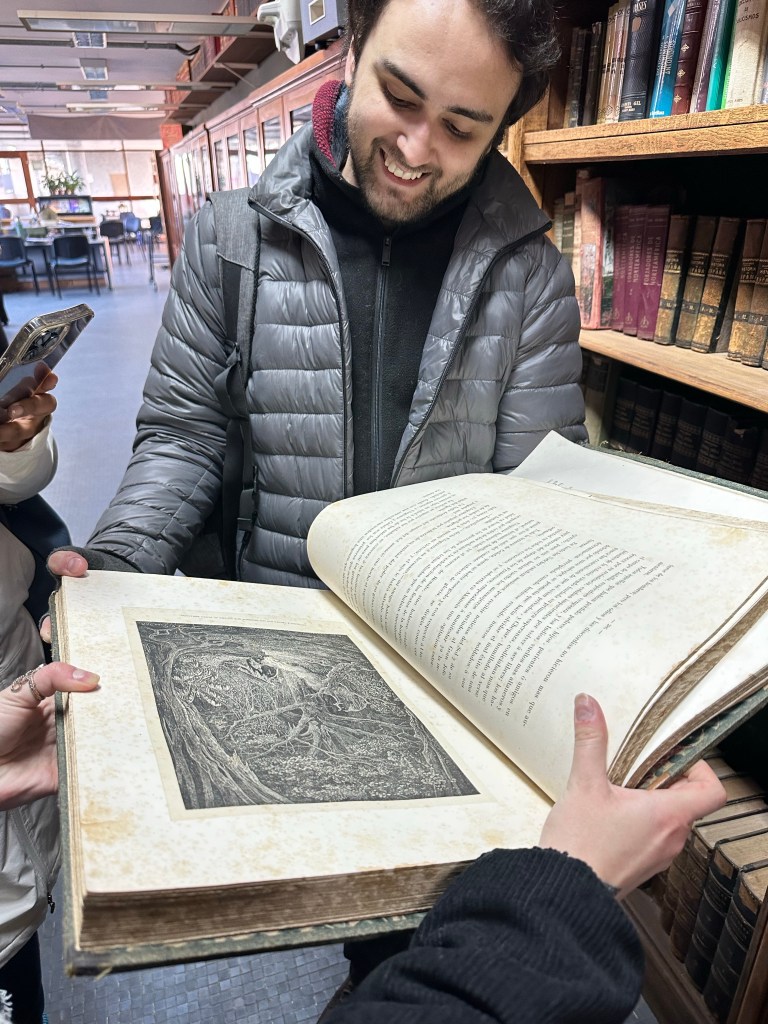
The school had many antiques dating back to the 19th century. It was a beautiful building, and I especially loved their library. There were numerous old books that one could enjoy reading at any time. However, my only concern was that these old books should be cared for more, or at least have some protective measures. They were literally on the shelf, and anyone could grab and read them. I would be afraid that people could damage these precious books at any time.
School Library and Conference Room
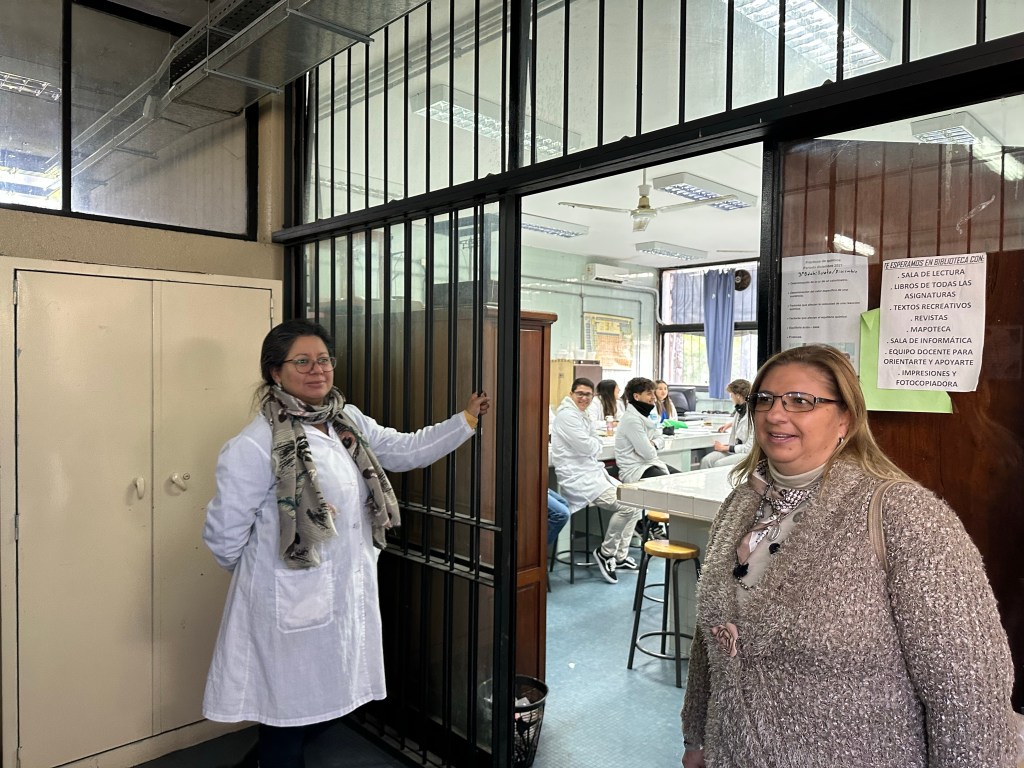
We also visited some classrooms and chatted with students and teachers. Students were engaged with the lesson, though it looked a bit more traditional way of teaching rather than hands on and student centric. I guess we can find those type of teachings here in the states as well. I just thought that if they had a chance to be student centric, those great students would have been more excelled.
One of the science classrooms
My favorite part was the principal’s office. It was very humble and welcoming. One can just go in there and look around and relax with the antique furniture. The furniture, including her chair, is at least 100 years old. They kept everything in its original version, making her room feel like a museum. The principal herself was originally from Ukraine, and the minute she heard I was originally from Turkey, she was really happy and mentioned her love for Turkish series. She said that visiting Istanbul was on her bucket list. By the way, I learned that many people in Uruguay were big fans of the Turkish series.
School Principal in her office
The principal showed us a school guest book where every visitor wrote something about their experience in Salto. I thought that was a neat idea, and we all wrote something about our time here.
Writing school guest book
After visiting the secondary school, we took some time off to explore the city further, with a particular interest in shopping. One store we visited was La Criolla, which had a wide selection of authentic leather products and other Uruguayan gifts. We spent more than an hour in that small shop, and I ended up buying some really nice campo pants for my son. I wished they had them in my size too, but unfortunately, they didn’t. When I showed the pants to my wife, she loved them and suggested buying two more pairs. Since I was already heading back to Montevideo when I was writing this blog, I thought about asking one of the host inspectors, Isabel, to buy them for me, so she could bring them when we all meet in the capital before heading back to the U.S. I texted her to see if it was okay, and she immediately said yes. I just loved these people! Now, I’m eagerly waiting for the extra pairs for my son.
On our way back to shopping, we stopped at Isabel’s office
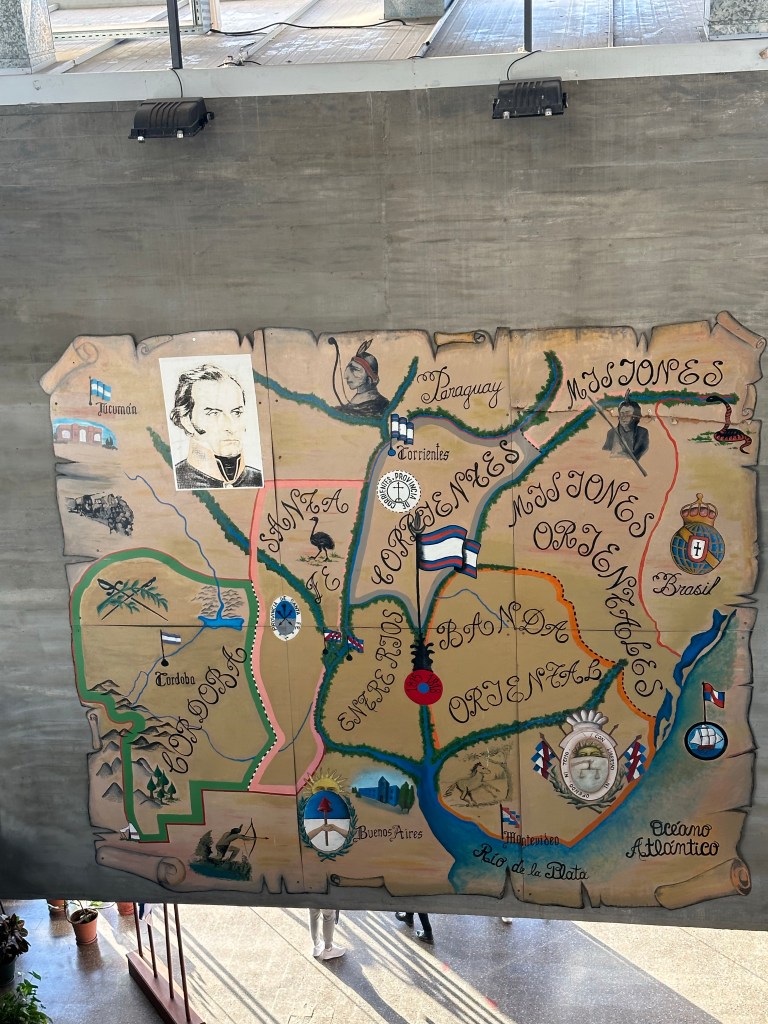
A nice map to show Uruguay
Towards the end of the day, we stopped at the grocery store and bought some fruits to have for dinner. I wanted to go light that night because my stomach had been overwhelmed by carbs!
Today was Monday, day five in Salto. We went to our last rural school, School Number 30 in Pueblo Laures in Salto. Our host teacher was Ines de Lisa.
We had to be ready at 6 in the morning to get there because Ines and her husband had to take us from the hotel which was about an hour away and they offered us to cook our own breakfast at their school which I was also excited about. I always like freshly prepared breakfast, especially if it is in countryside.
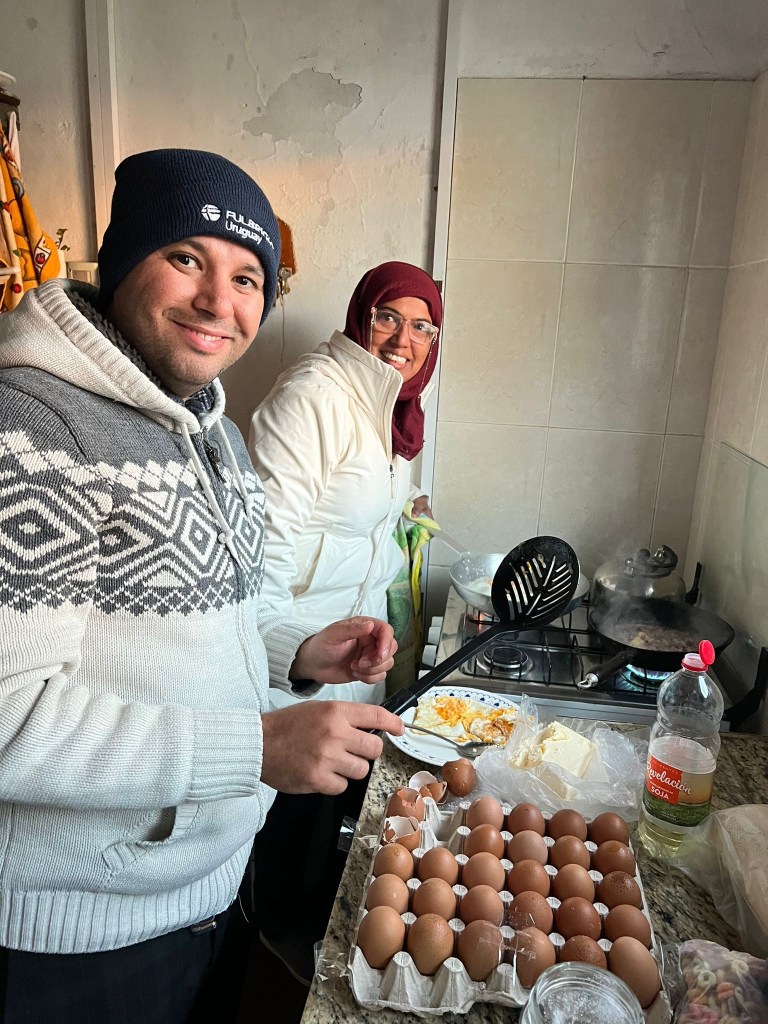
So, when we got to the school, one of our Fulbright colleagues, Saba, and myself said we are good chefs and we can prepare breakfast for all of us. Saba cooked fried eggs, and I cooked Shakshuka, a typical Mediterranean breakfast made of tomato, onions and eggs. All the ingredients were fresh out of the village including freshly-baked baguettes from the village bakery. The smell of the milk butter was so great that the minute I put it in the pan, everybody started to feel hungry. In addition to our hot meals, Ines put dulce de leche, and honey on the table. The honey actually came from Ines’ partner teacher’s home. It was so delicious. We ate like as if we haven’t been eating for a long time.
Saba and I were preparing breakfast
Look at the amazing color of the milk butter
After breakfast, myself, Ines’ husband and Stephanie, undergrad fulbrighter, went somewhere else that I will never forget which I am going to share with you here in my post. Myself and Saba were observing Halal diet which requires the meat to be blessed according to Islam. So we were both vegetarian up to this point. However, we were so jealous seeing others eating all kinds of meat including Asado and had a personal mission to eat meat in Uruguay. So, I have been telling the host teachers how we can eat Halal or Kosher meat here in Salto. They said it was difficult to find. And I proposed to them what if I can prepare the meat so that we can all enjoy it. They said why not and the good person to know how we can find animals was Ines. Her husband works at a farm which we were going to visit later in the day today. To keep the long story short, Ines’ husband found a person, his name is Juancho, who has animals. He then took the two of us to the farm.
I was initially thinking that having chicken would be best because they are a lot easier to prepare but then they convince me to have lamb because it is cheaper and natural and they are going to help me out. So, I decided to go with a lamb. They told me that it is usually around $100. I was so happy with the price. In the US, in Ohio that type of lamp is usually around $280-350. Anyway, we choose one lamp out of his pasture and prepared it according to Islamic law. Ines’ husband and the owner did almost all the work. I did only small portion of it.
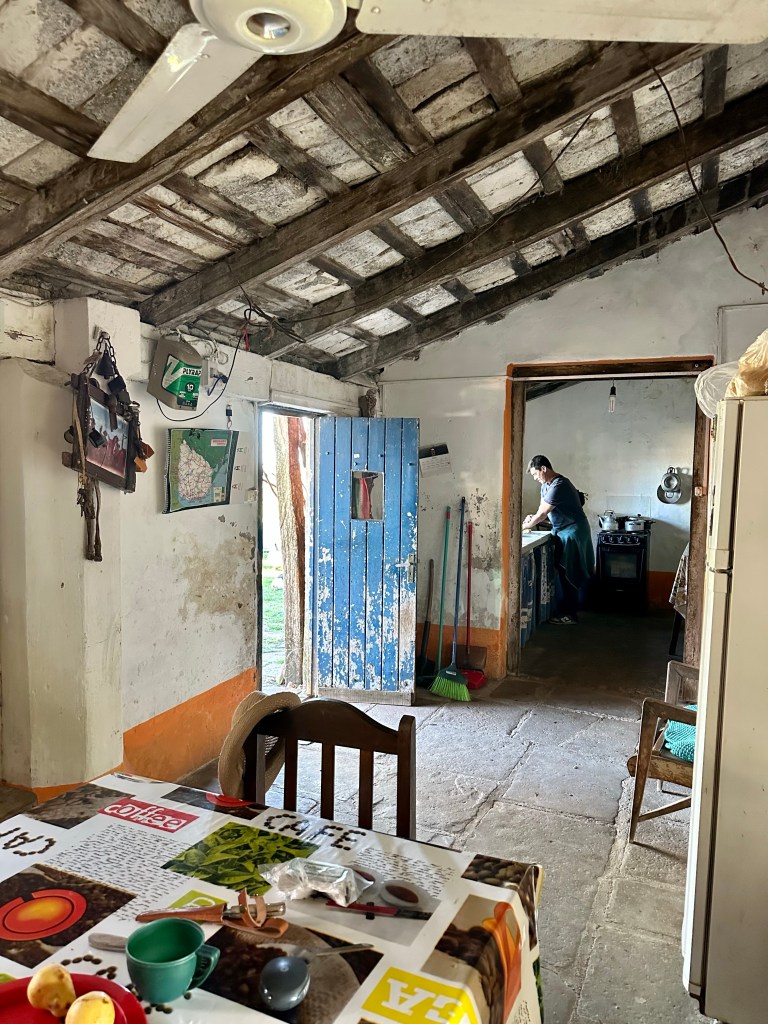
I also wanted to talk about the owner, Juancho. He was 84 years old, lives alone at his farm. When I went to his house to wash my hands after the meat preparation, I was so impressed by the cleanness and neatness of the house. Plus, the stuff he had was all antique and the way he put things in the old fashioned way made me walk around the house a bit. I think he understood my intention and he wanted to show his house. He took me and Stephanie to different parts of the house and when we went to his bedroom he pointed us to a picture which was of his wedding time with his wife. He suddenly got emotional and cried saying that he lost his life partner last year and he misses her so much. We couldn’t help ourselves but got emotional along with him. He also said that he has four children and they are all over in Uruguay which he misses them as well. He said it is hard for them to visit him.
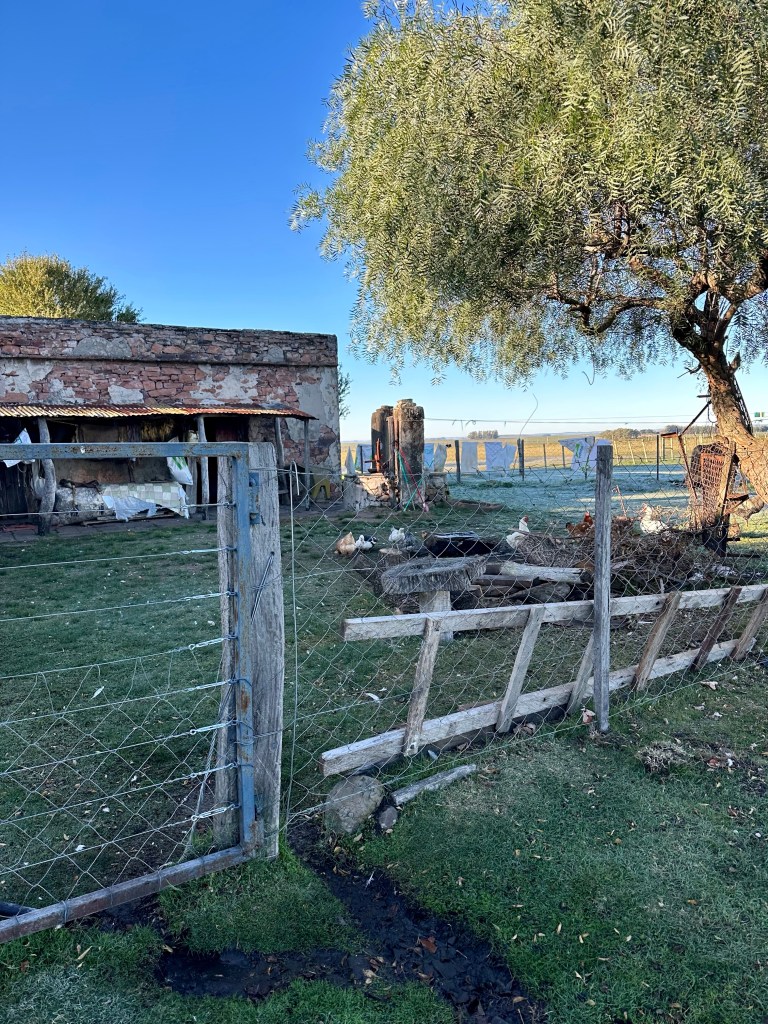
Juancho’s house and farm
His house is over 200 years old and he is planning to sell it because he can’t maintain it anymore alone. While he was showing us his house and all the memories he had with his family and children he never stopped crying. I felt so bad that I didn’t mean to have him go through this but later told myself that he wanted to share his stories with us as well as his emotions.
We then went outside, and he told us to wait for a moment. He ran into his house and brought his phone with him and asked us to take pictures with him. He said he wanted to remember this moment by looking at this picture on his phone.
I will never forget you Juancho!!!
(from left to right) myself, Juancho, Ines husband, Gerardo, and Stephanie (undergraduate Fulbrighter and my personal translator)
I told him that it is OK to pay him the next day when I get some cash from the bank. He said money was not a problem, he was happy to do this for students and teachers and no money asked. He said it was a gift from him for a greater cause. What a big heart he has! A person who needs the most, wants to share what he has with others without any hesitation. He said we are making much greater goods and giving this “small” gift was nothing compared to what we do. My heart melted once again with this statement.
I kept insisting to pay and Ines’ husband told me to not insist because he worried that he would get offended by that. Then we asked what if we could give him a gift. He said it was a good idea and I immediately said I am going to give him a gift once I return back to Salto. Next day, I could not go to the bank due to our schedule but instead borrowed some money from Saba to give it to him.
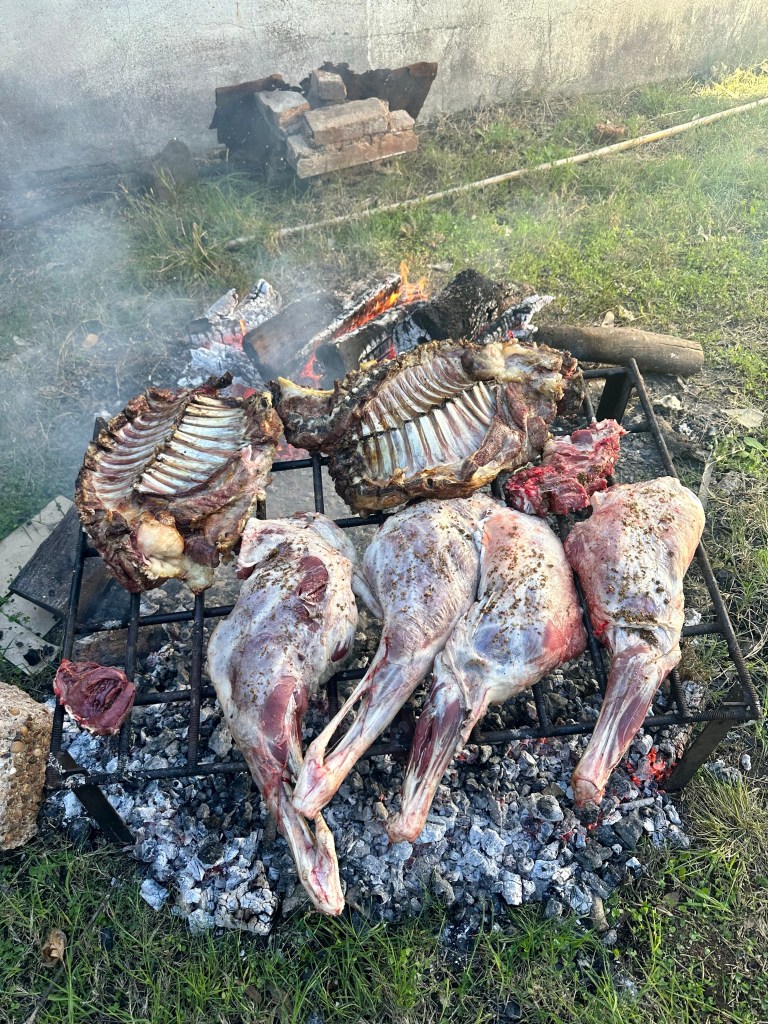
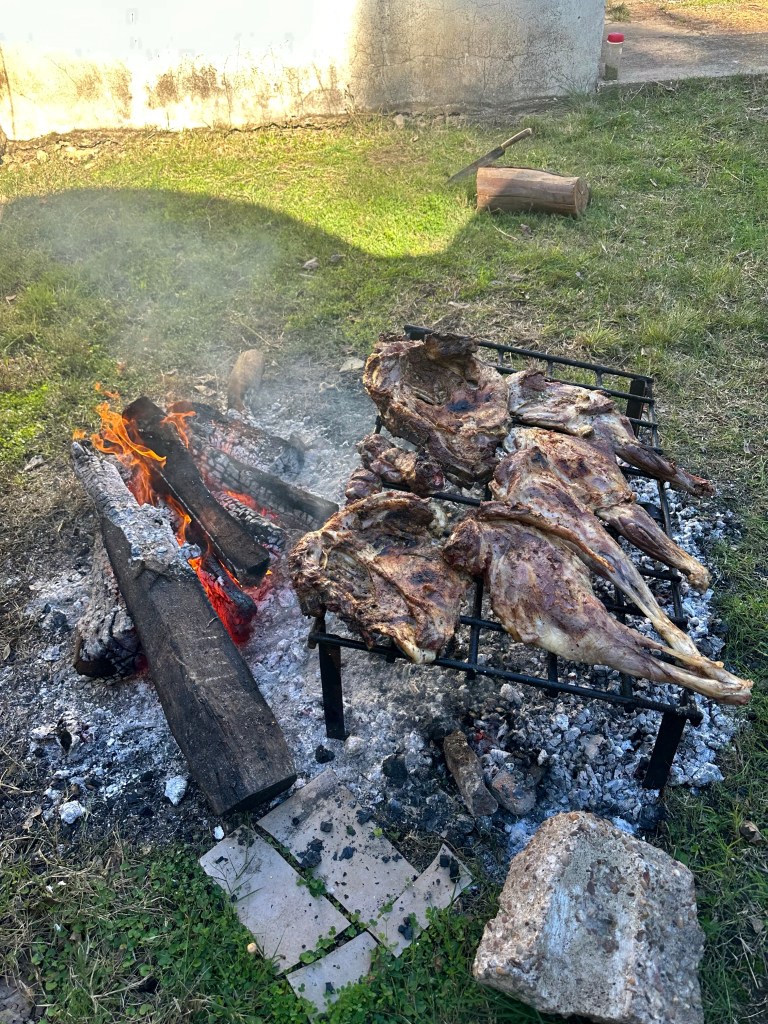
We brought up the meat to the school and Ines’s husband quickly started a fire with wood to make Asado for us.
Lamb asado was getting ready
While he was busy preparing our lunch, I attended the Ines’ classroom and observed her lesson.
Ines classroom
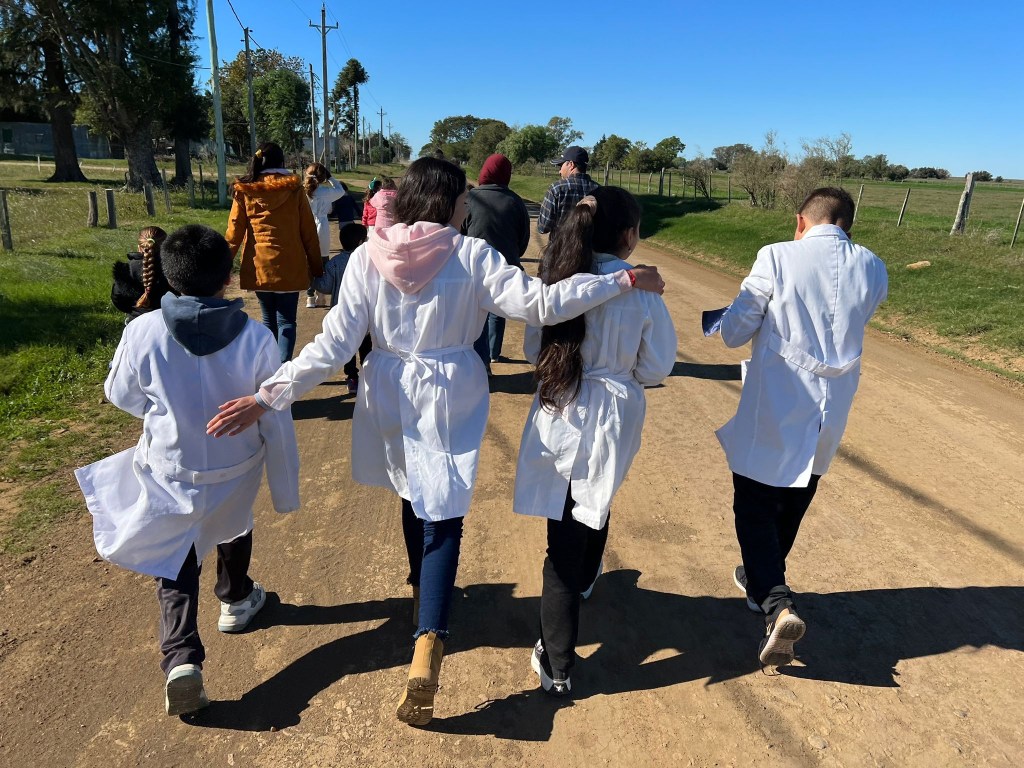
It was time for them to take a break before lunch. Ines and her teacher partner took us to walk around the village and at the end we stopped at the park where students could play. Along the way, students played, laughed and showed every skill and talents they have. The park was amazing and I played soccer with the kids. We didn’t have a ball but rather used a plastic bottle as a ball once again.
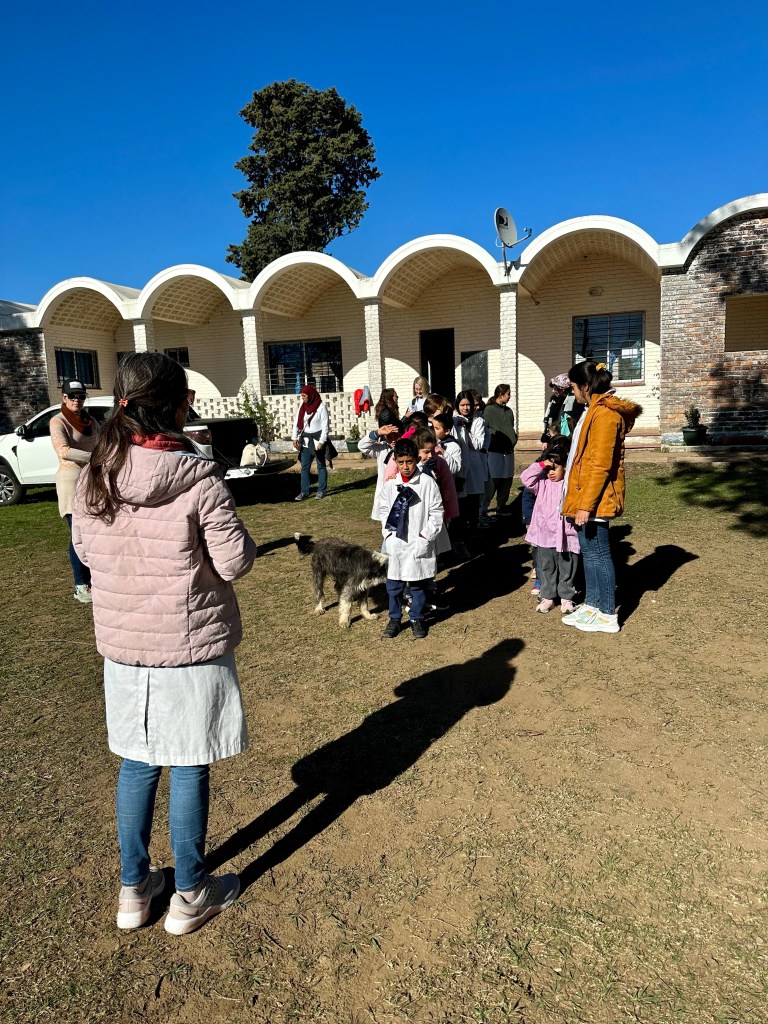
School children
Ines giving students expectations and rules
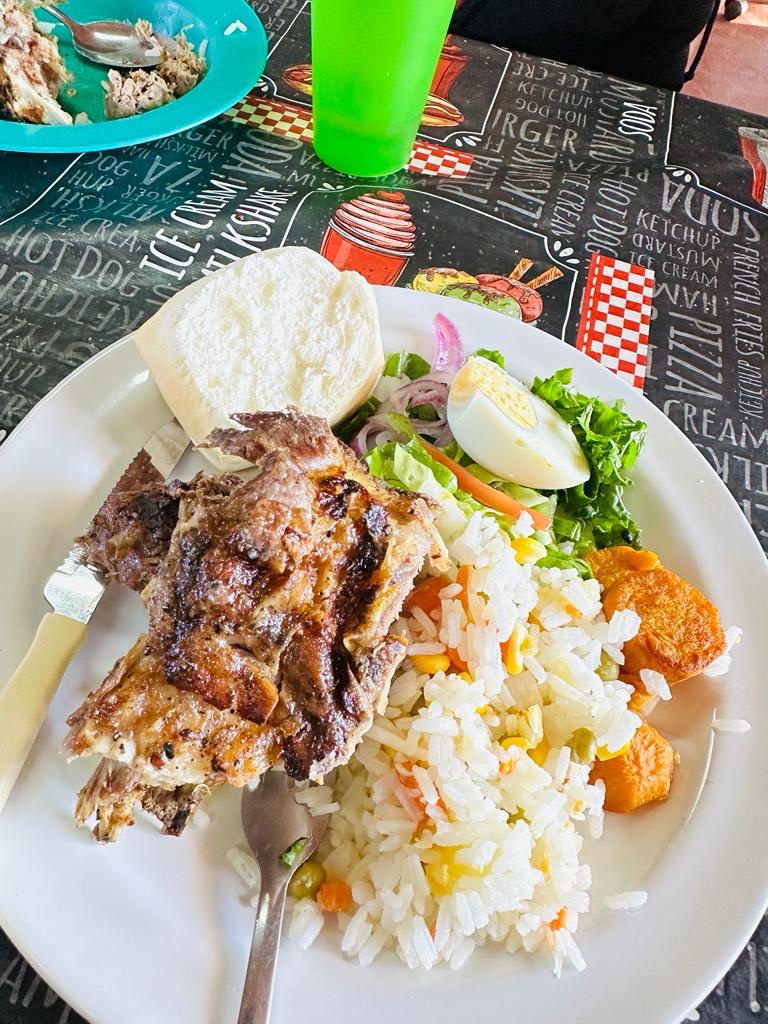
When we got back from the park to the school, Asado was almost ready. Ines’ husband was carefully flipping the meat pieces on the griddle. The kids were hungry and anxiously waiting for the meat. They were all banging their silver forks and knives on the lunch table, calling “asado, asado…”The school cook also prepared rice, and salad so that students were not only eating meat.
Here it came. The Asado was ready and Ines’ husband brought some of the meat inside. He carefully cut pieces for the students and the school cook distributed the meat to everyone.
Our asado was at its final round
School cook was serving asado
I forgot to mention. I kept going back and forth to learn how Asado has been made and its tricks to have the best quality. Ines’ husband told me that they use garlic, dry parsley, paprika, oregano, and black pepper mixed with water and put the mixture into the meat while it is cooking. He said that the key to having the best Asado is also slow cooking which we didn’t have that much of a time. I don’t agree with him. The Asado we ate was really delicious and he did a good job.
I also forgot to mention one more thing. When we had a zoom meeting back in the states with our host teachers from Uruguay, we asked what they would like us to bring for their students. Even though they said no, we insisted and Ines said they like Nutella. She said even though grocery stores has, many of the students didn’t tried before or they have tried once or twice in their lives. I immediately said I could bring jars of Nutella. Eventually, I ended up bringing two big jars of Nutella that I bought from Costco for Ines students. She distributed it, each student got one scoop before the lunch as a dessert. It was still plenty of it left but Ines said this was enough for them for today. They were leaking the Nutella as of they are eating ice cream. It was fun to watch them enjoy eating their treats. Who doesn’t like nutella, right?
Nutella time before lunch
The school cook also prepared alfajor for us which the taste was beyond description. I got to the point where I could not handle anymore to eat but stashed a couple more into my backpack.
Freshly baked alfajores
After lunch students left the school and we were ready to go to our next stop. While we were getting in our cars, Ines’ teacher partner said she uses hitchhiking to commute to school everyday. She said that almost anyone stops and picks her up at her home. We asked whether it is safe for her as a young lady and they said it is absolutely safe. Then they said, here teachers and students have school uniforms and people recognize the teachers by their uniform and offer help immediately. They said they have so much for teachers as well as people who are on the path of learning, students. I was absolutely amazed.
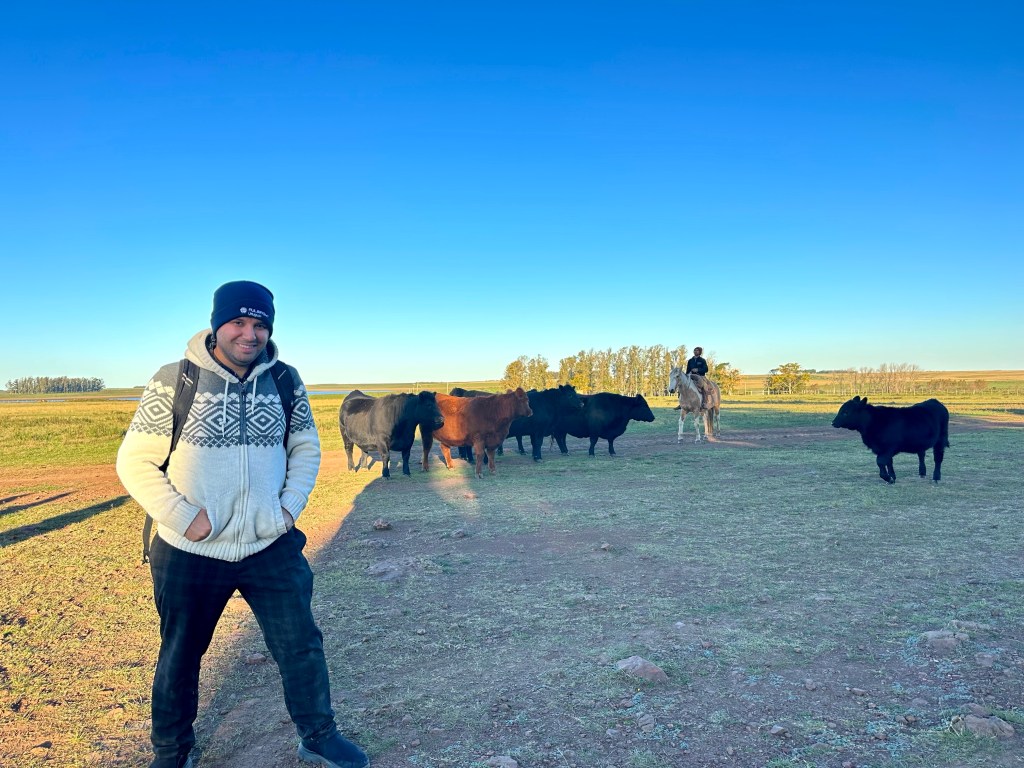
Our next stop was to visit a 150 year old cattle farm called Cabana Bayucua. After going through a series of dirt roads, we finally arrived at the house of this cattle farm. A couple runs the farm together and they gave us a brief explanation of the history of the farm. They said that currently there were 3500 angus and 2500 sheep in the farm.
Fulbright Salto crew with owners of the cattle farm
Then they took us to his lands on the farm. I was expecting his land was around his house only but it was so huge that it took us at least 30 minutes to get around his land with jeeps. One thing I learned was that they plant rice every year. The owner said that the Uruguayan rice is one of the best in the world. The water they use for the rice field comes from the reservoir near his land.
Enjoying my time at the back of truck
Rice field in Uruguay
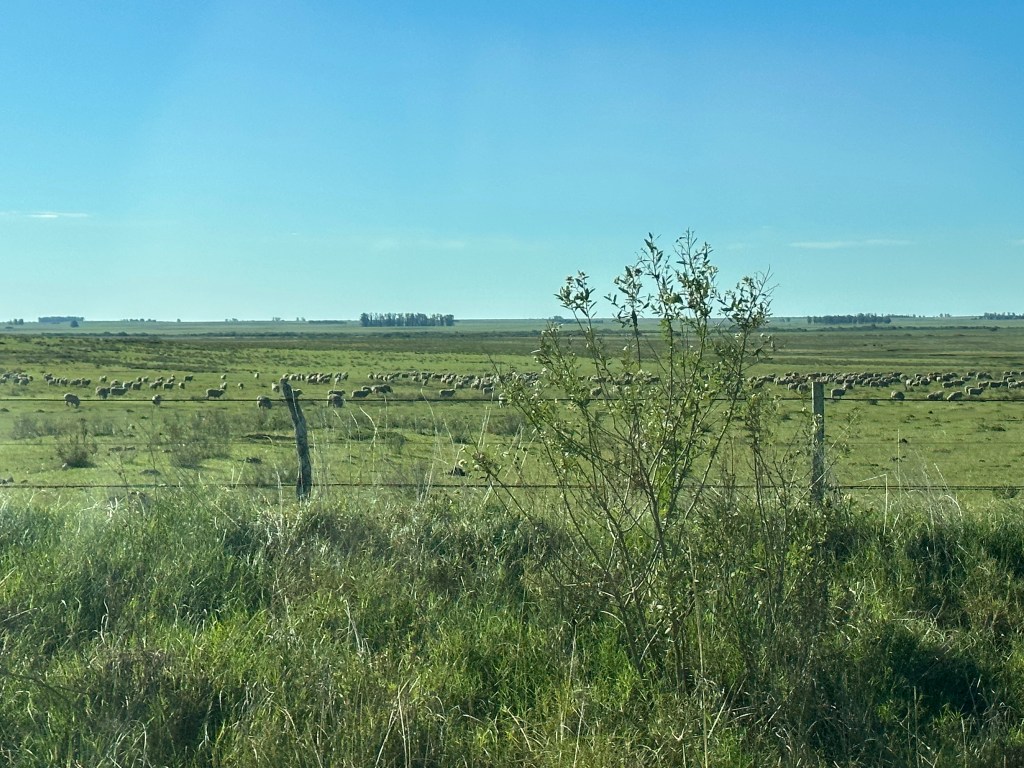
He also said that many of cattles here in Uruguay are free range and pasture raised. They don’t use any chemicals or hormones/steroids. He said that it is forbidden to use steroids in Uruguay. Another interesting thing I observed was that the concept of animal barn is almost non-existent, they all stay out in the pasture at night as well as if they are wild animals. I guess this is the next level of natural and organic farming in Uruguay.
Pasture-raised sheeps
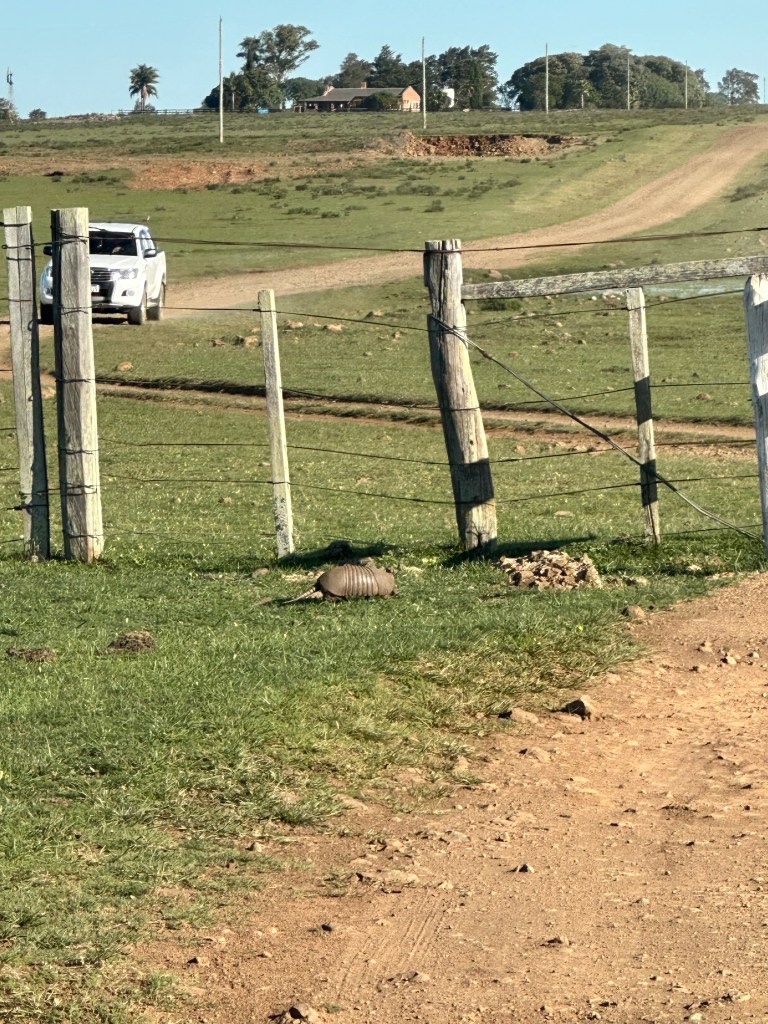
Armadillo
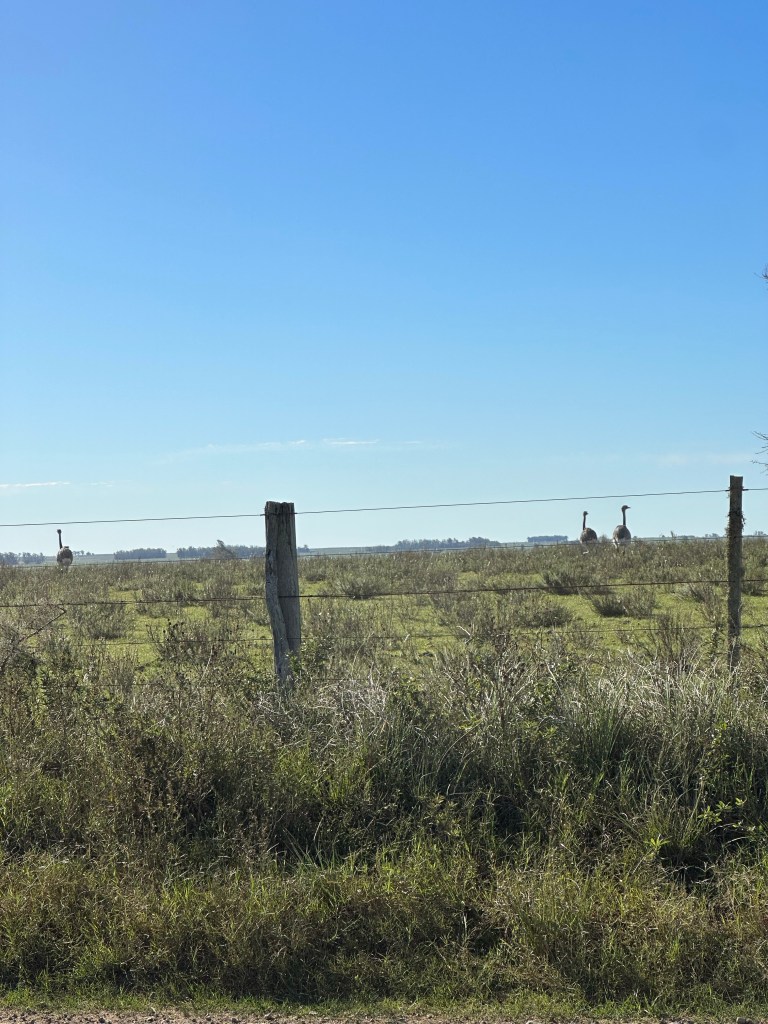
Wild South American Ostriches also known as Rhea
Uruguay coins with their national animals
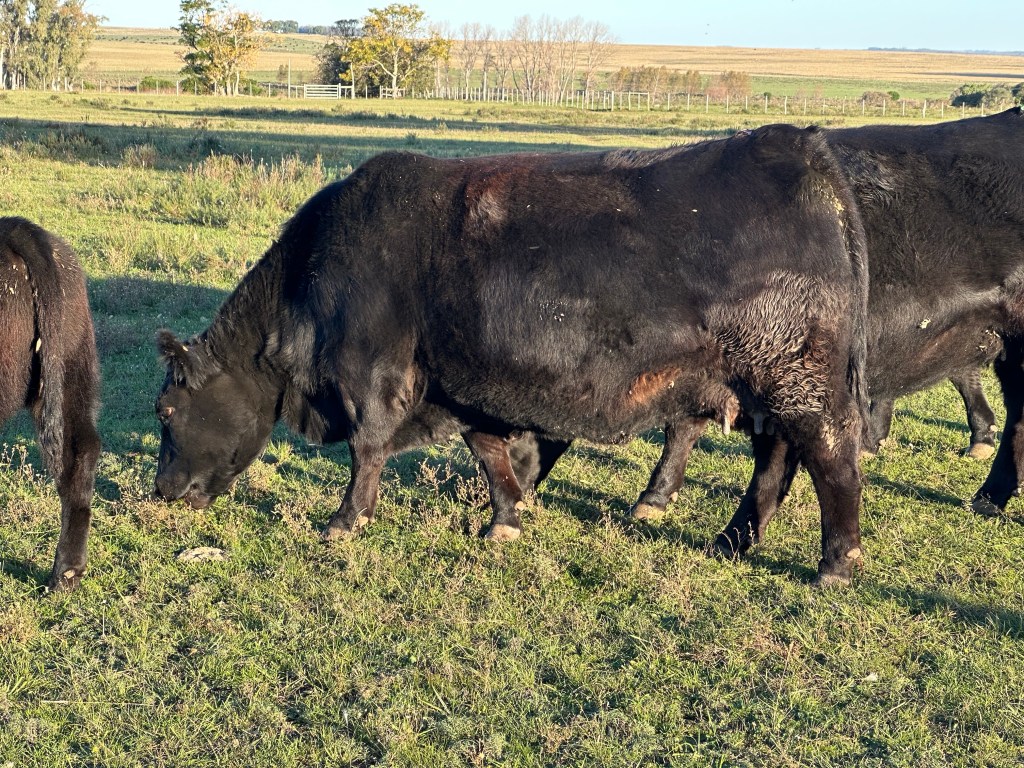
When they were talking about Angus, they noted that Angus beef is considered to be high quality beef because they have fat stripes within their muscles which makes their meat so tender and a quality that many meat lovers want. They also showed us their best angus cattle for showcase. One of their animals even won best angus cattle in Uruguay recently. She was really beautiful. When we asked what makes them the best. The owner said that they look for the characteristics of Angus breeds in any individual. She said the one it won the best had all the characteristics of the breed.
I present you the Queens of Uruguay
The Angus that won the best angus of all Uruguay
The farm had two gigantic dogs. I am normally scared of dogs by nature. I don’t know why but I just can’t approach them easily. When I saw them approaching us, I said I probably would not enjoy my time as much as I wanted while I was here. In contrast, the dogs were so friendly and they were almost saying pet and hugging me all the time. They were really cute.
Such a big dog with a big heart
Another amazing day ended with great memories and I will never forget the things I have experienced today in my life.
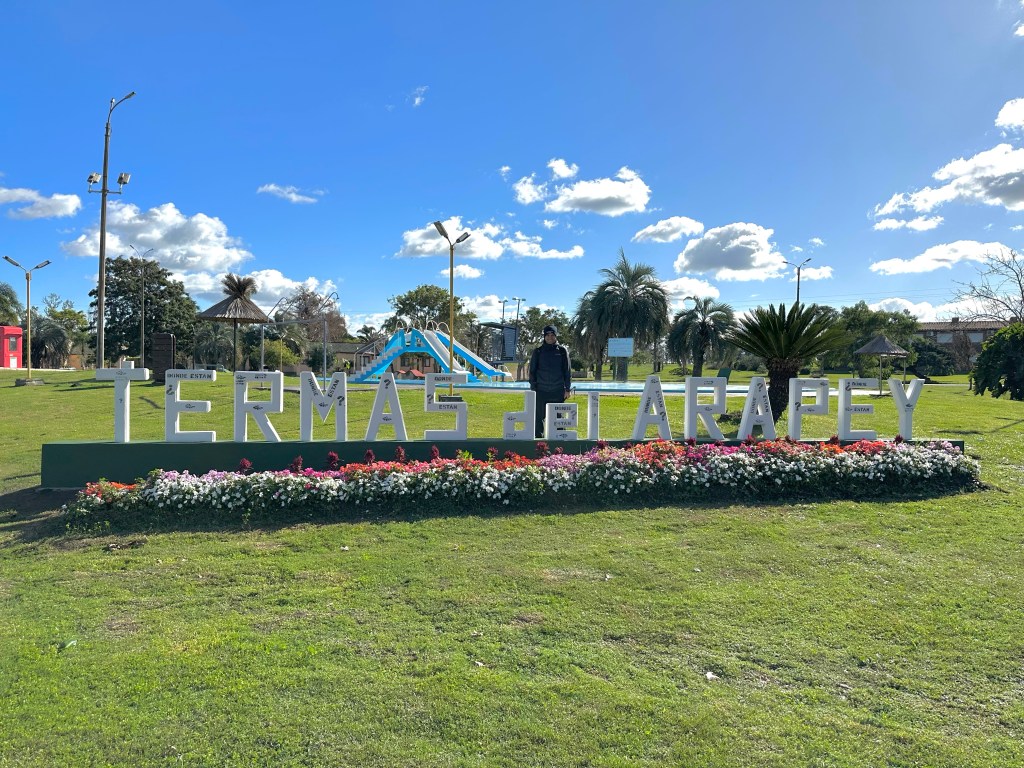
Today is Sunday, the fourth day of our stay in Salto. It was another enriching cultural experience for us. Our wonderful host teachers picked us up once again from our hotel to embark on a trip to one of Uruguay’s renowned hot springs, known as the “Arapey Hot Springs.” The trip took over an hour, spanning scenic landscapes that brings travelers from Argentina and Brazil to enjoy this breathtaking location.
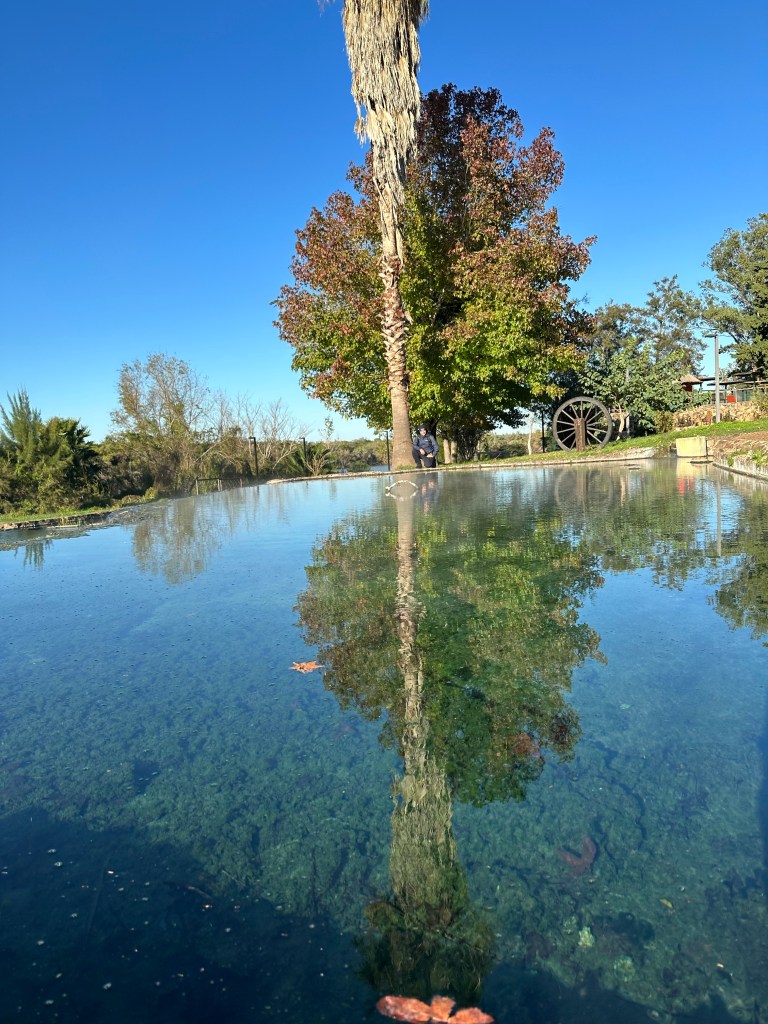
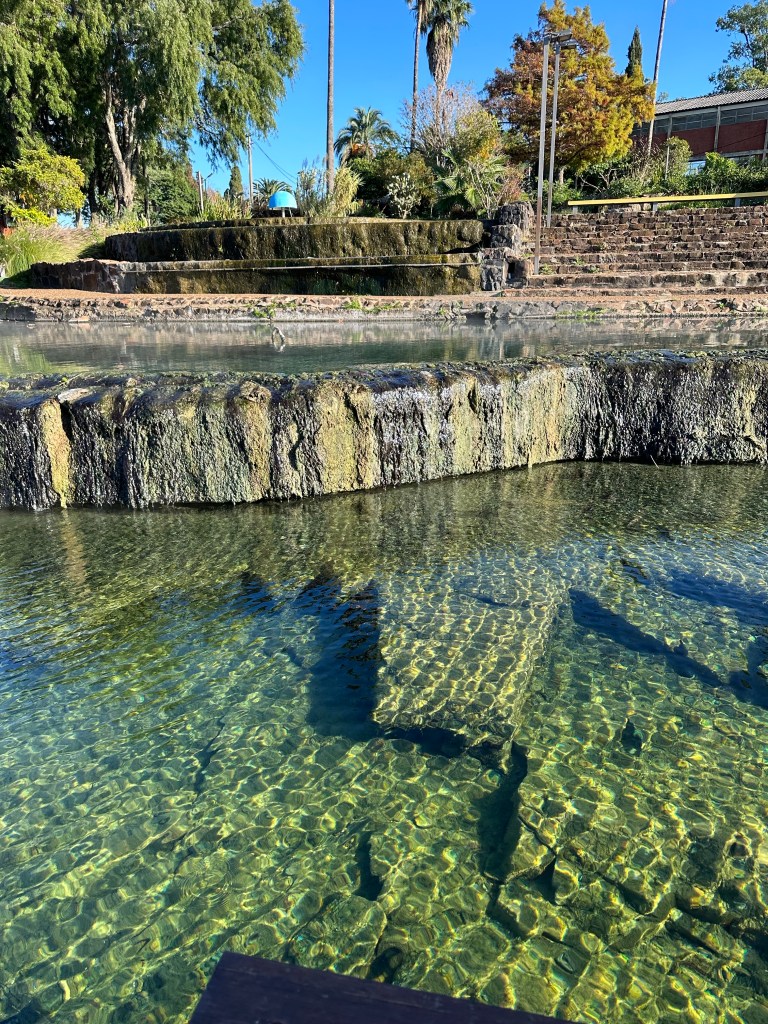
Upon our arrival, we walked around the area, encountering vibrant green parrots once more, as well as encountering natural hot spring pools. Following our exploration, the time came to immerse ourselves in these mineral rich hot pools. While many of us chose to swim, I was rather dangling my legs in the warm waters just to not miss out the healing properties of these natural wonders. The temperature hovered around 34 degrees, even though it was a refreshing day, I thought it would be a good idea to not swim on this day due to running the rest of my days being sick.
The water was surprisingly not that hot as well. I was expecting to be so hot but it was more than lukewarm. And also, all the pools that we have seen were man made pools not natural pools which I thought to be a little out of authenticity. The natural hot springs were there as a landscape and visitors were not allowed to get in.
There were different pools at the park where we explored each of them depending on how hot they were. Some of the pools were so open that it had so much wind and we were kind of passing those quickly.
After enjoying our time in hot spring pools, we ate our lunch at the park which I thought was very neat. We were the only ones at the restaurant at that time because many of the people were here camping and cooking their own meal. I saw lots of them even making Asado just right outside of their tents which reminded me of picnics back in Turkey where people usually BBQ at any public park on the weekend.
Inside the park
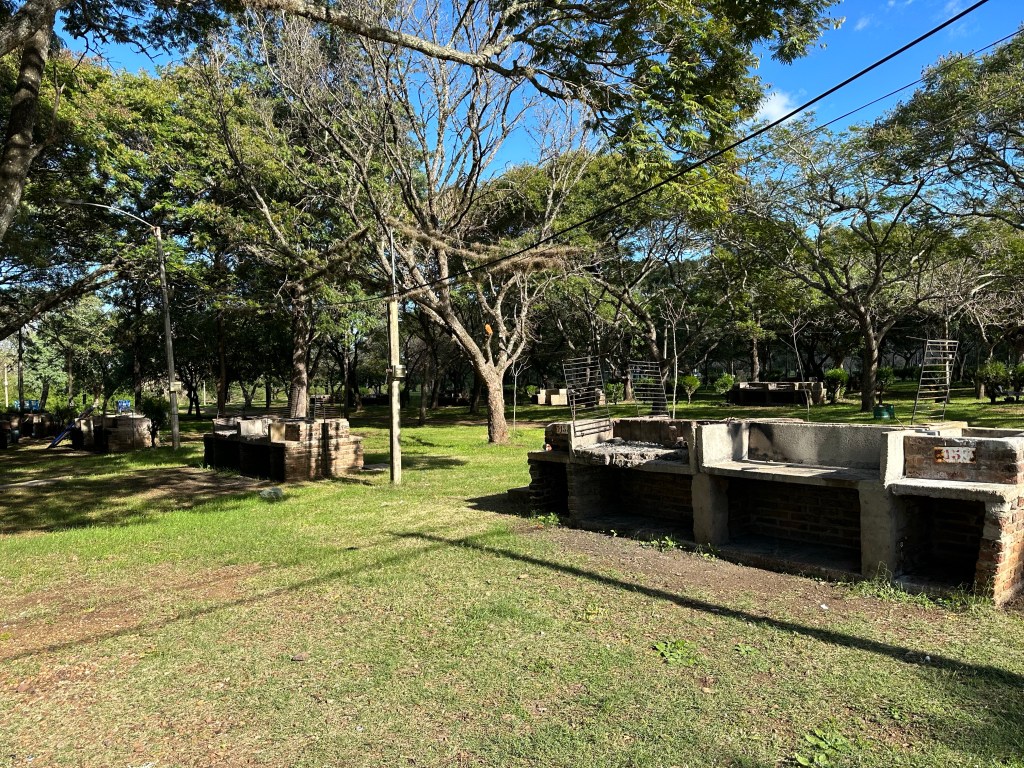
Places to make Uruguayan BBQ, Asado
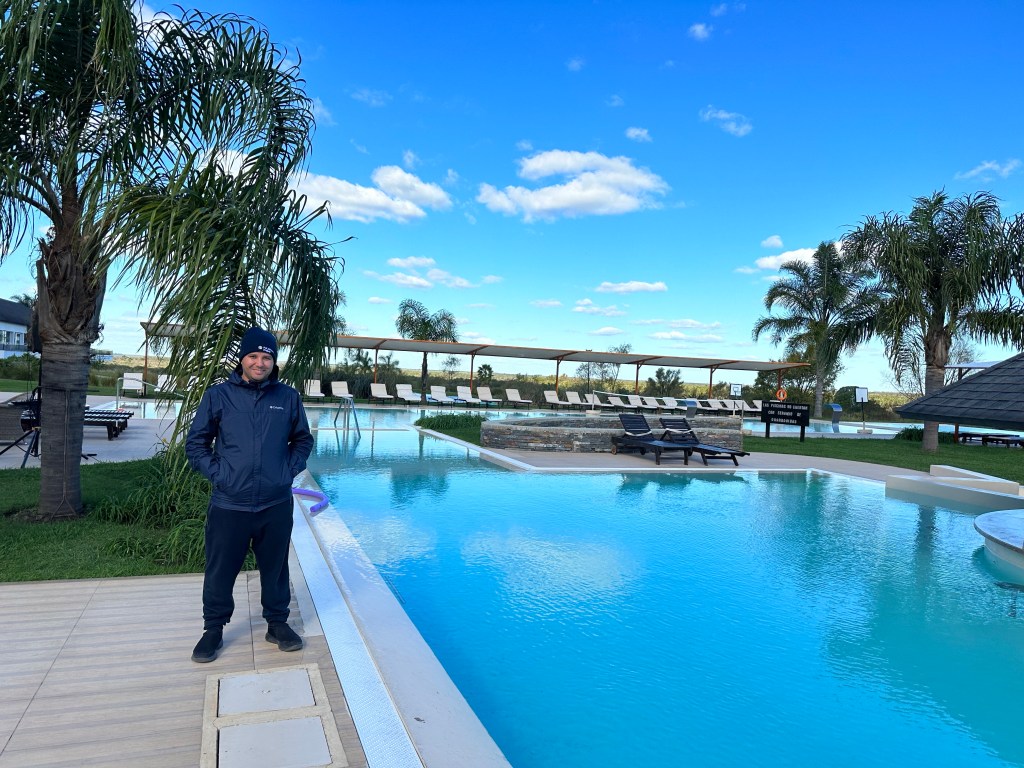
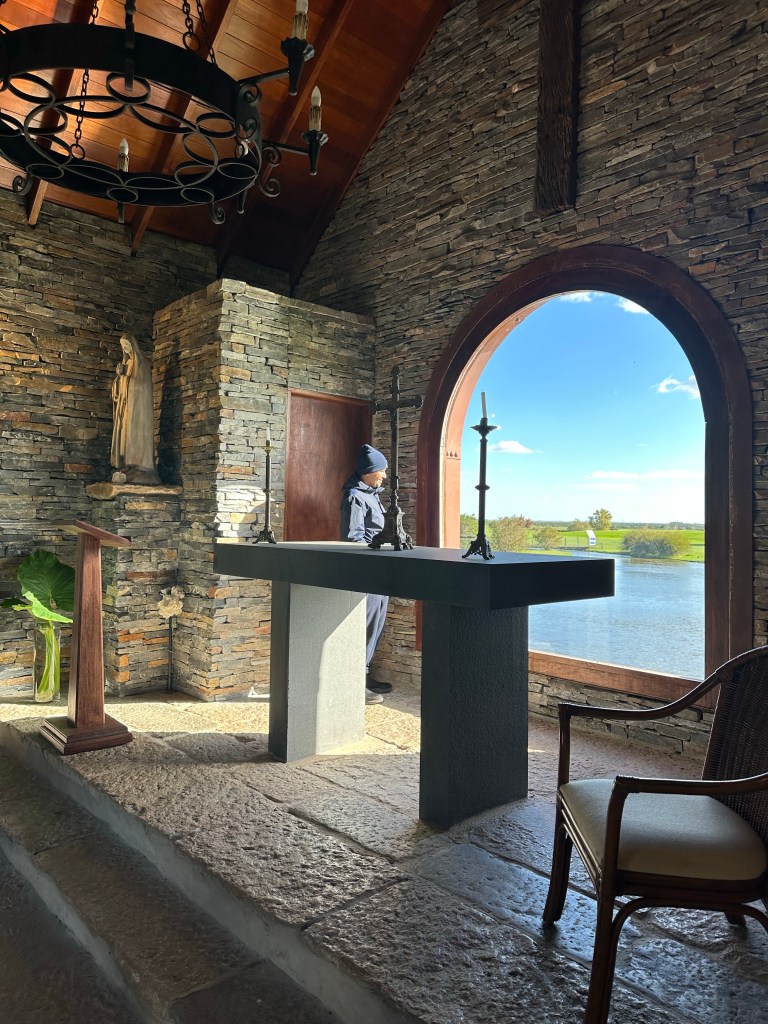
After lunch, we visited a five star hotel near to hot springs called Arapey Thermal Resort& Spa. Our host teachers told us that this hotel was so expensive that so many people couldn’t afford to come. They have never been there as well. A tour guide from the hotel showed us the hotel and the amenities they have. We also visited a church near the hotel which was phenomenal.
Beautiful pond view from a church outside of the Arapey Hotel
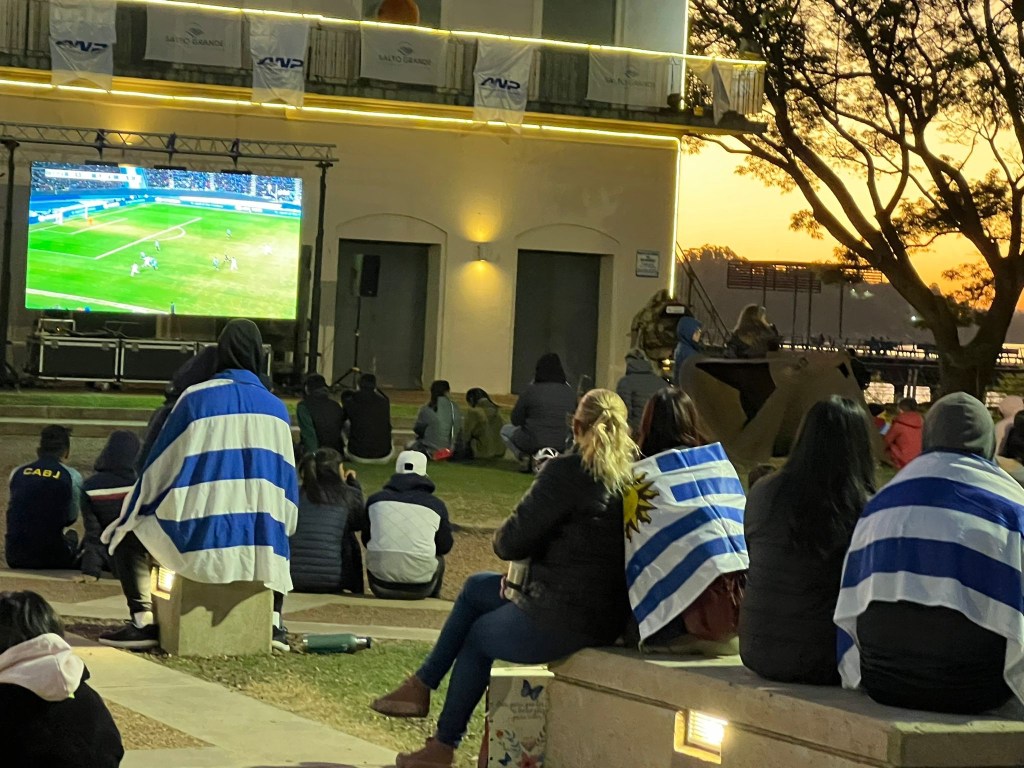
After the tour of the hotel, we went back to the city before 6 pm. The reason we went back early was because it was a special day for Uruguayans. There was a world final football (soccer) match under 20 against Italy. We wanted to experience the time of this special day in Uruguay. Our friend, Stephanie, who is also a Fulbrighter but came here in a different Fulbright program as an undergraduate, suggested we watch the game on the big screen at the Salto pier. The pier was just 10 minutes away from our hotel. We walked down to the pier and were ready to watch.
Salto Pier
One thing I do all the time when I get to a new place is to try street foods. Here in Salto, you see peanuts coated with caramelized sugar everywhere on the street. So, I wanted to have one of those while watching the match. I bought one and went straight to the place where the screen was. There were a lot of people from young to old who were all enjoying the match, and supporting their country team with pride.
After the first half of the game, we decided to leave the place and have time for dinner. The score was zero to zero. There was no winner. After dinner, I went back to the hotel and was ready for sleep. Then, all of the sudden I heard screams. These were the screams of “goal” where the Uruguayan team shot a goal during the last minutes of the game. Shortly after, there were screams, horns, trumpets, and drums all over the city. I was still in my room, thinking that the party would be finished soon. On the contrary, they were just starting.
I called Stephanie if she wanted to join me to go to the store to find our Kosher meat and she said yes and was happy to join. The minute I stepped outside of my hotel door, I could not believe the scene. It was literally every single person in the city from age 1 to 100 (!) out on the street celebrating their team success. People with Uruguayan flags, shirts, hats, trumpets, drums were everywhere on the streets. Cars joined them on the streets as well with their horns and waving flags from their windows. I truly say that this was a once in a lifetime opportunity, seeing how Uruguayans celebrate their football.
World-cup under 20 celebration
I was really impressed by how a country was united from young to old, men and women to celebrate on the streets. It was no joke. I believe everyone in Salto was out on the street. I was also impressed by the level of maturity during the celebration. One would think that there could be lots of people who could potentially create violence or some other things that could lead to public issues due to drinking or drugs. Not at all. It was a peaceful, joyful and fun city wide carnaval.
I stayed there until 10:30 pm with Stephanie to watch the celebration without going to the grocery store. We thought that we don’t want to miss out this opportunity. I then came back to the hotel and stayed about half an hour and decided to go back again to watch because the party was nowhere near to finish and there was no way for me to sleep in this loud noise. So, I went back to the street and stayed there until midnight. That was the limit to stay and went back to the hotel and slept like a rock. Even at night, they were still celebrating. I’m so glad that we had a chance to see this experience. It was a true learning experience to see Uruguayan culture in this authentic setting.
It was Saturday, the third day in Salto. Our host teachers had prepared fantastic cultural activities for both Saturday and Sunday, and we couldn’t wait to experience them all. However, I must say that while every day was a cultural experience for us here Salto due its remoteness and rural characteristics, on these specific days, we just immersed ourselves with cultural experiences without visiting any schools.
Our host teachers, Pablo Santurio, Ines de Lisa, and Virginia Reinoso, arrived at the hotel to pick us up in their cars. Ines and Virginia brought by their husbands along with them, which I thought created another layer of group dynamic. I will talk more about them later, as they were truly remarkable.
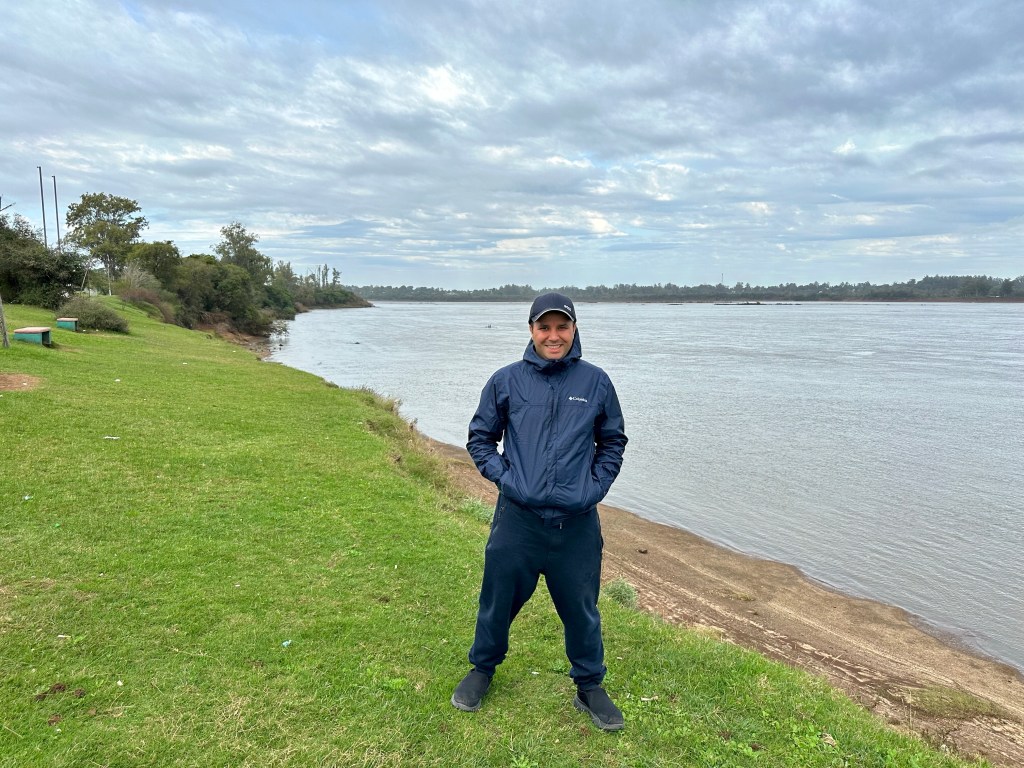
Our first stop was the parks near the Uruguay river that separates Salto from Concordia, Argentina. The river was magnificent, although surprisingly, I didn’t see any fishermen, likely due to it being winter or not the fishing season. Who knows the reason, but it was gorgeous view to see the river in its all magnificence.
Salto River
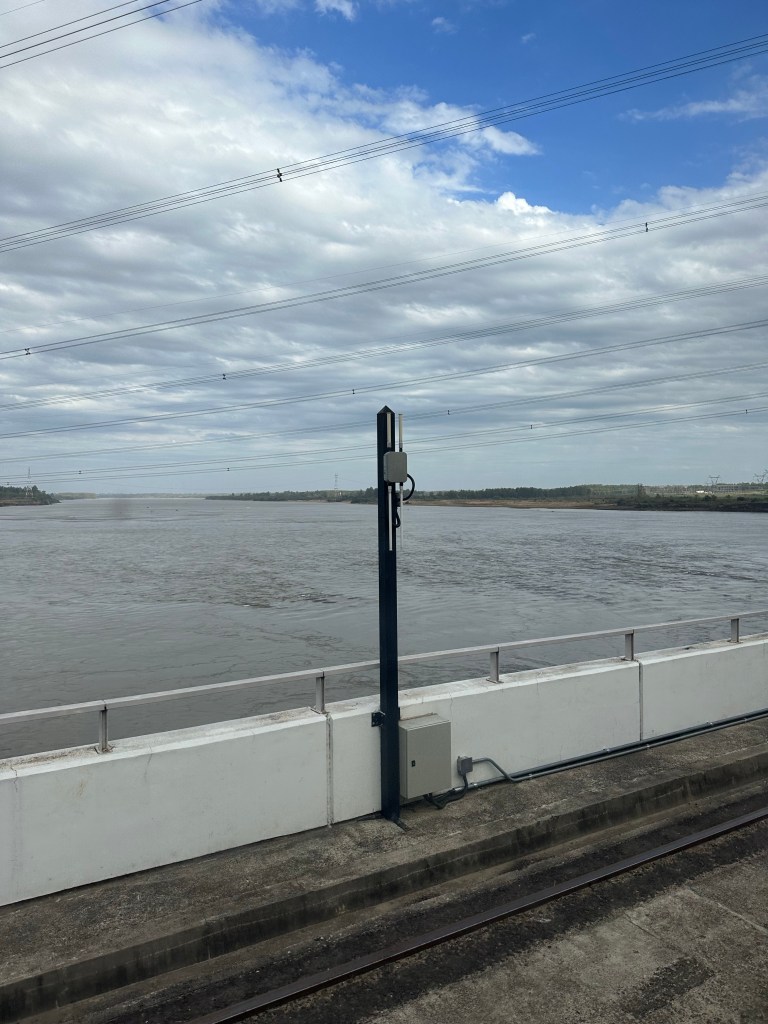
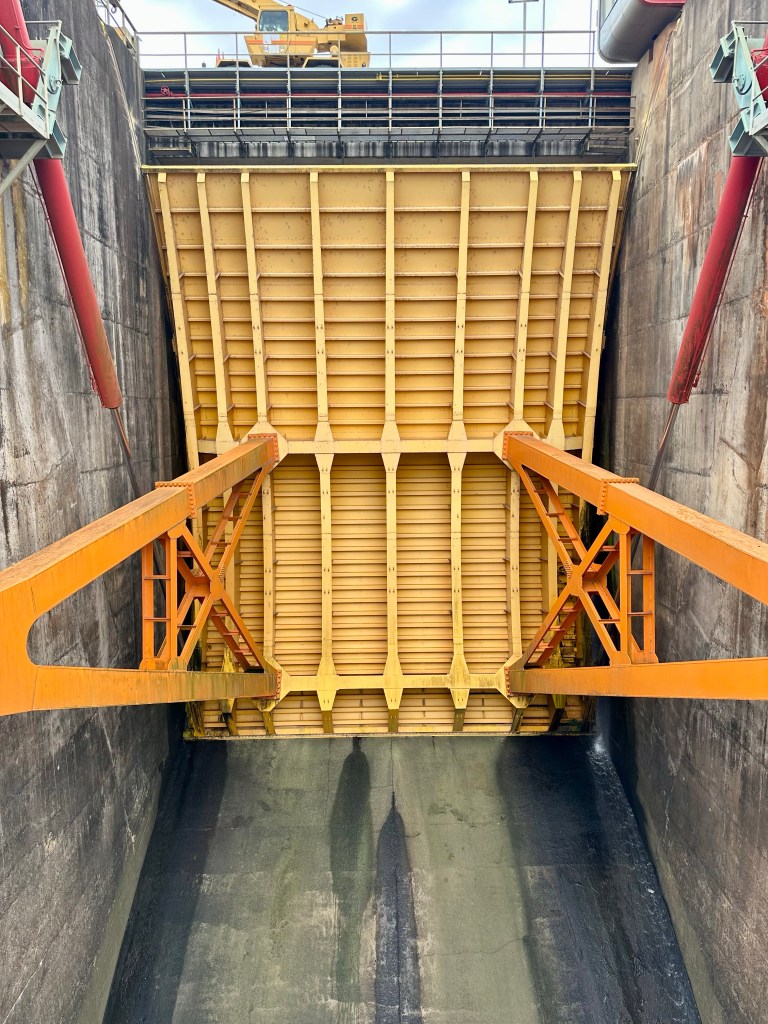
From the park, we went to “Salto Grande,” a hydroelectric power plant located just north of Salto. This plant was jointly constructed by Uruguay and Argentina in 1974 on the Uruguay River. We took a bus tour of the dam, which also serves as an international bridge connecting Argentina and Uruguay. The dam features fourteen hydro-generating units with turbines, and it was fascinating to see these impressive structures up close. Even though Salto days are much cooler than Montevideo around 40 degrees in mid-June, being up on the Dam made it much cooler. My extra layer of clothes and hat wasn’t enough.
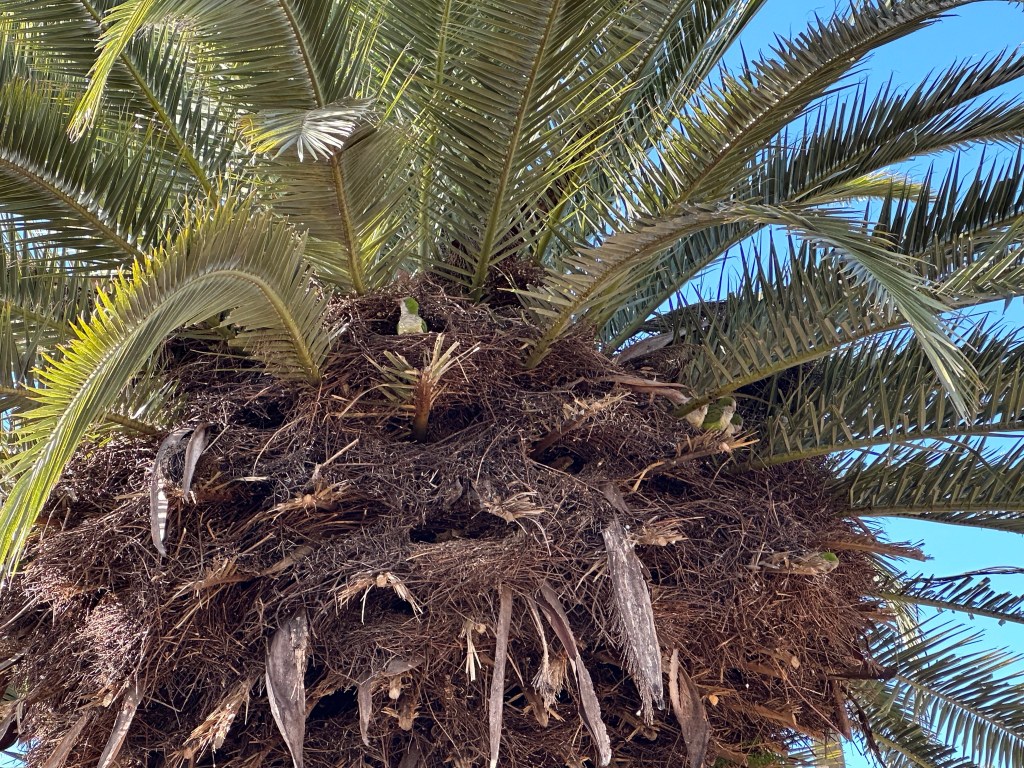
Monk Parakeet nest in Salto Grande’s park,
Eucalyptus tree that Monk Parakeets nest on
I was identifying a plant species through using “Seek” app
Salto Grande
One of the interesting aspects of the dam is the presence of fish ladders, which allow fish to move upstream by providing mechanisms that link rivers to the reservoir. This was the first time I heard about this concept. Birds were also benefiting from this as they were waiting to catch fish around these ladders.
Birds were waiting to catch fish
As a binational dam, Salto Grande’s energy production is divided equally between Argentina and Uruguay. Despite the population difference between the two countries, Salto Grande supplies approximately 7 percent of Argentina’s energy consumption and covers 53 percent of Uruguay’s energy demand. Recently, Brazil has also joined the team and purchased some of the energy produced by Salto Grande.
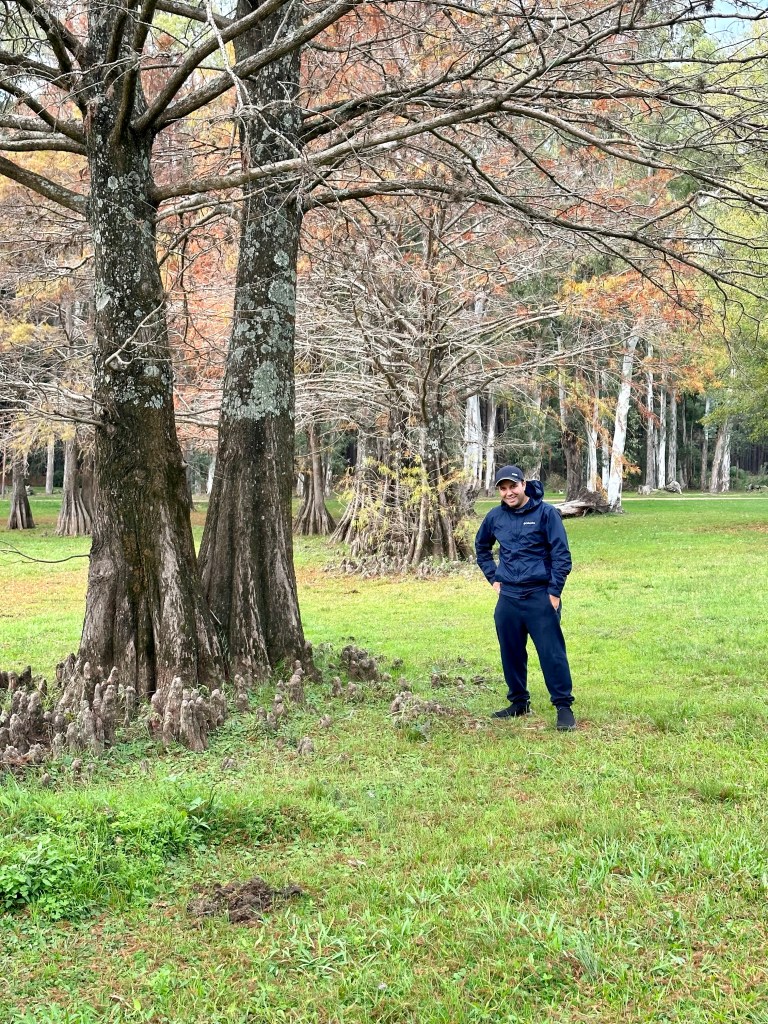
After the tour, our host teachers took us to parks near the dam, where we encountered various animals and plants. The natural surroundings around the reservoir lake were incredible, and it reminded me of mangroves in Costa Rica where mangrove roots stick out of the ground to expel excessive salt. I think in this case here near the Dam, the problem was not salt but rather they probably need more oxygen.
Magnificent trees near Salto Grande park
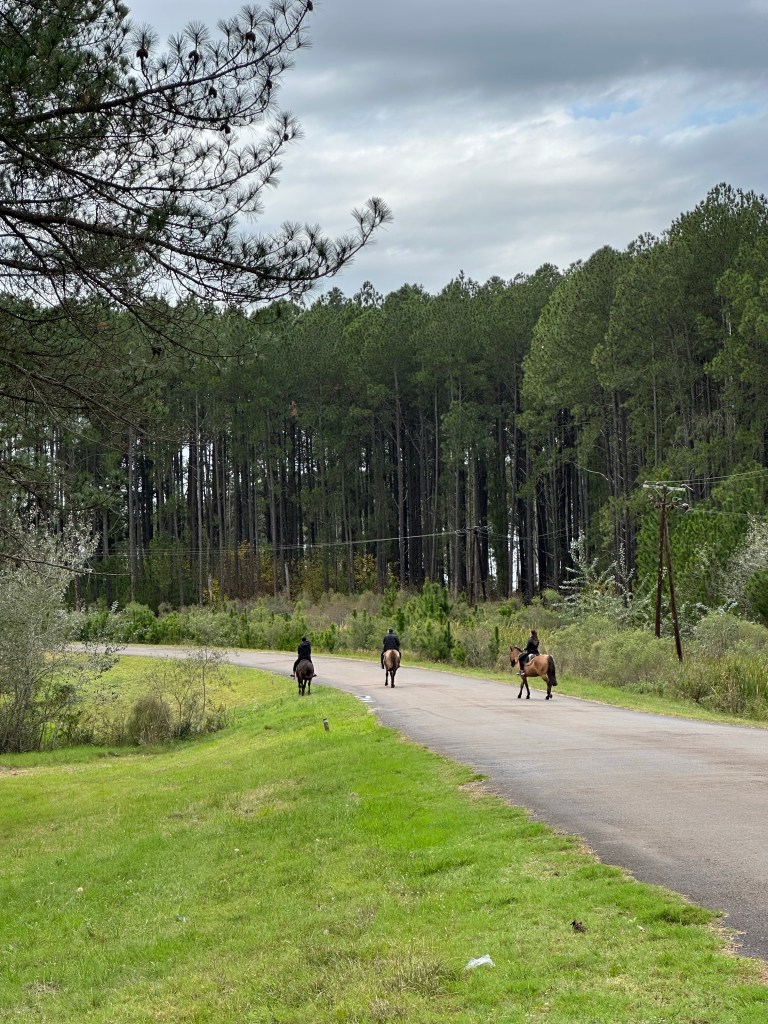
Close look up tree roots sticking up from the groundHorse riding was common here in SaltoSheep were grazing around the park
We also saw different types of pine trees with leafy needles, as well as trees with dark gray leaves that appeared vibrant from a distance. When I asked about this glossy tree, Ines’ husband stopped the car and ran towards it without telling me what it was. Climbing up the tree, he plucked a small branch, ran back to the car and asked me to smell it. It smelled like Vicks. I was correct! Ines explained that people use the leaves of this tree to alleviate sinus congestion and similar symptoms. I couldn’t myself but inhaling the aroma from the leaves for the rest of the day.
The trees that has “wicks” smell. Ines’ husband, Gerardo Yacques, was bringing me some leaves for me to see up close
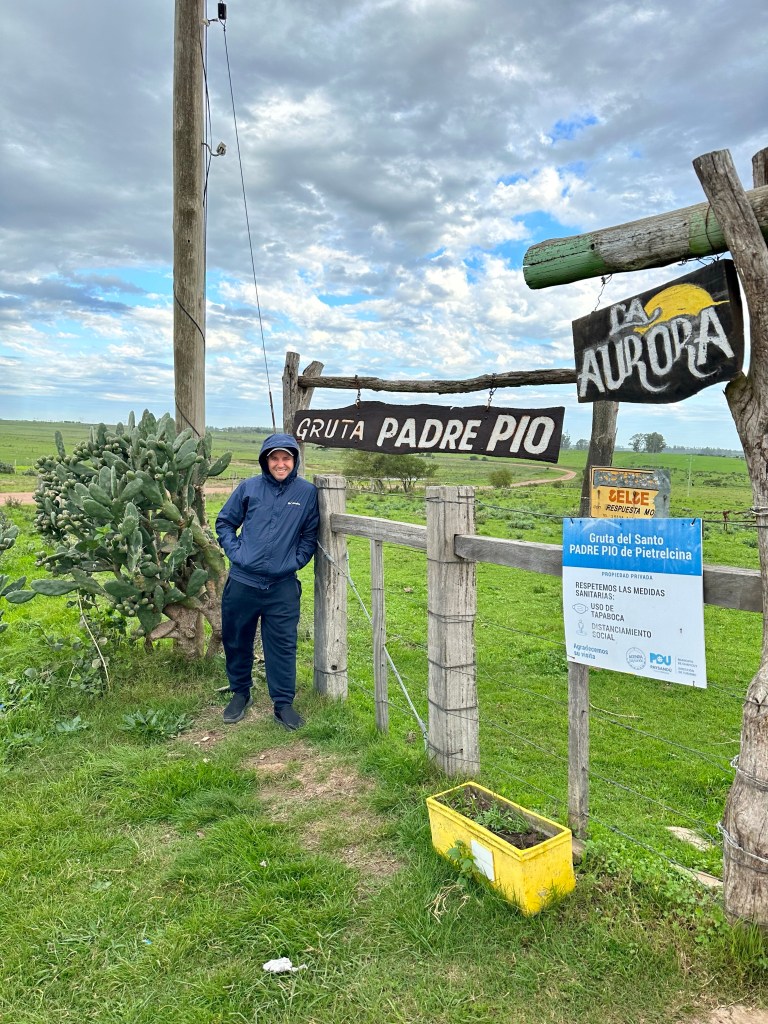
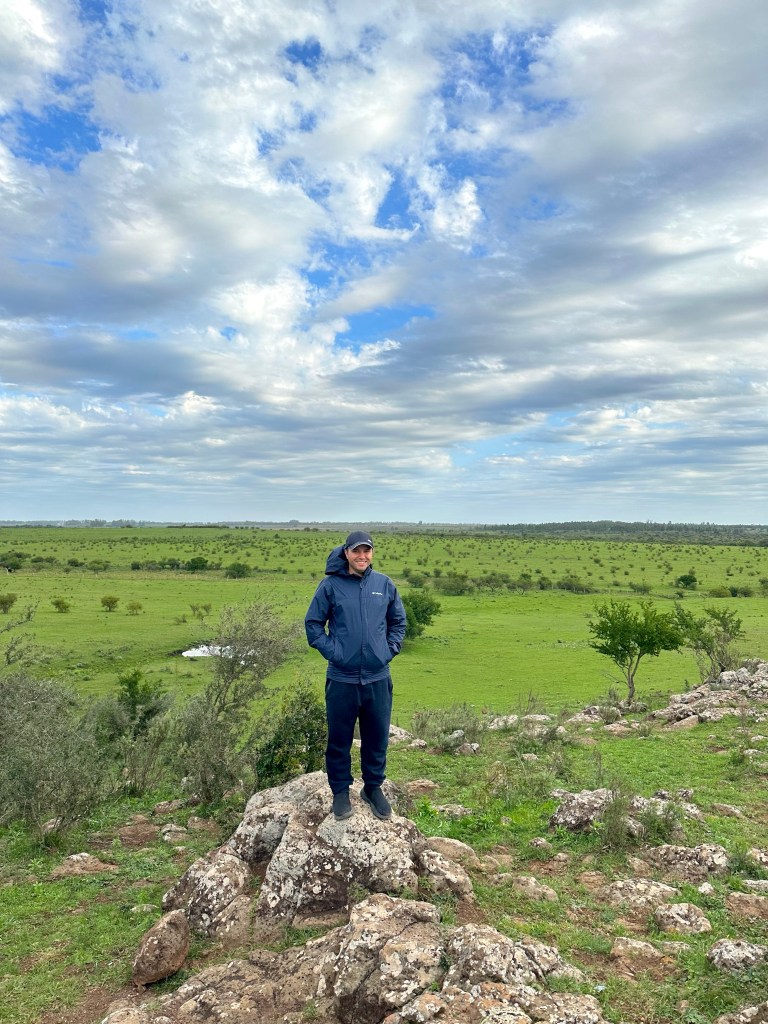
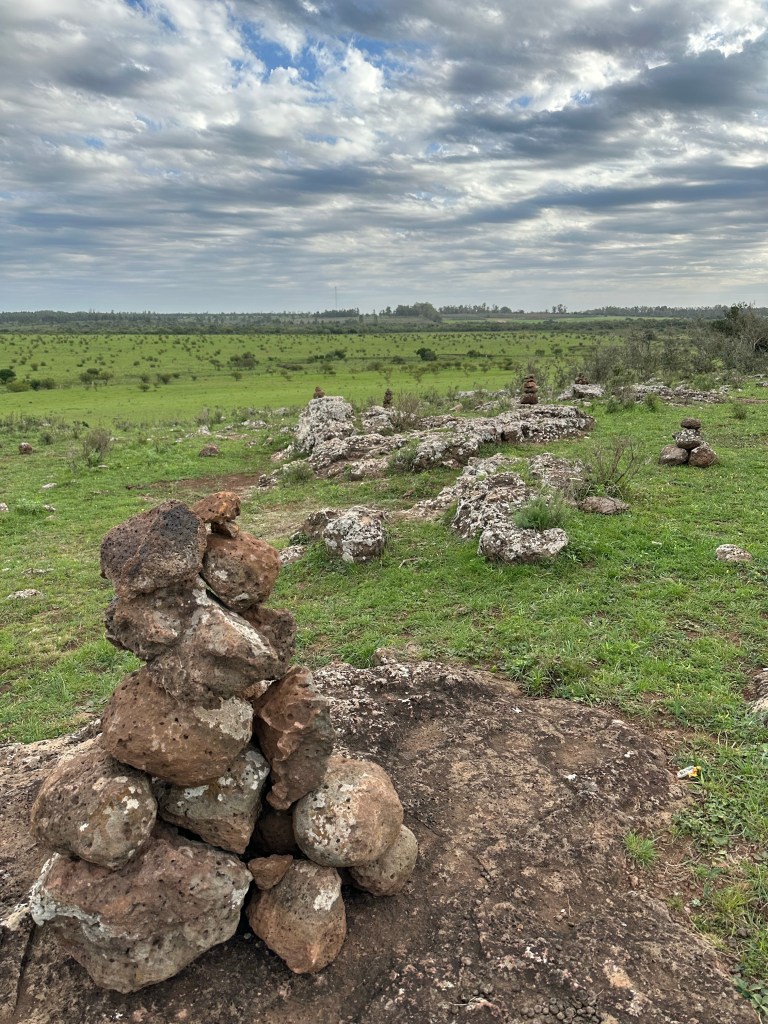
Next, we visited a religious site called Gruta Padre Pio, located in La Aurora. Situated atop a hill, this place offers a breathtaking view of the expansive plains of Uruguay. The site is characterized by volcanic rocks, which contribute to its unique landscape.
The entrance of Gruta Padre Pio
Magnificent view from the site
Before entering the site, Ines’ husband mentioned that for some local people the place was believed to have had extraterrestrial encounters and numerous UFO sightings in the past. Initially, I thought they might have been referring to sightings of Southern Auroras (given the word “Aurora” in the name), but I later learned that such phenomena are not observed here; it’s simply the name of the place.
As we explored the area and visited the statue of Padre Pio, we learned that people believe in the healing power of this place, often seeking healing when they come to visit. In fact, I saw a paralyzed young woman sitting around the statute and praying. I wanted to know more about the place and as I searched on the web, the soil is rich in quartz and crystals, creating a high energy environment. While I cannot vouch for the veracity of these stories, I can attest that this place left me with a sense of invigorating energy that would linger for many days and weeks. I even picked up several small volcanic stones as a gift for my son, who loves collecting rocks anywhere we go.
The statue of Padre PioStacked stones in the site
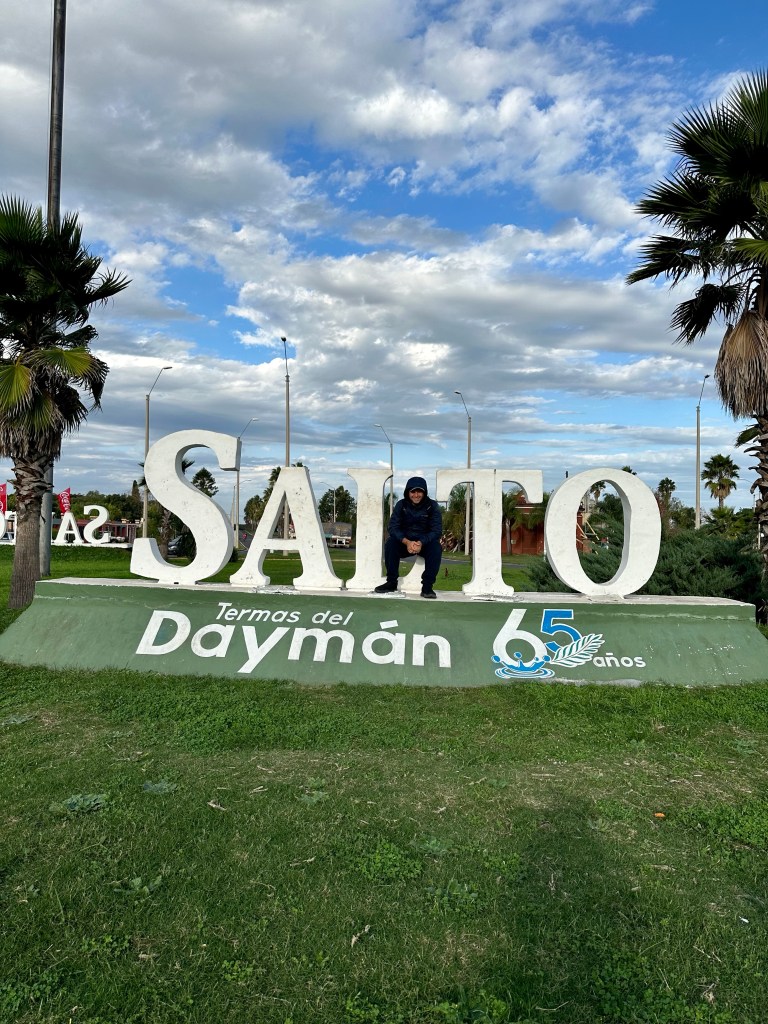
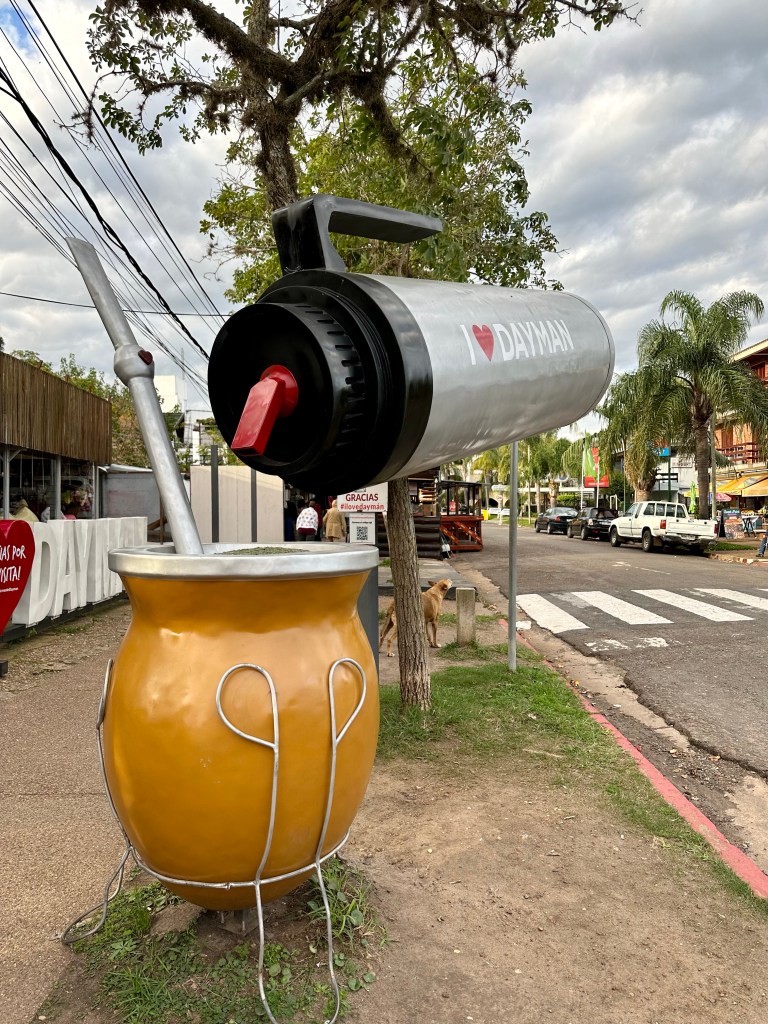
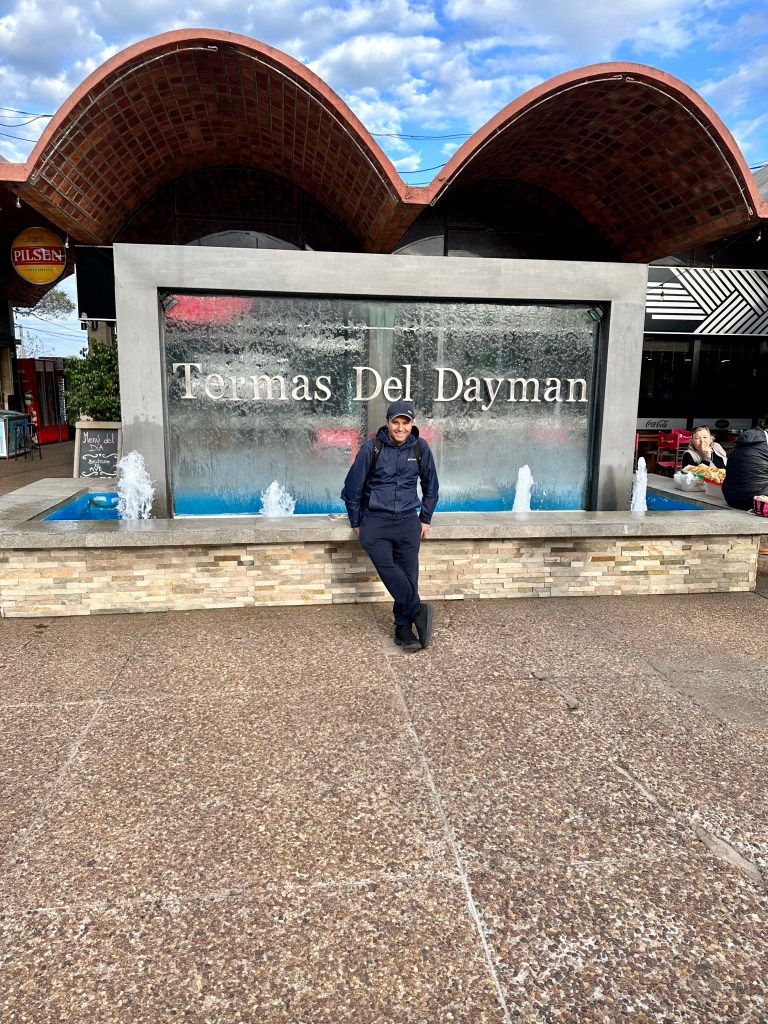
Our final destination for the day was Dayman Hot Springs, a beautiful neighborhood with several shops and a prominent Salto sign nearby. Although we didn’t enter the hot spring area as initially planned, our host teachers told us that we were going to another hot spring tomorrow, which was said to be a better option. Instead, we walked around and enjoyed the area.
I’d like to mention one interesting observation. Throughout our time in Uruguay, I noticed souvenir shops selling “evil eye” beads, which surprised me. The concept of “evil eye” beads originates from the Middle East and is associated with a protective superstition. Despite asking several times about its connection to Uruguayan culture, no one seemed to know. My theory is that the presence of a significant Armenian diaspora in Uruguay might have brought this tradition with them, resulting in these beads becoming widespread. It was literally everywhere.
Evil eye beads
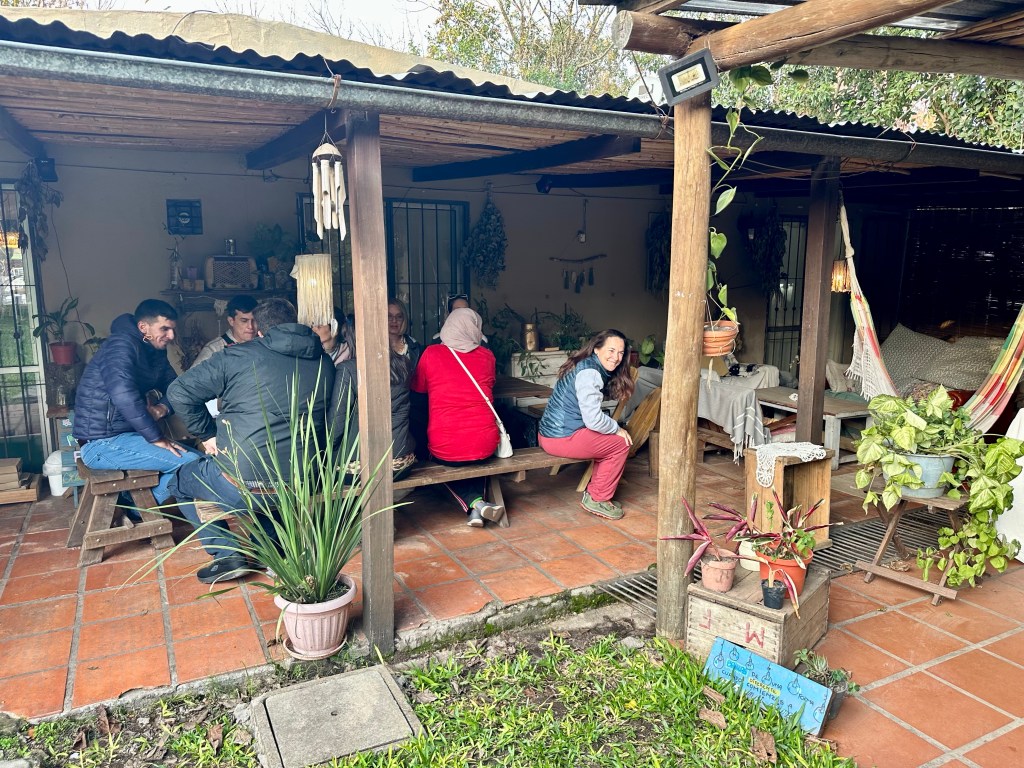
Since it had been a long and tiring day, our host teachers kindly asked if we wanted to refuel at a coffee shop. Without hesitation, we all agreed to have a coffee. They took us to a place that appeared like a house from the outside, with a modest appearance. However, the moment we stepped inside, we entered a whole new world. The place was exquisitely decorated with antiques, plants, coffee tables, chairs, sofas, and numerous other intriguing items that defied description. As we explored more in the backyard of the shop, we encountered even more surprises, including games, a small natural pool, a hammock, and antique furniture.
Entrance of the coffee shop
We sat at a large table and ordered our drinks and sweets. I chose cappuccino, one of my favorite beverages so far in Uruguay, and of course a famous dessert called Alfajor. Originating from the Andalusia region of Spain during the colonial period, Alfajor has become a symbol of dessert in Uruguay. The one I ordered was made with cacao and chocolate. According to my web research, the name “alfajor” is derived from the Andalusian Arabic term “al-hasú,” meaning “the filling.” The dessert itself is filled with Dulce de Leche, another iconic symbol of Uruguay made from caramelized milk and sugar. It was really good along with a nice hot coffee after the long day.
Famous Alfajor (chocolate kind) with cappuccinoCheese puffs
To be honest, despite the caffeine boost from the late coffee, I was so exhausted that upon returning to the hotel, I immediately went to bed. I wanted to make sure I got a good night’s sleep to be fully prepared for the next day’s adventures!
A nice minivan taking us to the rural school which was about an hour away from our hotel
The rural school was located 50 miles east of Salto
Fulbright TGC Salto Crew
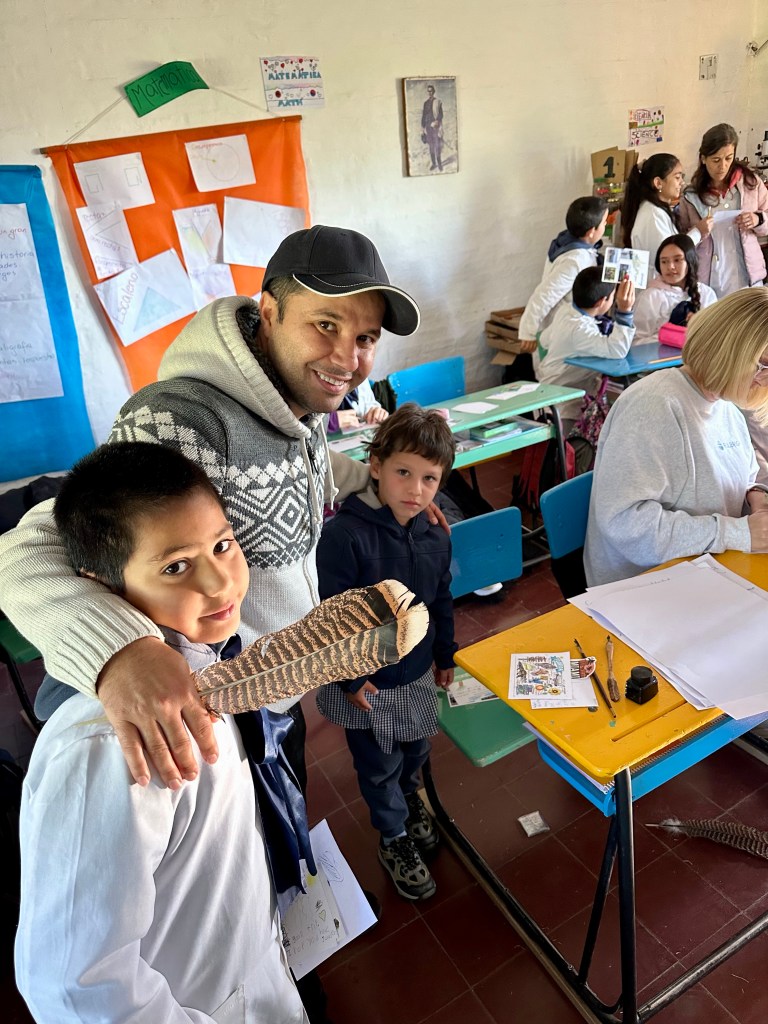
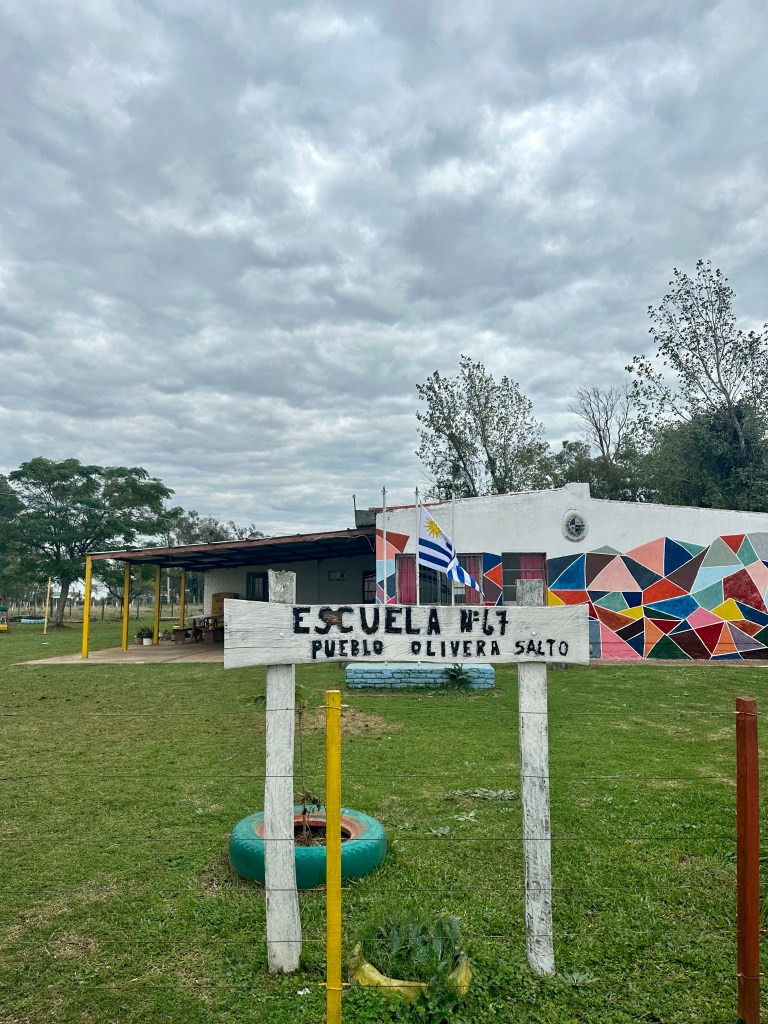
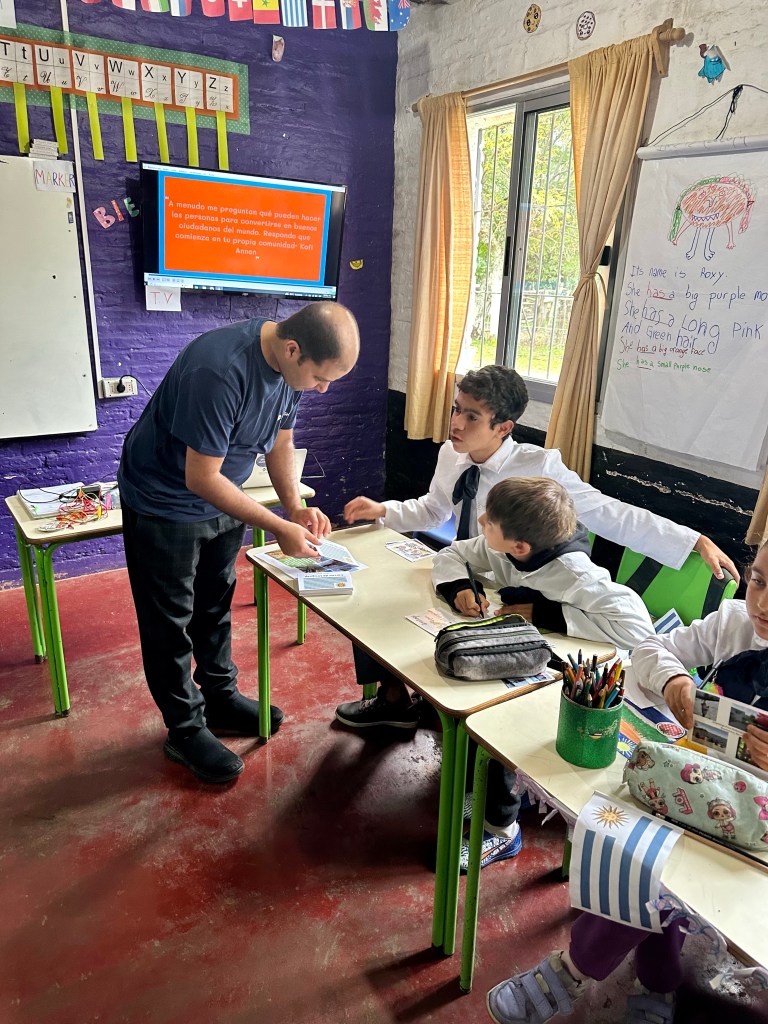
This was our second day in Salto. We left early in the morning to visit another rural school, Escuela Number 67 in Pueblo Olivera. During our visit, we learned about rural education at the elementary level. The school has two classrooms, one for younger students and another for older students, aged 3-12. Each class had its own teacher where one of the teachers served as head teacher. It was heartwarming to see the happy faces of the children in both classrooms.
We were visiting Pablo’s colleague’s classroom next door
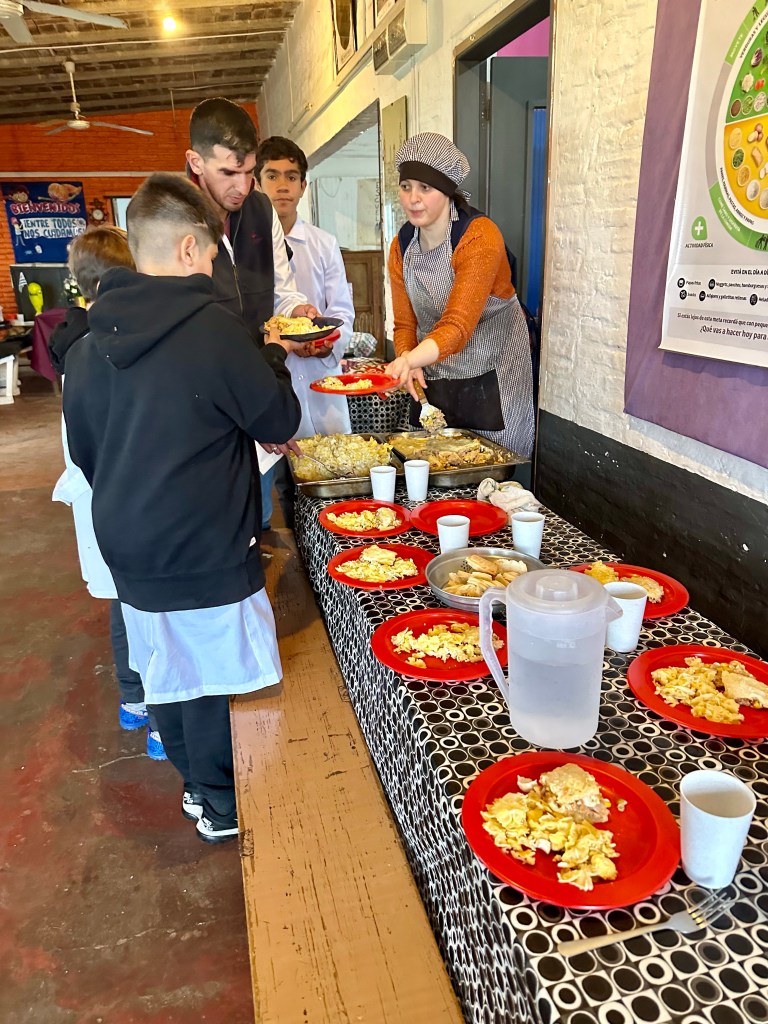
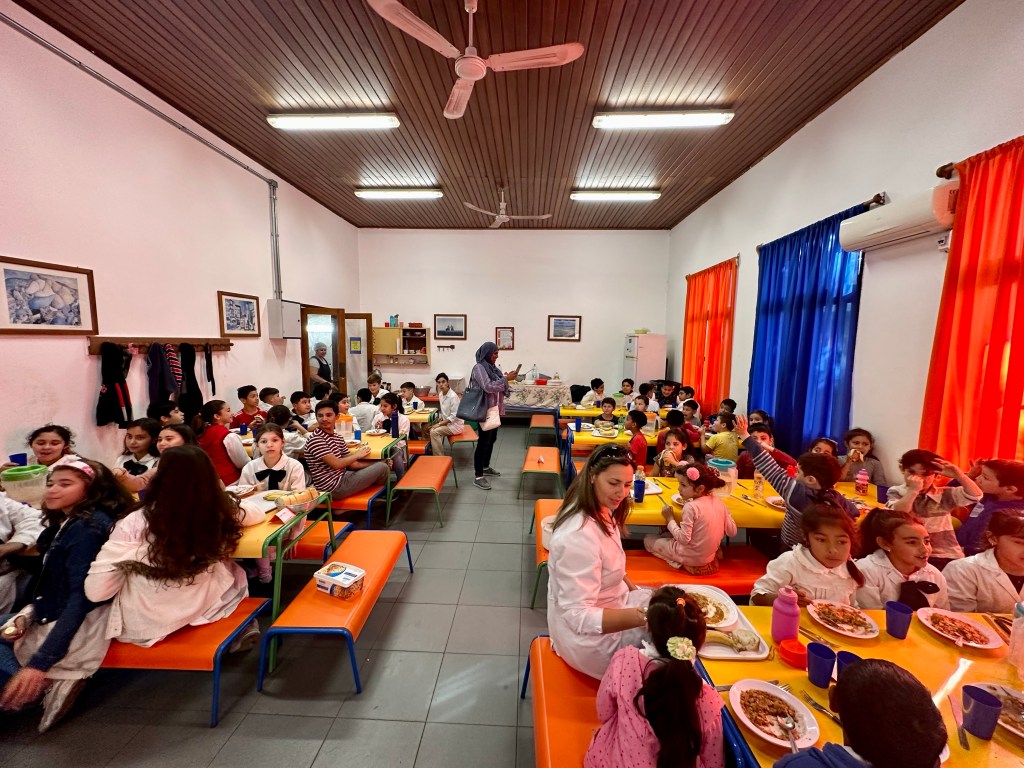
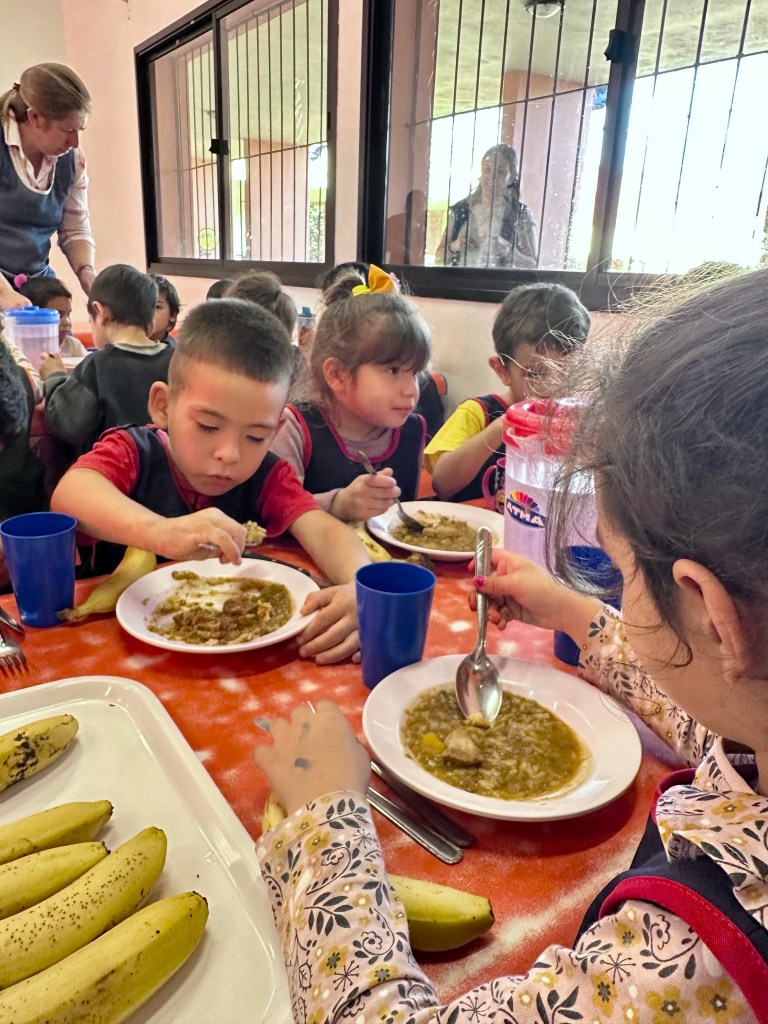
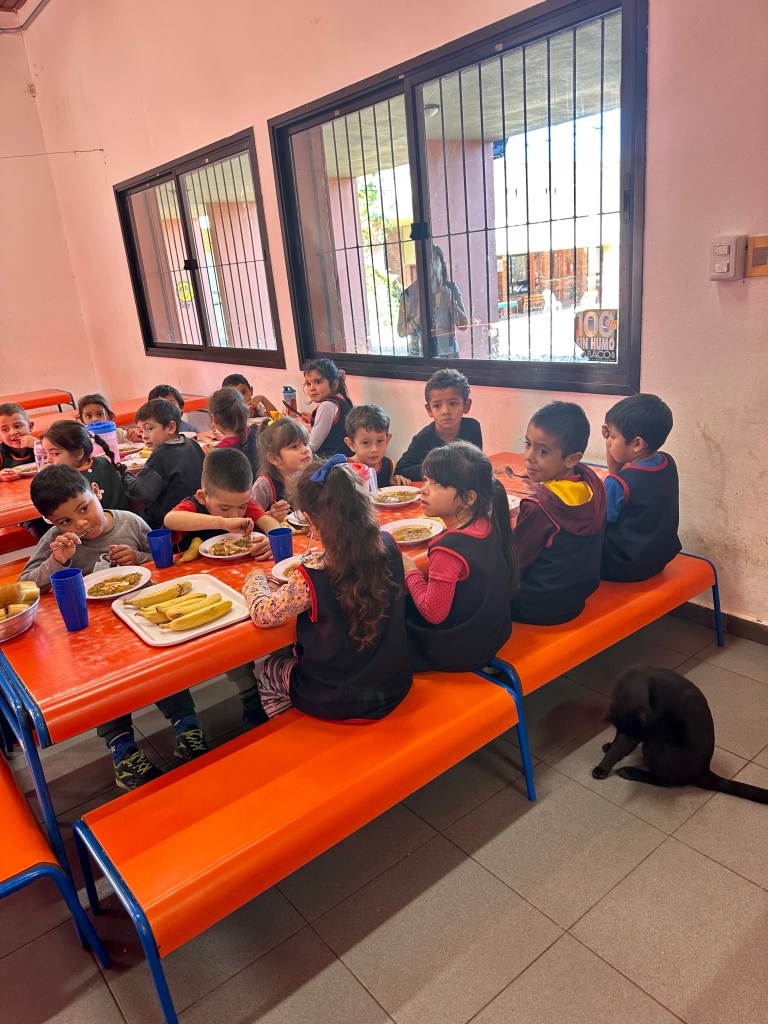
Afterward, we all had lunch together. As is typical in Uruguay, there was a dedicated person responsible for cooking fresh and hot meals for the students, even in rural areas like Pueblo Olivera. The students were called to the tables, and the school chef served their lunch one by one. It was amazing to see the students eating their meals and at the same time enjoying their time with their peers.
Students tooth brushes and pastesLunch time
Following lunch, the teachers took the students outside. They were all playing together in their small front school yard. They laughed and played happily, and we even played dodgeball, which was a lot of fun. Every student has something to play. While we were playing dodgeball, some were playing soccer, swinging and other activities. Surely, it was a lot of fun.
Students playing with the teacher
Students were playing soccer
One thing I have to mention is that despite the students’ varying levels of maturity and age, they all interacted as one cohesive group. I didn’t witness a single moment of bullying or any other misbehavior that is often prevalent in the U.S. They genuinely cared for one another, helping and guiding each other.
During our playtime, I opened my gift bag that I brought from home that was full of candies, cookies, and small toys with the students. My son, Yahya, actually prepared the entire bag for them. As I opened the bag out in the field, students were lined up immediately to have their treats. I was happy to see them eating and giggling with their treats in hand.
Students were rushing to get treats from my candy bag
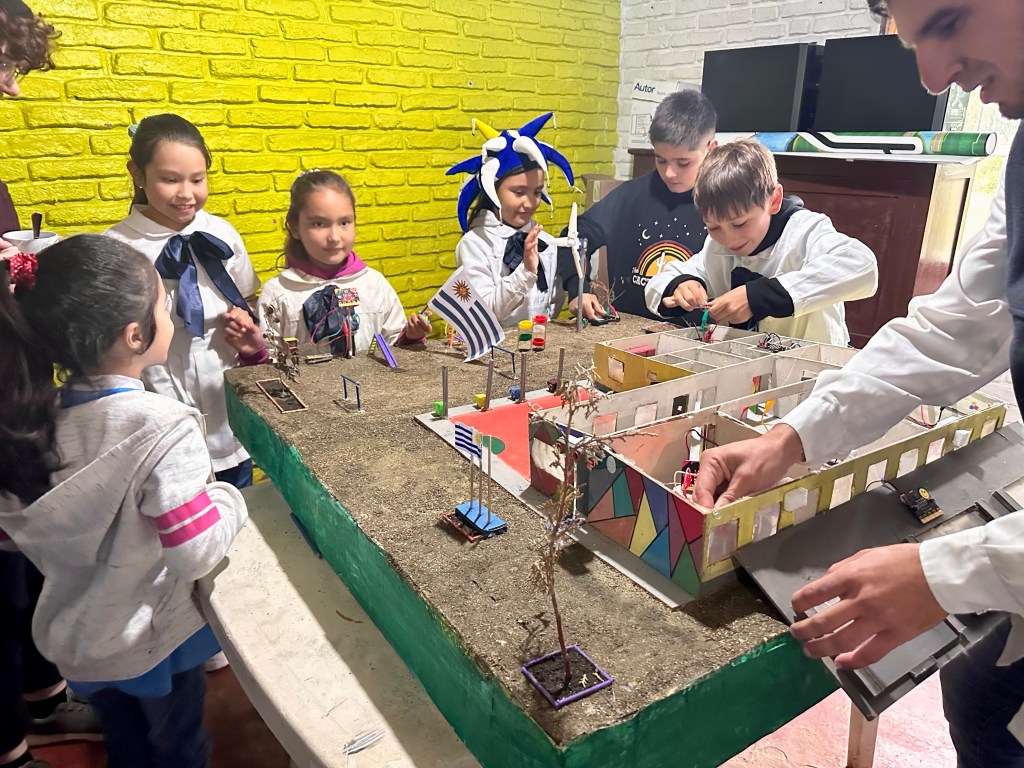
Our host teacher, Pablo Santurio, then showed us some of the projects they had done with their students. One project, in particular, blew my mind. If I understood the name correctly, it was called “The Future Version of Our School.” I apologize if I mistranslated or didn’t capture the title accurately, but the project focused on envisioning how their school should look in the future. They created a miniature version of their school on a table, complete with solar panels, sensors that opened the school door for the handicapped with a wave, a library, an open roof concept to allow more sunlight into the classrooms, and much more. Their project won the award for the best innovative project in Uruguay. It was wonderful to hear the kids discuss what they had accomplished in this project.
Future School Project
Future school project is not the only one they have done. Another project they have done was about water contamination that affected people in their community. This small school, only around 20 students, had lots of water related health issues such as vomiting and diarrhoea. Despite the challenges they faced including lack of resources and some community resistance to not analyze water (as the issue of water is highly political in the country), students and teachers collected water samples and send to labs for analysis, thanks for Ceibal, a technology-based teaching foundation. They found out that the source of their sickness is the wellwater they use in the village. Students and teachers urged the community to boil their water and then shortly after the school managed to have chlorinator installed in the pump where the water was accessible to the villagers to make the water drinkable.
Because of this project, the school has nominated one of the world’s Top 10 schools for Supporting Healthy Lives. I believe next fall, they will announce the World’s Best School Prize among these ten schools from the world. Here is more information about the project.
Helping students with their writing in English
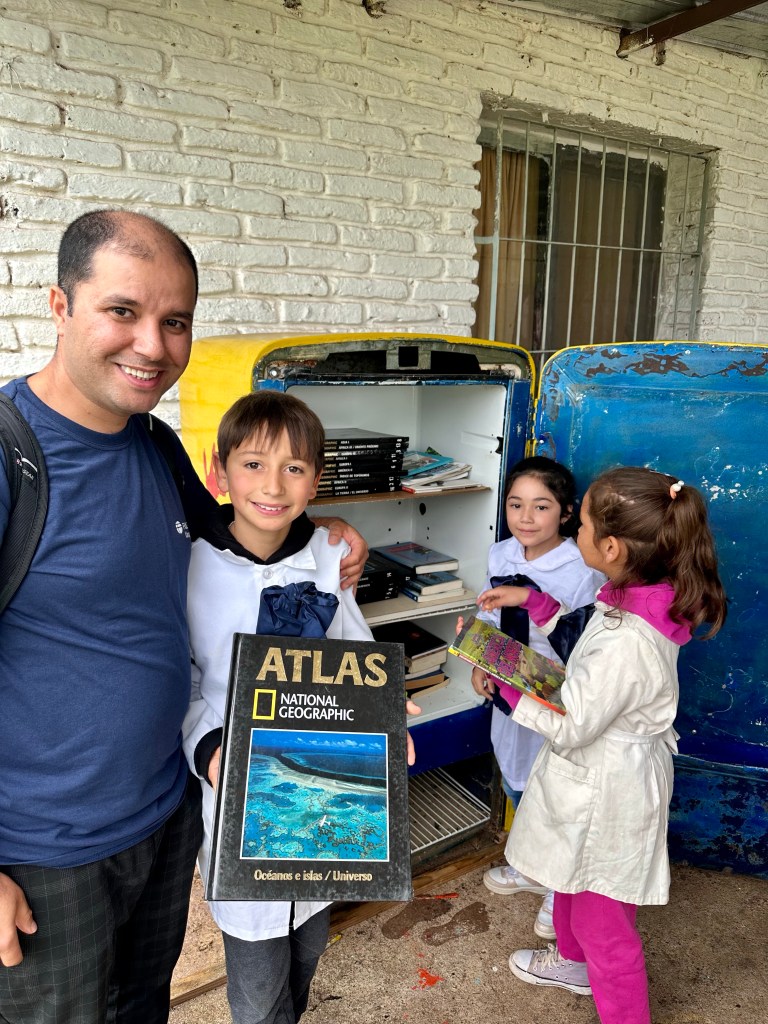
School library made of an old refrigerator
Afterward, the students proudly showed us their school garden, presenting their vegetables and herbs. Another thing that I noticed was how the children took care of their school as if it were their own homes. I can’t express enough how incredible this feeling was, a sense of belonging—it’s an experience that cannot be fully described in words.
Showing students how to transplant lettuce in the school garden
Vast Uruguayan plains and plateaus
Leaving behind these wonderful people and places, we returned to Salto. Our group decided to visit an art museum near our hotel, where we explored beautiful artworks before heading back to the hotel once again. It was another unforgettable day. Many thanks to Pablo and his students for graciously hosting us in their school. It was such an inspirational day for me. I have no doubt that this beautiful community will achieve many more remarkable things in the future. I eagerly anticipate what lies ahead for them. I wish them luck.
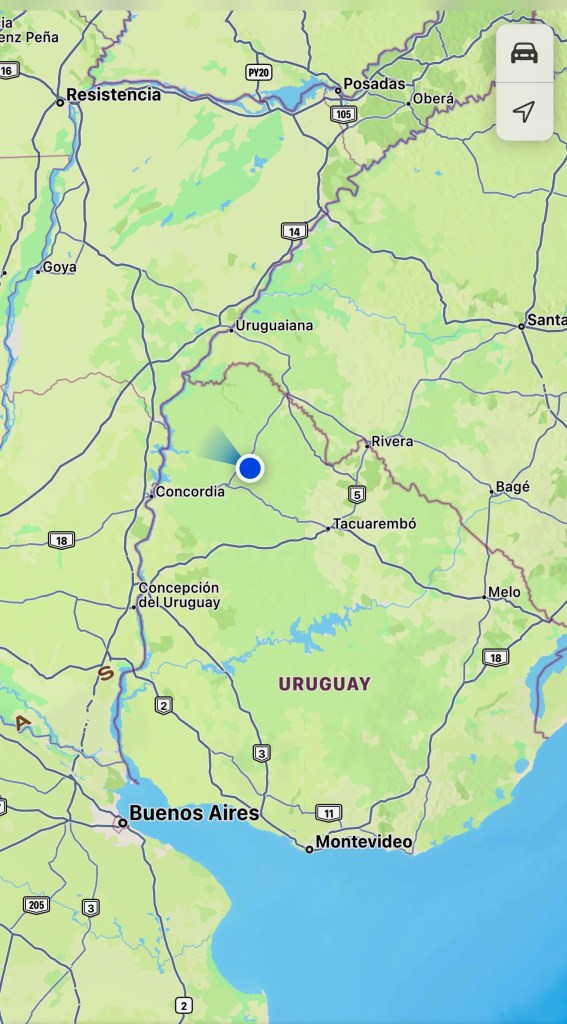
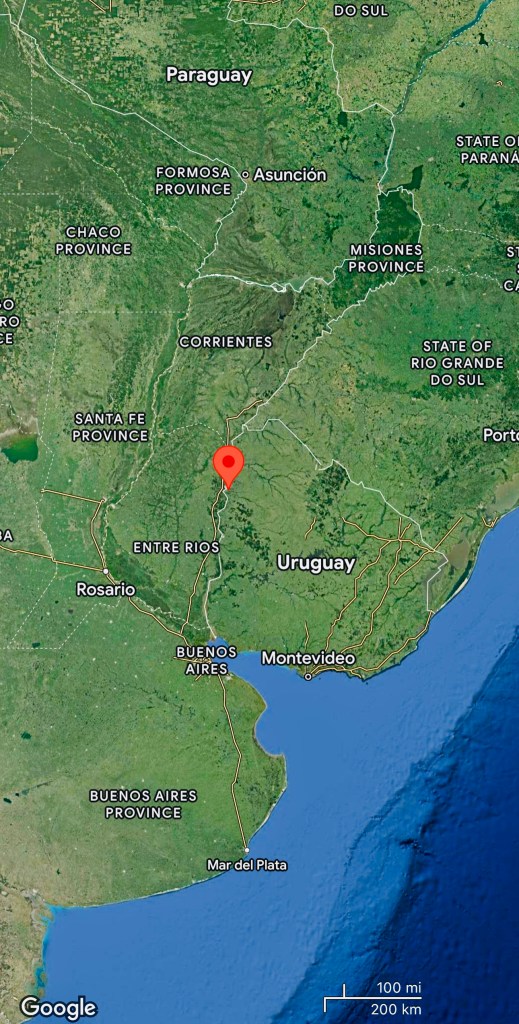
Salto, Uruguay, is located in the northwest part of the country
After a six-hour-long bus drive, we arrived in Salto. There were two taxis waiting for us to take us to our hotel, Los Cedros, located in the heart of the city center. We arrived at the hotel at 6 am and were told to be ready by 8:30 am for our meeting. Despite sleeping for most of the journey, I still needed to rest my body a bit. So, I went directly to bed and slept for an hour and a half. Afterward, I had breakfast at the hotel and got ready for the day.
About Salto
Salto is the second-largest city in Uruguay, with a population of around 105,000 and it is located in the northwest part of the country on the Uruguay River. It is 300 miles north of Montevideo and just across the river from Concordia, Argentina. It’s known for hot springs, citrus farms, great cattle and sheep postures and wineries.
School Number 15 Pedro Ambrosoni, A rural School
Our activity for the day was visiting a rural school in San Antonio, School Number 15 Pedro Ambrosoni, which took approximately 30-45 minutes to reach. On the way, our driver showed us numerous soccer fields. It was incredible to see how much they loved soccer, with a soccer field almost every couple of blocks. We also passed by mandarin, orange, and lemon trees, which was a priceless sight. As Uruguay is known for having some of the best quality meat in the world, we also saw many herds of cows and sheep along the countryside.
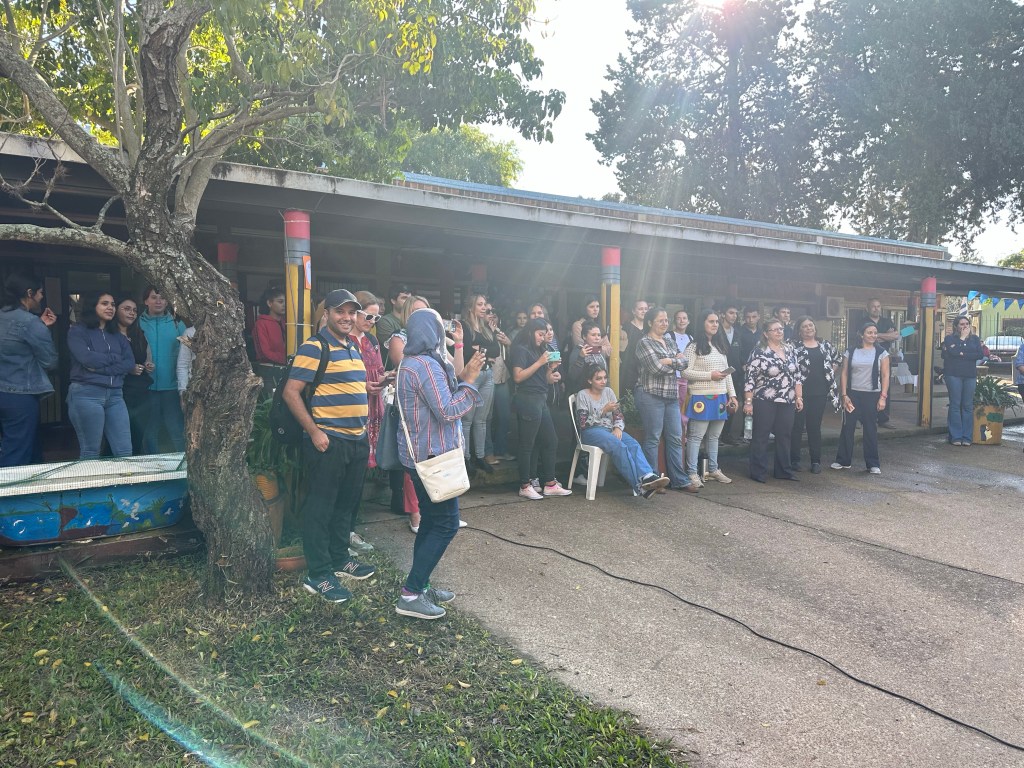
When we arrived at the school, teachers, students, and administrators were waiting for us at the door, greeting us cheerfully. It’s worth mentioning that each school in Uruguay has an inspector responsible for overseeing around 8-15 schools. Their role is to observe and evaluate educational processes in individual schools and provide advice at the central level. Since then, whenever we visit a school, the respective inspector joins us in our school experience.
At the entrance of the school, students greeted us with crafts and gifts that they had made for us
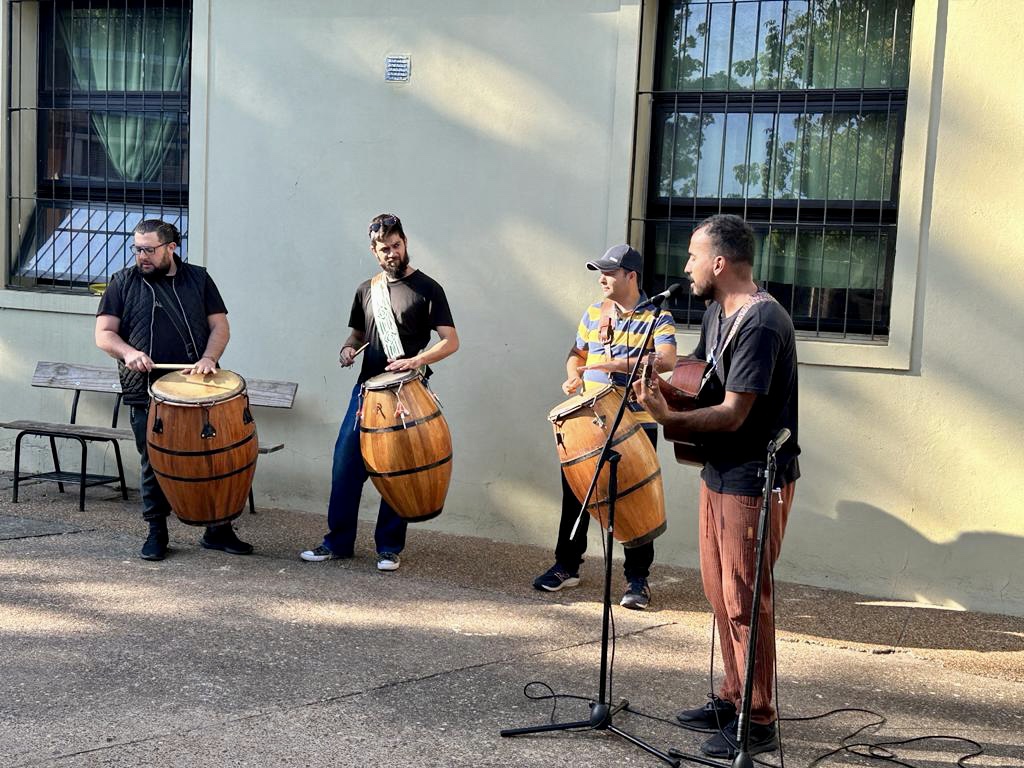
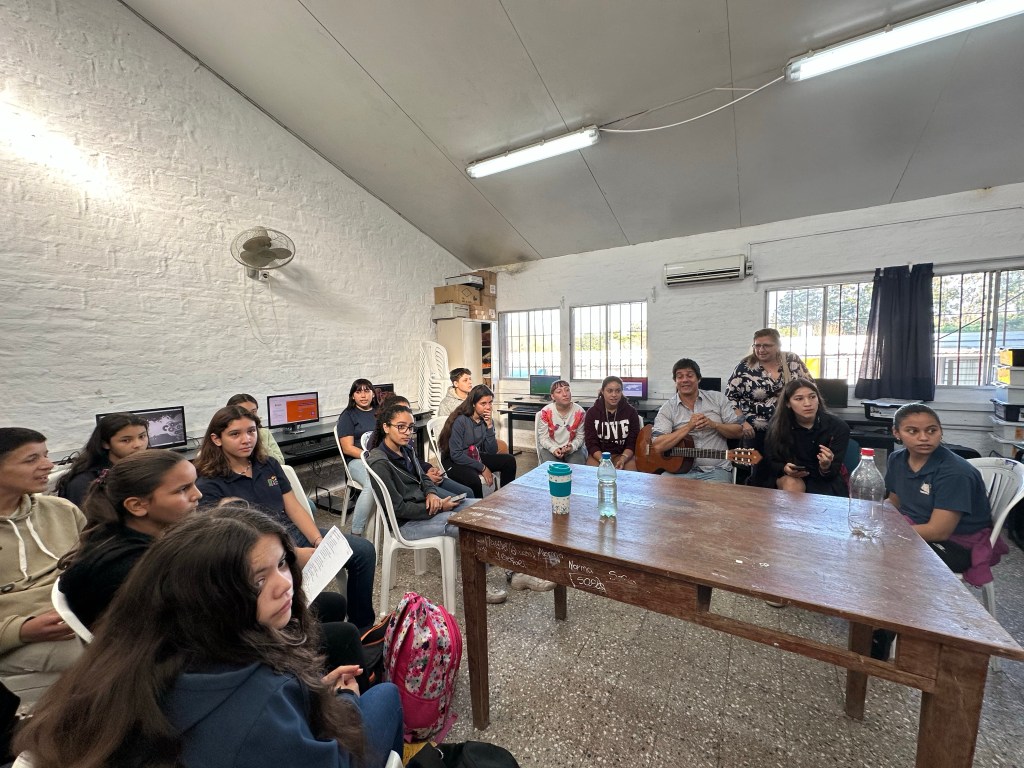
The inspector for the rural school in San Antonio was Isabel Delgue, who became one of the core figures that I will never forget, for many reasons I will mention later. The school principal and teachers took us around the classrooms, where students excitedly showed us their projects. We witnessed STEM projects, including robotics, in both primary and secondary school, and we also visited a music classroom where students performed songs for us. One of the highlights of the school tour was when several teachers performed songs with guitars and drums in the school courtyard. I had the opportunity to join them by playing one of the drums, and it was an incredible experience. I truly enjoyed their traditional songs.
Playing the traditional drum known as “tambores de candombe” or “tamboriles,” used in the playing of Candombe music of Uruguay
Listening to beautiful traditional Uruguayan songs performed by music and performing arts teachers ( I think!)
Visiting different classrooms
After the school tour, we visited the school cafeteria, where students and teachers ate hot meals together. It was a time for everyone in the school community to socialize and relax, without the concept of “lunch duty” as we had back in the States. Everywhere we went, we noticed this practice of communal meals. The chef walked around with a big pot, refilling it for those students who wanted extra servings. Additionally, we explored the school garden, where they composted and cultivated plants in their semi-built greenhouse. A person responsible for the school garden managed agricultural learning experiences for the students.
Teachers eating with the studentsSchool Cafeteria
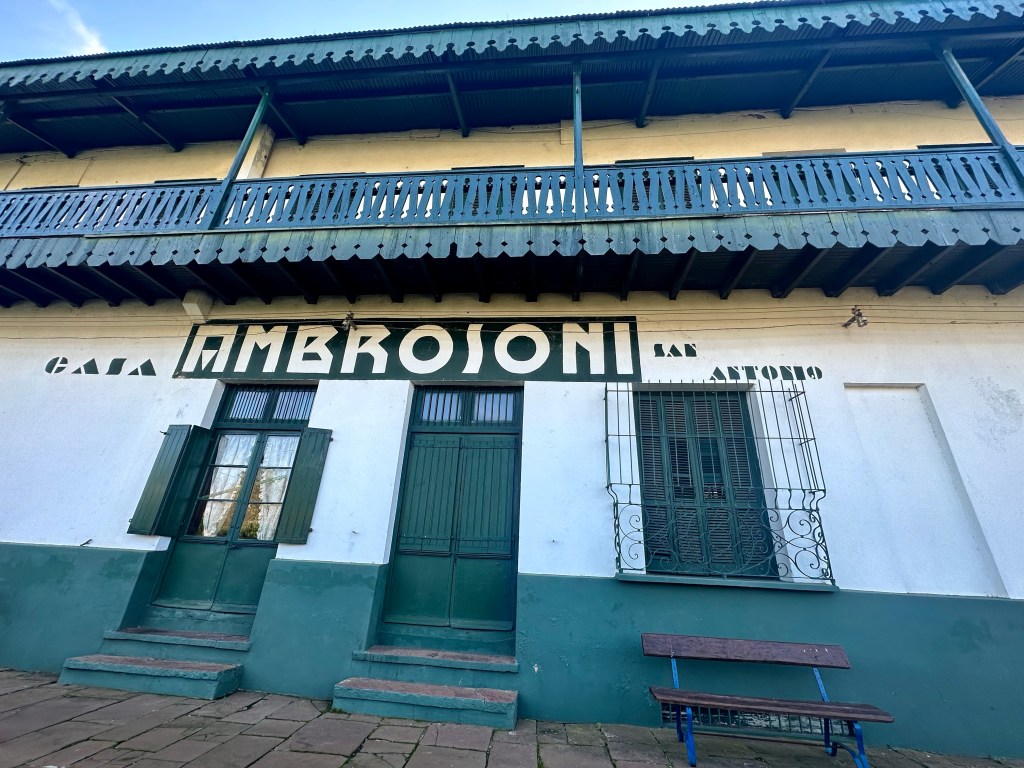
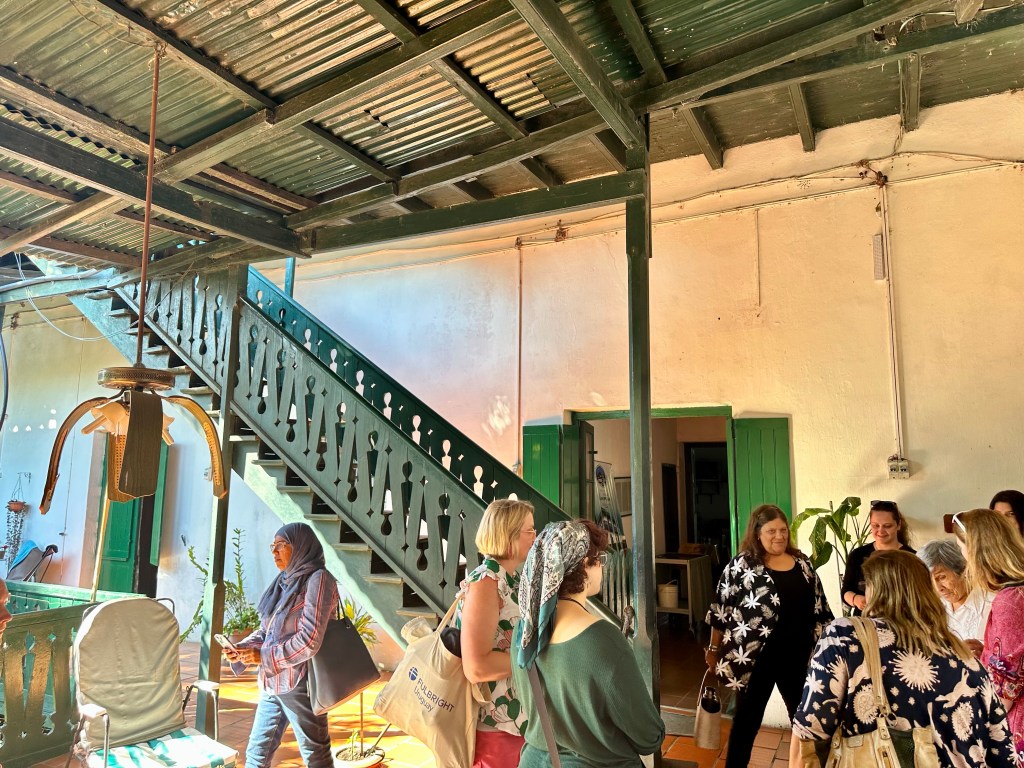
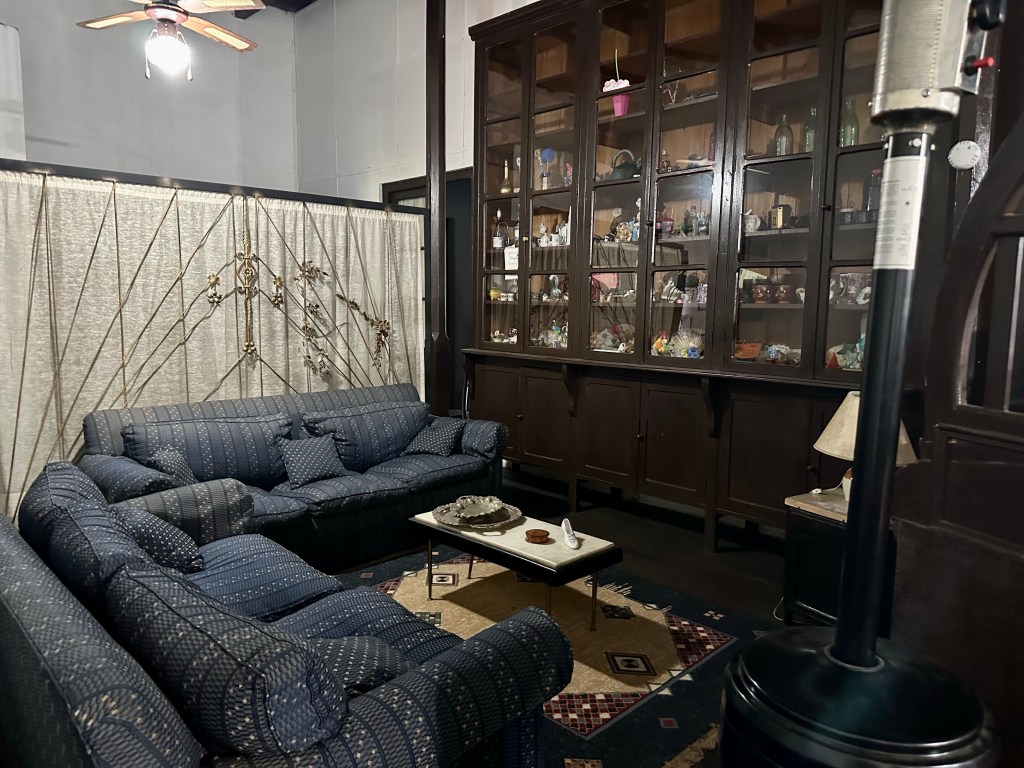
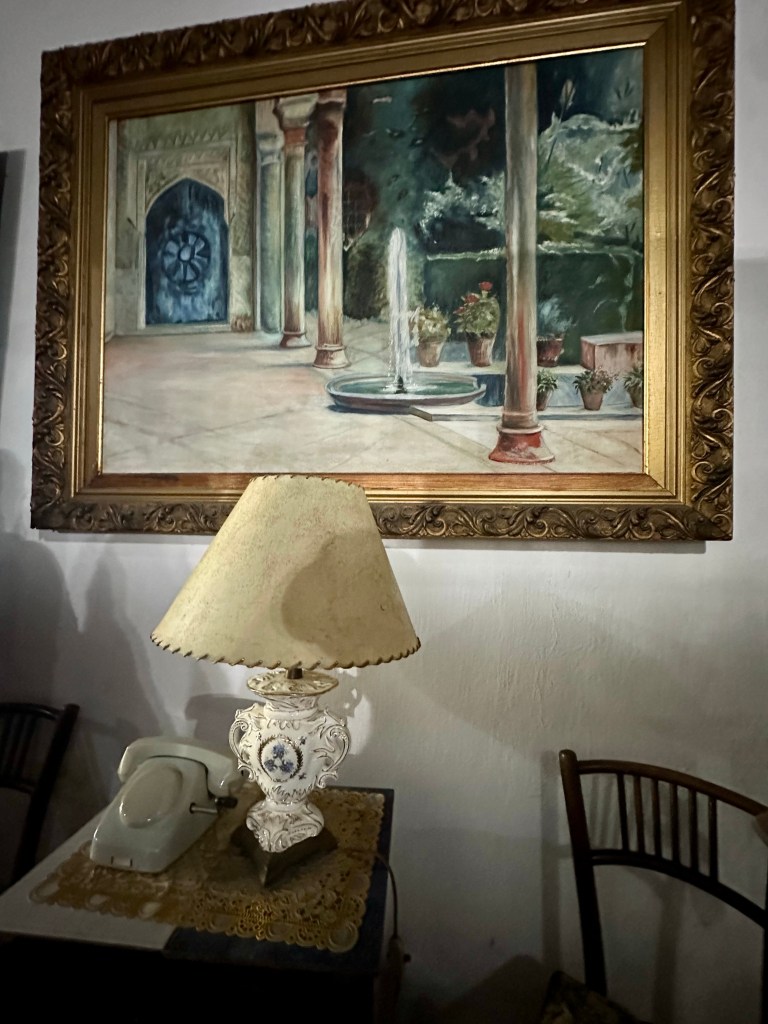
Following the school visit, we headed to a historic place near Salto called Casa Ambrosoni, which was founded in 1878 and belonged to Isabel’s great-grandfather. As mentioned earlier, Isabel was our inspector for the school in San Antonio. The moment I saw the structure, I knew it was going to be an amazing place, and indeed it was. Isabel’s mother-in-law, who currently lives in the house, welcomed us at the door. Together with Isabel and the school principal, she gave us a tour of the house, showcasing its history. We learned that their ancestors came from Italy and established the area as it is today. Nowadays, the house serves various purposes, including being a hotel, recreational center, and education center for the area. Many students from the region come here to camp, learn, and celebrate special occasions.
Isabel (on the left) and Isabel’s mother-in-law (on the right)
Casa Ambrosoni
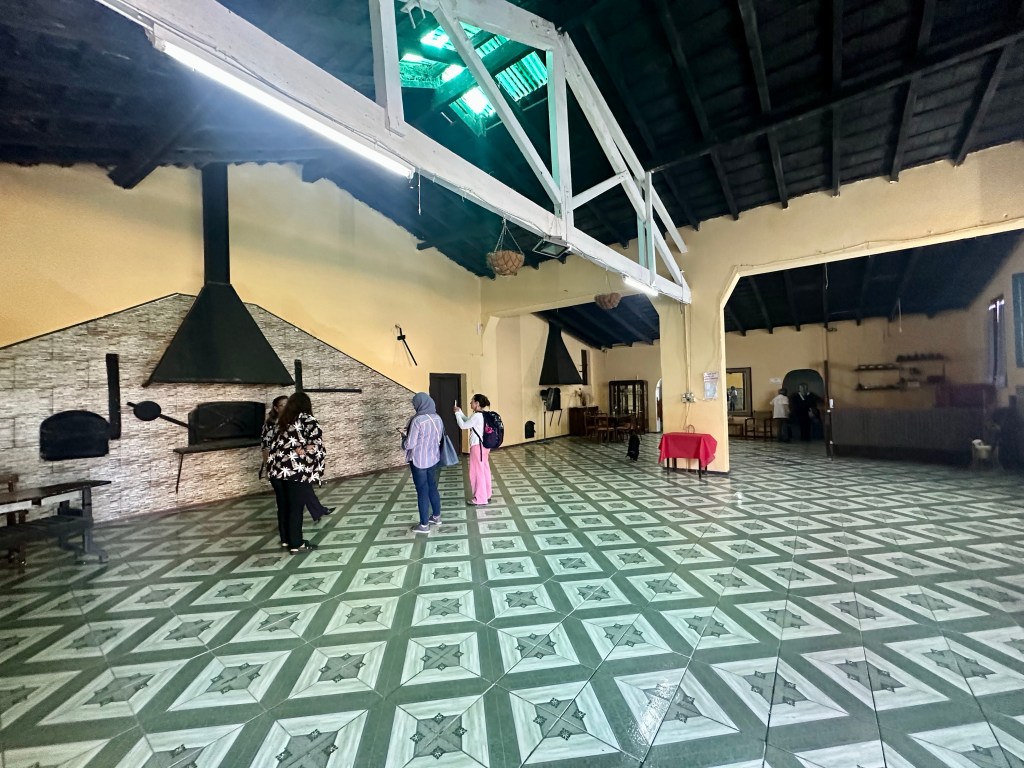
One of my favorite parts of the house was the bakery area on the first floor. It featured two large stone ovens in a spacious room, which used to be a gathering place for people to enjoy freshly baked goods, dance, and socialize in the past. Having a stone/clay oven like that is one of my dreams in my backyard, and I hope to make it come true one day.
Bakery Area
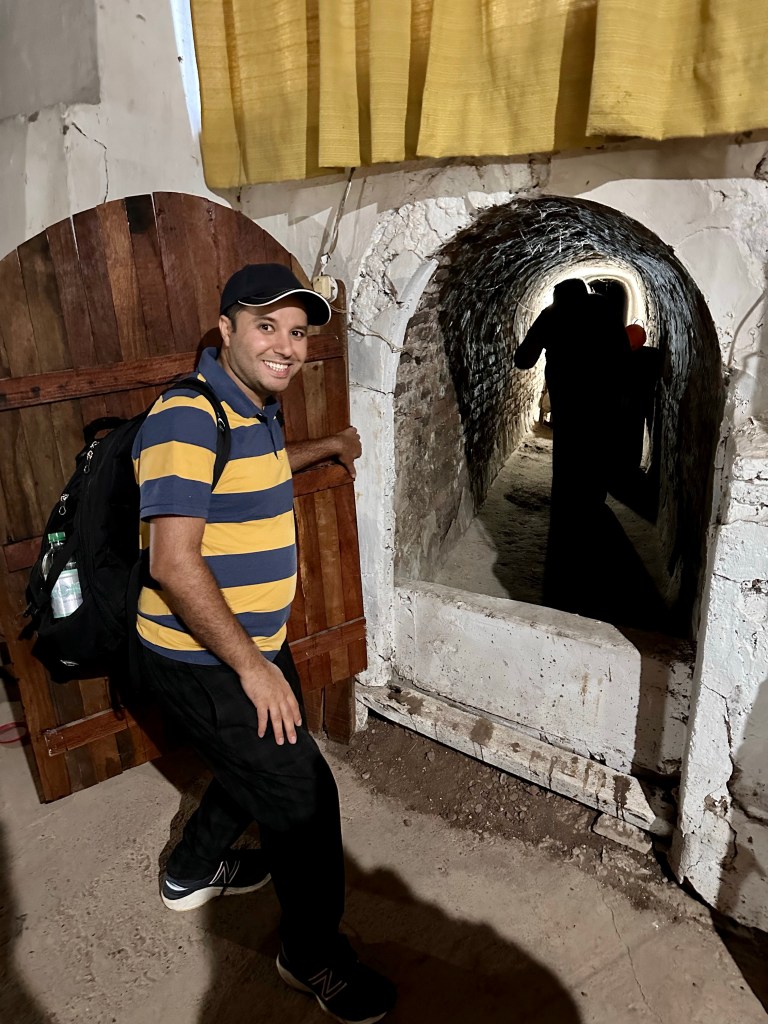
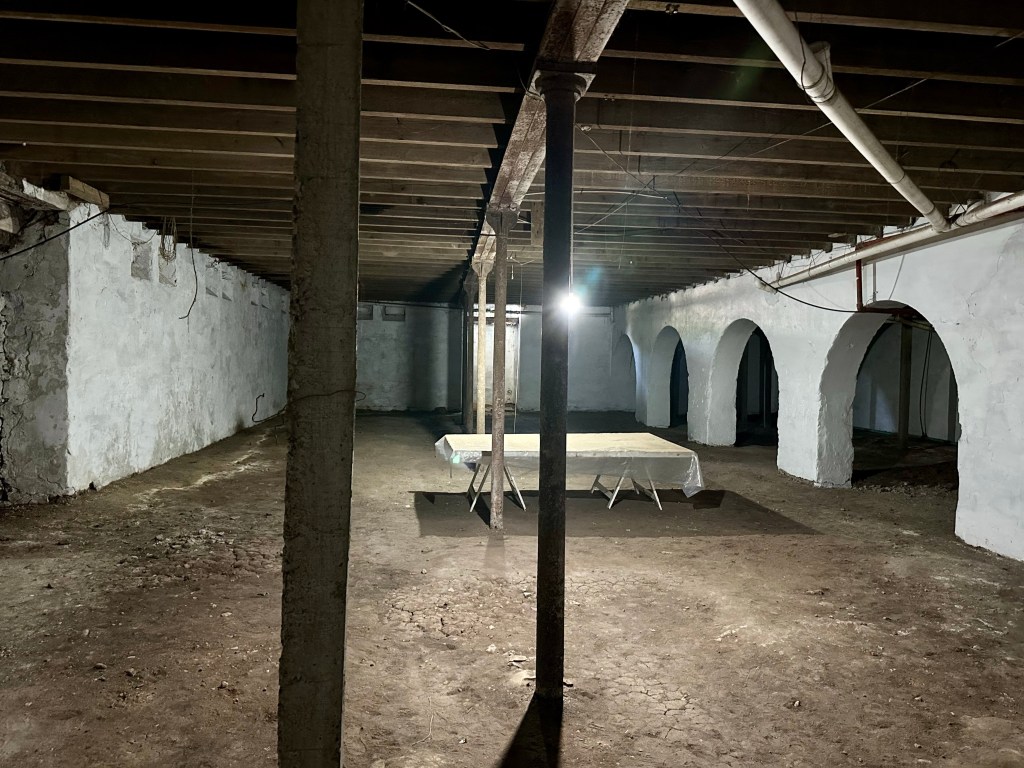
We also visited the basement of the house, where Isabel showed us a tunnel that connected different parts of the area. During the civil war in Uruguay back in the 1900s, Isabel’s family provided refuge for one political side, and the tunnel was used for discrete movement. Although the tunnel was elegantly made, it was recently closed by Isabel’s husband due to safety concerns, as anyone could enter the house through it. The basement, where the tunnel entrance was located, also served as a winery and milk storage area.
The tunnel entrance from the house
WineryHorse Carriage
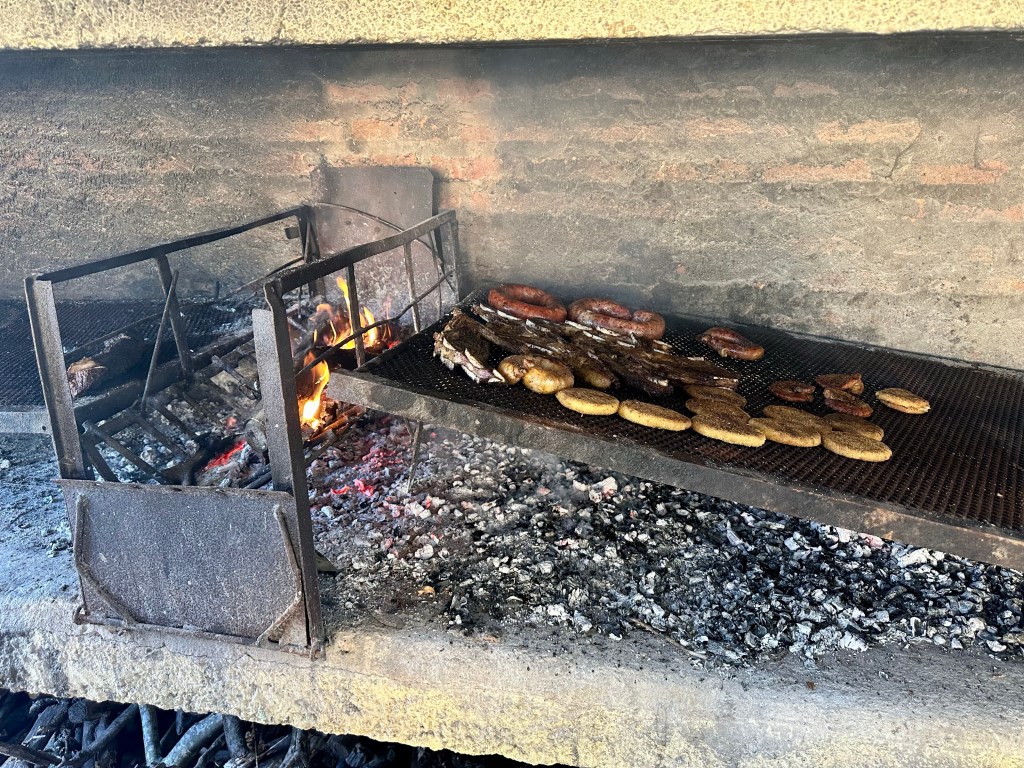
Isabel then took us to the house’s spacious yard, reminiscent of functional backyards in Mediterranean countries. We strolled through the beautiful garden with flowers and trees and rested in an eating area that also had a BBQ place. This was where we had our lunch, enjoying the famous Uruguayan BBQ known as Asado. Unfortunately, luck wasn’t on my side, as I didn’t get to taste the delicious meat once again. However, they kindly prepared a BBQ fish burger for me instead. While looking at my friends’ plates with a bit of disappointment, I have been thinking how I could recreate this famous BBQ at home. The person preparing the Asado told me that there are usually premade spice mixes sold in the markets, which I would be definitely getting one.
BBQ area to prepare Asado in the backyard of the house
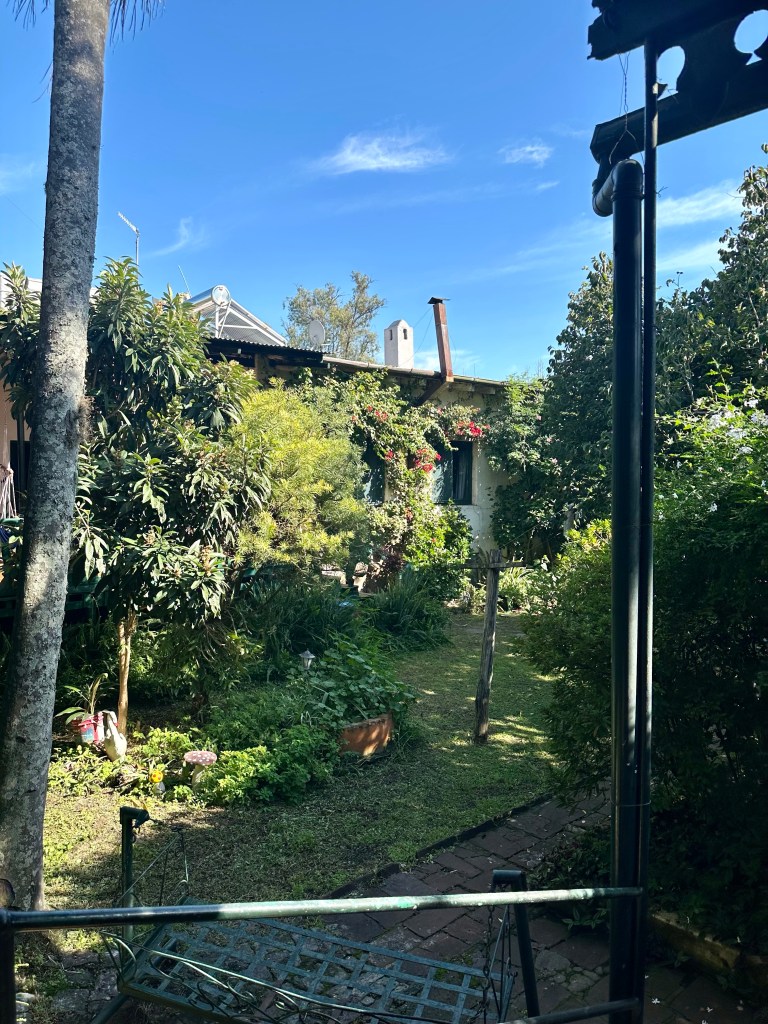
My fish burgers were cooking alongside with AsadoMy fish burgerBackyardView from the PorchMonk Parakeets Nesting Everywhere in the BackyardMonk Parakeet
After the delightful lunch and homemade cake, Isabel’s mother-in-law invited us to her patio and served us tea, coffee, and crackers. While we were enjoying chatting and drinking our hot beverages, I was also listening to a soccer match playin on the radio in the background. Isabel’s mother-in-law was constantly attentive, asking if we wanted anything else. She was such a sweet and wonderful person, and I found myself hoping to have a life like hers when I reach her age. Her presence exuded a great aura.
Isabel’s Mother-in-Law Serving Tea Biscuits
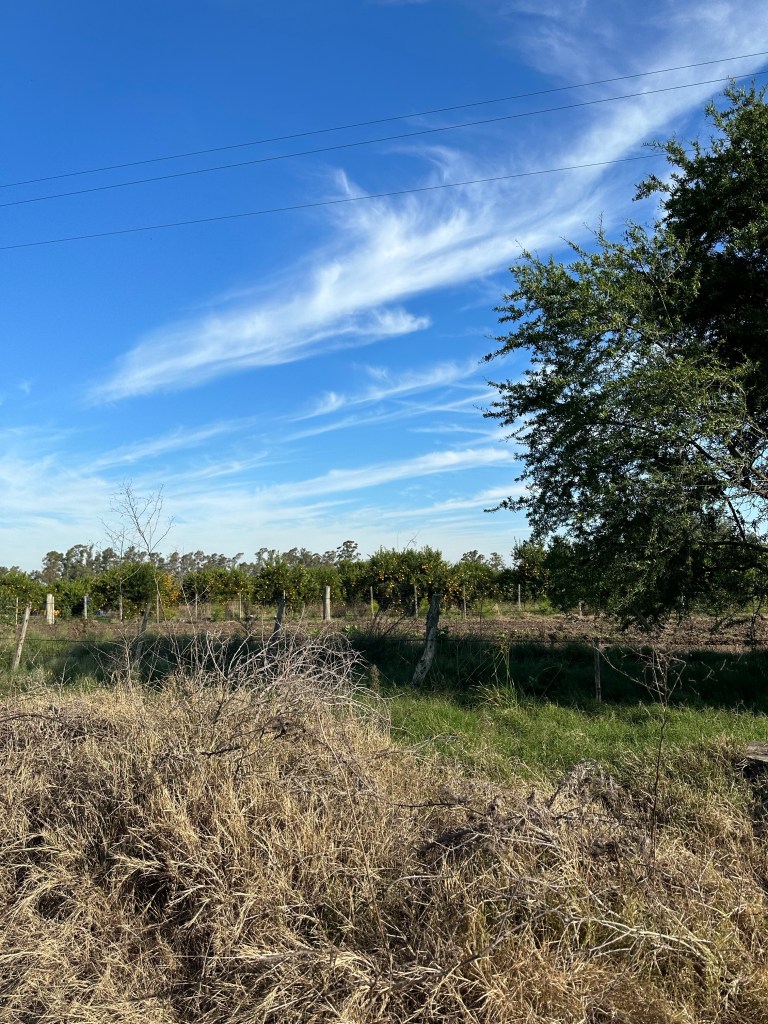
Next, Isabel took us to her family farms, where they had cattle, sheep, and citrus gardens. I had seen lemon trees before, but never as extensive as a whole field. Additionally, I had never encountered mandarin and orange trees like the ones I saw there. I even picked and ate five mandarins right on the spot. They were incredibly sweet and delicious. I couldn’t help but wonder why we don’t find this type of mandarins in stores back in Ohio.
Mandarin Orchards
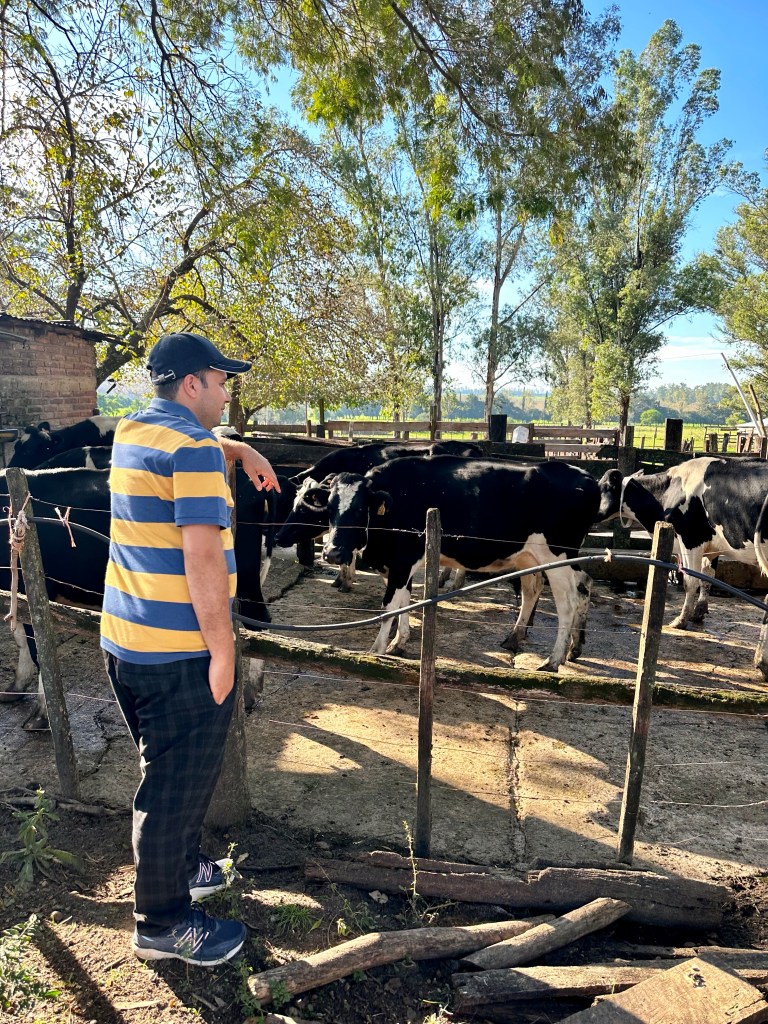
Isabel’s Cattle FarmMilking in Progress
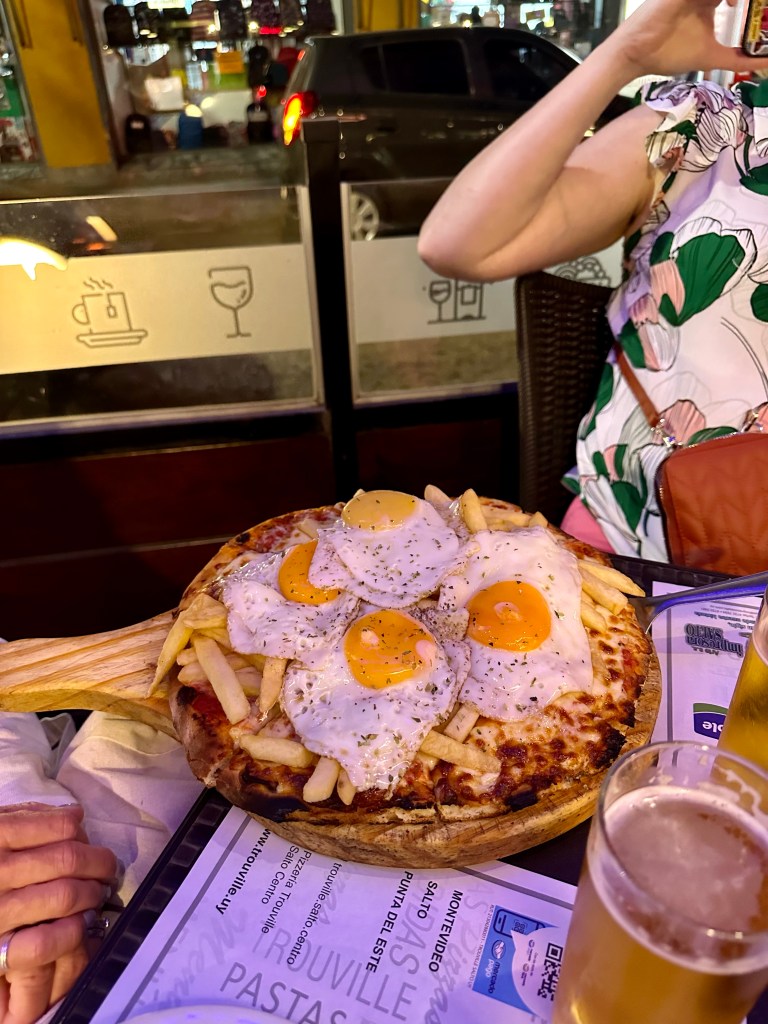
After having a wonderful time in the San Antonio region, we returned to Salto. Before dinner, we took some time to explore streets near our hotel in Salto. We were exhausted and eagerly awaited dinner. Eventually, we decided to dine at Trouville, one of the famous restaurants just one block away from our hotel. Although the menu had many options, there were several names I was unfamiliar with. After some discussions with my fellow Fulbrighters, I chose for fish, which arrived as breaded and deep-fried. Unfortunately, it was so disappointing that I couldn’t eat much. It was not what I was expected to have. However, one of our friends, Kerry, who was also our Spanish translator in our group, generously offered me a few slices of her American pizza, which was topped with french fries and fried eggs on a cheese pizza. Although it initially sounded like an interesting combination, it turned out to be really delicious.
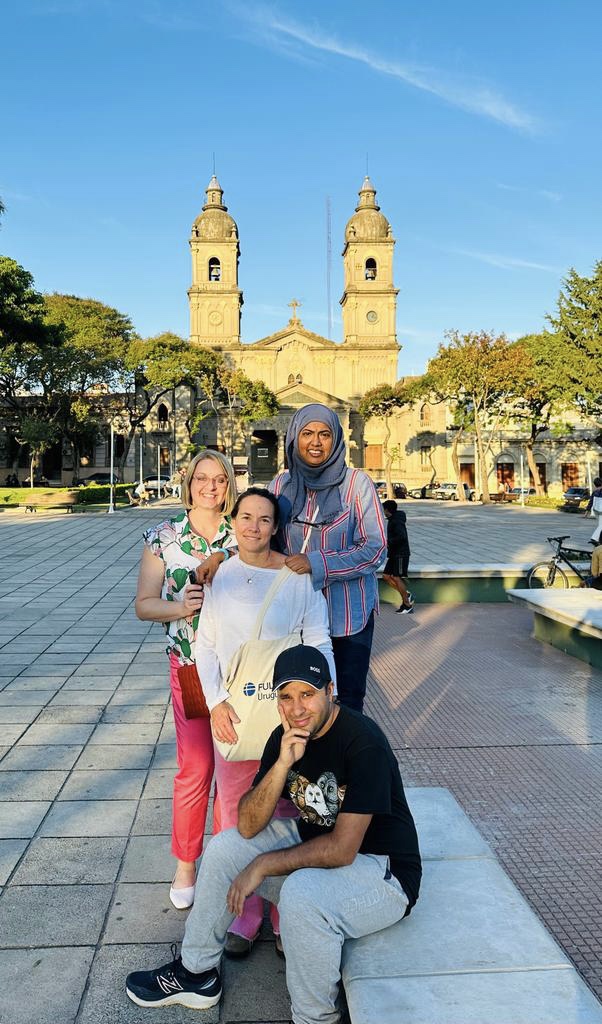
Fulbright Teacher for Global Classroom Salto Crew, Cathedral of Salto in the Background
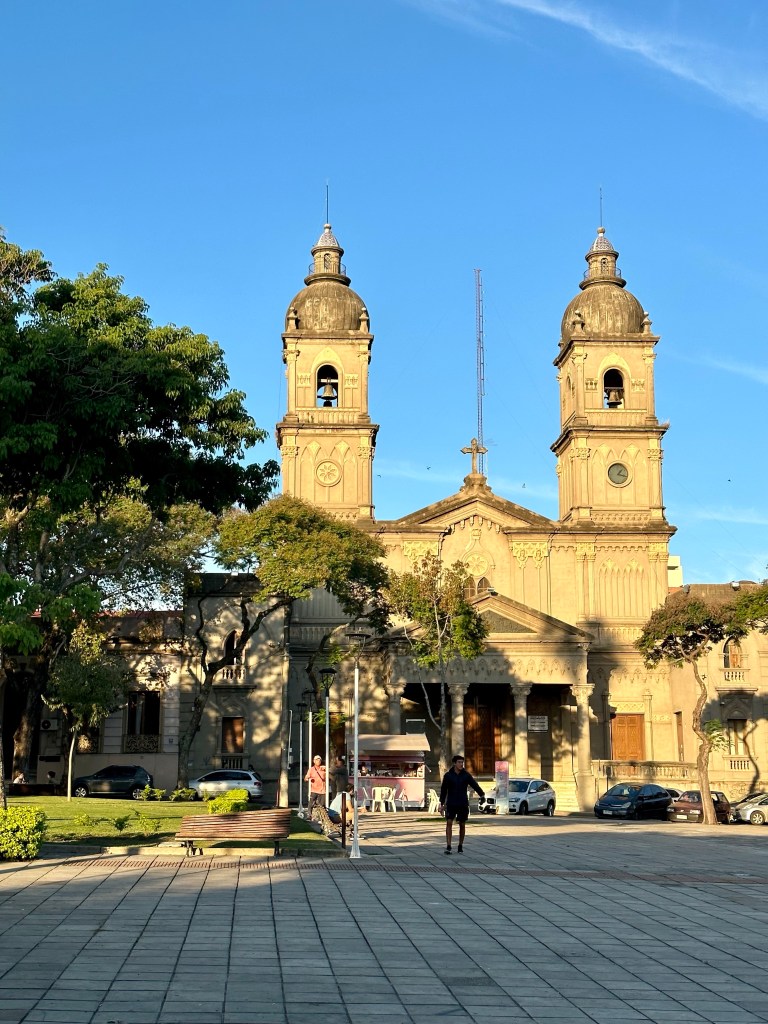
One of the Main Streets of SaltoCathedral of SaltoMate Tea CupsAmericana Pizza
Our first day in Salto concluded with good memories and laughter, knowing that this was just the beginning of our adventure. I can’t wait to see what comes next.
Escuela Técnica Domingo Arena (Domingo Arena Technical School), Montevideo, Uruguay
Today is our last day in Montevideo before each group heads to their respective provinces. After our experiences in the provinces, we will return to Montevideo and spend three more days.
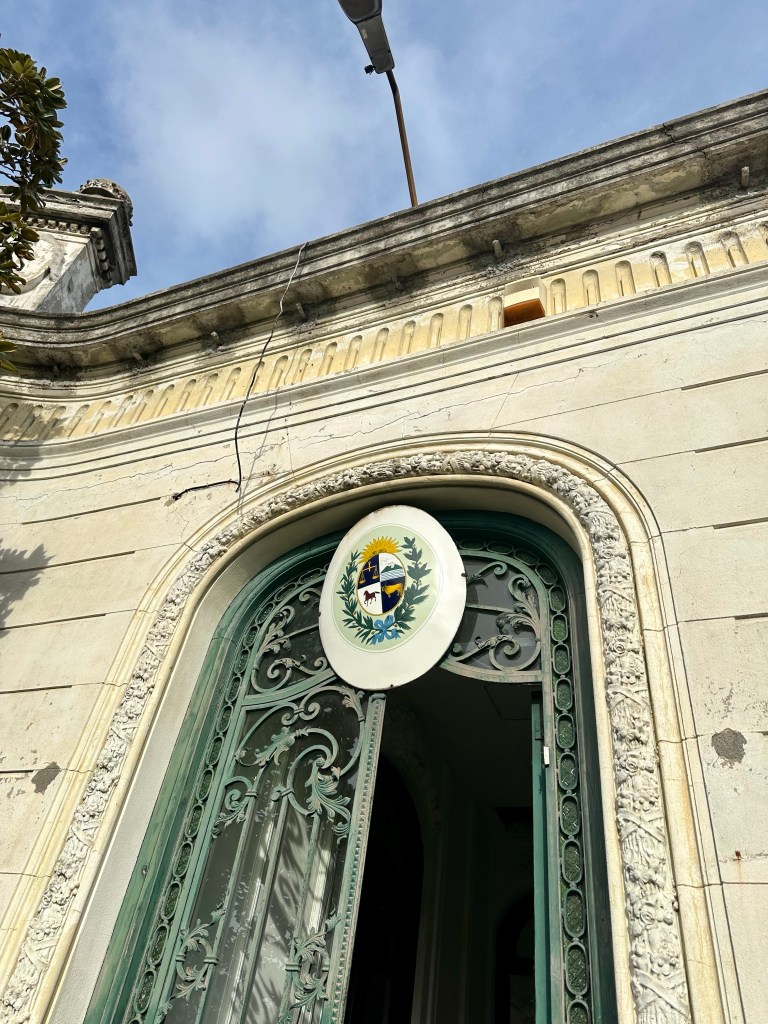
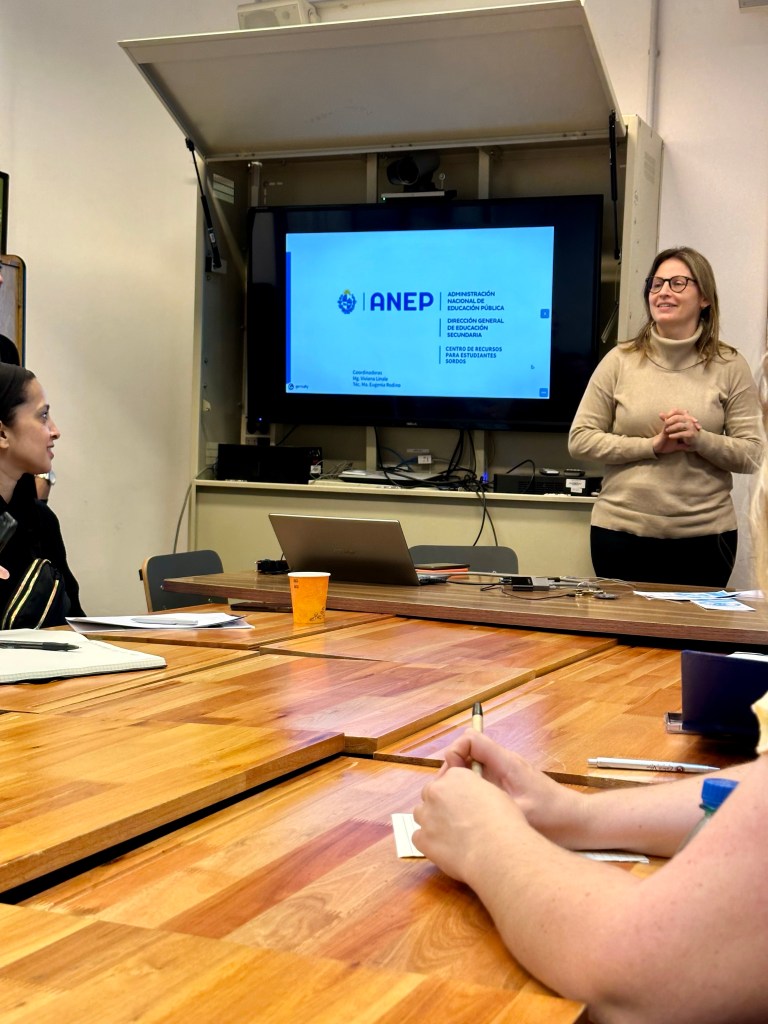
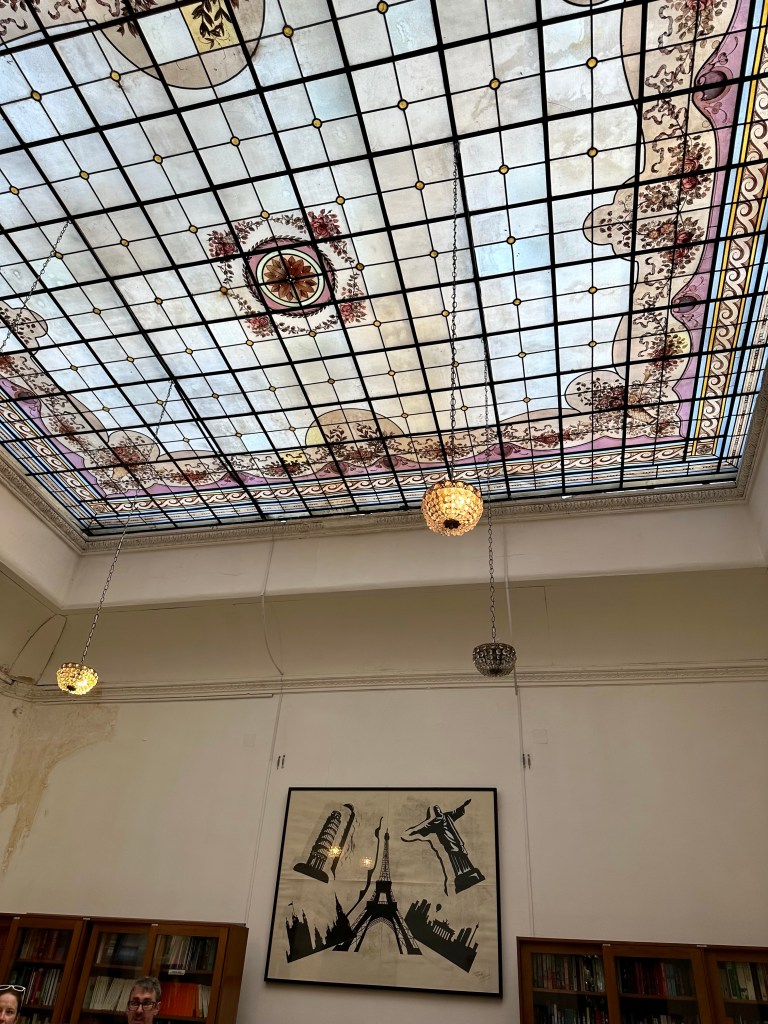
On our third day, we visited the Casona de Políticas Lingüísticas (Directorate of Language Policies), where we discussed the teaching of different languages in Uruguay. They also highlighted their efforts to provide education to students with hearing disabilities. I was impressed by the building’s structure, which resembled a museum rather than typical office space.
The impressive National Linguistic Department building, Casona de Políticas Lingüísticas
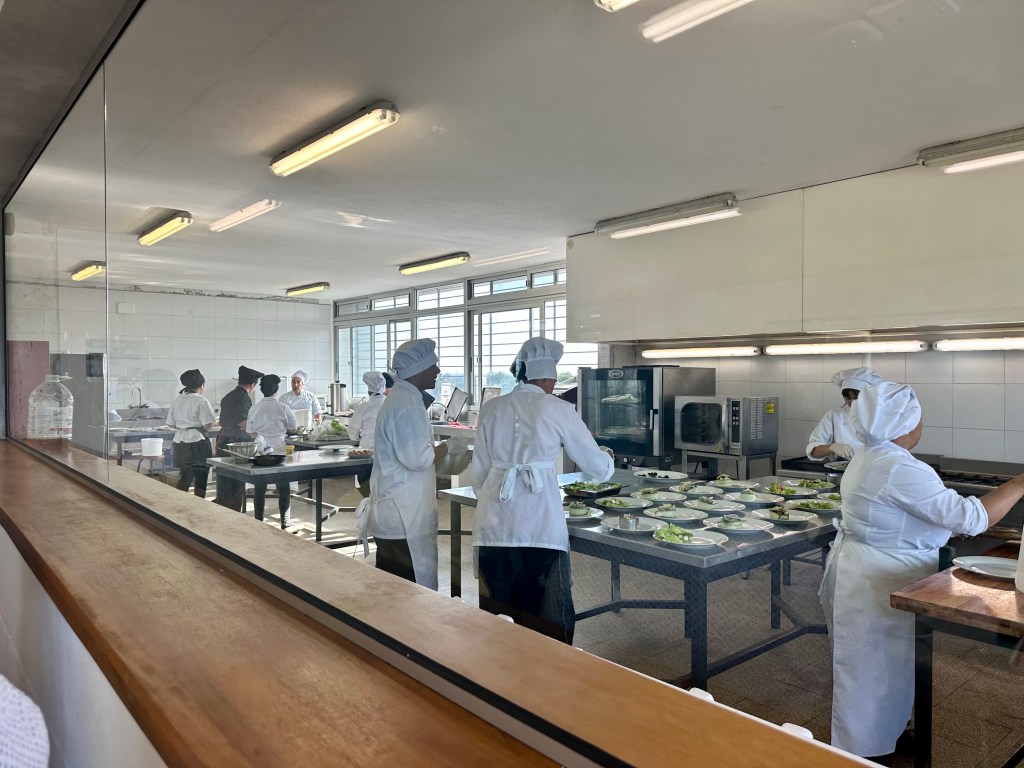
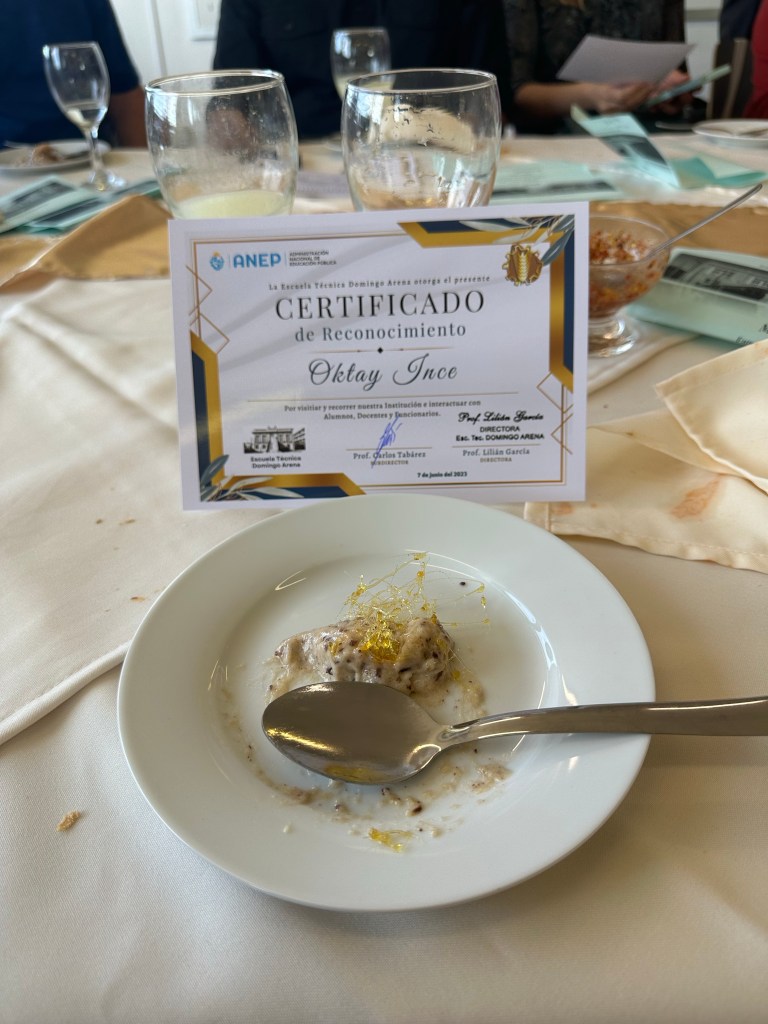
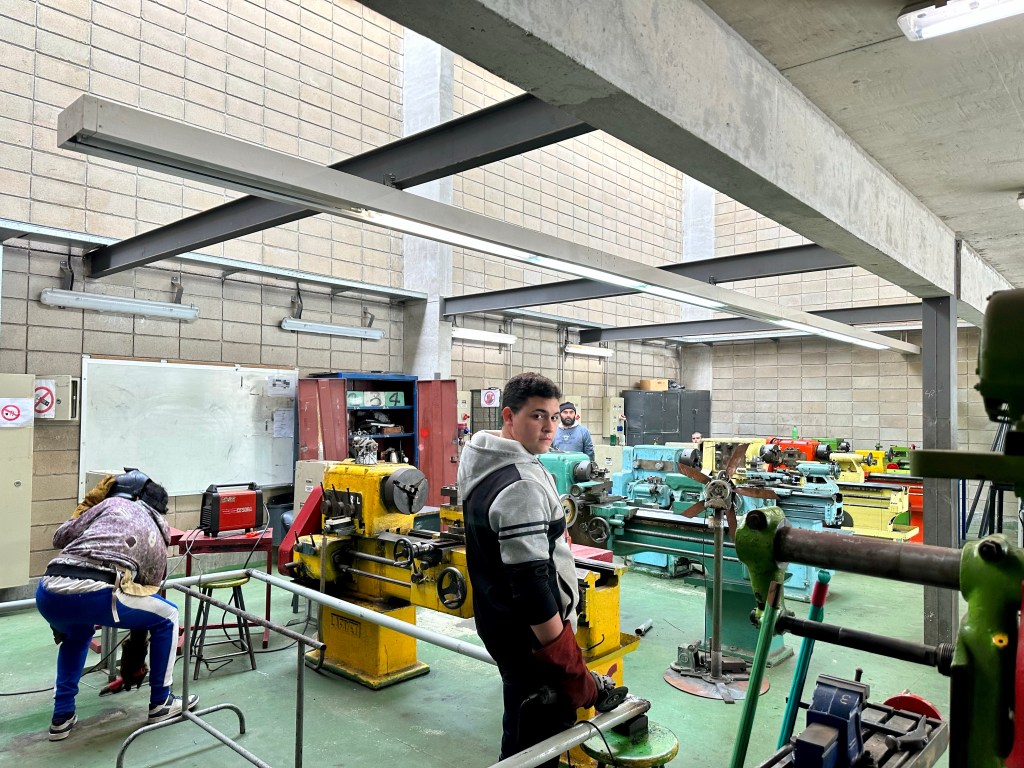
We then headed to a technical school, Escuela Técnica Domingo Arena, in one of the poor neighborhoods. In this technical school, students learn some of the vocational skills in addition to their main courses similar to what we can find technical schools in the U.S. Since the students are coming from low socioeconomic backgrounds, giving them a chance to learn some of the technical skills and allow them to have certifications in the areas of their interests would allow them to be productive members of society. Uruguayans highly value these vocational schools in disadvantaged neighborhoods, and I was truly impressed by the breadth of technical skills the students acquire here.
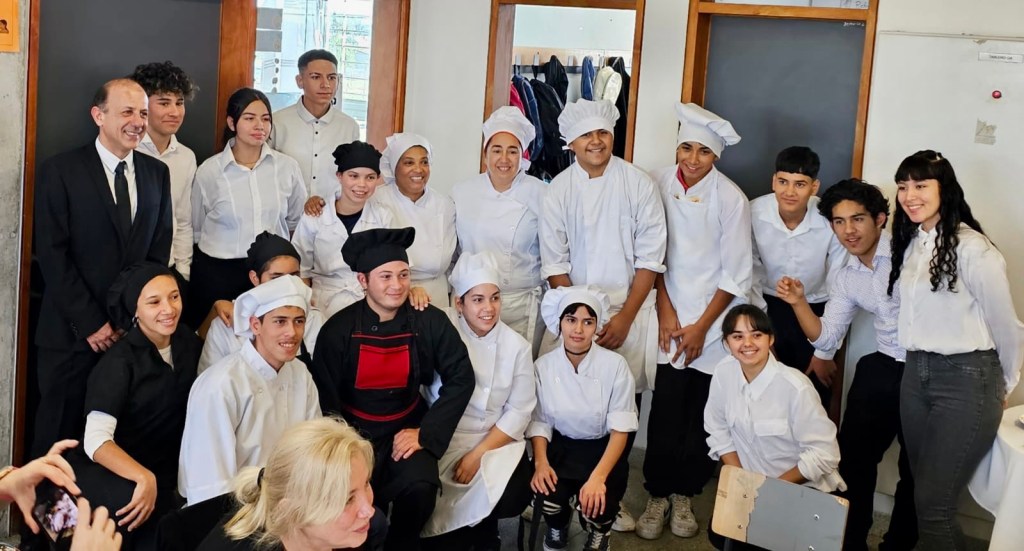
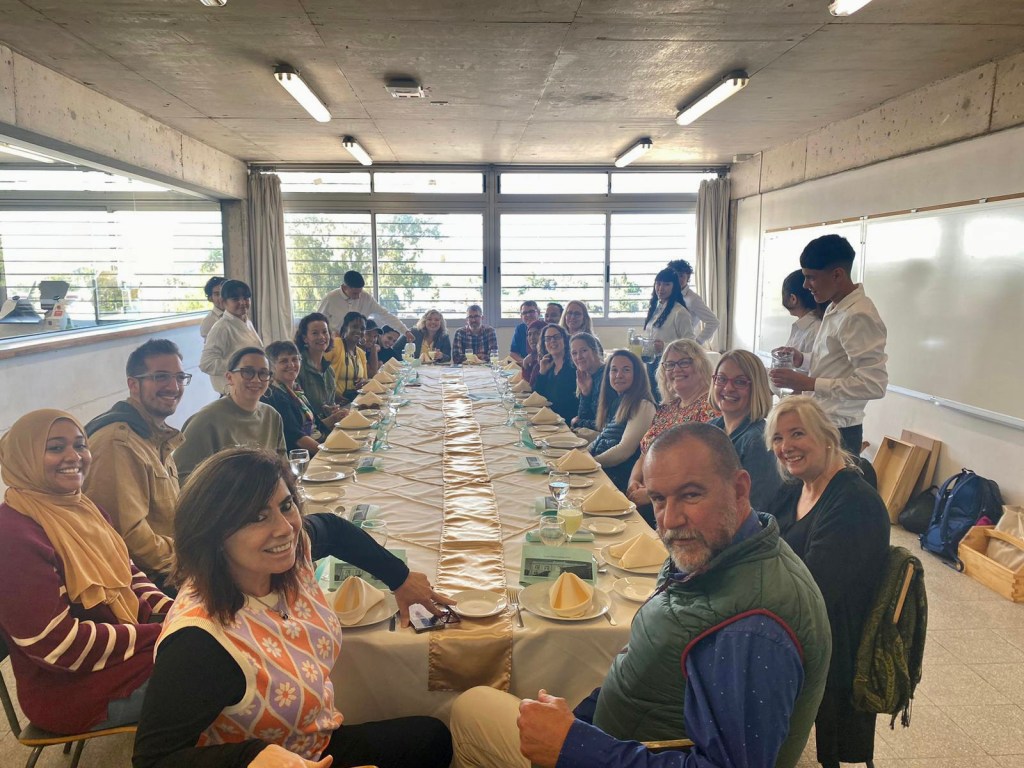
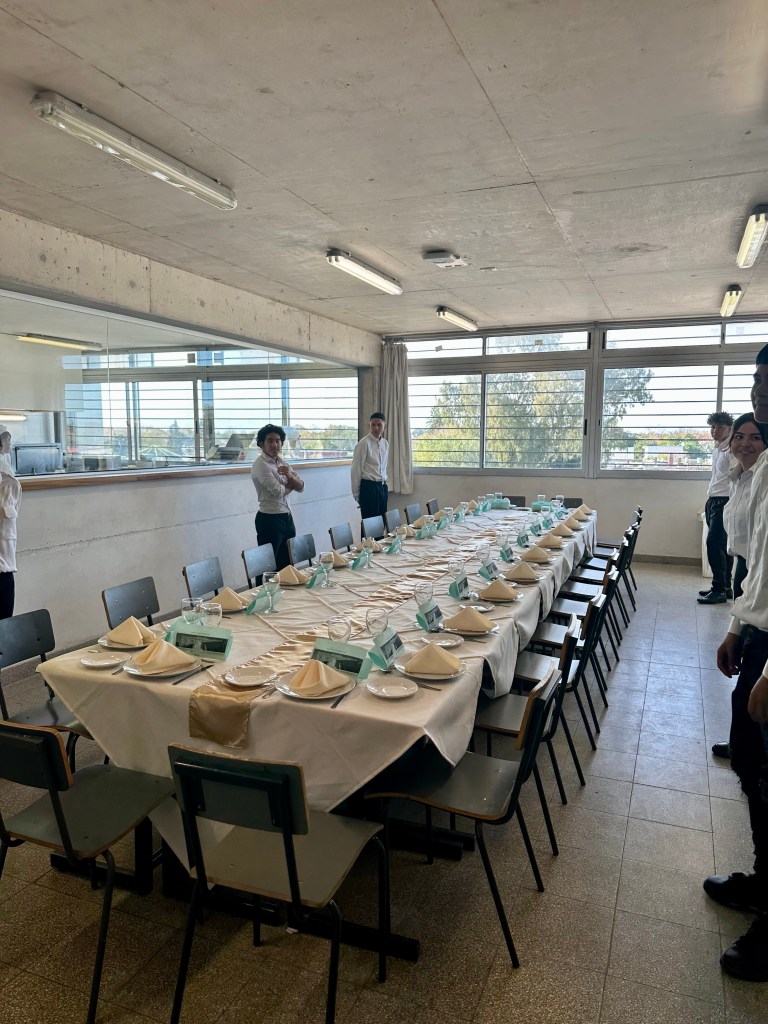
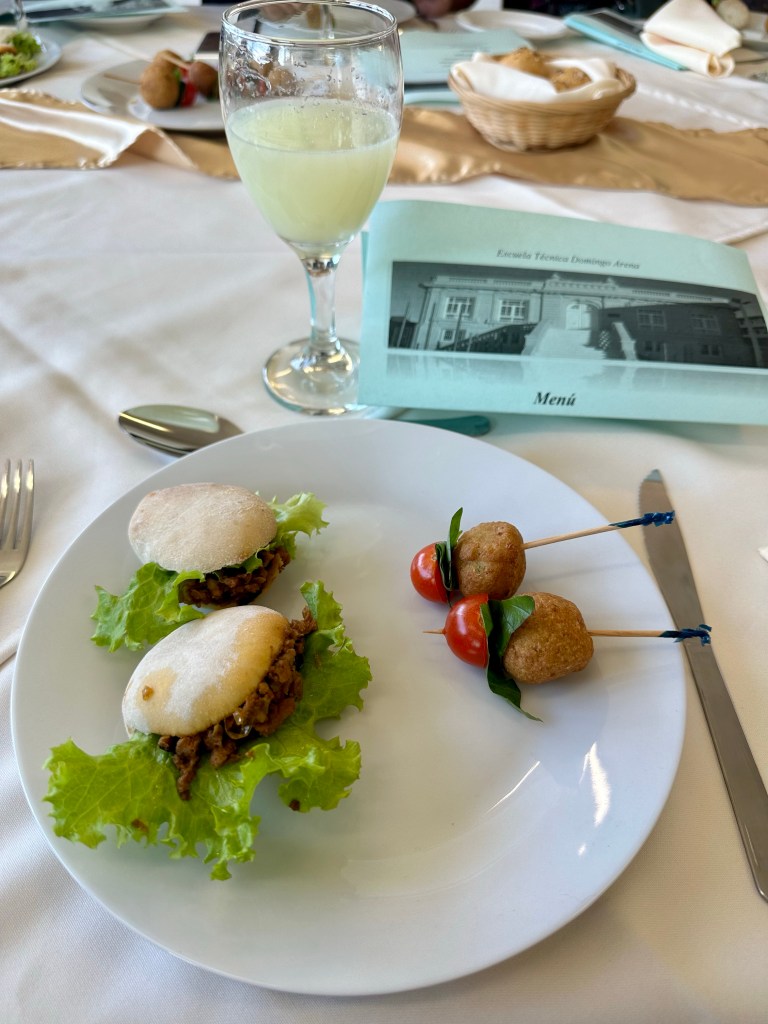
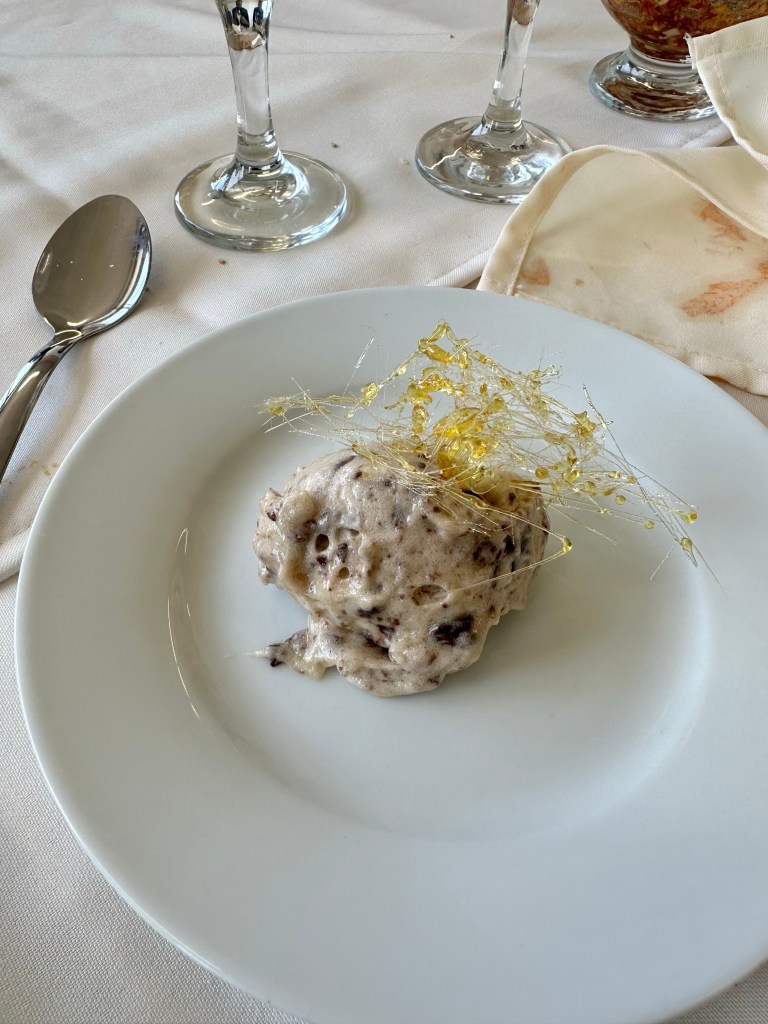
We ate our lunch at the school, prepared by students who are in the culinary program. They treated us to one of the best meals I have ever eaten in Uruguay. The way they presented their dishes on the plate, the service, and their kindness were incredible. I was so grateful for the teachers who are making a difference in students’ lives here in this poor neighborhood of Montevideo.
Students from Culinary Program
We were ready to enjoy our lunch prepared by students from the Culinary Program
As an advocate for project-based learning, I was thrilled to see how teachers at this technical school collaborate to make learning more impactful. Each workshop teacher works together with language teachers, math teachers, or teachers from other subjects to incorporate relevant content into projects. They explained that this approach helps students better understand the theories and prevents learning from becoming dull, considering the students’ backgrounds. Once again, I learned that students are students, no matter where they are. They won’t be engaged if the content they learn is not authentic, relevant, or useful to them.
One of the technical classroom
Rural School No. 88 “Alfred Nobel”
After visiting the technical school, we headed to Rural School No. 88 “Alfred Nobel”, a rural school located about an hour and thirty minutes north of Montevideo. As soon as we arrived, the school principal and students were waiting for us at the door with a welcoming sign. It was a humbling experience. The principal greeted us and provided a brief introduction to their school. It is a small rural school with around 80 students, focusing on science education and project-based learning. Students tackle real-world problems in their lives and communities, working to find solutions within their small classrooms.
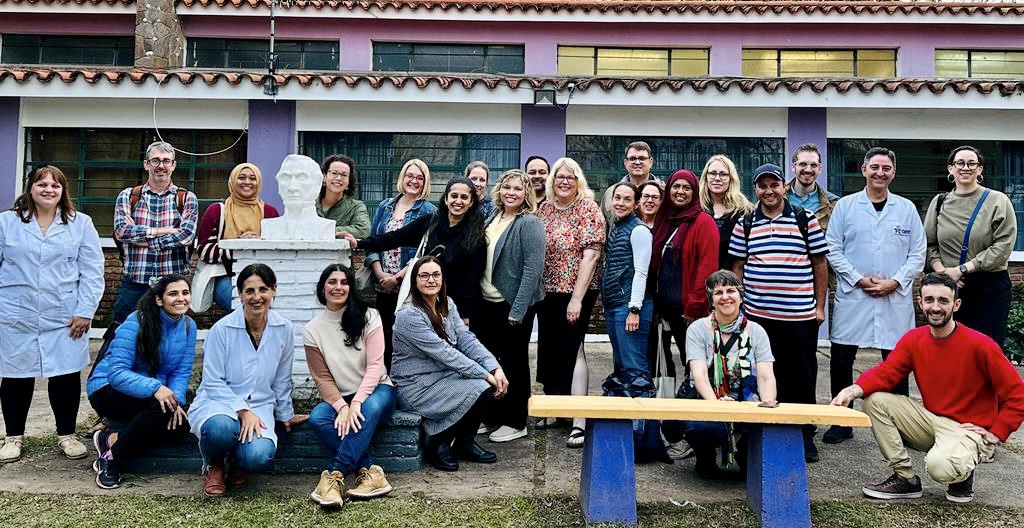
Fulbright TGC Fellows alongside teachers from Alfred Nobel School
Alfred Nobel School Principal, Darío Greni, and his students warmly welcoming us at the front of the school
Sixth-grade student ambassadors divided us into 5-6 groups and guided us through classroom visits and projects. I appreciated the administration and the way they gave empowerment to their students. I was amazed to see kindergarteners presenting their spider project and first graders exploring the trees on campus. They confidently presented their projects, demonstrating how they can make a difference in their communities. We also participated in other projects in different grades, such as measuring the height of trees using creative tools and a little bit of math. I had never seen tree measurements done in such a simple yet innovative way.
Classrooms from Alfred Nobel
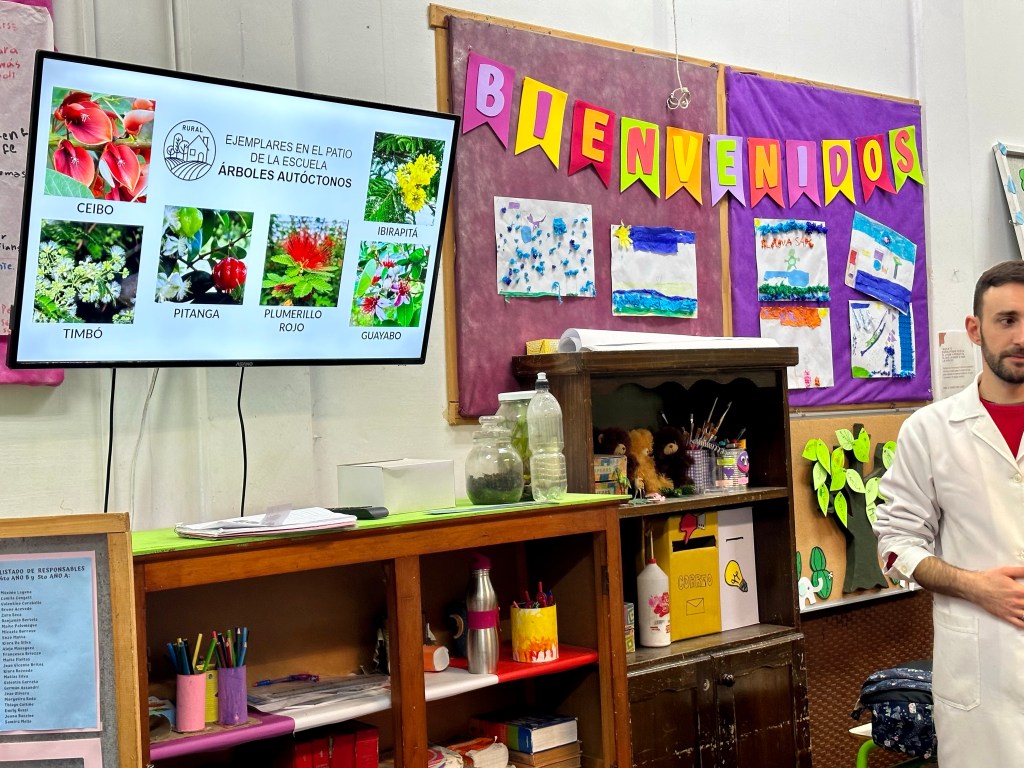
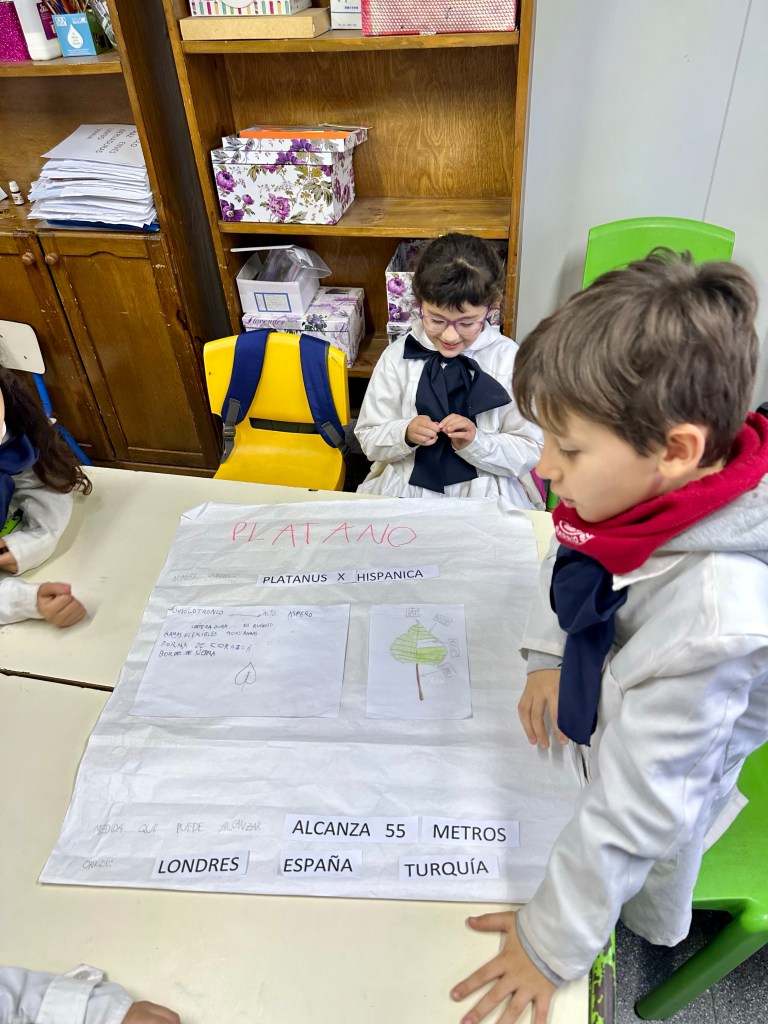
Among all the projects, one that stood out to me was with either the first or second graders who were exploring trees in their schoolyard. They not only identified different tree types but also learned about the climates in which they grow and where else in the world they can thrive in similar conditions. The groups created posters about their chosen trees, detailing their characteristics and the names of countries where these trees also grow. It was fascinating to see the names of many countries like Turkey, Portugal, Spain, indicating that these rural students in the remote area of the Uruguayan capital possessed more global competence than many students worldwide.
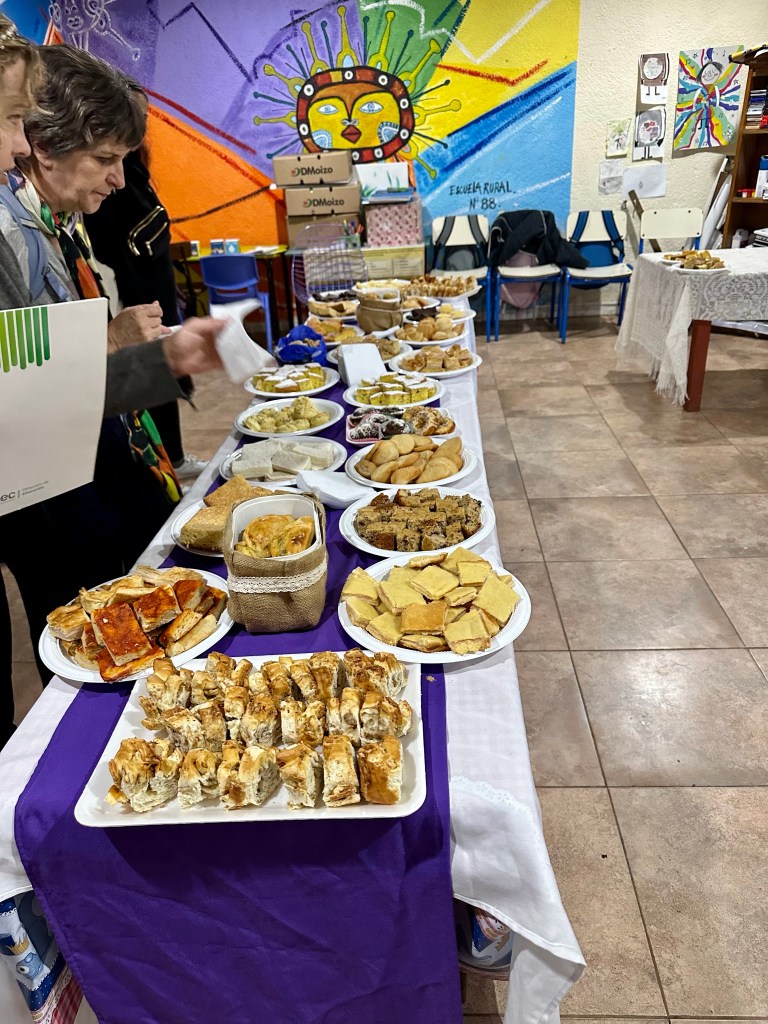
Students then took us to a community gathering place where they said we are going to have some refreshments. This was not a refreshment but rather a feast! The community prepared lots of home made pastries, sweets and goodies for us. Everything was fresh and delicious. It was a kind gesture from them. Students, teachers, administrators, and our group all enjoyed the treats together. Socializing and exchanging ideas with each other was truly rewarding.
Delicious homemade pastries made by parents
By the way, the school was honored as the winner of the Nova Jr. category in the 2021 National Innovation Award, which recognizes youth initiatives in the country. Here is the press release highlighting their remarkable achievement. Congratulations to the dedicated teachers, students, and especially their visionary principal!
Eventually, Martina called us back to the bus. I hadn’t realized how much I had eaten at the school, but as soon as I sat on the bus, I fell asleep.
When we arrived at the hotel around 7 pm, we were reminded that our group who goes to Salto province would need to be down at the lobby no later than 10:50 pm so that we won’t be late for our bus at the terminal which was leaving at 11:30 pm. I quickly packed my luggage regardless of my exhaustion and got ready for my next adventure.
At the terminal, we presented our tickets to the bus driver’s assistant and had our luggage loaded onto the bus. I was amazed by how comfortable the bus was. The seats could almost fully recline, and it even had footrests. During the 6-hour drive, I think I was awake for only 15 minutes. The rest of the time, I slept as comfortably as if I were in my own bed. I wish the plane seats were that comfortable.
Anyway, I can’t wait to share my experiences in Salto in my next blog posts.












































































 Expeditionary Learning