Earthwatch Marine Mammals and Predators in Costa Rica

The Complete Journey of Our Citizen Science Project to Support Preservation of Costa Rican Marine Ecosystem

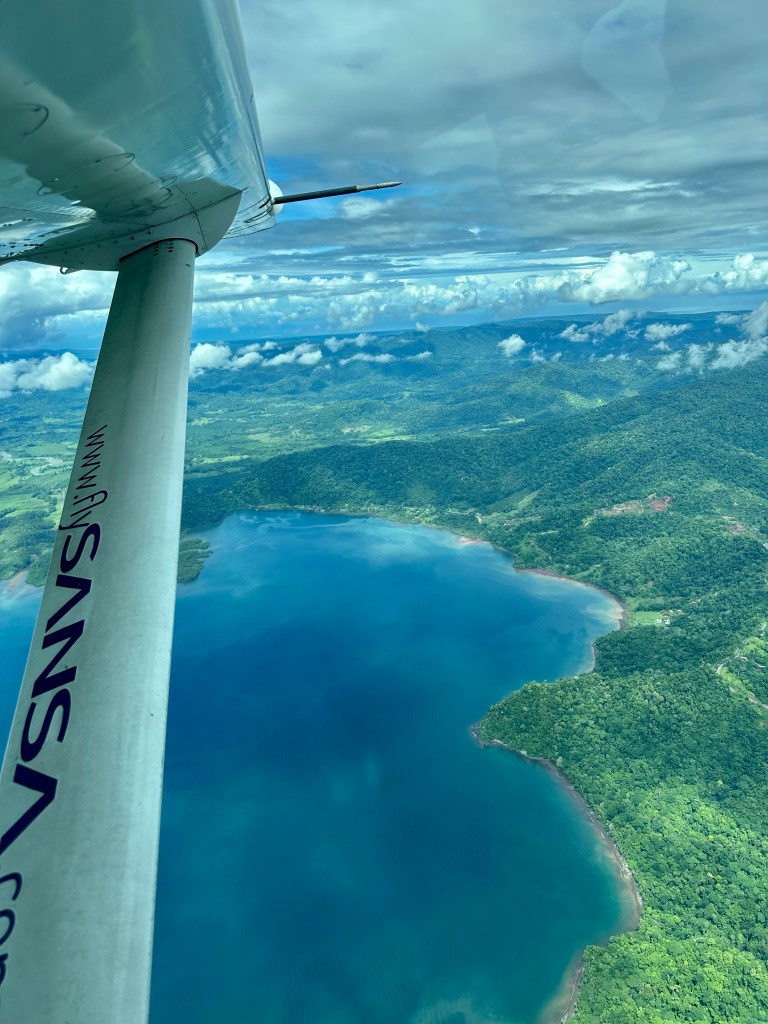
A view of Golfo Dulce from our small plane on our way back to San Jose, Costa Rica

In the fall of 2019, I was bold enough to apply for the NOAA Teacher at Sea Program as a science and career technical health educator to expand my knowledge of marine science. It was uncharted territory for me, but it was worth taking the plunge. In the spring of 2020, I received good news stating that I had been selected to embark on one of NOAA’s mission trips during the summer. However, that didn’t happen due to the pandemic, and it wasn’t until the summer of 2022 that I finally embarked on this long overdue learning experience. I was one of the six lucky educators from across the nation to have this opportunity. My assignment was to sail on a hydrographic survey aboard NOAA Ship Thomas Jefferson in Lake Erie for 12 days. This experience allowed me to learn more about marine science, careers related to ocean exploration, and much more.

Upon returning, I contemplated ways to bring this experience to my students and community. Marine science is largely unknown to many people, especially in underserved and underrepresented communities like ours. I came across an article in NOAA’s education resources section written by Corey Garza, where she stated that fifteen years from now, 40% of the traditional undergraduate-age population will consist of underrepresented groups, but today, the ocean sciences have the lowest participation by underrepresented groups. That was absolutely true, and I witnessed it first hand in my community. Luckily, I came across an opportunity in my mailbox stating, “Apply for Ocean Exploration Education Grants to Advance Diversity, Equity, and Inclusion.” It was like a miracle that was answered right away. I immediately began crafting my proposal on how I could bring marine science to life in my community and empower them to learn more about it. I was certain that the proposal had to be something exceptional and have the same impact that I had when I was aboard NOAA’s research vessel. Shortly after, I started to search for marine expeditions for students and realized that the Earthwatch Institute offers several expeditions designed for just that purpose. As a teacher and senior Earthwatch fellow who has participated in several Earthwatch expeditions, I knew that this would be a great opportunity for students to attend one of their marine science expeditions. It worked out perfectly for me. As you can see, my two past experiences came together to create something novel for my students. That’s why I always say that no experience is useless; there is always something to learn from an experience, and it will eventually be useful in the future.

In March 2023, I received an email stating that we were one of the 12 lucky recipients across the nation to receive the 2023 Ocean Education Grant, funded by NOAA Ocean Exploration and the National Marine Sanctuary Foundation. The purpose is to help engage and inspire the next generation of ocean explorers by supporting diversity, equity, inclusion, and accessibility (DEIA) efforts related to ocean literacy and workforce development.

Our project is called “The Urban Citizen Scientists Support Preservation of Costa Rican Marine Ecosystem,” and it followed as this: It will support six minority students and two teachers from Columbus, Ohio, in a 10-day immersive experience in Golfo Dulce, Costa Rica. Together, students and teachers will conduct research on marine mammals and predators during the in-field experience. In addition to fostering a greater understanding of ocean literacy through hands-on research to understand and protect marine ecosystems, the project aims to simultaneously enlighten students about sustainable marine science programs and develop a greater awareness of future career options, as summarized on the NOAA Ocean Exploration and Marine Sanctuary Foundation websites.

The project encompassed more than what was stated in this summary. Before students embarked on their journey in the pristine waters of Costa Rica, they explored our local water systems, analyzed their physical and chemical properties, met with local experts about water management, and much more. It was excellent preparation for our community to learn more about our local water systems and their importance.

The second part of the project involved traveling to a region called Golfo Dulce in Costa Rica, where students were going to study marine mammals, specifically dolphins, alongside marine scientists, including the primary investigator, Lenin Enrique Oviedo Correa. They collected data to support the conservation efforts of these beautiful creatures in their pristine waters. In this article, I’d like to summarize each of the blog posts that I have published on my personal blog.

In my first blog post, I started by describing our travel experience from Columbus, Ohio, to Costa Rica, our research camp on the shores of Golfo Dulce, orientation about marine research and safety by Dr. Lenin, our first boat ride and data collection in Golfo Dulce, learning about the importance of Golfo Dulce in the world’s oceans, Costa Rica’s biological diversity, the meaning of conservation, and marine mammal behaviors, among other topics.

In the second blog post, I provided more information about our project proposal, our funders – NOAA Ocean Exploration and Marine Sanctuary Foundation, and how fortunate we were to receive this opportunity once again.

In my third blog post, I delved deeper into our field experience, discussing data collection methods such as photo identification in dolphins and the common fungal infection that affects these animals. I also talked about dolphin society and its behaviors, our exploration of the Golfo Dulce coastal area, as well as our camp adventures, including eating coconuts and cane sugar.

In my fourth blog post, I shared a bit about our experience in a boat, explained how scientists identify individual marine mammals in greater detail and how this information is helpful for their conservation efforts. I also highlighted more of our post-camp exploration and our experiences tasting delicious tropical fruits straight from the trees.

In my fifth blog post, I focused on a different part of Golfo Dulce, Piedras Blancas National Park, where we explored spotted dolphins near river mouths. I shared our experiences with local fishermen, beautiful newly protected coral reef plantings by local initiatives along the coast, and our exploration of other species at the camp, among many other adventures.

In my sixth blog post, I delved into “Voices of the Sea: Listening to Whales and Dolphins.” I discussed how different species of dolphins and whales have different voices in different situations and how scientists try to understand them by listening to those voices. I noted that, especially in the case of dolphins, they have complex social structures, making deciphering their communication challenging. The post concluded with our exploration of cornfields and land species.

In my seventh blog post, I covered our last day of fieldwork, focusing on baby spotted dolphins and their behaviors in the water. It was a joyous sight for us to see, as if they were saving the best moment for last. I concluded the post with my hiking adventure to spot flora and fauna of the Osa Peninsula, including sightings of walking trees, Giant Ceiba trees, green and black poison dart frogs, and many more.

In my eighth blog post, I explained the process of necropsy and how we performed it using mullet fish as an example. Mullet fish necropsy provides scientists with valuable information about dolphins and aids in their study. I also discussed the International Union for Conservation of Nature, species conservation categories, and the world’s rarest marine mammal – the Vaquita.

In my ninth blog post, I shared our experiences on an organic chocolate farm, the chocolate-making process, and how it connects the culture of the people to both the land and the ocean. We aimed to understand our marine ecosystem in the context of its land ecosystem. Of course, the post included delightful chocolate sampling and many more unforgettable experiences.
In my final blog post, I concluded with my final thoughts on our entire experience and the report we created during our research in Golfo Dulce.

Final thoughts…

As you read through my posts, I hope you have been inspired and developed a deep love for the oceans. Because when you truly love something, you are more likely to protect it. I also hope to have sparked your curiosity about our oceans and ways you can contribute to their preservation. Remember, it all starts with you; even small actions can lead to significant changes. Here are some of my personal wisdom:

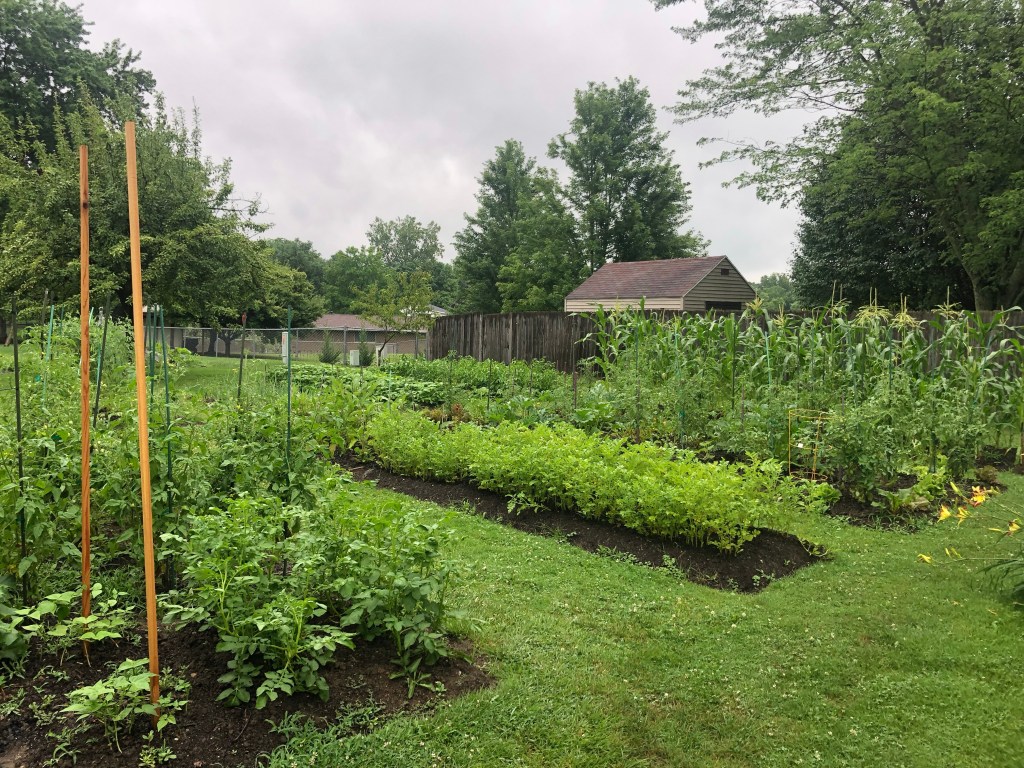
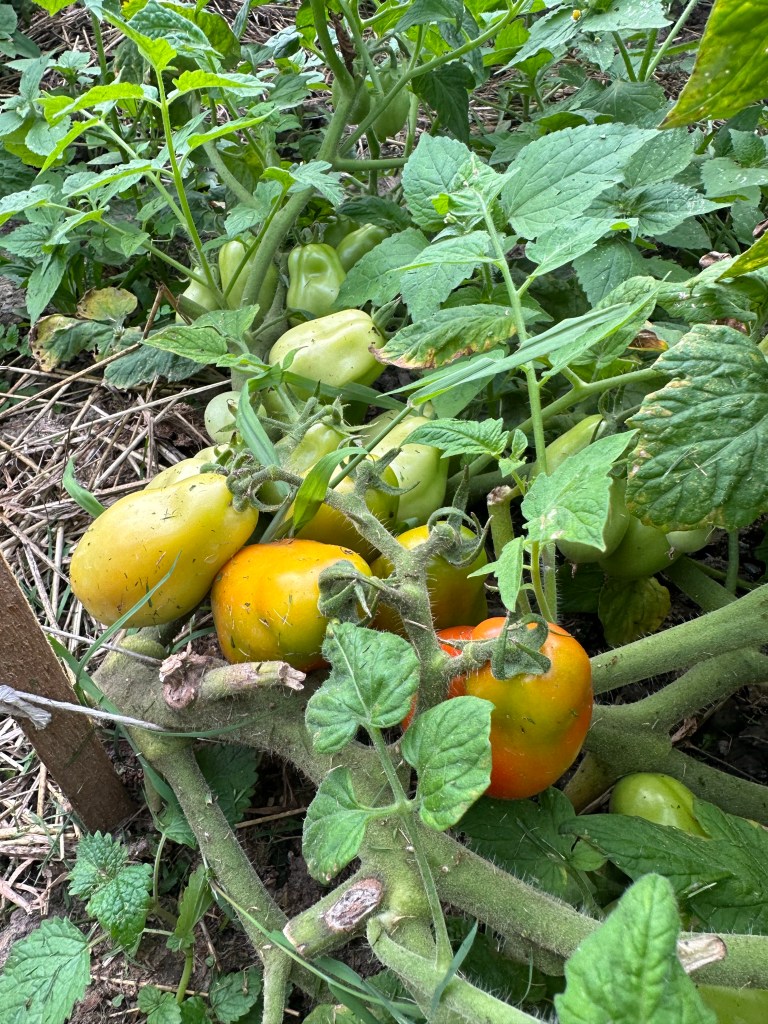
Adopt a Sustainable Lifestyle: Take steps to reduce waste, such as carpooling, using bicycles, creating compost bins at home, school, or work, cooking at home instead of dining out, using refillable water bottles, practicing mindful spending, and even starting your organic vegetable garden instead of killing your yards with heavy chemicals for the sake of one species “grass” to have a “non-functional” yards.

Embrace Continuous Learning: Seeking out new learning opportunities is crucial. I firmly believe that the more you know, the more you realize how everything is interconnected, and it fosters an appreciation for the delicate balance of our world. Challenge yourself to step out of your comfort zone and explore new knowledge areas.

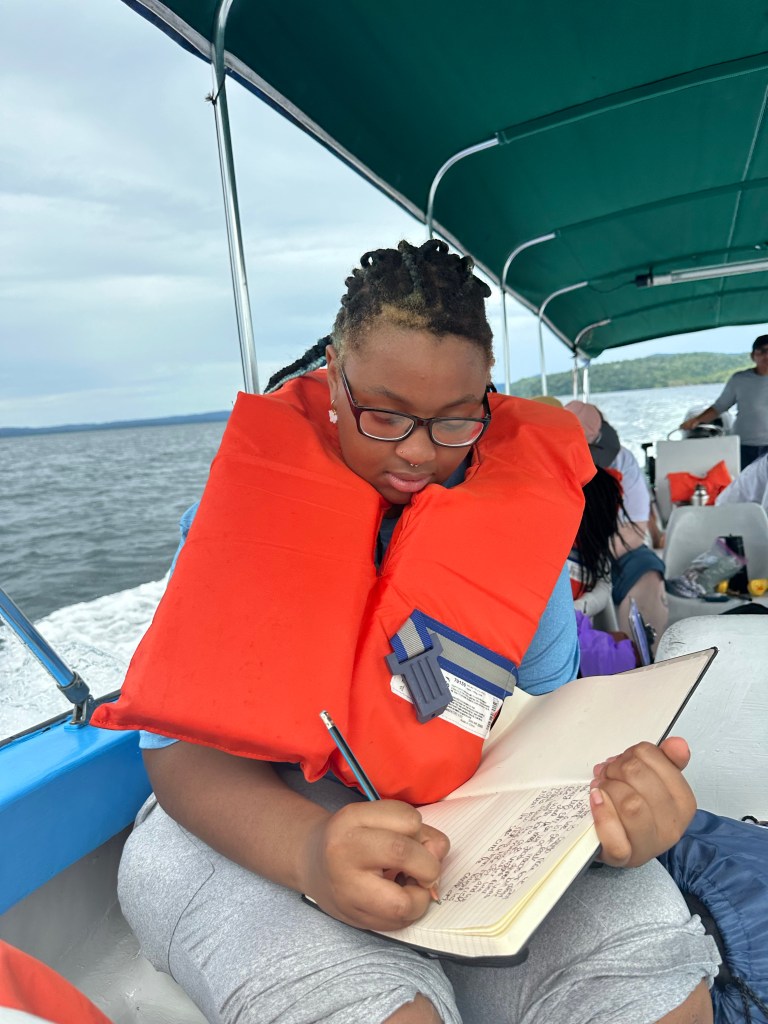
Taking notes while listening to a marine researcher discussing the ecology of Golfo Dulce

Share Your Knowledge: Sharing what you know is equally important. Don’t hesitate to express your opinions, experiences, and beliefs. You never know who might be inspired by your insights and experiences, potentially leading to positive changes in the world.

In conclusion, let’s nurture our love for the oceans and take action to protect them. By living sustainably, seeking knowledge, and sharing our passion, we can contribute to a brighter future for our oceans and the planet as a whole. Together, we can make a meaningful difference.

Earthwatch Marine Mammals and Predators in Costa Rica

Reflections on Our Journey: Concluding Thoughts and Final Report

I am writing this concluding post to share a few thoughts as well as our final report Dr. Lenin prepared for us. It is not a farewell to this beautiful country, but rather a beginning of our learning journey. I still have more questions to ask and more things to learn even after leaving the country. I haven’t learned everything; in fact, it has left me with more questions and a desire to explore further.

Throughout our research, you have witnessed our study on marine mammals, specifically bottlenose dolphins. It is like entering a whole new world. Their society is incredibly complex, and scientists are determined to unravel their secrets. It was a privilege to observe these magnificent creatures in their natural habitat at Golfo Dulce in Costa Rica. We are grateful to Dr. Lenin Enrique Oviedo Correa for sharing his research with us and allowing us to be part of his team for eight days. We hope that our contributions have made a positive impact on his research. Many thanks to you, Dr. Lenin. I hope your science will inform policymakers to make informed decisions. 

Meeting the amazing people and immersing ourselves in their Costa Rican culture is an experience I will never forget. Their hospitality reminded me of my own Middle Eastern culture, which emphasizes generosity and welcoming others. I am sincerely grateful to David, our host, and his extended family for embracing us as part of their own family.

Final Report

I would also like to express my gratitude to the National Marine Sanctuary Foundation for awarding us the 2023 DEIA Ocean Exploration Grant. Without their financial support, this experience for our students and educators would not have been possible. We are grateful!

This is not the end of our “expeditionary learning” in Costa Rica. I plan to return many more times to explore this incredibly biodiverse country. There is so much more to see, feel, learn, and experience in this magical place.

I hope to continue sharing our journey of “expeditionary learning” with you. Stay connected because I’m heading to Uruguay. 

Earthwatch Marine Mammals and Predators in Costa Rica

Organic Chocolate Farm, Rancho Raices

This was our last day in El Chontal camp. Today, right after breakfast, we went to an organic chocolate farm called Rancho Raices. It is a family-owned place where they dedicate themselves to showing people the traditional way of making chocolates in an old-fashioned manner. They are passionate about conserving their traditions, plants, and everything around them.

The owner of Rancho Raices, German

When we first heard that we were going to a chocolate farm, we thought it might be a commercialized process of making chocolate, but it was not at all. This is literally a family ranch, and the entire process of making chocolate is an integral part of their family. There was nothing commercial about it.

Anyway, we were greeted by a guide who spoke English, and she started talking about the history of the ranch farm. She mentioned that before Corcovado National Park became a national park, the owner’s parents lived there. Once it became a national park, they had to move to a new place where the owner started his ranch.

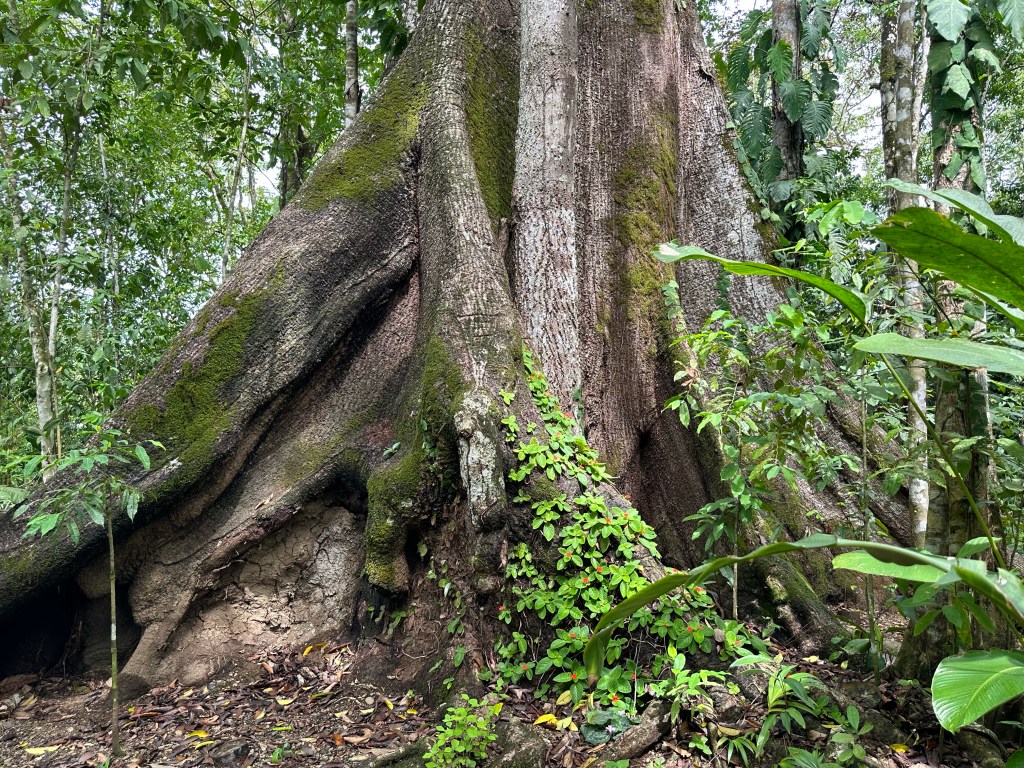
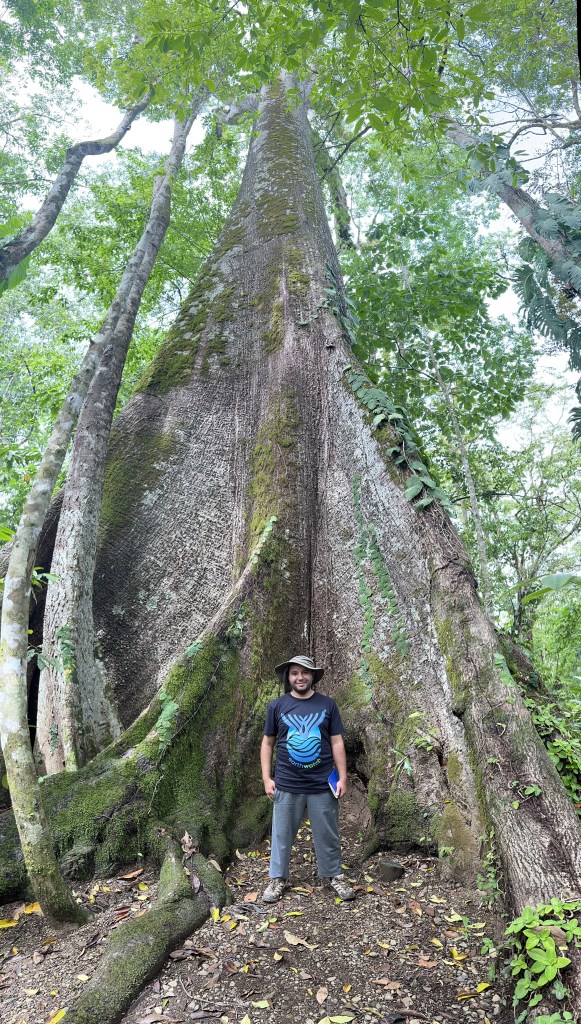
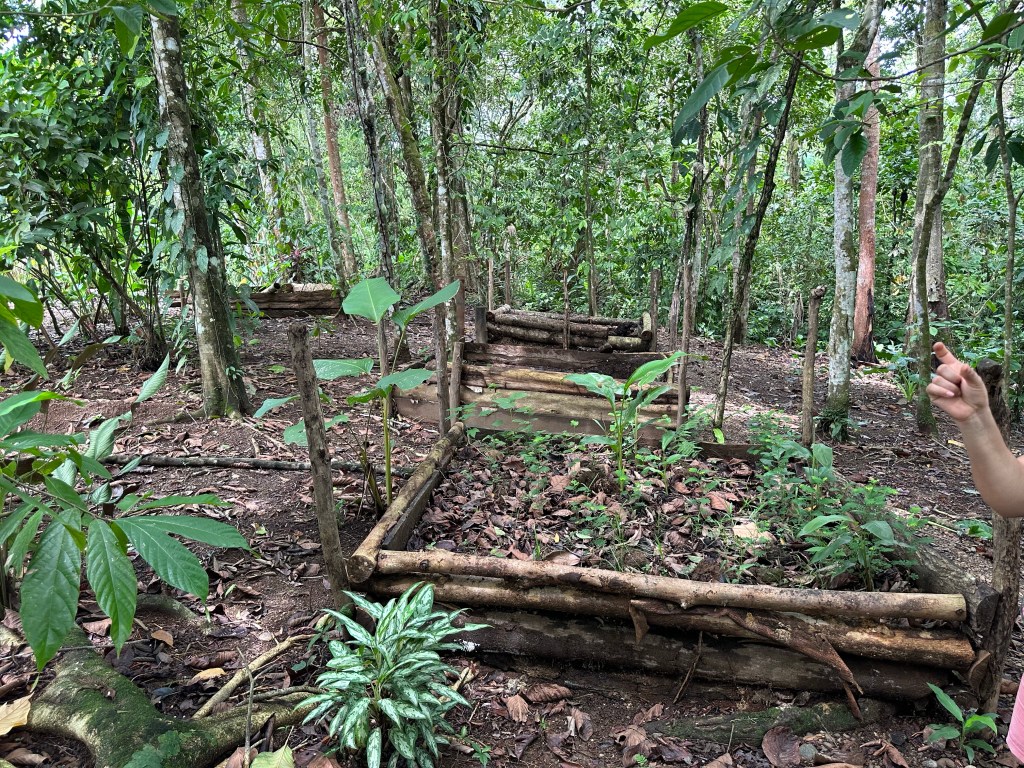
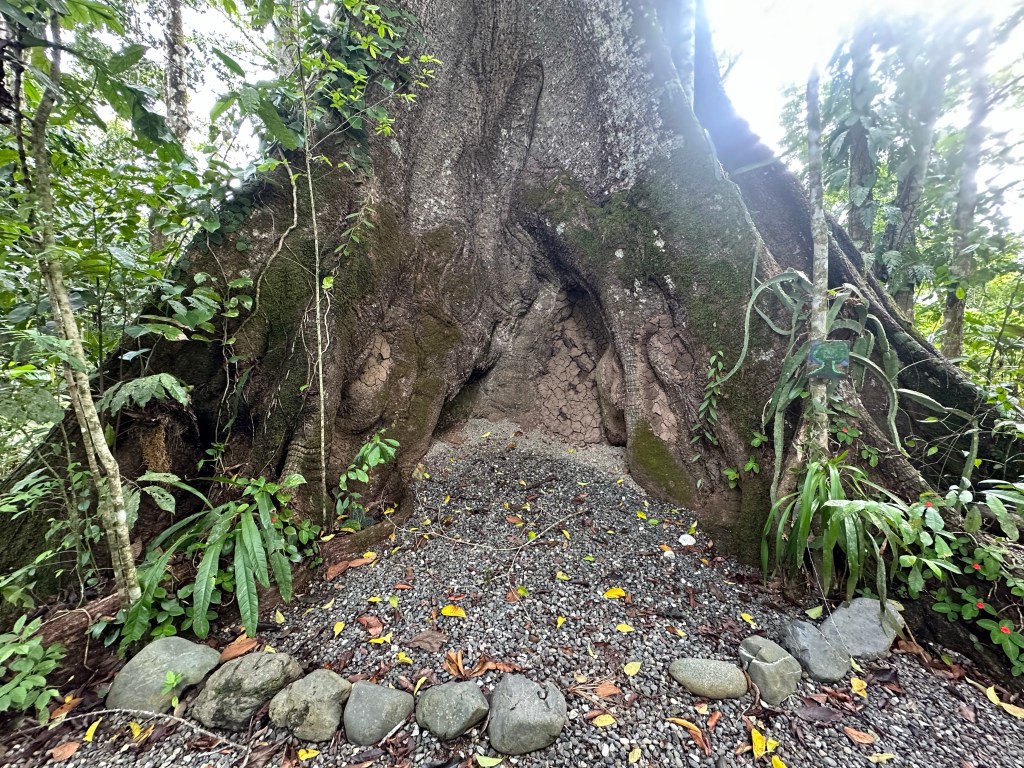
She explained that everything in this place is 100 percent organic, and they don’t use any modern agricultural methods. As we explored his ranch, which was in the middle of the jungle, the guide showed us many medicinal plants and how indigenous people have used them for thousands of years. I was amazed to see a ceiba tree, one of which was almost 300-400 years old. The tree was ancient and enormous. I noticed that some parts of its trunk were covered in mud, so I asked our guide about it. She explained that the tree had been infected by a type of fungus, and the owner created a special mixture of mud with ash, lime, dirt, and some medicinal plants to cover it. Once applied, there were no remnants of the fungi at all. I was so impressed by what he had done for this magnificent tree. The guide mentioned that they treat each plant in their jungle with the same care and respect. She also told us that the owner creates natural “pesticides” from the plants on his ranch and uses the juice mixture in his greenhouse. During our hike, the guide showed us many medicinal plants whose names I didn’t capture since most of them had Spanish or local names, and I didn’t want to interrupt her to ask for the names.

Giant ceiba tree

Variety of Cacao Trees

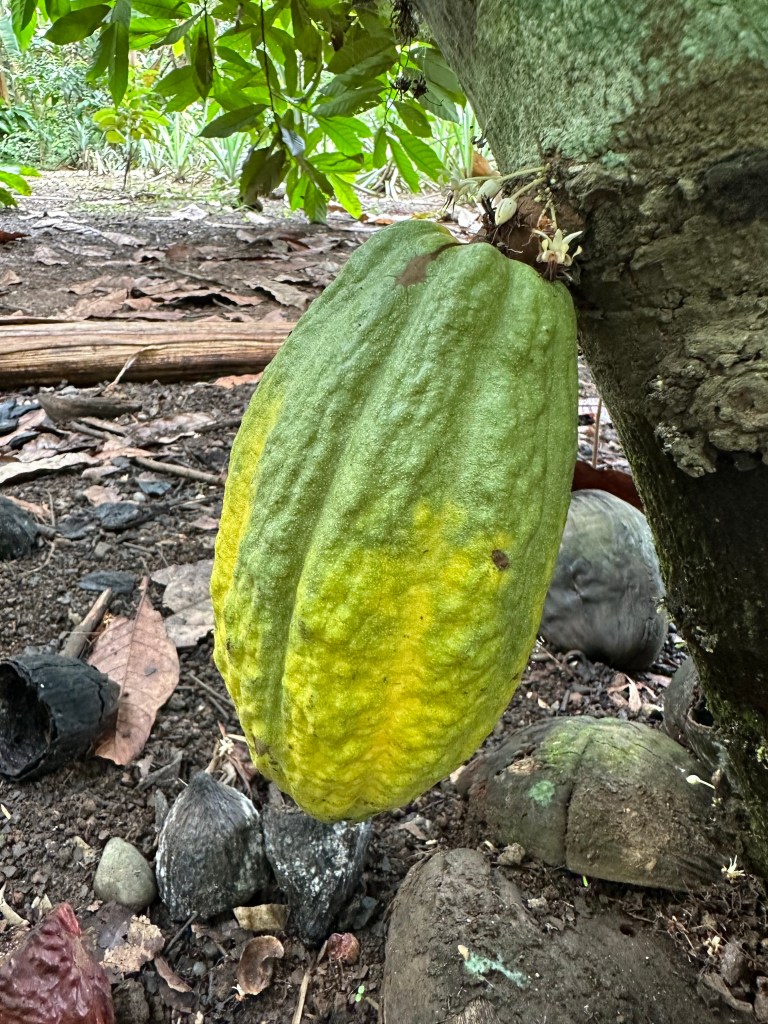
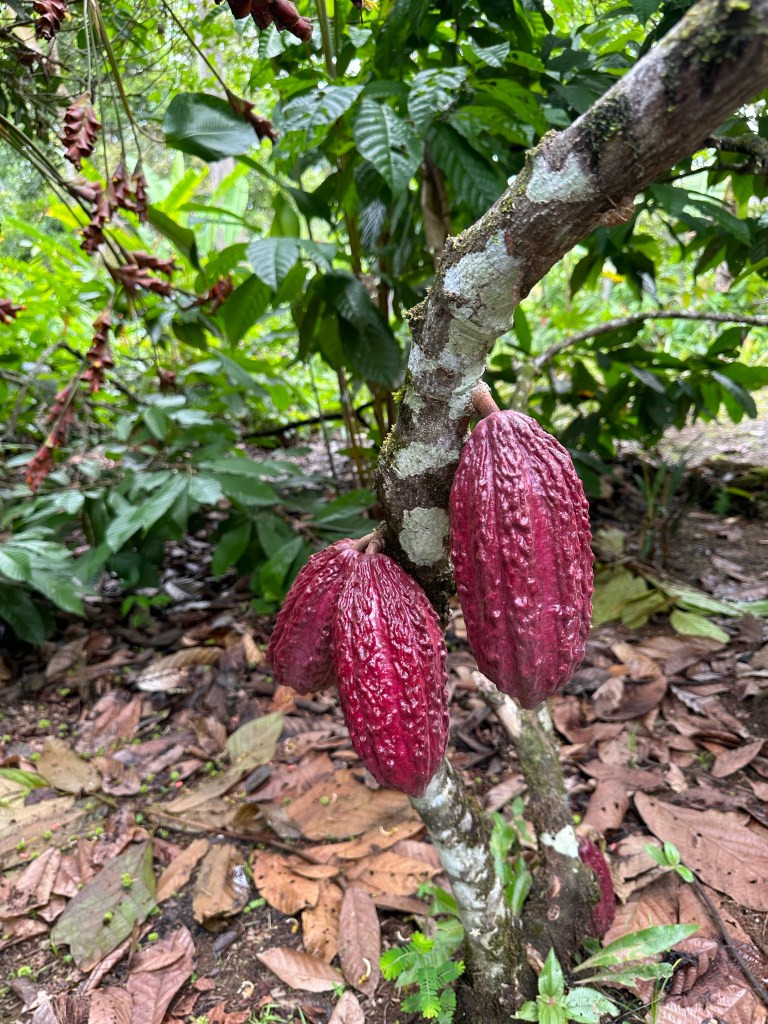
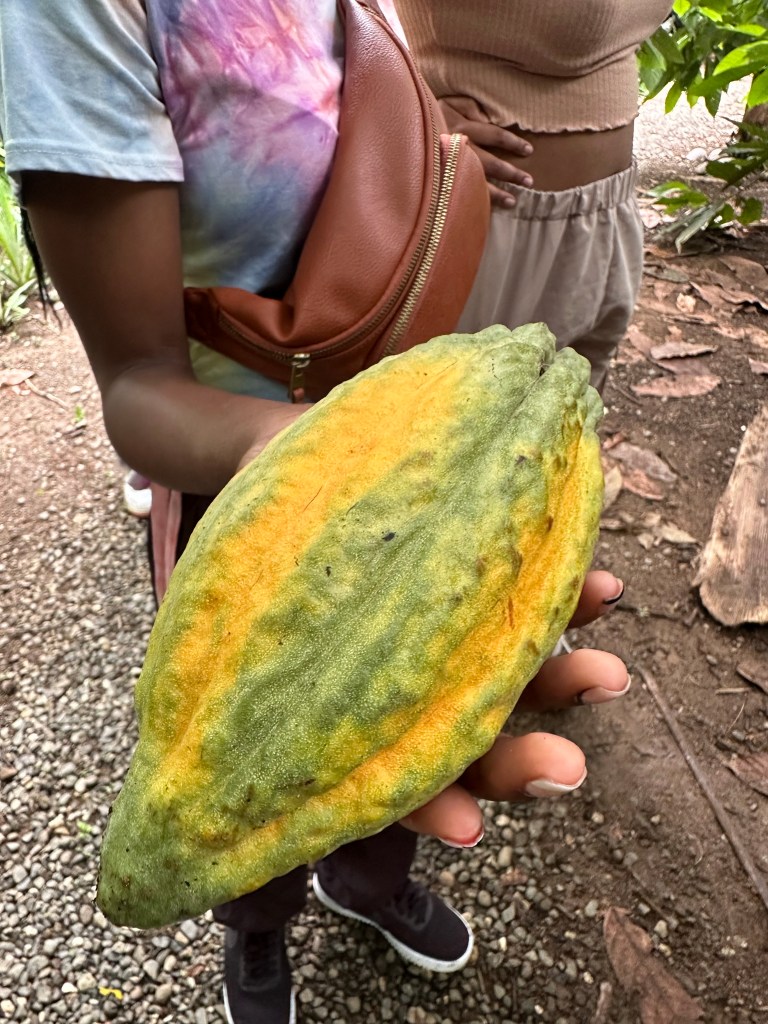
The main purpose of our visit was to see cacao trees and learn about the process of making chocolate, but this place offered so much more. Anyway, let’s talk about cacao. We saw many varieties of cacao trees, and the guide explained that there are four main types of cacao trees in the world: forastero, criollo, trinitario, and nacional. We saw all four types in his ranch, and she mentioned that there are many other varieties derived from these four types.

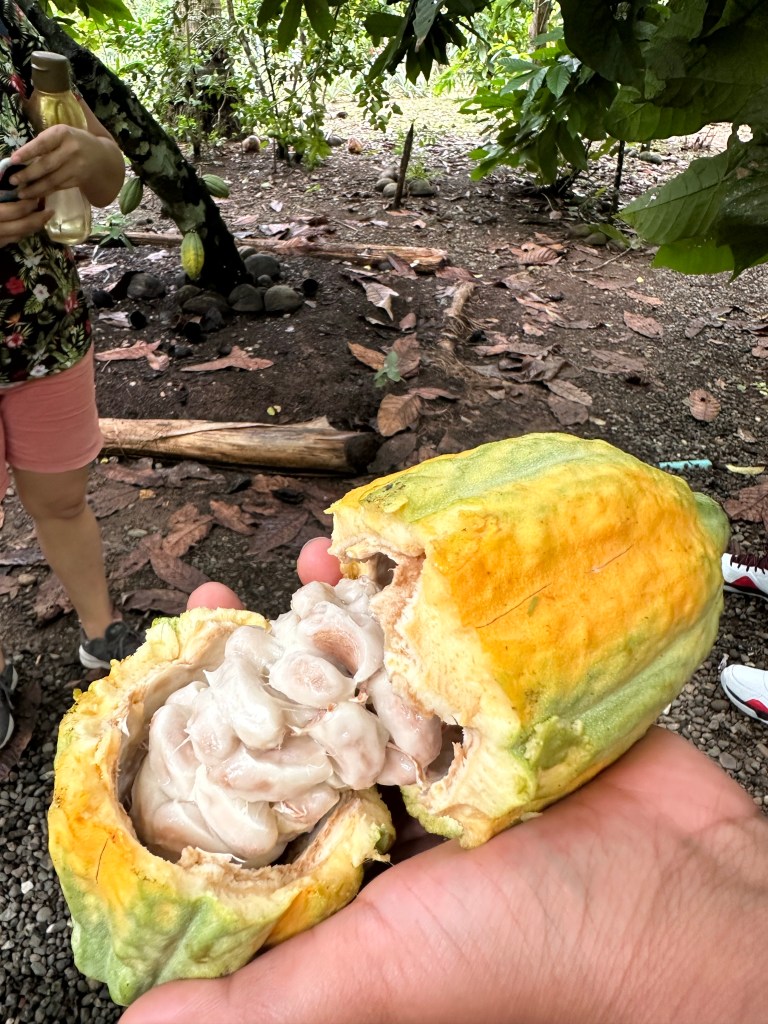
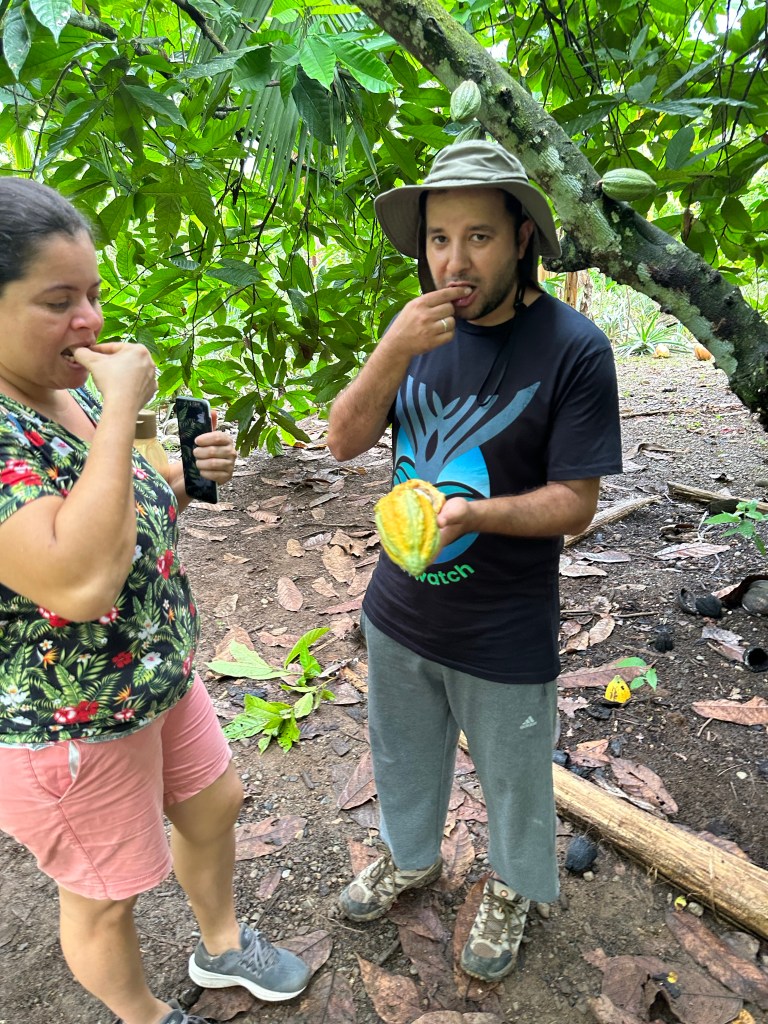
When we stopped at the nacional type, she showed us a ripe one and asked us to open it. Inside, we found cacao beans with white juicy flesh surrounding them. As you may know, chocolates are made from these cacao beans. When our guide said to eat the beans, I ate the whole thing. She corrected me and explained that I was supposed to eat only the white flesh, which is sweet and juicy, and not the cacao beans themselves. Then I asked if we were supposed to eat the cacao beans to taste the chocolate. She smiled and said that the process of making chocolate is not that simple, and she was going to show us the entire process on the ranch.

Enjoying the delicious white pulp surrounding the cacao beans

Fermentation, Drying Process

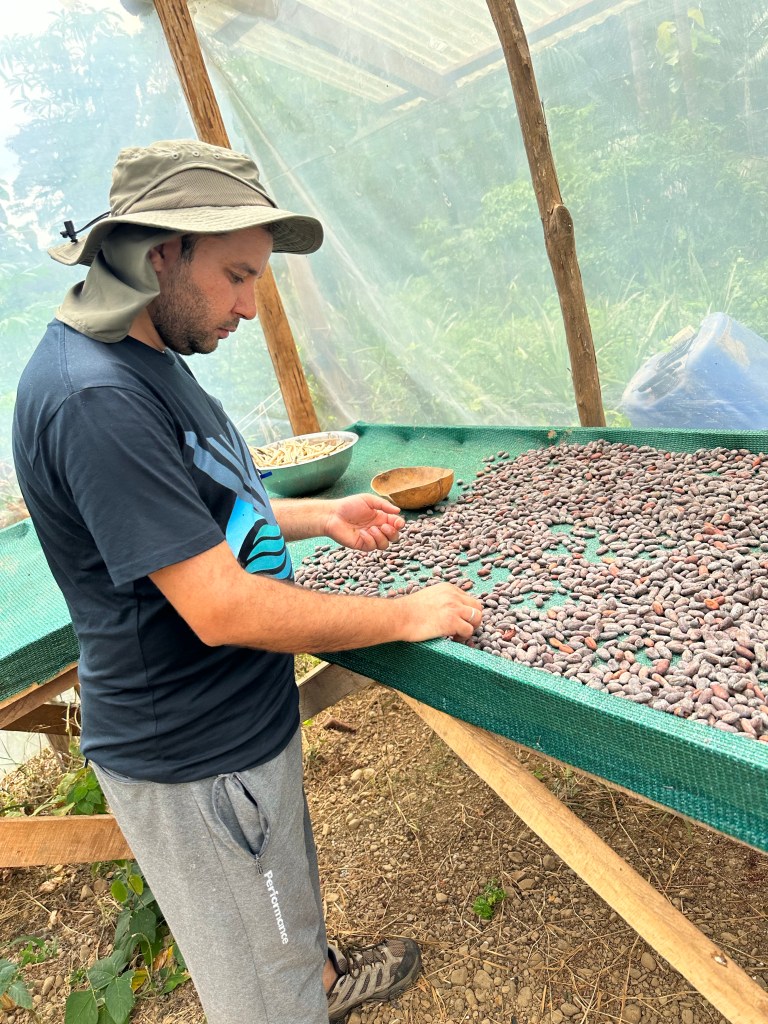
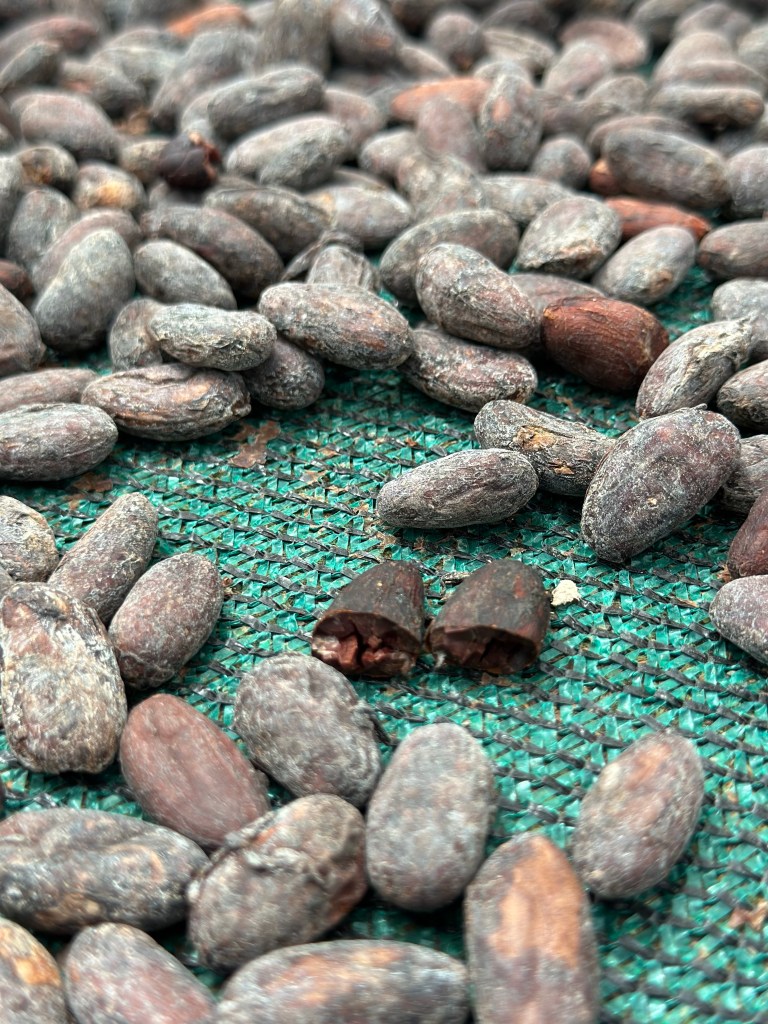
Next, we went to a small greenhouse-like structure with benches filled with cacao beans. Our guide showed us a wooden box and explained that this is where they ferment the cacao beans after removing them from the fruit. First, they put layers of banana leaves at the bottom and place the seeds on top. Then, they add another layer of banana leaves on top of the beans and leave them for seven days to naturally ferment. I realized that I needed to learn more about the fermentation process at this stage. At the end of the fermentation process, they dry out the beans on these benches for several days. She had us try the beans at this stage, and although they tasted slightly bitter since they are 100 percent cacao, they were still good.

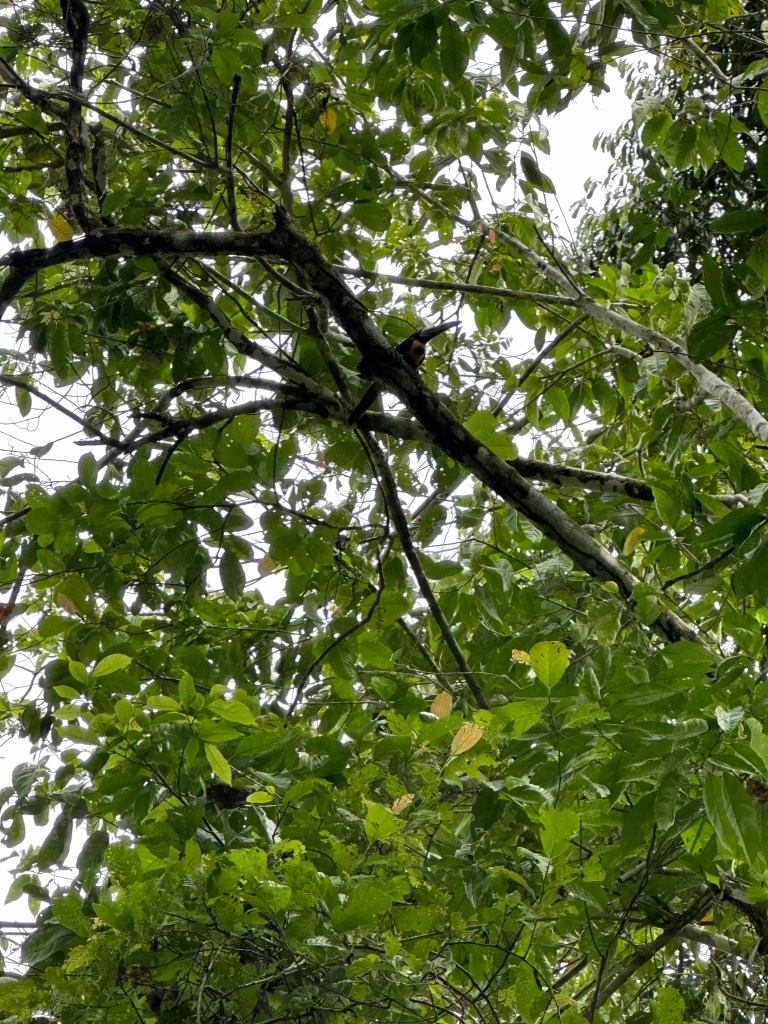
After tasting the cacao beans at this stage, we continued our walk in the jungle. We saw a perfectly camouflaged bird, a young toucan, and scarlet macaws perching on branches. They were so cute. Finally, we reached a seating area that looked like an open house, with benches, a kitchen, tables, and various cool arts and furniture. Our guide told us that we would relax here and experience many great surprises.

Powerful Medicinal Plant

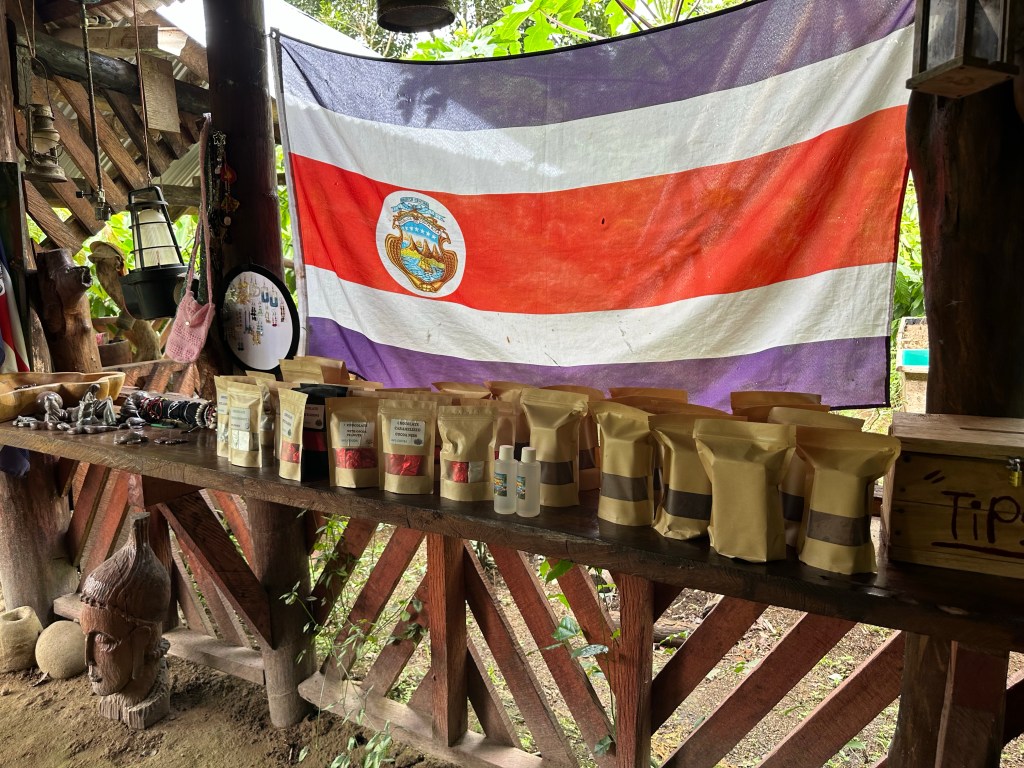
Within 5 minutes, she served us milk chocolate made from the chocolate produced on this ranch. By the way, the entire family was working together to make the whole experience memorable for their guests. They weren’t doing it for money; they did it out of love and passion. This has been an experience for me throughout my time here in Costa Rica.

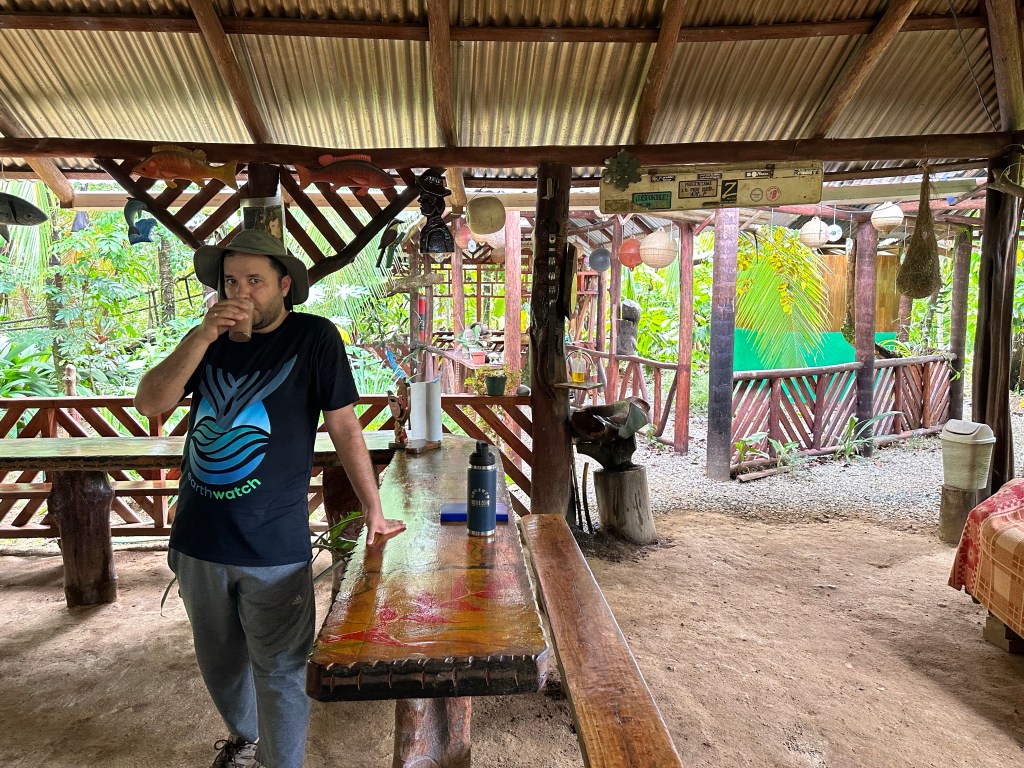
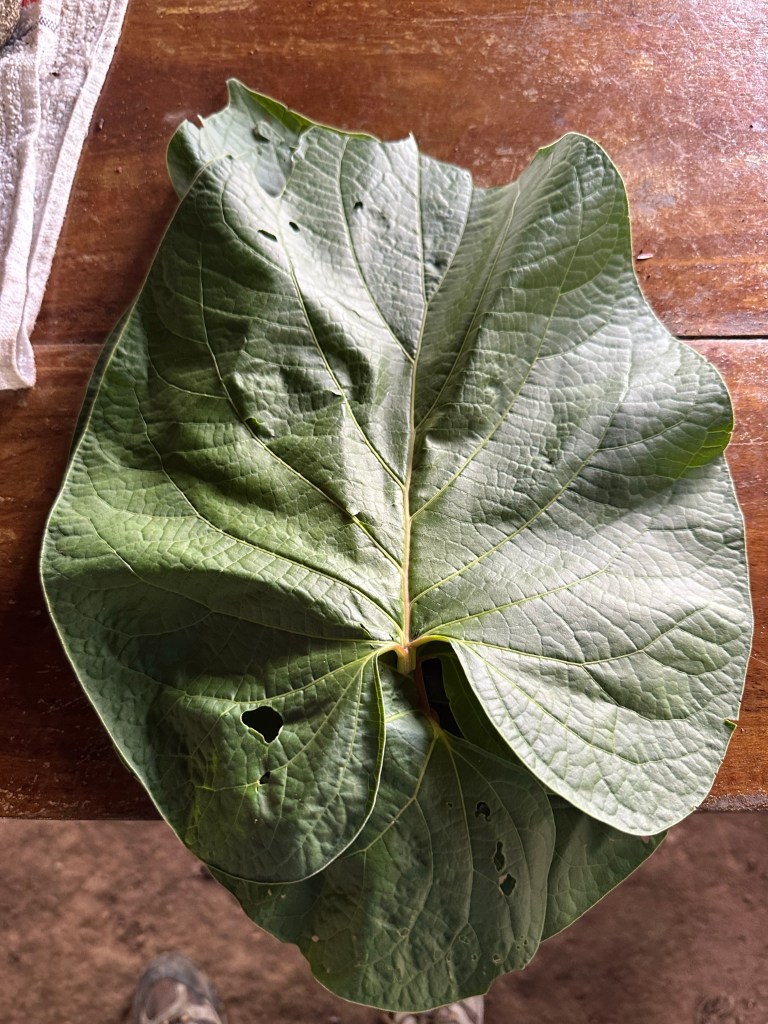
Oh, I need to mention something else. One of our students had a migraine the whole time, and we were trying to figure out what to do for her. The owner immediately said, “Don’t worry, we’ve got her.” I was a bit nervous about using medicine, but I was curious to see what he had in mind. He came back with a bunch of large leaves and said he was going to use them. I immediately thought that we couldn’t give her plants as medicine. However, he clarified that he wasn’t going to give her medicine but instead asked the student to place these leaves on her forehead for about 10 minutes, and her headache would go away instantly. It was amazing! In about 10 minutes, our student was feeling much better and expressed her gratitude. They told us that indigenous people have been using this plant for headaches and migraines for thousands of years, and it’s amazing how effective it is. I was intrigued and wanted to ask more questions. The owner then offered to make me a tea from this medicinal plant, and of course, I wanted to try it. In the next five minutes, he brought a whole tea made from this plant with cups. I drank three cups, and it was delicious. Then I shared with him about my spinal cord injuries and how I have neuropathic pain all the time. I asked him if I could put some leaves on my back as well. He immediately went out, picked a bunch of leaves, and heated them on top of a wood-fired stove. Then he placed them on my lower back. Oh my God! It felt amazing! I left those leaves on my back for at least 8 hours until they were completely wilted. It truly provided relief. I realized that my homework is to learn more about this plant. I didn’t capture the name of the plant, but I will find out soon.

Feels so good

Roasting, Tossing and Grinding Process

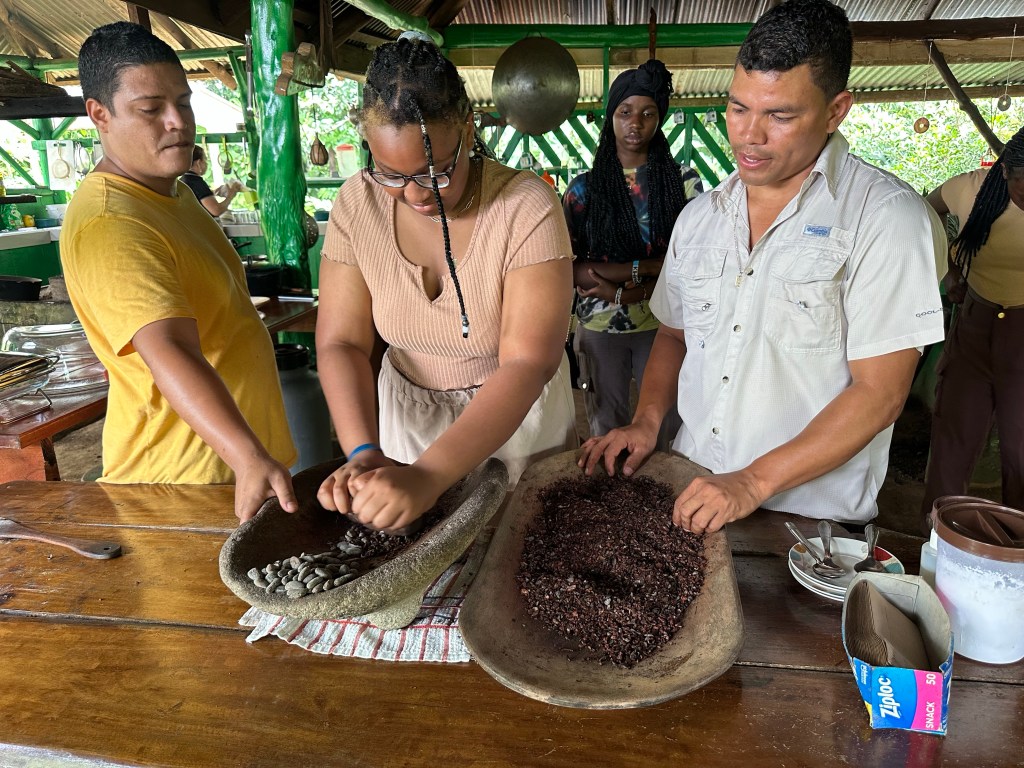
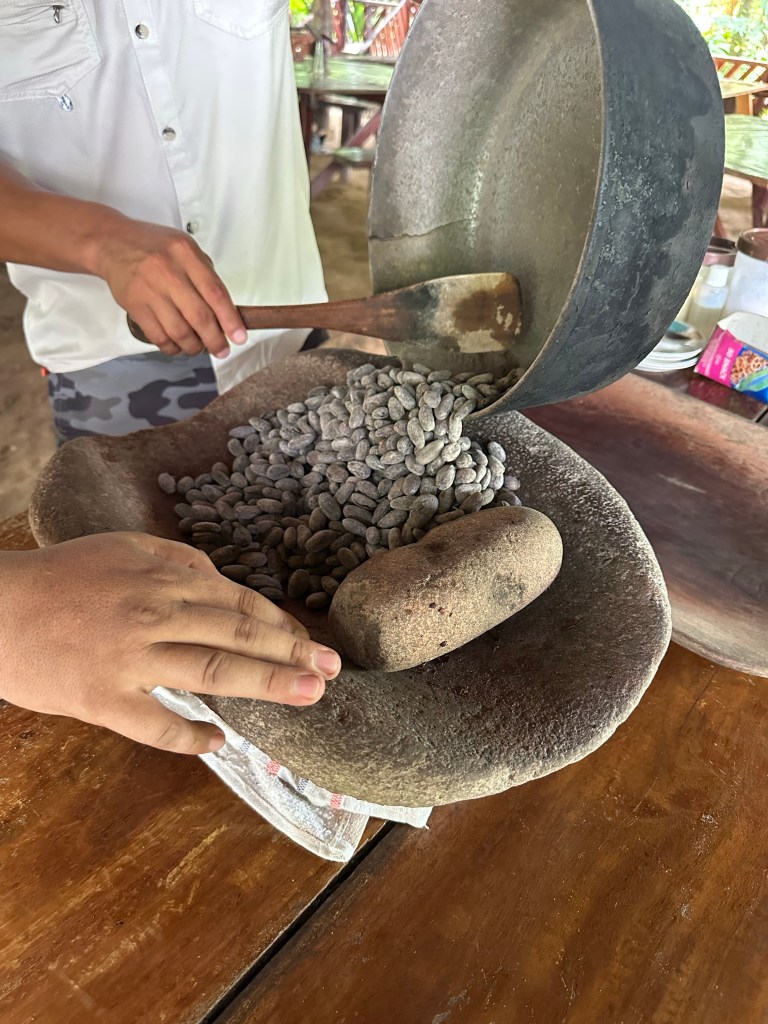
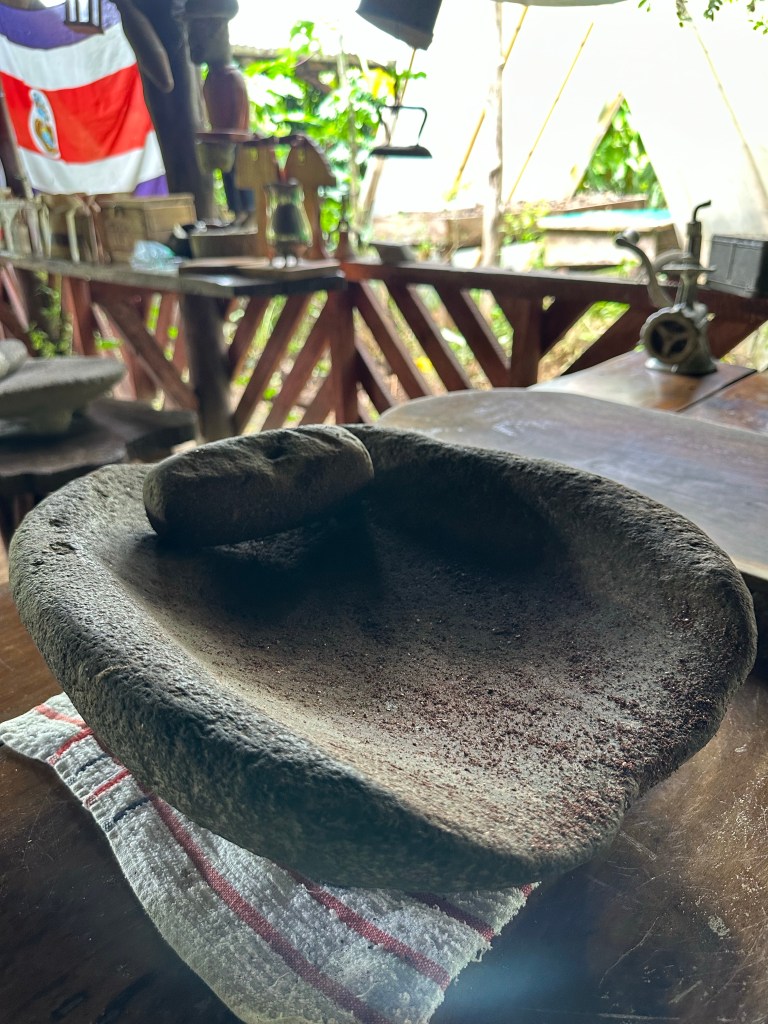
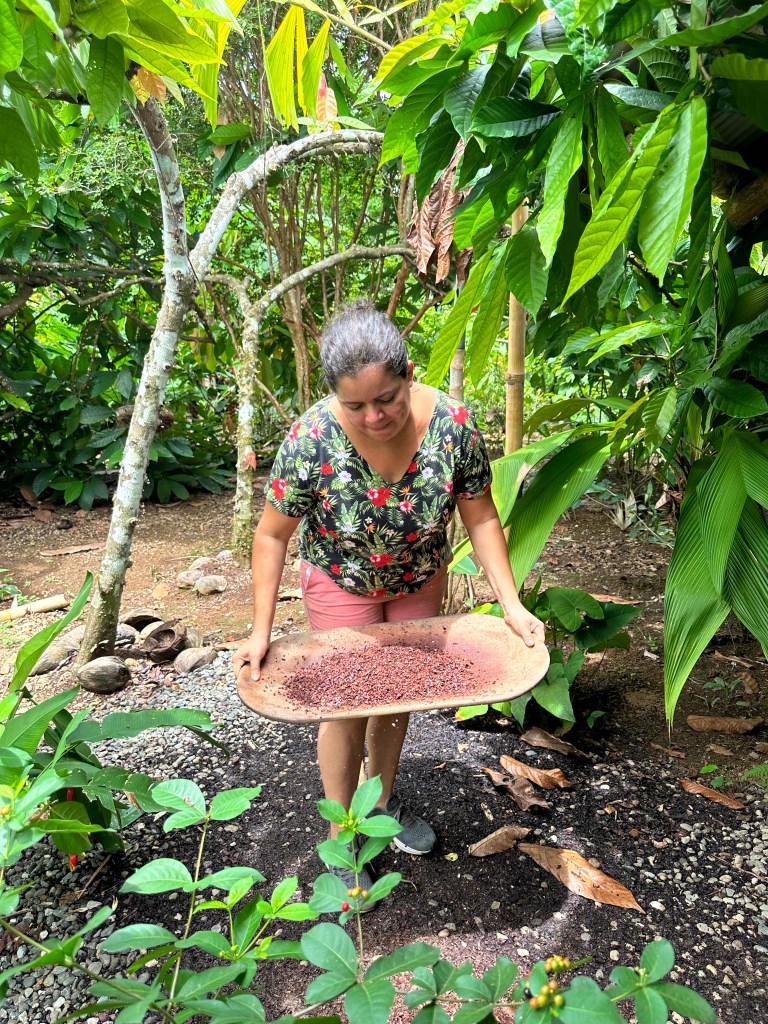
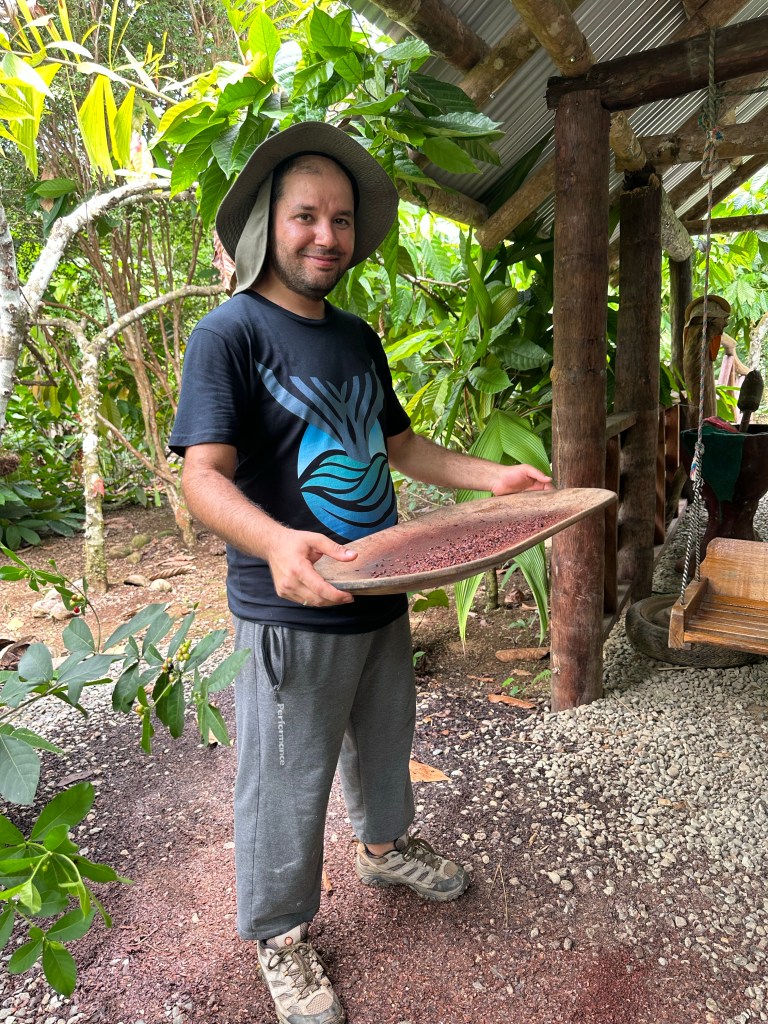
Now, let’s get back to the process of making chocolate. After the beans dried out, they roasted them on a pan for 20 minutes. Then, they placed the roasted beans on a stone mortar and ground them with a handheld stone to break them down into small pieces. All of us tried this process. Afterward, they transferred these broken pieces to a wooden tray and began removing the shells by tossing them in the tray. In the end, we were left with only cacao beans without shells. We tried these beans, and they tasted really good, fresh out of the oven.

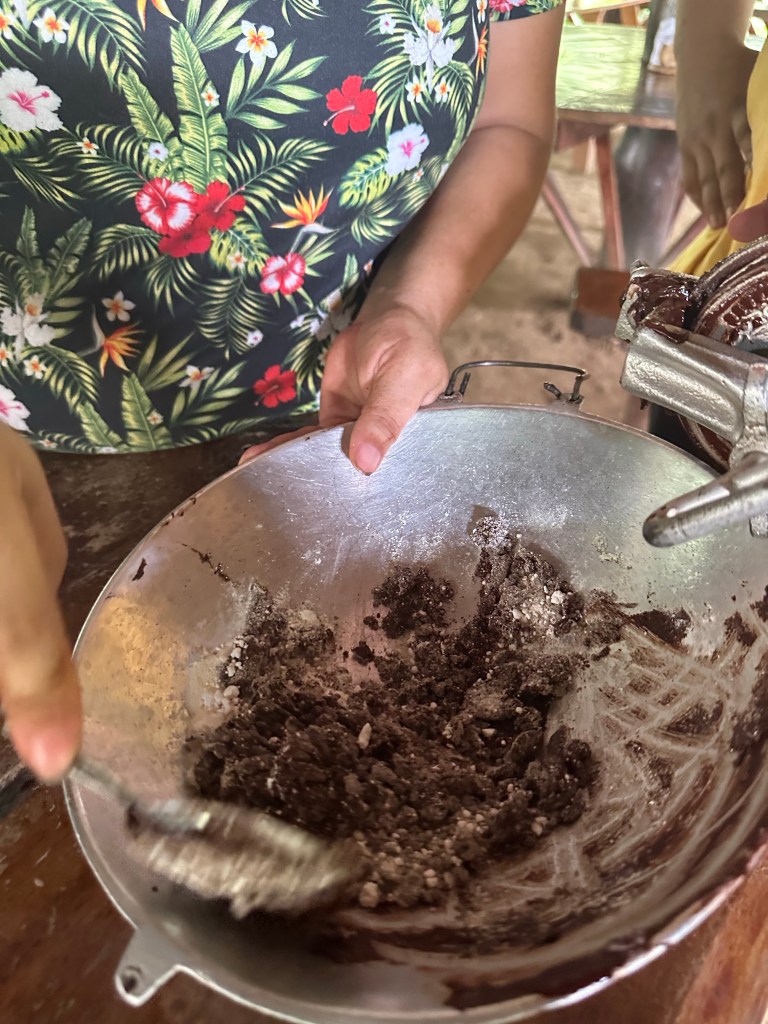
The next step was putting these broken pieces into a handheld grinder to make chocolate butter. I didn’t know that when you put the beans in the grinder, you end up with chocolate butter similar to Nutella. The guide explained that cacao beans contain a lot of oil, which is super healthy. As you may know, cacao is one of the superfoods that you can eat, and I instantly remembered that. However, in commercial chocolate factories, they remove this oil from the cacao beans first, and then whatever is left, they mix with another oil, usually palm oil, to compensate. She emphasized that this is how you lose many of the health benefits of cacao beans. She also mentioned that Africa is the largest producer of cacao in the world, but 80 percent of the high-quality cacao comes from Central America.

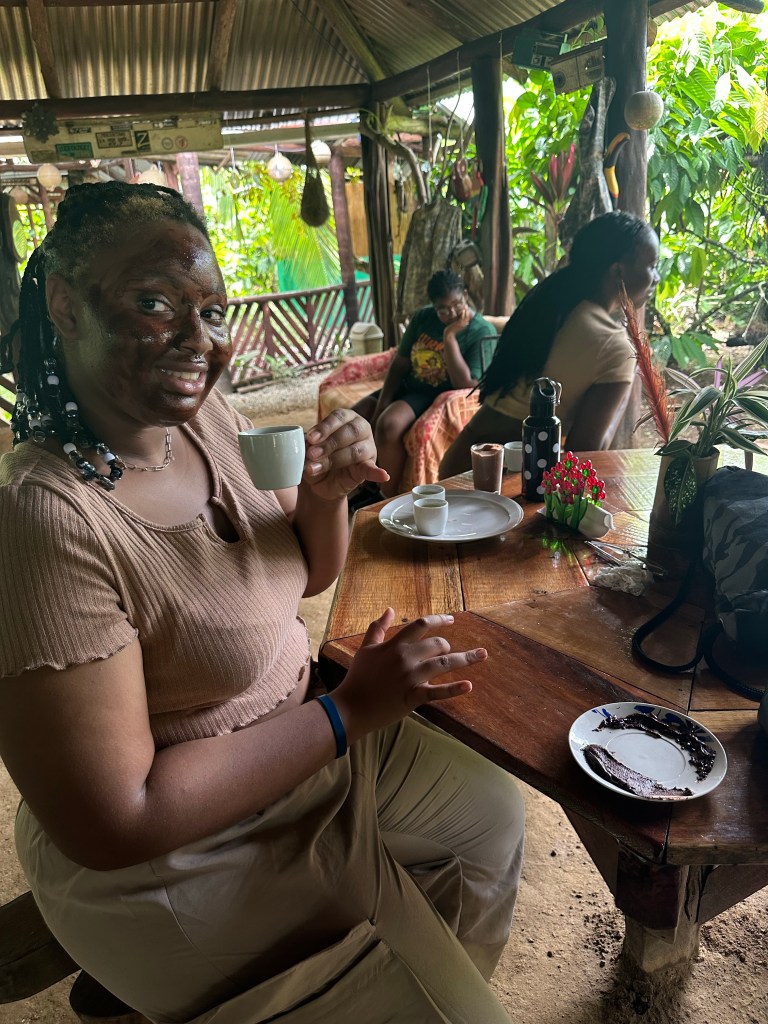
Chocolate Facial

Of course, we also tried the whole chocolate after the grinding process, and it tasted amazing. The guide took some chocolate and mixed it with coconut oil, asking us to apply it to our faces. We all made our organic chocolate facial masks and left them on our faces until we left. It felt wonderful.

Chocolate facial
Enjoying herb tea
Pictured with one of the workers at the farm

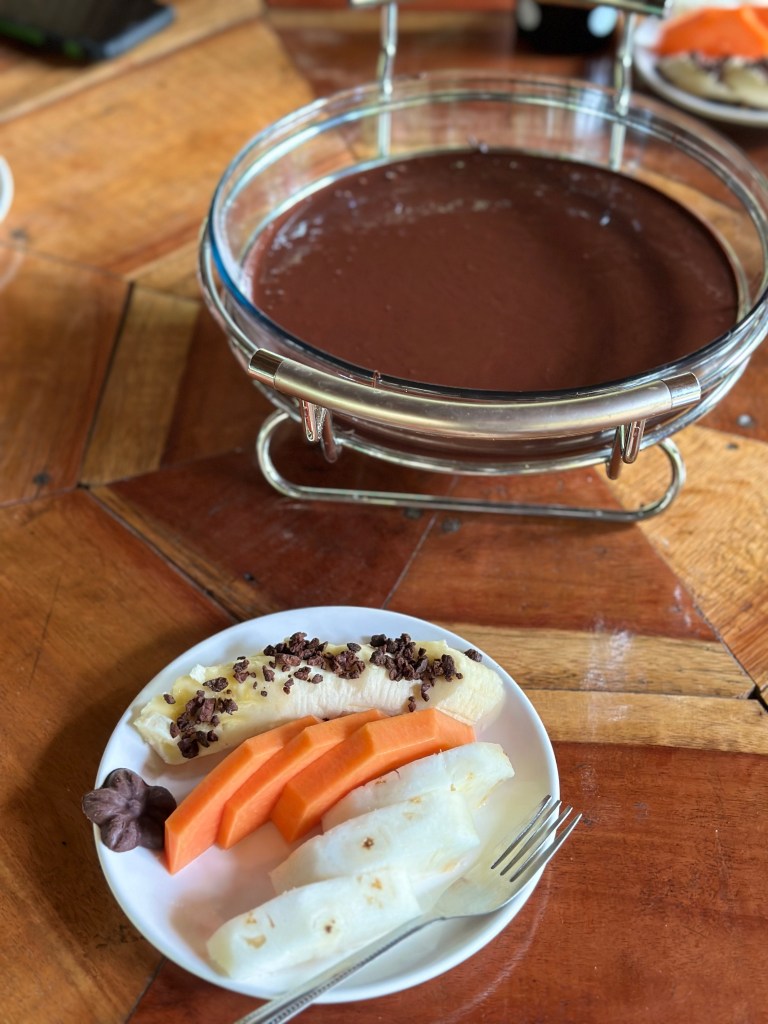
They served us fresh papayas, white pineapples, and bananas topped with caramelized chocolate, used sugar cane during the caramelization process, as well as chocolate fondue. It was beyond delicious. I told the kids that I felt rejuvenated after a long day of research. I was glad that we visited this place on our last day.

Do you want more chocolate? What about chocolate fondue on the side?

A Bit Exploration Around the House

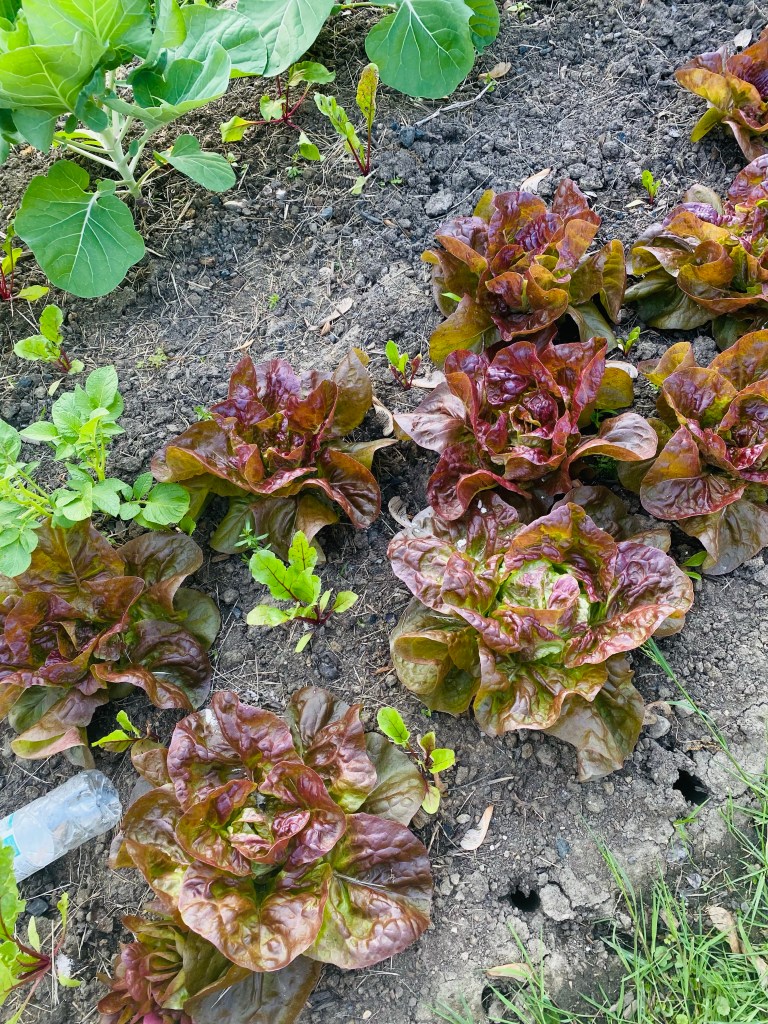
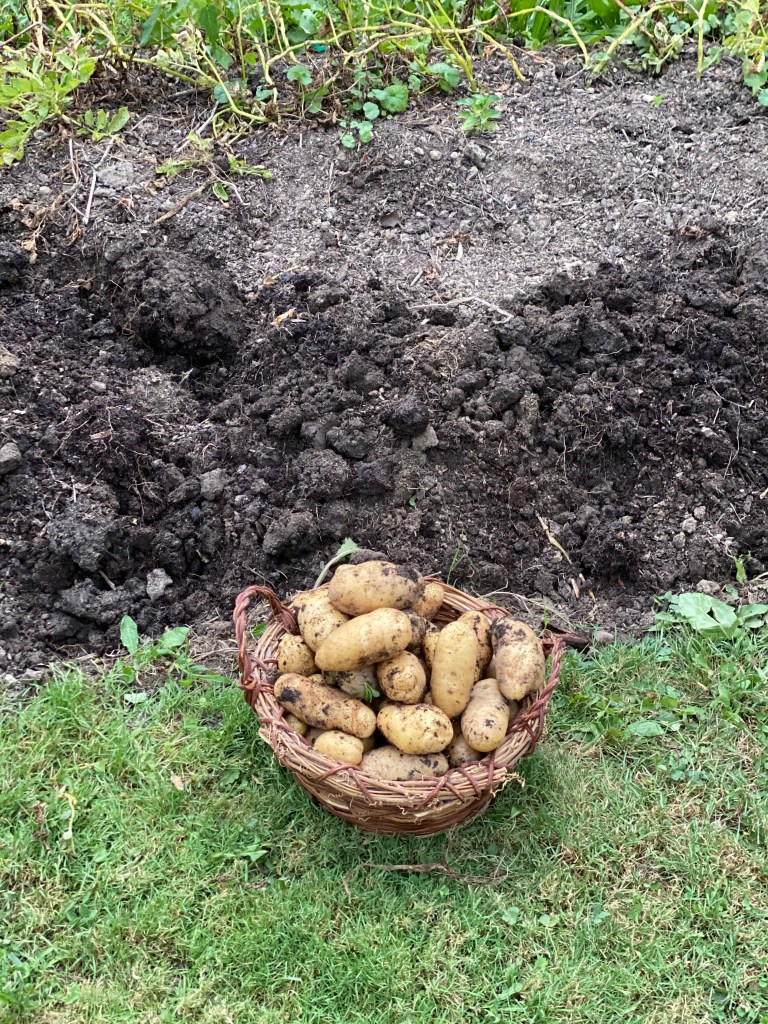
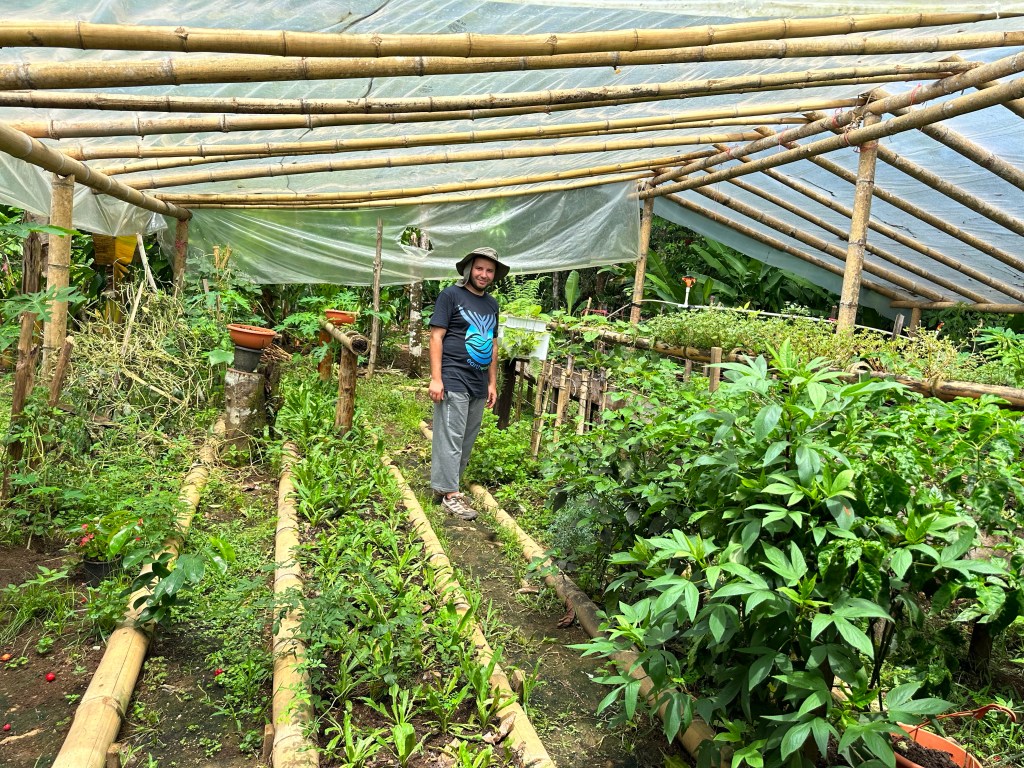
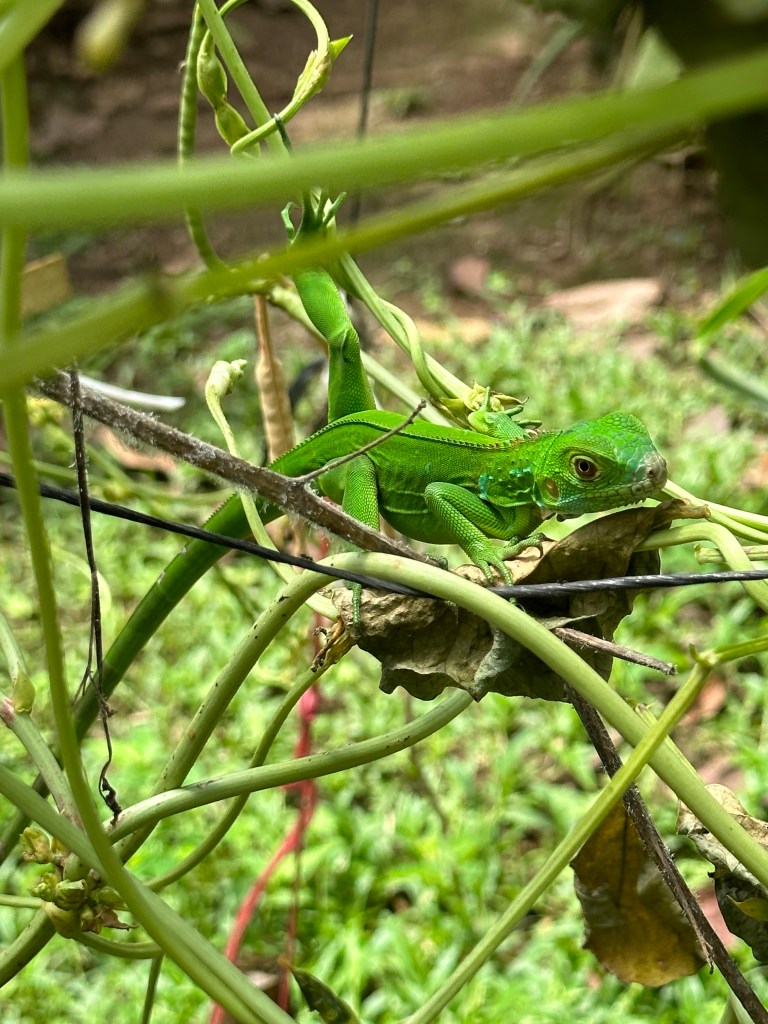
While we were savoring the chocolate, I explored the rest of the house. I saw a greenhouse with tomato and pepper plants, various herbs, lettuce, and much more. I even saw my first green iguana. They were so docile and didn’t move when I approached them. I mentioned my organic garden back home in Ohio to the guide and told her that for the past five years, no organic material from my kitchen has gone to waste. I compost them and use the compost for my garden. I showed her pictures of my lettuce, beets, and cabbages from my phone that my wife sent me recently. She then showed me how they compost behind their greenhouse as well.

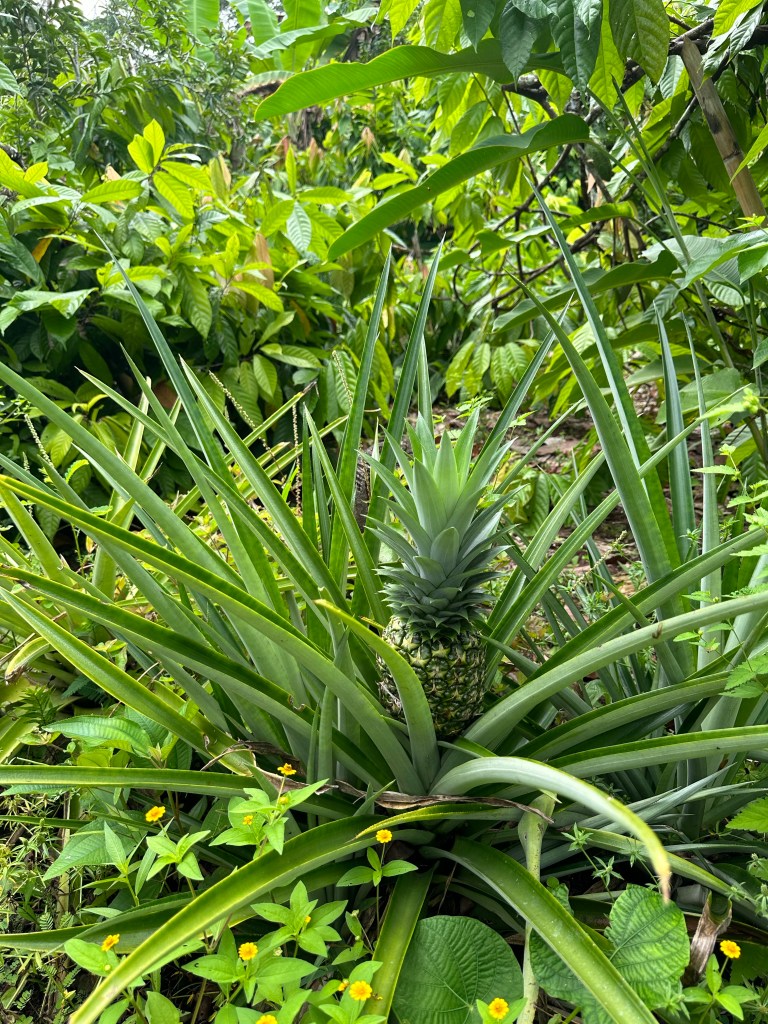
I almost forgot to mention the pineapple industry. The guide told us that it takes two years for a pineapple to grow. However, in commercialized pineapple farming, they grow in only 7 months. When I asked how they make that happen, she explained that they likely use lots of chemicals to expedite the process. I wondered about the effects of these chemicals on humans. It’s no surprise that so many people are experiencing physical, mental, and COGNITIVE health issues nowadays.

Farewell

Overall, visiting the organic chocolate farm was a once-in-a-lifetime experience. We learned so much in a short period of time and left feeling inspired and hopeful for a brighter future. Seeing people who care about the environment and the people around them amidst a society that can be self-centered made me happy for sure.

Engaging in indigenous nature-based play

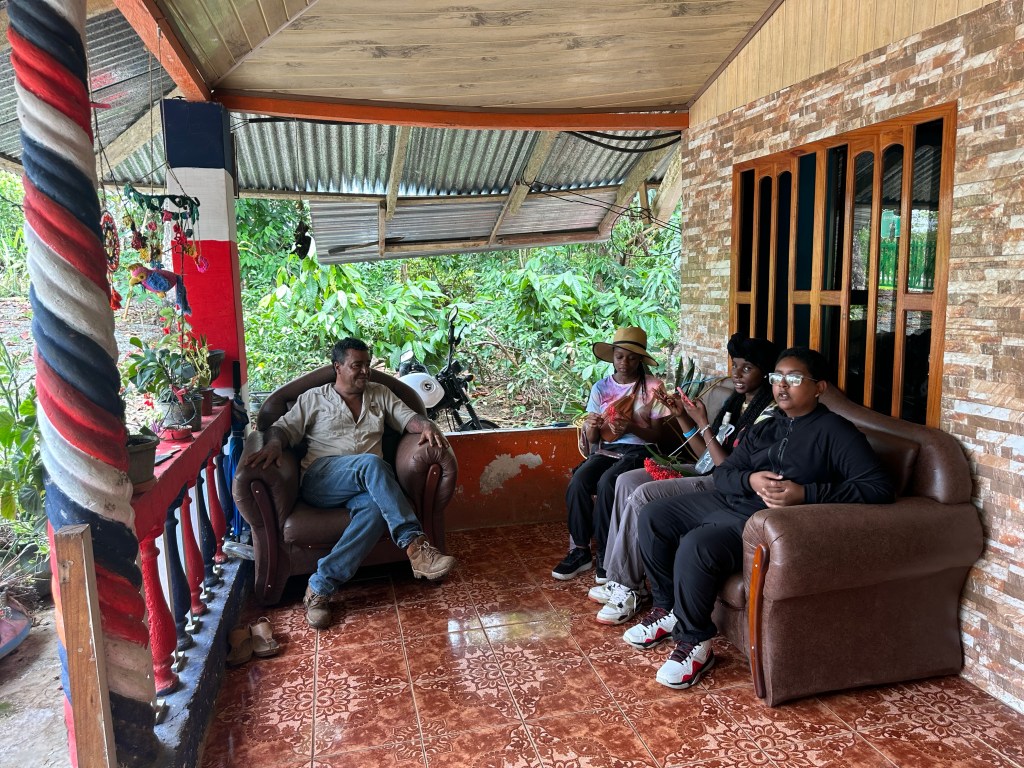
I hope to bring my family and friends to visit this place next time and have the chance to talk more about sustainability, conservation, and nature. Our three hours went by quickly, and we bid farewell to German, the owner, on our way back to our camp.

Earthwatch Marine Mammals and Predators in Costa Rica

Mullet Necropsy

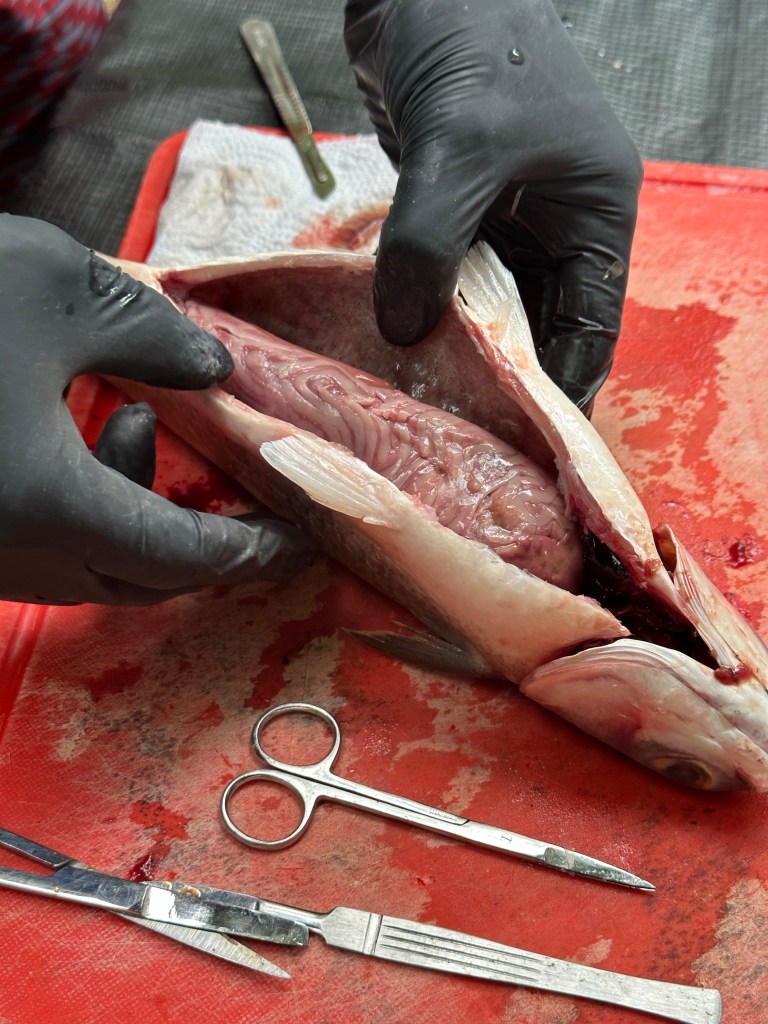
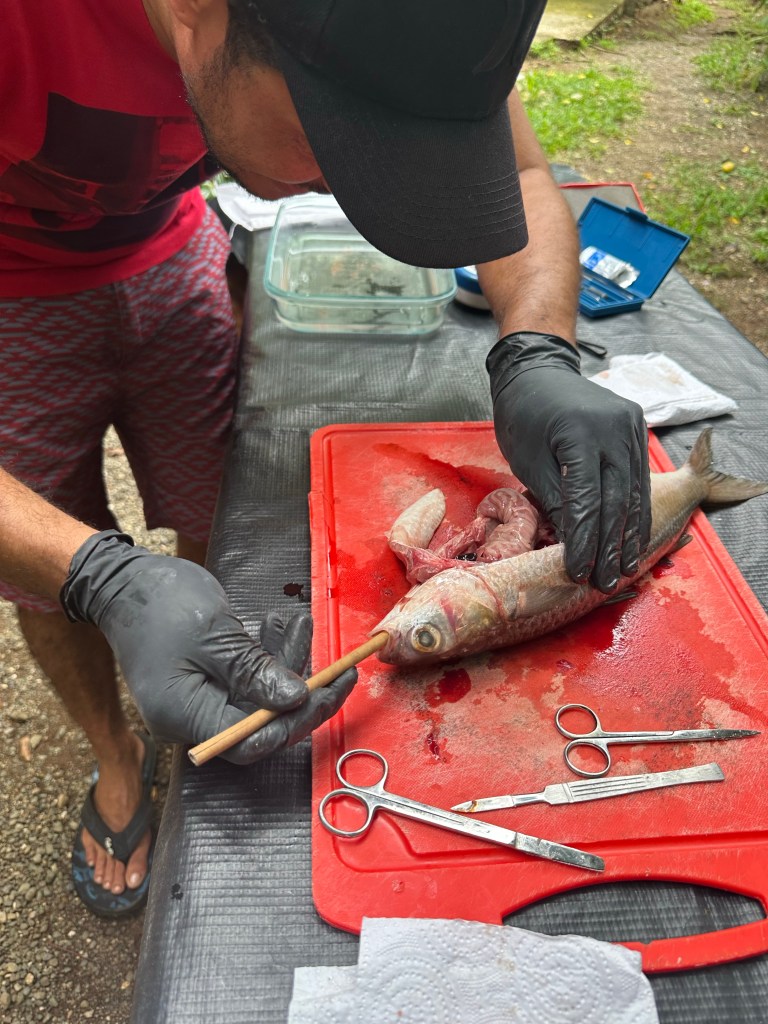
Today, we conducted a necropsy on a mullet fish. A necropsy involves examining the body of a deceased animal, while the term “autopsy” is used for human bodies after death.

Mullet fish are a favorite food for dolphins, and studying them provides valuable information about dolphins. We began by examining the fish’s external features to assess its overall condition. We observed its dorsal fins, caudal fin, and lateral fins. Dr. Lenin explained that mullets use their dorsal fins to defend themselves against predators, as they have exceptionally strong bones. They rely on their caudal fins for movement, and scientists also use these fins to classify the fish.

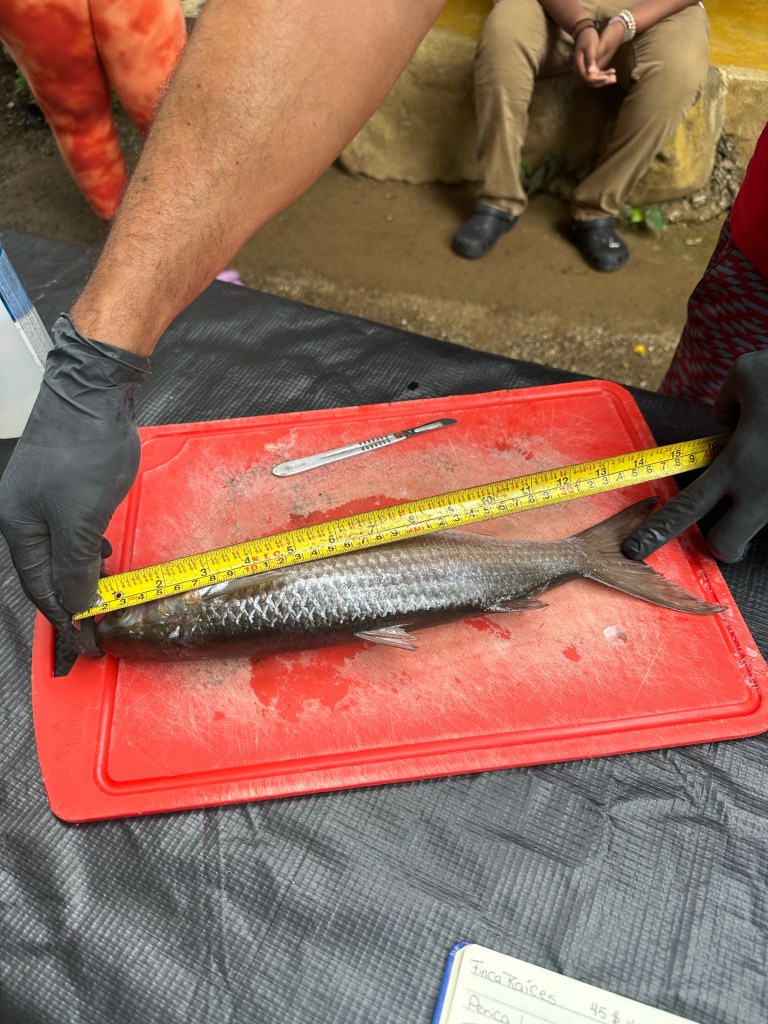
Examining external features of a mullet fish

Next, we measured the length of the fish from its head to the lowest point of the caudal fin. This measurement helps scientists determine the life stage of the fish, whether it is young or adult. In this case, it measured 35 cm. We also took another measurement from the head to the tip of the caudal fin, which was 39 cm.

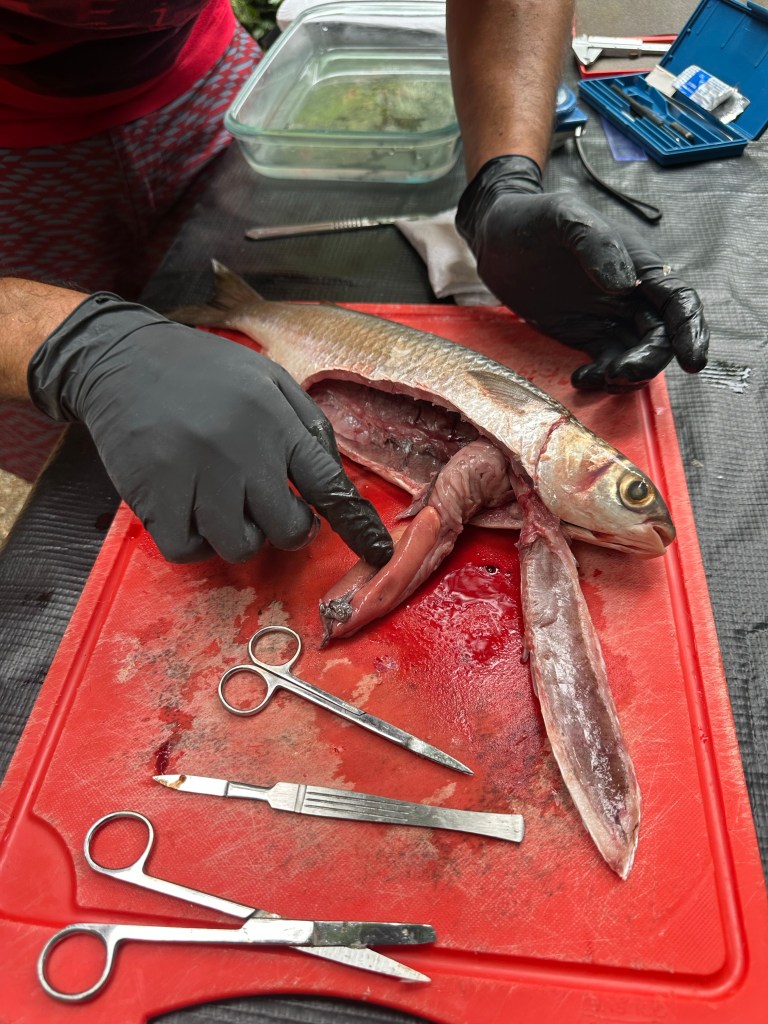
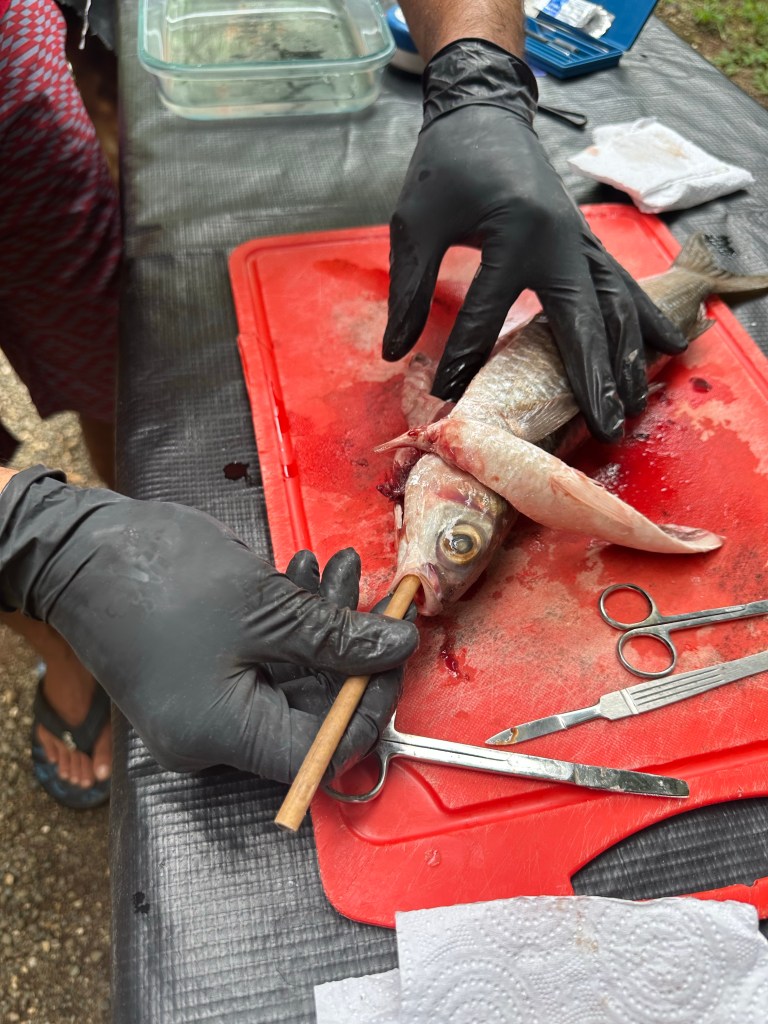
David then proceeded to show us the fish’s heart, liver, and other internal organs. To better locate the stomach, David inserted a stick into the fish’s mouth. Surprisingly, the stomach was completely empty, and David made a note of this in his recording.

Mullet Fish Have Gizzards

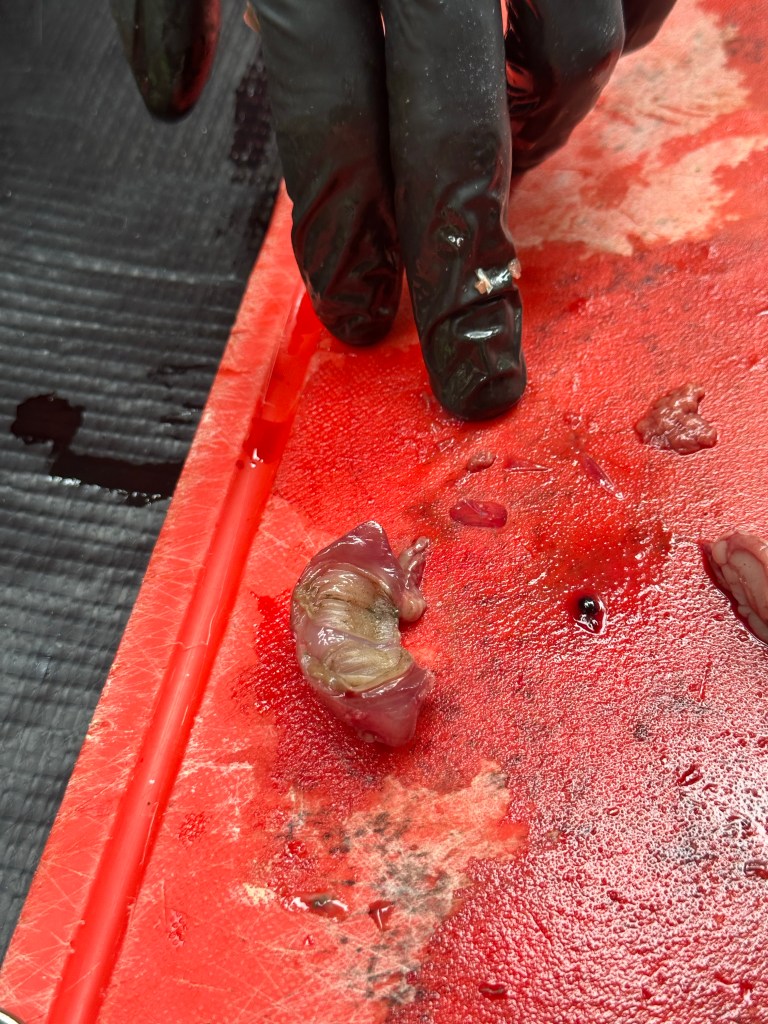
I don’t know about you, but I was unaware that fish could have gizzards. However, mullet fish, along with some other species, do possess gizzards. I was amazed to discover a large-sized gizzard in the mullet fish. Gizzards are unique because they help grind difficult-to-digest foods, making them particularly useful for animals that lack teeth. Birds, earthworms, crocodiles, and alligators also have gizzards. It was astonishing to learn that fish, especially mullet fish, have this organ. Dr. Lenin explained that mullet fish have gizzards because they are bottom feeders and often ingest unwanted substances along with their food. The gizzards aid in the digestion of these indigestible items.

David then pointed out the swim bladder located near the fish’s backbone. This air-filled sac organ allows bony fish to maintain buoyancy in the water. You might be wondering how cartilaginous fish, such as sharks, float. Dr. Lenin said that these fish have enormous livers filled with fat, which enables them to float. Fascinating, isn’t it?

Next, David extracted the mullet fish’s otoliths, also known as “earstones.” These hard, calcium carbonate structures are found directly behind the brain in bony fishes. The significance of these bones lies in the fact that when dolphins consume mullet fish, they do not digest the otoliths. During necropsies on dolphins, scientists can analyze these otoliths to gain insight into their diet. It’s truly amazing how scientists come up with such techniques!

International Union for Conservation of Nature

During our afternoon discussions, Dr. Lenin introduced us to the International Union for Conservation of Nature (IUCN) organization and their efforts to protect the planet’s biodiversity. I must admit, I was not previously aware of this international organization. They offer a wealth of knowledge and tools for anyone interested in preserving the planet and educating others about its species. I highly recommend visiting their website to explore the incredible resources available.

Dr. Lenin presented us with the structure of the IUCN categories, which range from “not evaluated” at the bottom to “extinct” at the top. These categories help assess the conservation status of species. He then showed us the Red List, a list that indicates whether a species is threatened with extinction based on specific parameters.

International Union for Conservation of Nature (IUCN) categories (image sourced from the IUCN website)

Dr. Lenin used these examples to highlight the conservation status of bottlenose dolphins in Golfo Dulce. Although they are currently designated as “least concern” according to the IUCN, Dr. Lenin’s data suggests that they are vulnerable and even nearing endangered status. Therefore, Dr. Lenin and his team have been working to convince decision-makers to change the designation of bottlenose dolphins from “least concern” to “vulnerable.”

The Vaquita, the World’s Rarest Marine Mammal

He then shared a heartbreaking story about the Vaquita, the world’s rarest marine mammal, which is on the verge of extinction. This species is endemic to the waters near Baja California and can be found nowhere else in the world. In the past decade, their numbers have drastically declined, with the last count in 2021 estimating less than 10 individuals remaining. Scientists attempted to capture a few individuals to aid in their population recovery through captivity, but unfortunately, this mission failed. The Vaquita is a fragile species that is difficult to capture, and the stress from capture led to the death of the first animal caught, resulting in the suspension of further capture attempts.

Dr. Lenin explained that the Vaquita’s precarious population status is primarily due to their being endemic. If anything happens to their environment, they face the risk of extinction worldwide with no possibility of recovery. This is a universal truth for all species. Dr. Lenin expressed concern that the rapid environmental changes in Baja California have had a severe impact on the Vaquita population. Additionally, there is a fish species in these waters, highly valued in Chinese markets, that the Vaquita depends on for food. Consequently, the Vaquita faces depletion of its food resources and is often caught accidentally in fishing nets. Dr. Lenin’s worry is that we may soon no longer see the Vaquita in the near future if the gillnetting will not stop.

The Vaquita is a porpoise, which belongs to a group of fully aquatic marine mammals known as toothed whales. Although they may resemble dolphins, they are more closely related to narwhals and belugas than to dolphins. Prior to this, I had not been acquainted with the Vaquita, and I sincerely hope to witness their thriving presence in the waters of Baja California in the future.

Earthwatch Marine Mammals and Predators in Costa Rica

Exploring the Dolphins of Golfo Dulce: A Final Day of Boat Research

Today was our final day of boat research on dolphins. We have conducted a total of five boat surveys so far. Our last destination was a little farther away in the Golfo Dulce, near the open ocean. After that, we planned to return near the shore of the Osa Peninsula, where the Corcovado National Park is located.

During the journey, we had an exciting encounter with a baby manta ray jumping out of the water. It was incredibly adorable. Just then, we received a call from David’s friend informing us about the presence of spotted dolphins in a specific location near the shore of Corcovado National Park. We immediately redirected our attention to that direction. As their name suggests, spotted dolphins have distinctive spots on their skin, while calves do not have spots. These spots increase as they mature. David told us that spotted dolphins usually gather in large numbers, with up to 400 individuals in the open ocean. However, in Golfo Dulce, their group size is much smaller, usually ranging from 5 to 10 individuals. As mentioned in my previous posts, dolphins here don’t fear predators, and food is abundant in Golfo Dulce, which explains the smaller group size.

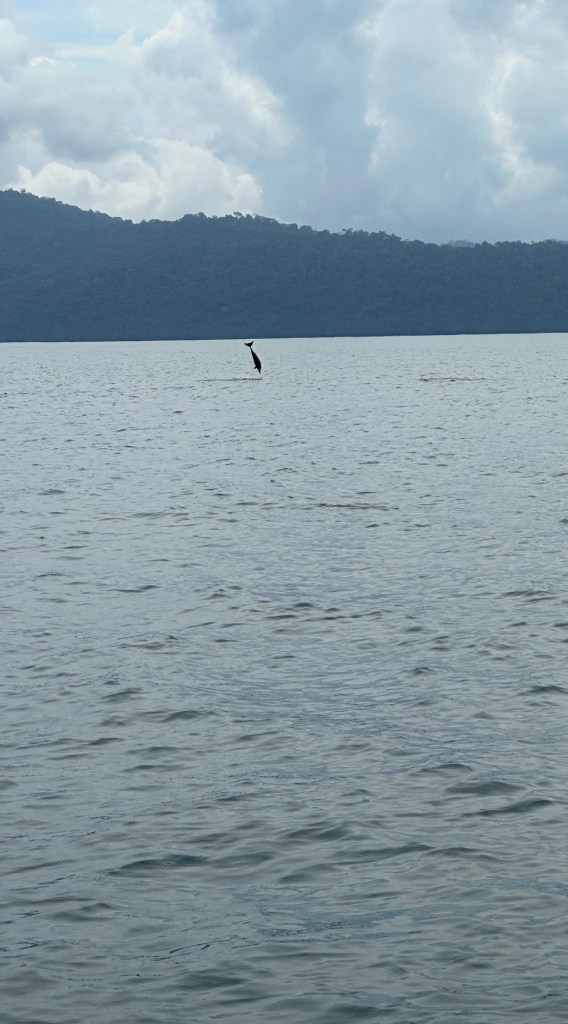
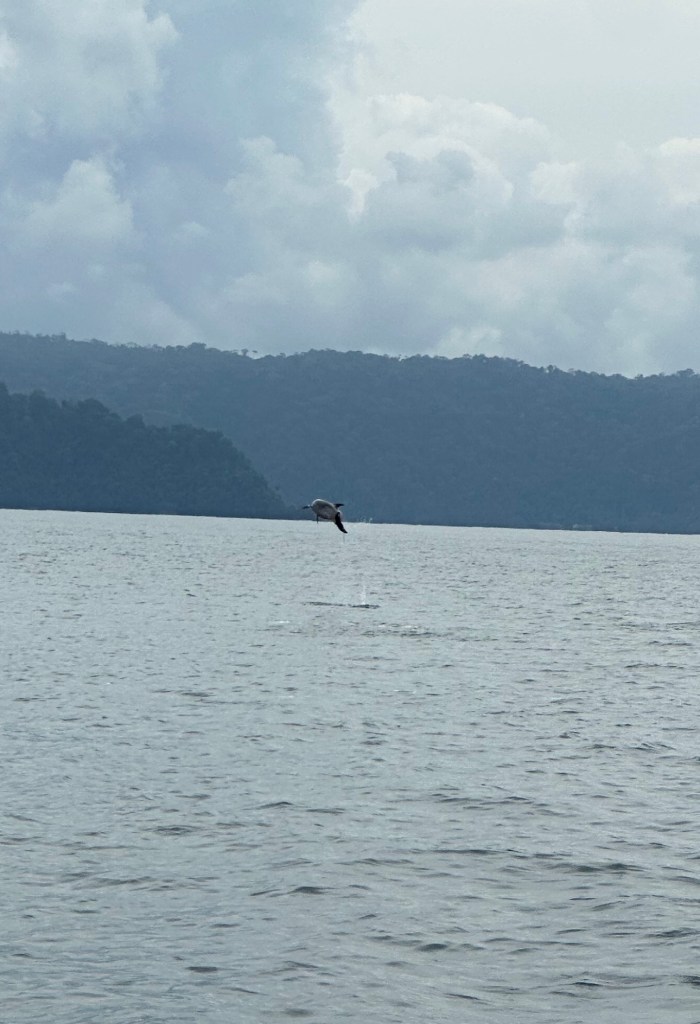
As luck would have it, the best moment awaited us at the very end. We witnessed baby spotted dolphins jumping out of the water multiple times, playfully frolicking around our boat. It was truly fascinating to see them so happy and healthy. Capturing their pictures proved challenging, but I managed to take a couple of shots while they were mid-air.

While we were enjoying the scene of baby spotted dolphins, we also caught sight of a green turtle. It briefly emerged from the water, taking a curious look around, before swiftly swimming away as we approached.

Hiking

After lunch, it was my time to embark on a solo exploration. Due to the scorching heat and high humidity, most students preferred to avoid hiking. I couldn’t blame them since the average temperature reached the mid-90s F (33-35 C), and the humidity made it feel like 105 F (40 C). Nevertheless, today our discussion with Dr. Lenin got postponed from 4 pm to 5 pm, leaving me with three hours to spare. I approached David and asked if we could go hiking to explore the jungle. He happily agreed to accompany me, and off we went.

We followed a trail behind David’s house, as he mentioned that his father owned around 9 acres of forest in the area, granting him an intimate knowledge of the surroundings. Our path led us uphill, which turned out to be the hottest and most humid moment of my life. Imagine temperatures exceeding 100 F (38 C) with 90 percent humidity, while hiking uphill and wearing long pants and closed-toe hiking shoes. I must have felt like it was 120 F (49 C) at that time. My clothes were drenched in sweat, with droplets falling from my face like rain. Despite these “hellish” conditions, I felt immense joy being out there. The forest was awe-inspiring, and David proved to be an excellent guide.

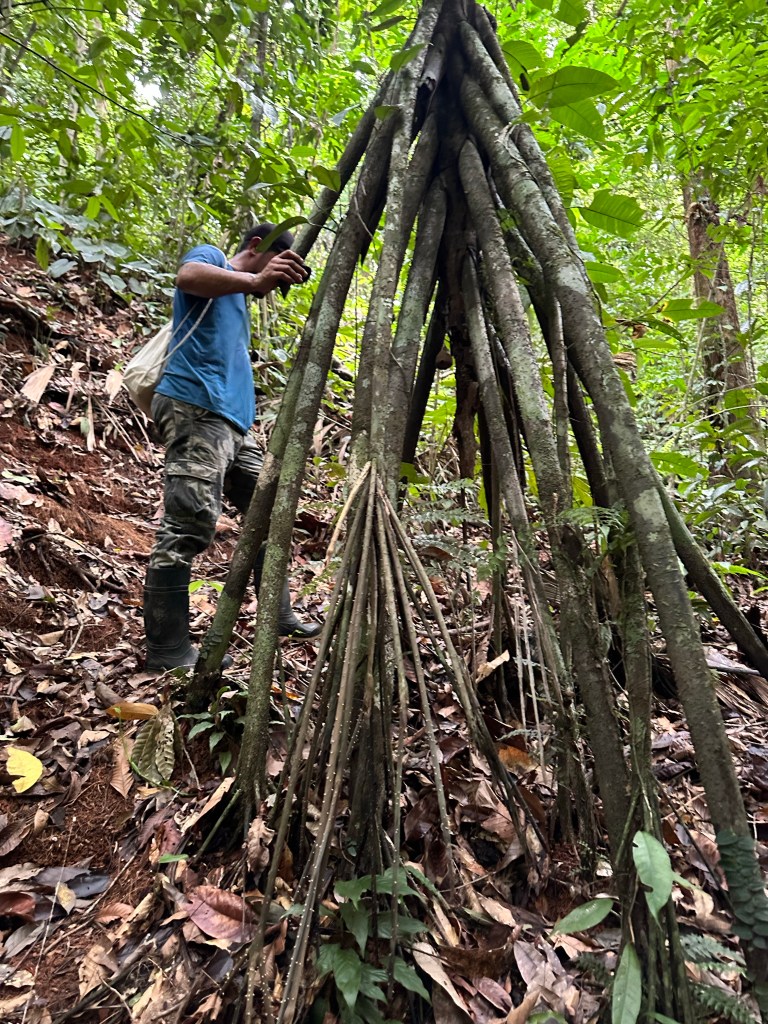
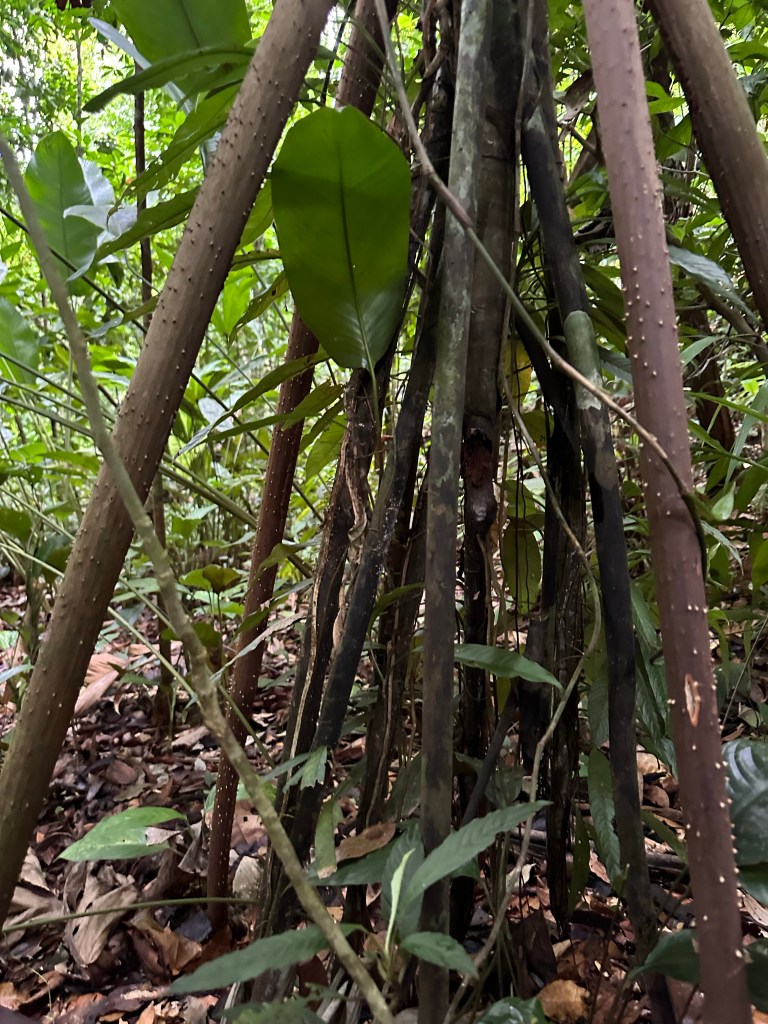
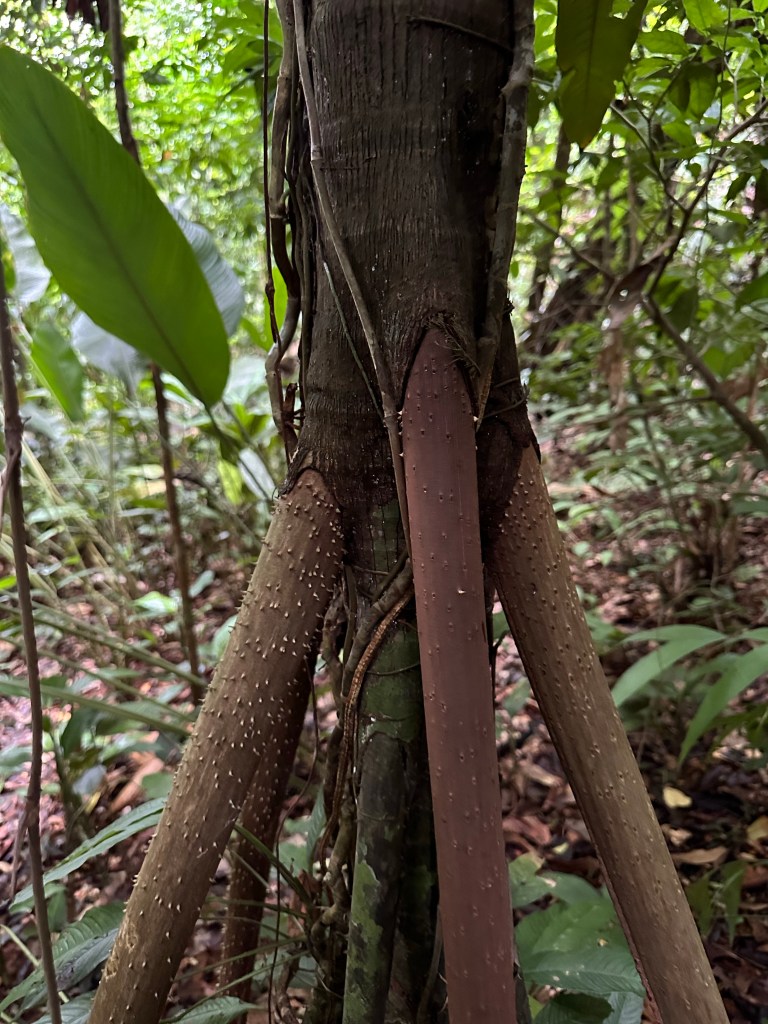
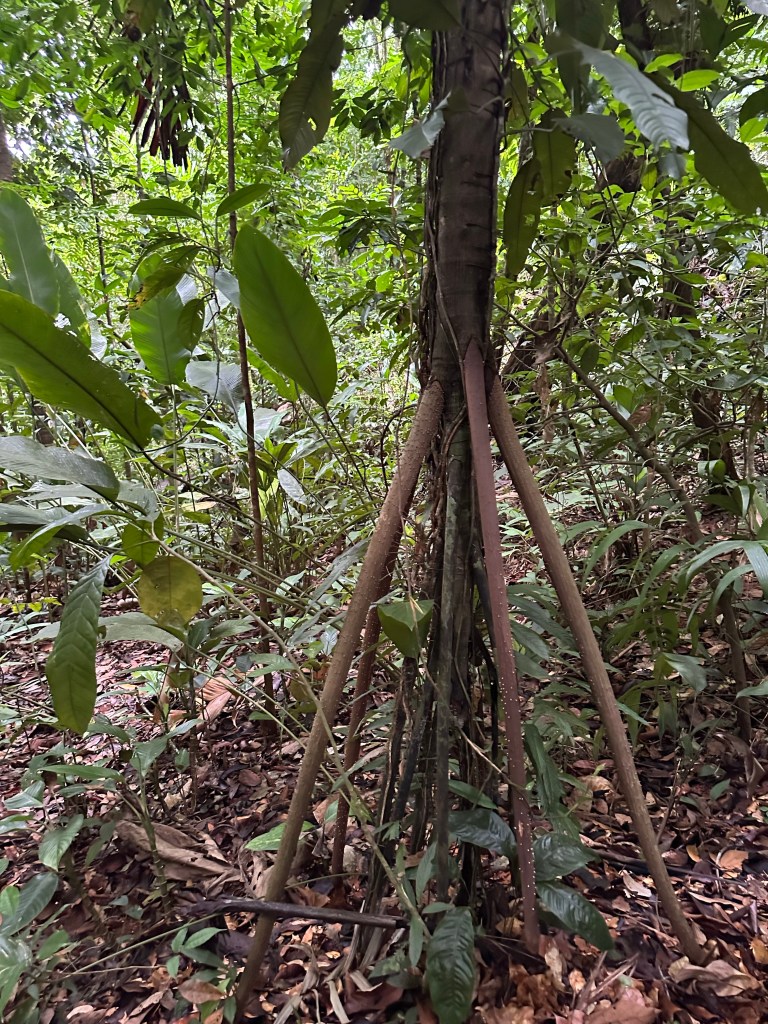
Walking Trees (Socratea exorrhiza)

During our hike, I encountered a fascinating phenomenon: the “walking” trees. I had never seen anything like it before. These enormous trees literally change their location to find the best spot for sunlight. The entire tree stands with its roots in the air, forming a hollow at the center. Here’s how it works: when the tree leans towards a side with more sunlight, it creates new roots in that direction. As these new roots establish themselves, the old ones gradually die, and this process continues. According to an article I read from the BBC, these trees can relocate themselves up to 65 feet (20 meters) per year. It’s mind-blowing! I wished to spend more time observing them, but we had to keep moving.

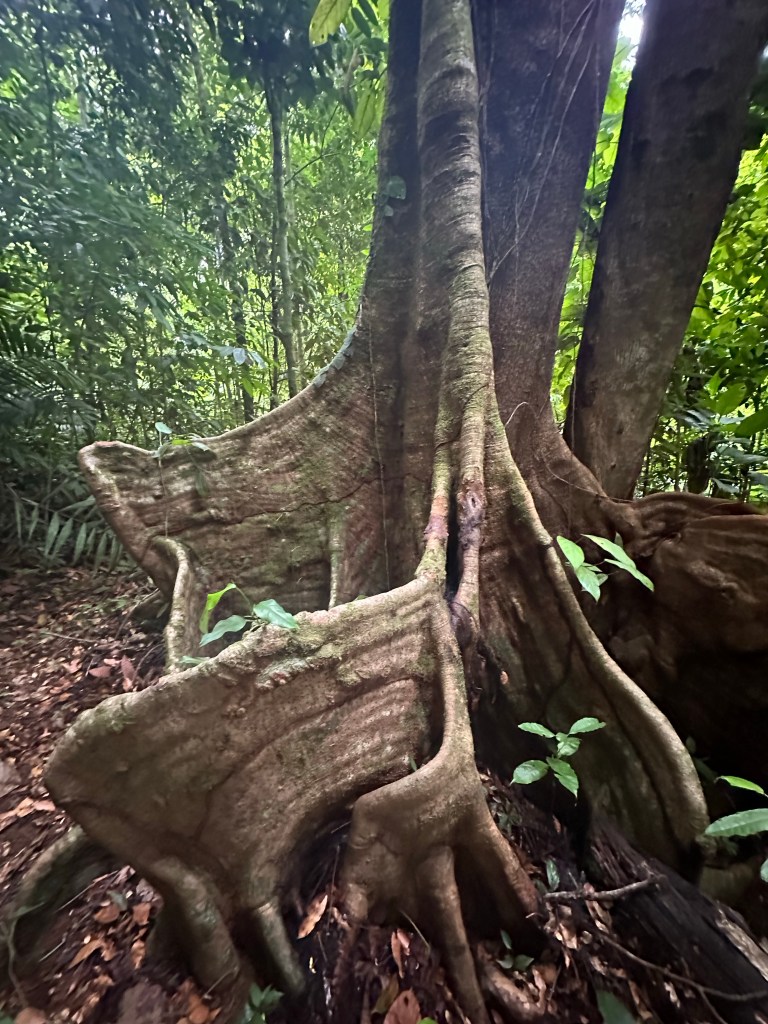
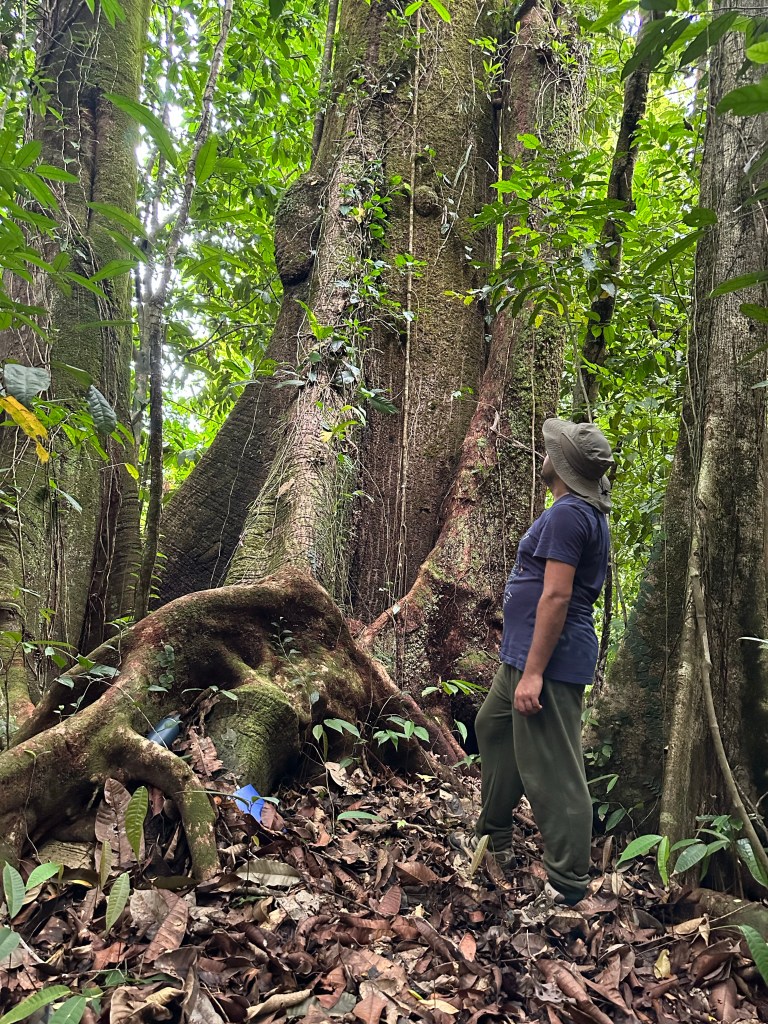
The Giant Trees, Ceiba

Moving through the jungle, I couldn’t help but be captivated by the giant trees, known as Ceiba. Their trunks had an unusual shape with supportive structures at the bottom, and their visible roots extended close to the ground. David explained that since water isn’t an issue for these trees, their roots don’t need to go deep into the ground. Instead, they remain closer to the surface. However, supporting the immense weight of the trees becomes a challenge. To overcome this, they develop these unusual support structures around their trunks, near the ground. David also mentioned that these shapes serve as nutrient collectors from the jungle and create small water pools that contribute to the thriving of frogs. Truly, these majestic trees left me in awe.

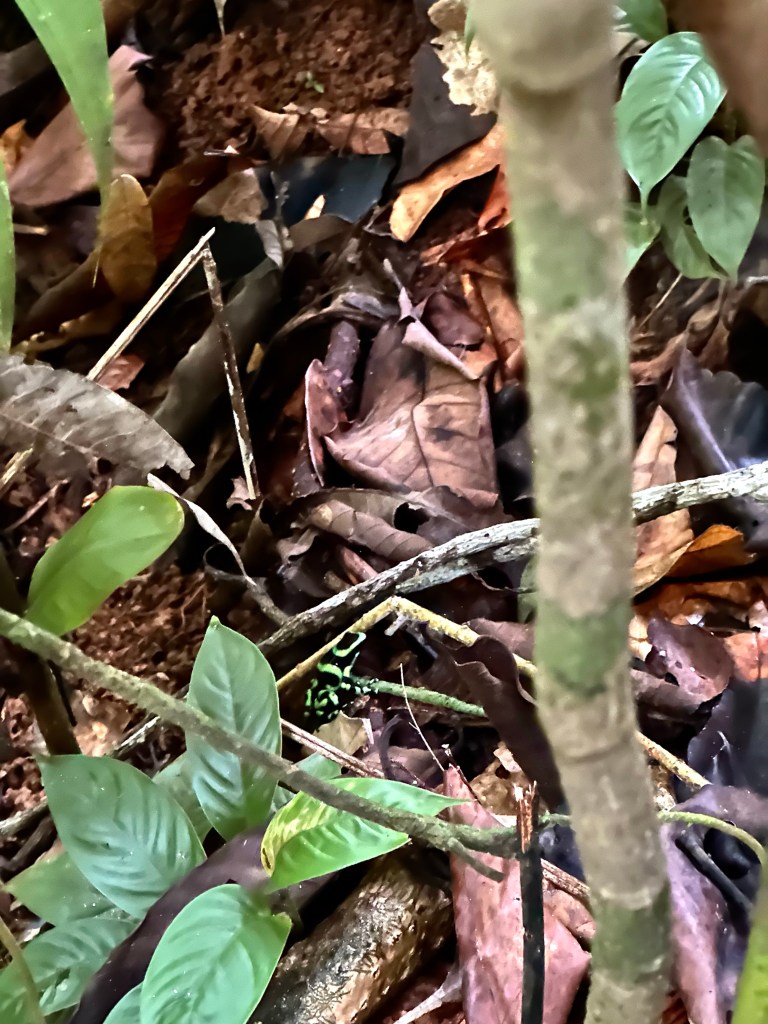
Green and Black Poison Dart Frogs

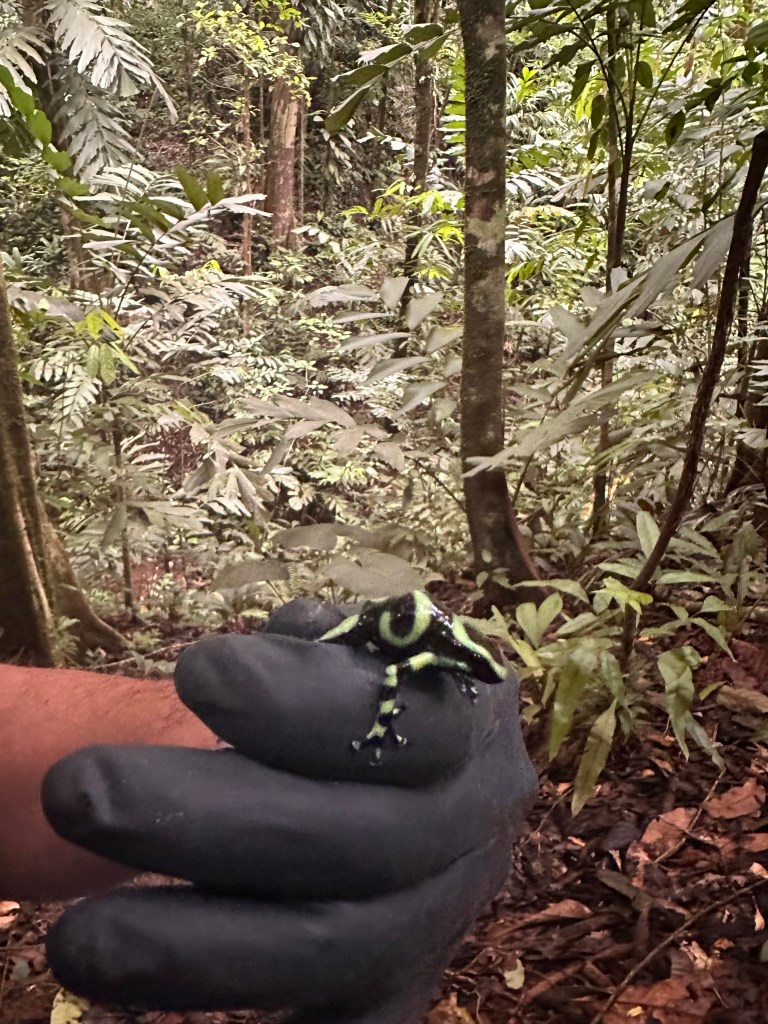
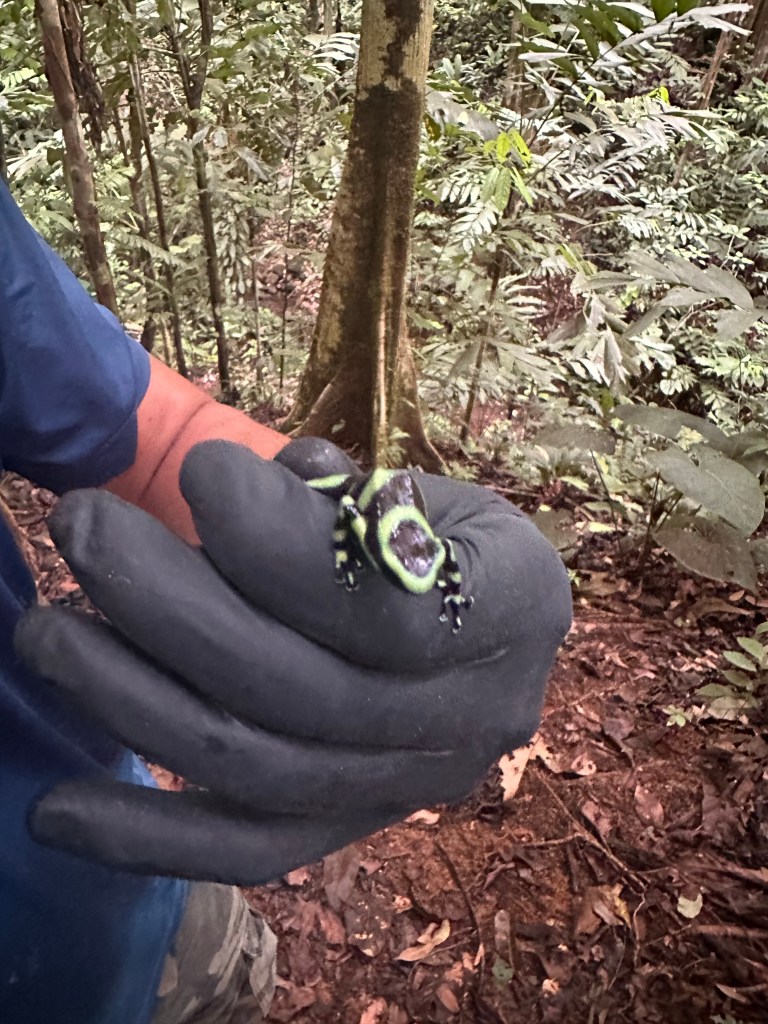
The jungle of Costa Rica is known for its diverse amphibians, and it was impossible to miss the frogs during our expedition. David, who had previously studied amphibians, proved to be an expert guide in this regard as well. He knew exactly where to look and what to do. We encountered Green and Black Poison Dart Frogs (Dendrobates auratus). The vibrant colors of these frogs indicate their poisonous nature. They possess a potent neurotoxic poison that causes muscle contractions. They secrete this poison through their skin as a defense mechanism against predators. Equipped with black gloves, David swiftly caught one of these vibrant frogs. I had never seen a frog with such vivid colors before; it was truly beautiful. David measured its size from the head to the end of its body and explained that females are significantly larger than males. The frog we caught happened to be a male. After observing it for a brief moment, we gently released it back onto the ground and continued our journey. David mentioned that despite the rainy weather of the past week, he hadn’t come across the Green and Black Poison Dart Frog to show the rest of the group. Hence, I considered myself lucky to have encountered them. It was indeed a fortunate sight to behold.

Golfo Dulce Poison Dart Frogs

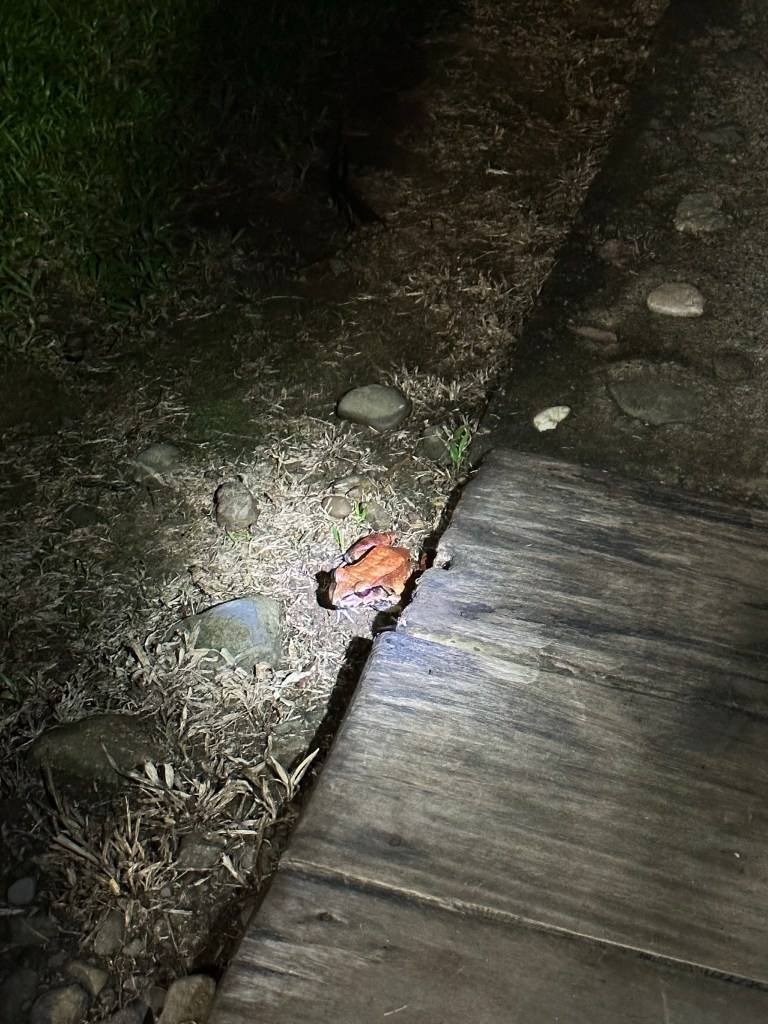
As we approached a small stream, David informed me that we were likely to find an endemic frog species, one that can only be found in this particular location in the world. While searching for frogs near the stream, I spotted an orange-colored frog near the trunk of a giant tree. I excitedly pointed it out to David, who swiftly captured it. It turned out to be the endemic frog he had mentioned. I asked David if I could touch it, and he agreed, but we made sure to put on fresh gloves before handling it. He explained that the gloves were not only for protection against the frog’s poison, but also to ensure that we didn’t transmit any harmful substances to the gentle creatures, which could potentially be lethal for them. The frog had a vibrant orange color, a characteristic of its poisonous nature, and it was incredibly tiny. After taking a few pictures, I bid farewell to my little friend as it hopped back into the stream.

Fascinating story of Leaf-Cutting Ants 

During our hike, I couldn’t help but marvel at the incredible trails that were so neatly constructed for people to walk on. David, noticing my fascination, pointed out that these trails were actually made by leaf-cutting ants. These ants create trails that span miles and miles, resulting in smooth and well-maintained paths. It was truly remarkable!

Path of leaf-cutting ants

But that’s not all. Contrary to popular belief, these leaf-cutting ants do not carry pieces of leaves for their own consumption. Instead, they transport the leaves to cultivate a fungus garden. The leaves serve as the substrate for their fungal cultivation, which provides them with sustenance. The ants eat the fungus that grows in their leaf-cutting gardens. The growth of the fungus depends on the leaves, while the ants rely on the fungus for their survival. It’s a fascinating example of a mutually beneficial relationship.

David’s Turkish Heritage

During our conversation, I asked David about his heritage out of curiosity. To my surprise, he revealed that his grandmother is Turkish, while his grandfather is Costa Rican. I was astonished and shared my own Turkish background with him. I was aware that in Spanish, people from the Middle East are sometimes referred to as “Al Turco,” so I clarified whether he was certain about his Turkish heritage. He confirmed it, and I asked him to convey to his mother so that to tell me more about her Turkish roots.

David’s elaborate front door

Upon our return from the hike, David immediately approached his mother and told the news that I’m originally from Turkey. She was delighted, and with David’s translation, I asked about her knowledge of her own mother’s heritage. Sadly, she said that she knew very little about her mother’s background. All she could recall was that her mother was a tall, white lady, and her last name was different from that of the locals. I refrained myself asking further questions, as it was clear that she held cherished memories despite the lack of information.

To encounter someone with Turkish heritage from thousands of miles away was truly remarkable. It felt like more than just luck; it was a meaningful connection that transcended borders and brought us closer together. And, by the way, she’s been the one who cooks us all along three times a day which I wondered why I loved her dishes so far!

Earthwatch Marine Mammals and Predators in Costa Rica

Voices of the Sea: Listening to Whales and Dolphins

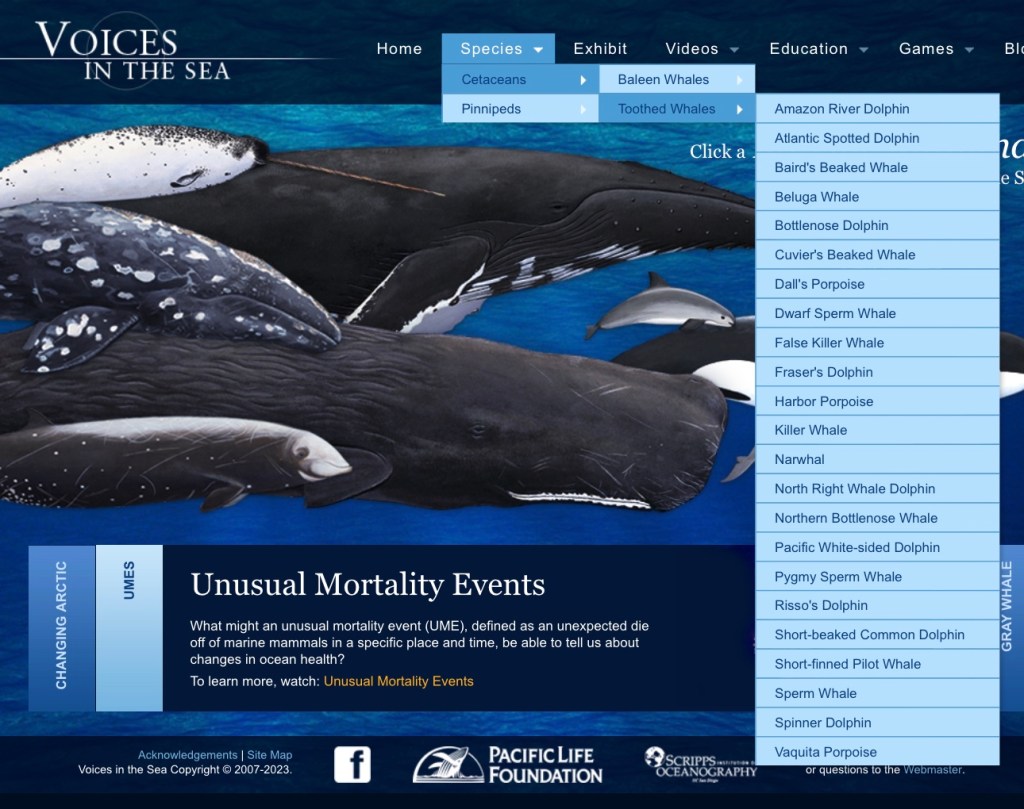
Photo from: Voices in the Sea, University of California San Diego

One of our discussions with Dr. Lenin was about whales. He played different calls of humpback whales, orcas, blue whales, sperm whales, and bottlenose dolphins.

Listening Dr. Lenin’s lecture on marine mammals’ voices

Marine mammals are classified into four different taxonomic groups: cetaceans (whales, dolphins, and porpoises), pinnipeds (seals, sea lions, and walruses), sirenians (manatees and dugongs), and marine fissipeds (polar bears and sea otters).

Cetaceans are divided into two groups: baleen whales and toothed whales. Humpback whales are a type of baleen whale that has baleen instead of teeth, which they use to collect shrimp-like krill, plankton, and small fish from the sea. Blue whales, the largest animal known to have ever existed, are also a type of baleen whale.

Photo from: Voices in the Sea, University of California San Diego

Under the toothed whale category, we have our famous bottlenose dolphins, killer whales (orcas), and sperm whales. I have to admit that I did not know killer whales (orcas) are actually not whales. They are the smartest and largest species under the dolphin family. So, orcas are dolphins.

Photo from: Voices in the Sea, University of California San Diego

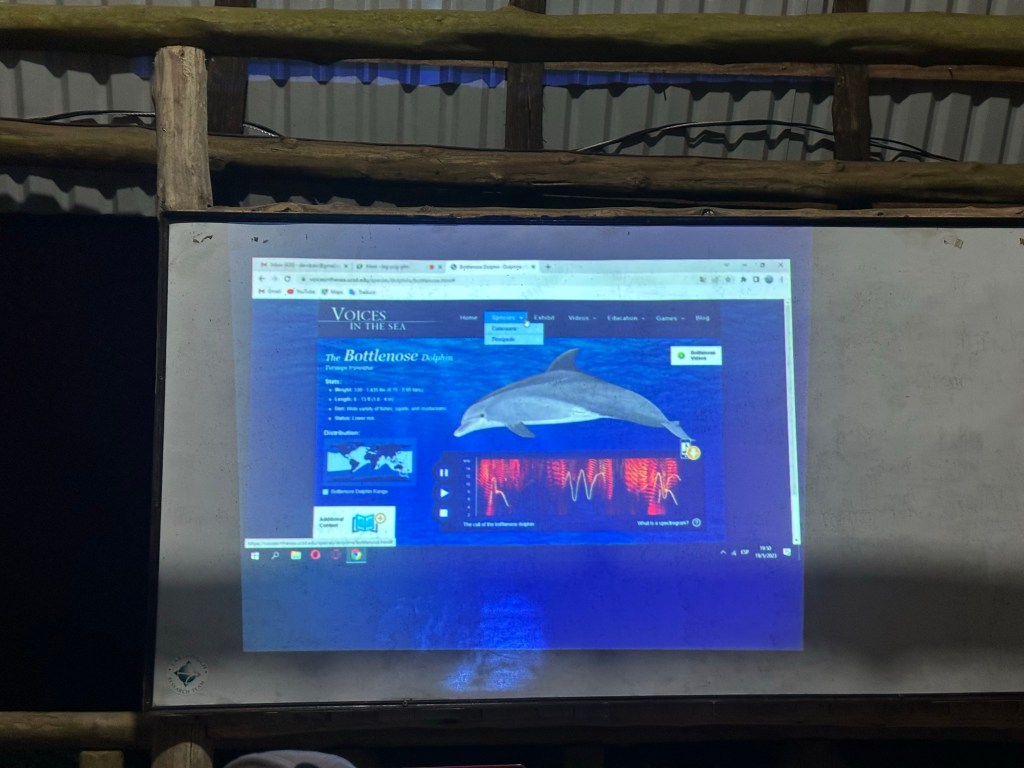
Dr. Lenin presented some of the whale sounds using “Voices in the Sea” from the University of California, San Diego. We first started listening to humpback whale calls. The first call we listened to was their reproductive vocalization. The second call we listened to was their foraging sound, and the third call was mother and calf communication. We were amazed to hear different vocalizations for different situations. Based on these sounds, scientists can predict whale behavior. Humpback whales are endangered species. Humpback whales are migratory animals that typically migrate up to 16,000 km (9,900 mi) each year. They feed in polar waters and migrate to tropical or subtropical waters, such as Golfo Dulce, to breed and give birth. Dr. Lenin told us that listening to the sound of humpback whales is one of the best experiences one could have in their life.

Photo from: Voices in the Sea, University of California San Diego

We then listened to the sound of another baleen whale, the blue whale, which is the largest animal that has ever existed. It is fascinating that the largest animal on earth feeds on the smallest creatures on earth, such as krill and plankton. Blue whales are also endangered animals. When we listened to the blue whale’s sound, it wasn’t loud but deep. Dr. Lenin told us that they create infrasound, which is below our hearing frequency, which is why we can’t hear them well. However, it doesn’t mean that they are not loud because we don’t hear their sound well. Their sound actually travels the farthest.

Photo from: Voices in the Sea, University of California San Diego

Next, we listened to the sounds of bottlenose dolphins. Dolphins, like other toothed whales, use echolocation to locate food and other objects in the ocean. This is how they “see” in the water through sound. In echolocation, they produce a series of sounds called “clicks.” In front of the dolphin’s blowhole, in the area we call the forehead, there is a structure called the melon. The melon consists of fatty tissue and fluid where the sound is focused like a lens. The sound waves travel through the melon and into the water, bouncing off objects of interest. The sound waves then travel back to the dolphin and are received by their lower jaw, which is also filled with a fatty fluid. The sound waves travel from the jaw to the inner ear, to the nerves connected directly to the brain, where they are translated into an image.

Dolphins also make a second type of sound called a whistle sound. Dr. Lenin told us that each dolphin has its unique whistle sound, which is called “signature whistles.” This is how dolphins recognize each other in the dolphin society, and baby dolphins can identify their mother. Signature whistles are so powerful that they play a crucial role in their social bonds. One interesting fact I learned is that a mother dolphin may whistle to her calf almost continuously for several days after giving birth, so that her calf can learn to identify its mother.

We then listened to the sound of another toothed whale, the sperm whale. Sperm whales have the largest brain in nature and are also listed as endangered animals. They have three different types of calls. The first one is echolocation, the second is their language or dialect, which is how they communicate, and the third one is ultrasound. They use ultrasound when hunting, as it paralyzes the prey with sound. Sperm whales can even stun other sperm whales with their ultrasonic sound. That’s how powerful it is.

Photo from: Voices in the Sea, University of California San Diego

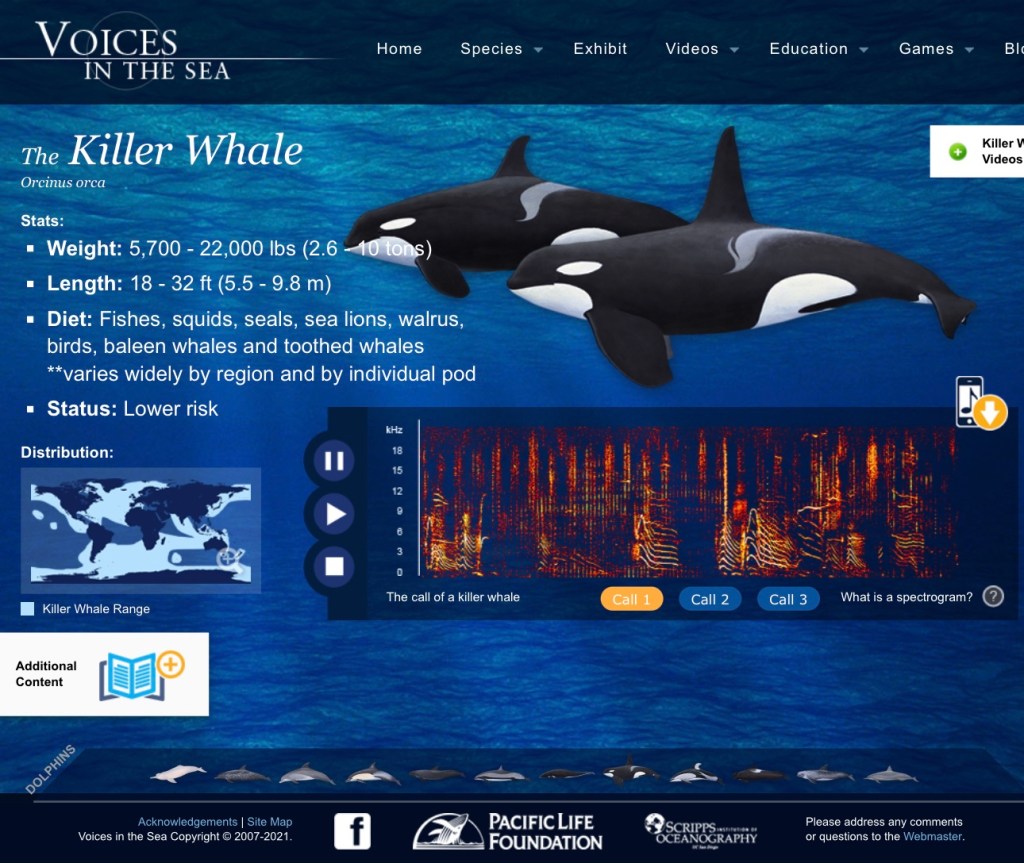
Lastly, we listened to the sound of killer whales (orcas). Their sounds are similar to other dolphins.

Photo from: Voices in the Sea, University of California San Diego

Cornfield Exploration

As a passionate gardener, I always like to see how others succeed in their organic vegetable gardening. This time was no different. At our research camp, we have a cornfield that was recently planted, I would say about 3 weeks or a month ago. However, it was different from what I know. First of all, the field has not been tilled. What they did prior to seeding was they put plastic sheeting into the field where they wanted to plant the corn and let it sit for a while until all the weeds were dead. Then, they removed the plastic wrap and started planting the corn seeds. In each hole, they put three seeds, and the distance between two holes was about 3 ft. The distance between rows was also 3 ft. Once the corn germinated, they thinned out one of the weaker corn plants from each hole. I can’t wait to try this method of planting corn when I get back home to Ohio. This way of agriculture is not only good for the environment but also for the plants themselves. When the soil is tilled, a significant amount of carbon is released, which is bad for the environment and for plants that need carbon. Tilling also disrupts the entire ecosystem in the soil, which is beneficial for the plants. Many microorganisms provide nutrients to the plants at a level they can use.

Corn field at the camp

Land Crab (Gecarcinus quadratus) Encounter

When we returned from dinner around 7 pm, which was a dark night, we encountered a land crab near our meeting place. By the way, the sunset in Costa Rica is at 5:47 pm, which is pretty early compared to Columbus, Ohio. However, the sun rises around 5:15 am, which is also pretty early for Ohio. As you may have noticed, the length of day and darkness is almost the same since we are near the equator. Now, let’s go back to our land crab. They were so cute, colorful, and looked docile. After taking its picture, I went straight back to my room to relax because it had been a very tiring day for me.
Earthwatch Marine Mammals and Predators in Costa Rica

Coastal Part of Piedras Blancas National Park: A Biodiversity Hotspot in Golfo Dulce

Our research and exploration continued in Golfo Dulce, specifically focusing on the coastal area of Piedras Blancas National Park. Our researcher, David, described this as one of the best parts of the entire Golfo Dulce due to its incredible diversity of marine animals. Although we didn’t have the opportunity to explore Piedras Blancas National Park, David told us that it is also one of the most biodiverse places on the planet.

While heading towards the Piedras Blancas National Park side of the gulf, we approached the river mouths. I forgot to mention this in my previous posts, but dolphins are often found hunting near river mouths where fish are abundant. Therefore, it is highly likely to spot them in those areas. Additionally, since we are in the tropical rainforest region, there are numerous rivers and frequent rainfall. These factors contribute to the presence of dolphins. Shortly after we left the river mouths, we once again spotted several dolphins, recorded our data, and continued towards the nearby coast.

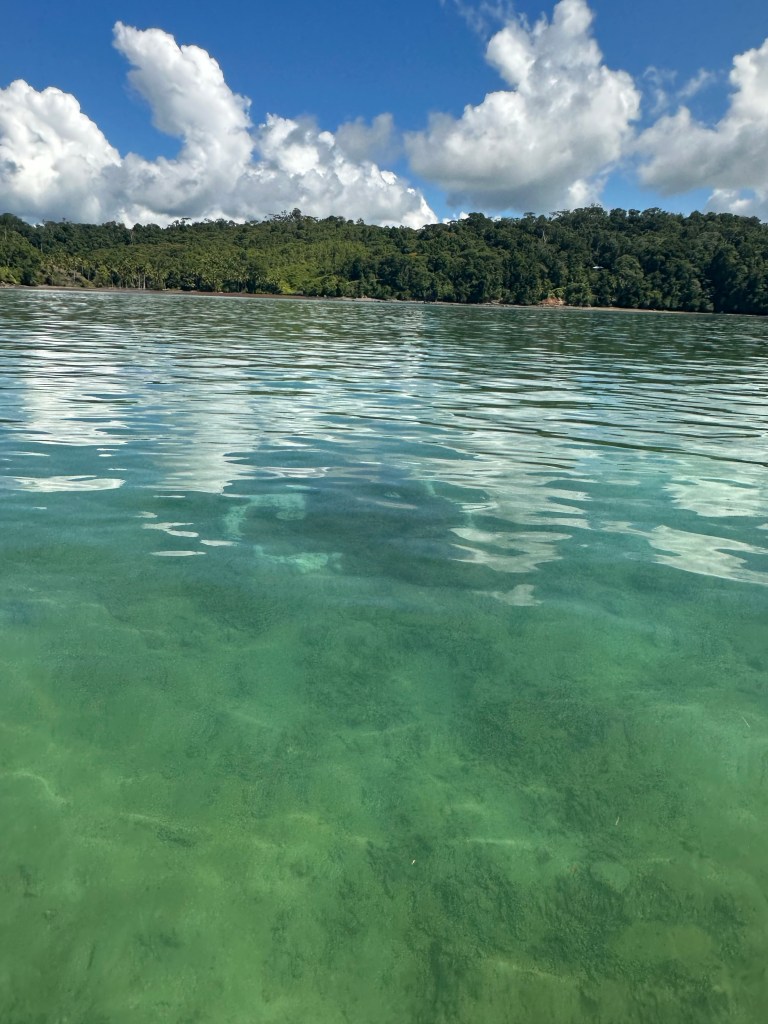
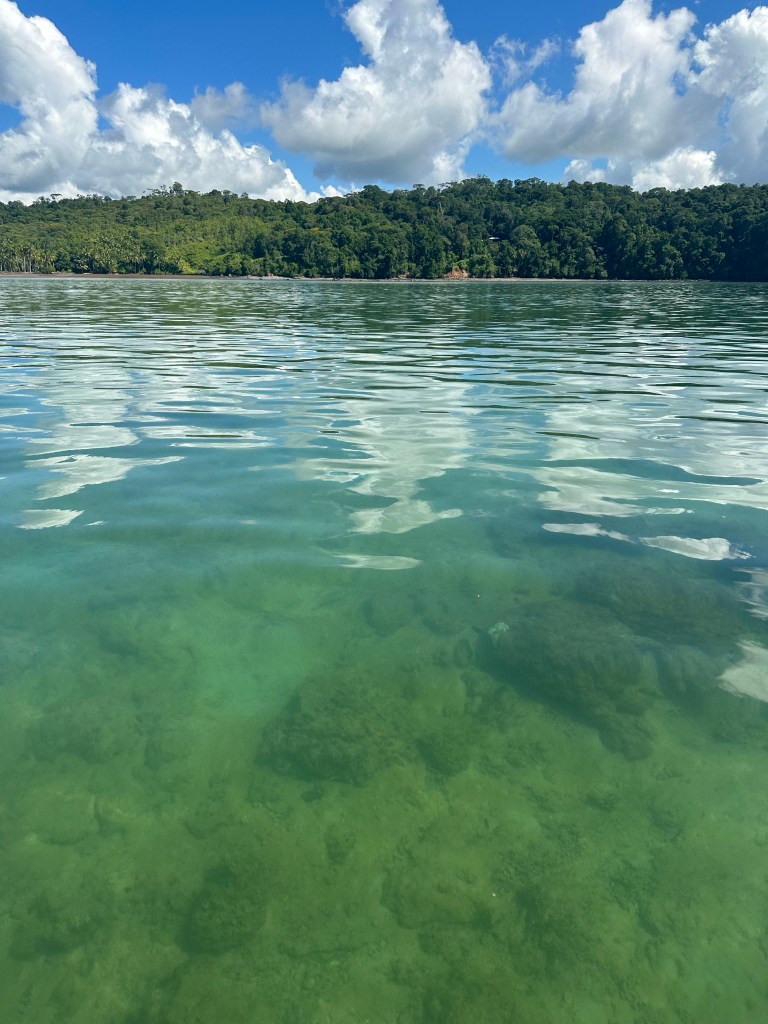
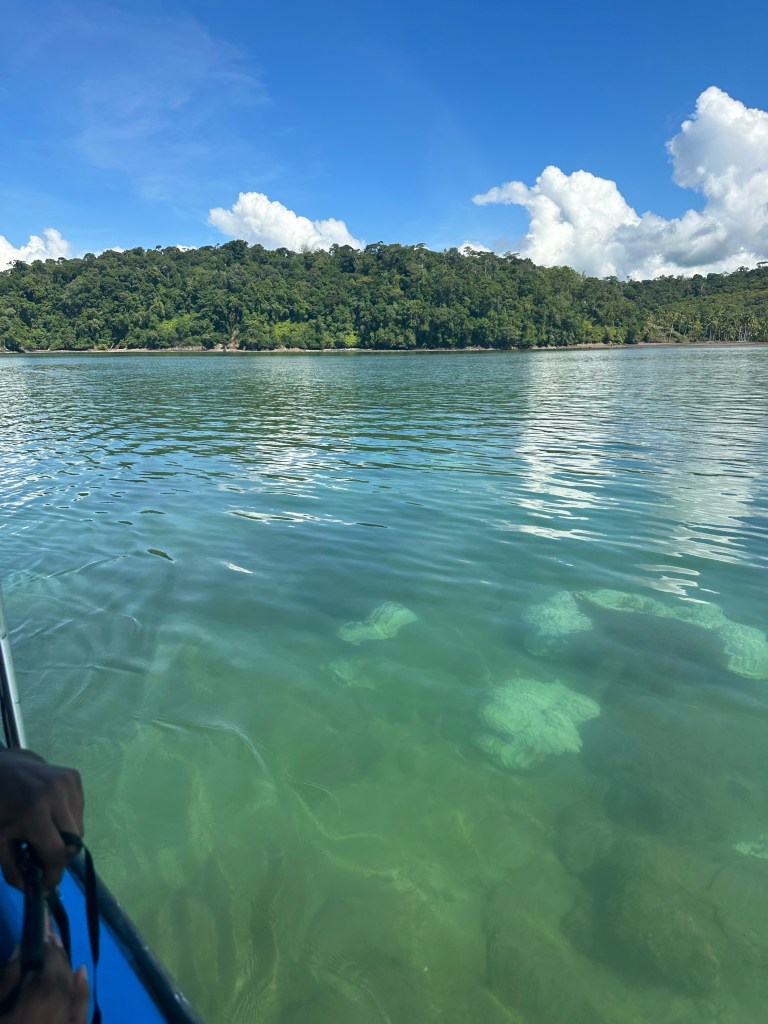
The coastal waters were shallow, allowing us to easily see the sea floor. Due to recent heavy rainfall, the water was slightly muddy, but David told us that during the dry season a couple of weeks ago, the water in this area was very clear. During our observations, we encountered an eagle ray and several mantas. One of the mantas even jumped out of the water, providing a fascinating sight. We also observed snappers and various tropical fish. Additionally, we were fortunate to spot a green turtle and a type of jumping fish called a needlefish. The needlefish uses its tail to propel itself out of the water, covering long distances. After a lengthy jump and sprint, it returns to the water and remains still to confuse potential predators. However, dolphins, being highly intelligent, use their echolocation to easily detect them.

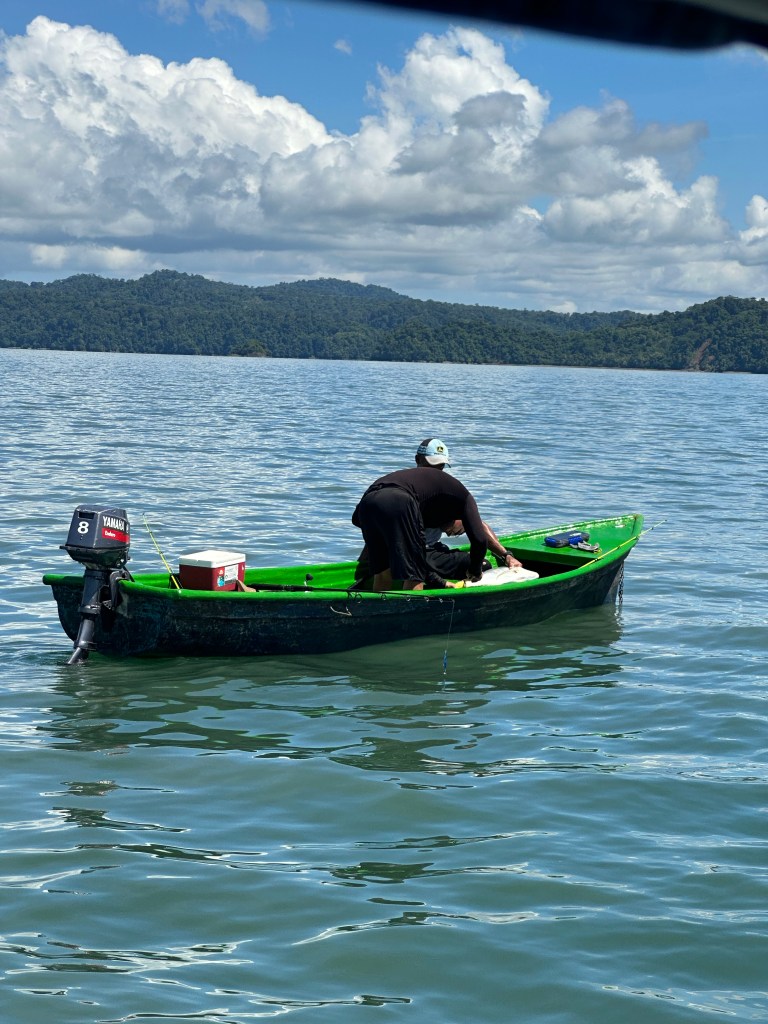
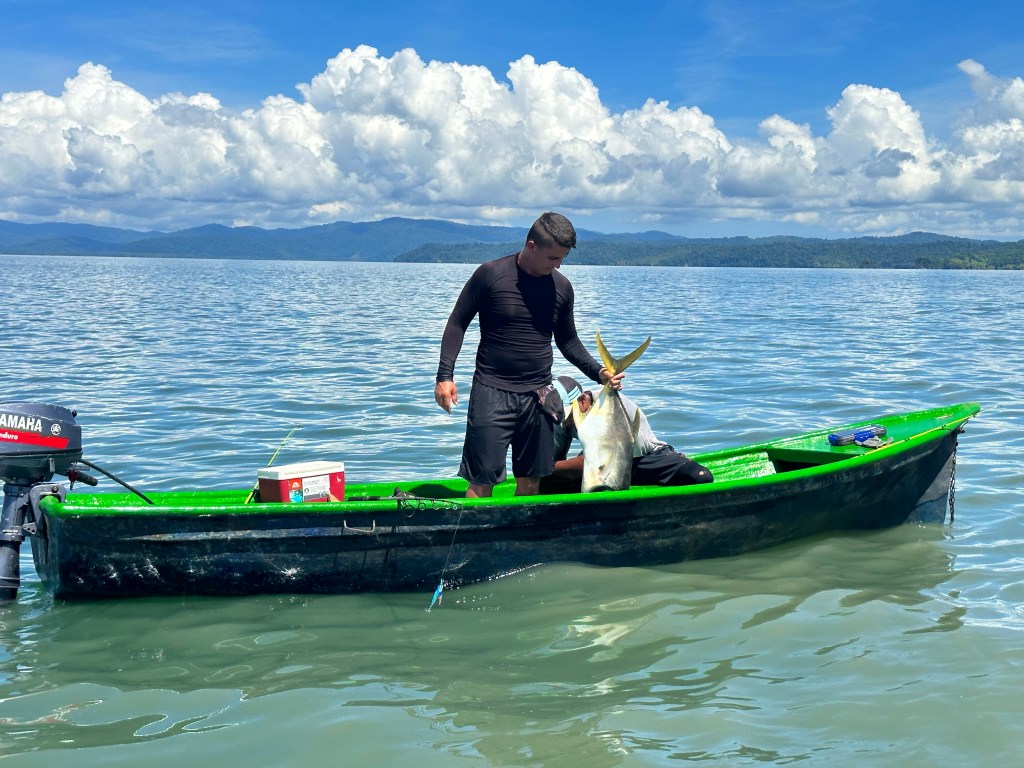
Along our journey, we also encountered fishermen who were fishing near the river mouths. David explained that having dolphins around is not a good sign for fishermen as they tend to scare the fish away. Nevertheless, the abundance of fish in the area means the fishermen do not mind having dolphins accompanying them. We stopped one of the fishermen’s boats and asked if they had caught any fish. They proudly showed us two jackfish they had caught, which were both enormous and appeared delicious. So far, I haven’t had the chance to eat any fish here, but perhaps in the coming days, David will treat us to some.

Continuing from the river mouth, we noticed a distinct division between the river water and the ocean water in Golfo Dulce. I have never seen such a sharp demarcation between fresh and saltwater before.

Distinctive division of sea water with fresh water

Once we passed the river water, the clarity of the water improved, allowing us to easily see the ocean floor. David shared that around 50-60 years ago, this region had a vibrant coral population. However, the construction of roads to connect the Americas resulted in deforestation, leading to increased mudslides and debris washing into the coast. As a result, the shallow coastal areas became covered in sediment, burying the corals. Presently, there are no visible corals in the region. Nevertheless, there is a promising non-governmental non-profit organization called “raising coral” that aims to reintroduce corals and restore their population along this beautiful coast with an alliance with the Center for Research in Marine Science and Limnology (CIMAR) of the University of Costa Rica (UCR).

Species Exploration

Being in one of the world’s most biodiverse regions, we were eager to document as many species as possible. However, it has been challenging to keep up with the constant diversity we encounter at every turn. At this point, I have concluded my exploration of fruits and wish to focus more on wildlife. To assist me in my endeavors, I rely on two incredibly useful apps: Seek and iNaturalist. For those who have not yet used them, I highly recommend doing so. These apps are powerful tools that aid in species identification. I first learned about them during my initial Earthwatch expedition called “Climate Change: Sea to Trees at Acadia National Park,” where we used them to identify species in the surrounding area. Since then, I have utilized these apps wherever I go. The Seek app helps identify species, and then the data is inputted into iNaturalist, enabling my observations as a citizen scientist to be used by researchers. I also use the Seek app to familiarize myself with the species present in the area before exploring. Once again, I must emphasize the effectiveness and usefulness of these tools.

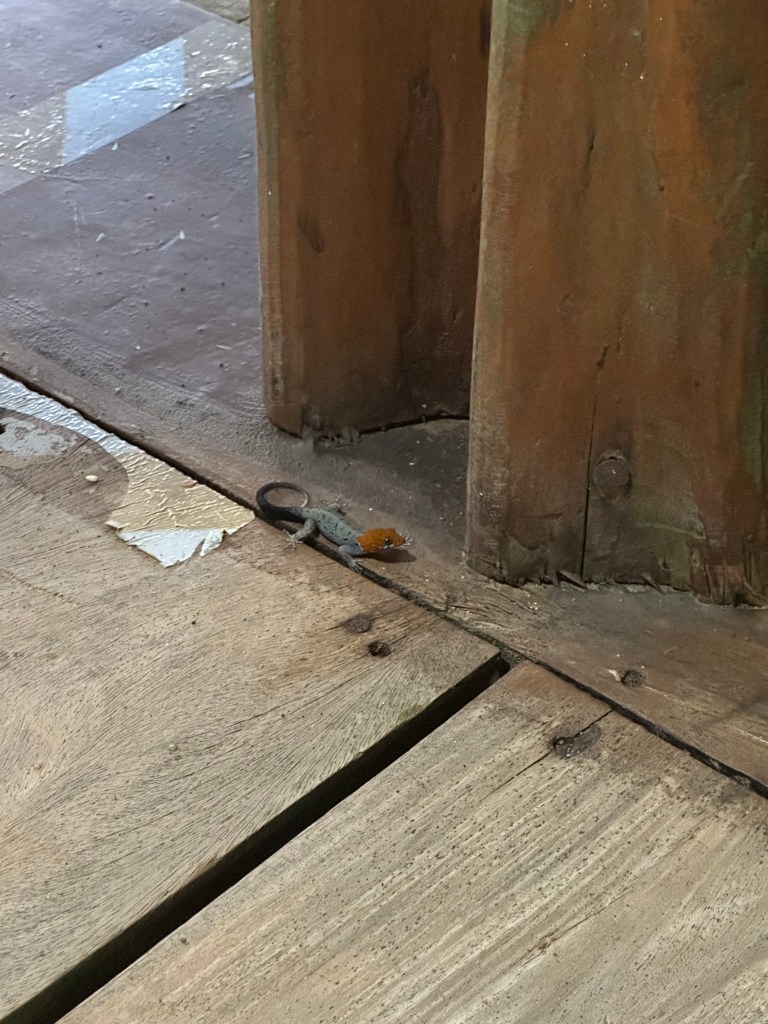
Reptiles have become some of my favorite animals here due to their incredible diversity and uniqueness. Every time I turn around, I encounter a different kind of reptile. Unfortunately, they are often too quick for me to capture in photos or thoroughly analyze before they disappear. However, I have managed to document a few of them, including the Yellow-headed Gecko (Gonatodes albogularis).

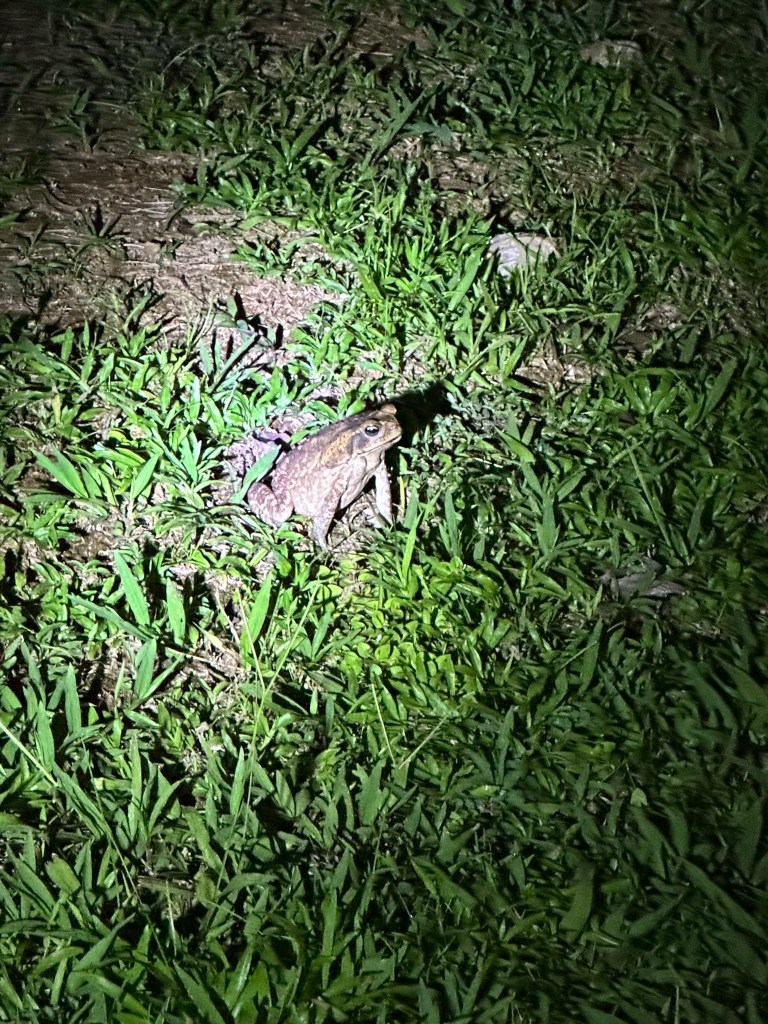
During the nighttime near our camp, we spotted numerous bullfrogs. These beautiful creatures were surprisingly docile and did not move when we approached them.

Moreover, iguanas are abundant in the vicinity of our camp; they can be found literally everywhere. I must admit that I felt a bit intimidated by their appearance, as they seemed rather fierce to me.

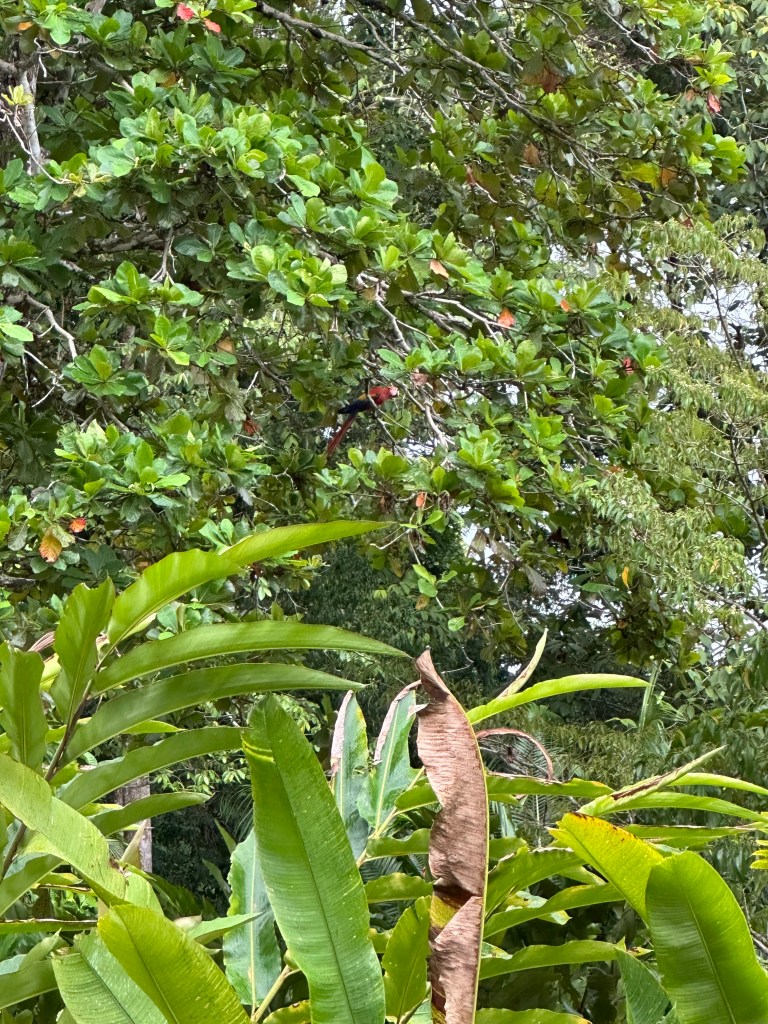
I have also spotted scarlet macaws at our camp. They are beautiful but can be quite loud, especially when they fly in pairs. I often see them perched on almond trees at our camp.

Scarlet Macaw

Interesting Fact

It may surprise you, but there are no mosquitoes in this area. One would expect them to be abundant, yet they are entirely absent. Even insects or moths that typically swarm around light bulbs at night are nowhere to be seen. I asked David about this peculiar phenomenon, but he was also unsure of the reason. He mentioned that many guests who visit this place have made similar observations. Although there are bugs on the ground, they do not bother or approach us. Even in the place where we are staying, which has numerous cracks and openings, nothing has emerged thus far. This is something that continues to intrigue me.

Earthwatch Marine Mammals and Predators in Costa Rica

Citizen Scientists in Action: Studying Dolphins and Sampling Tropical Fruits

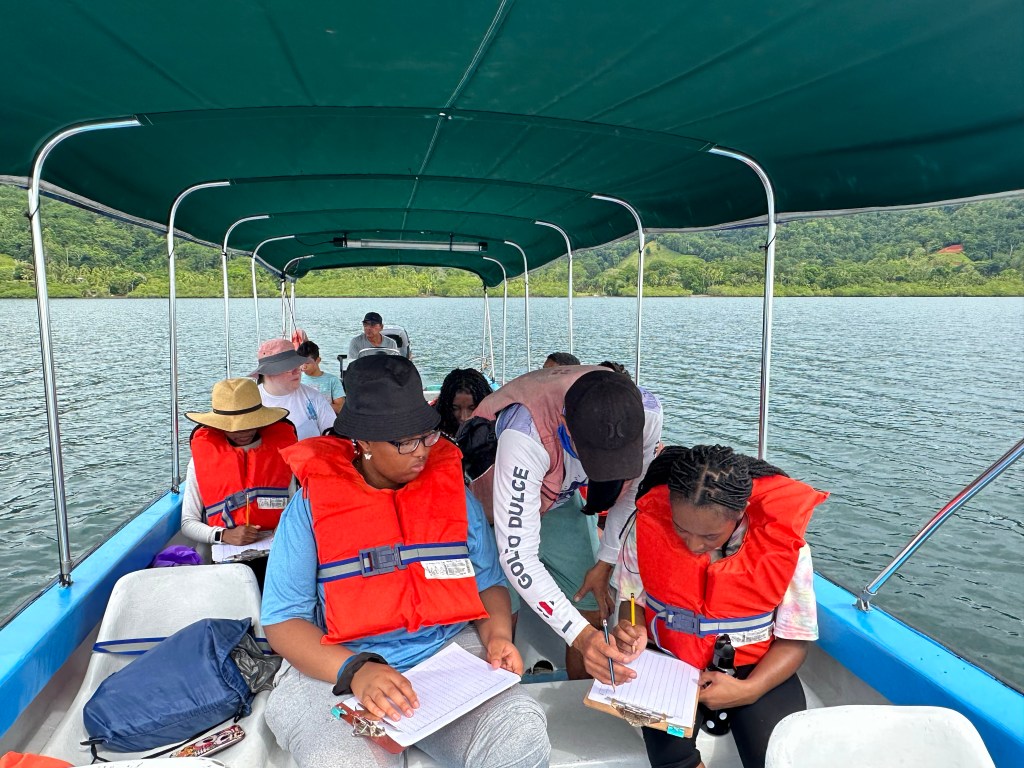
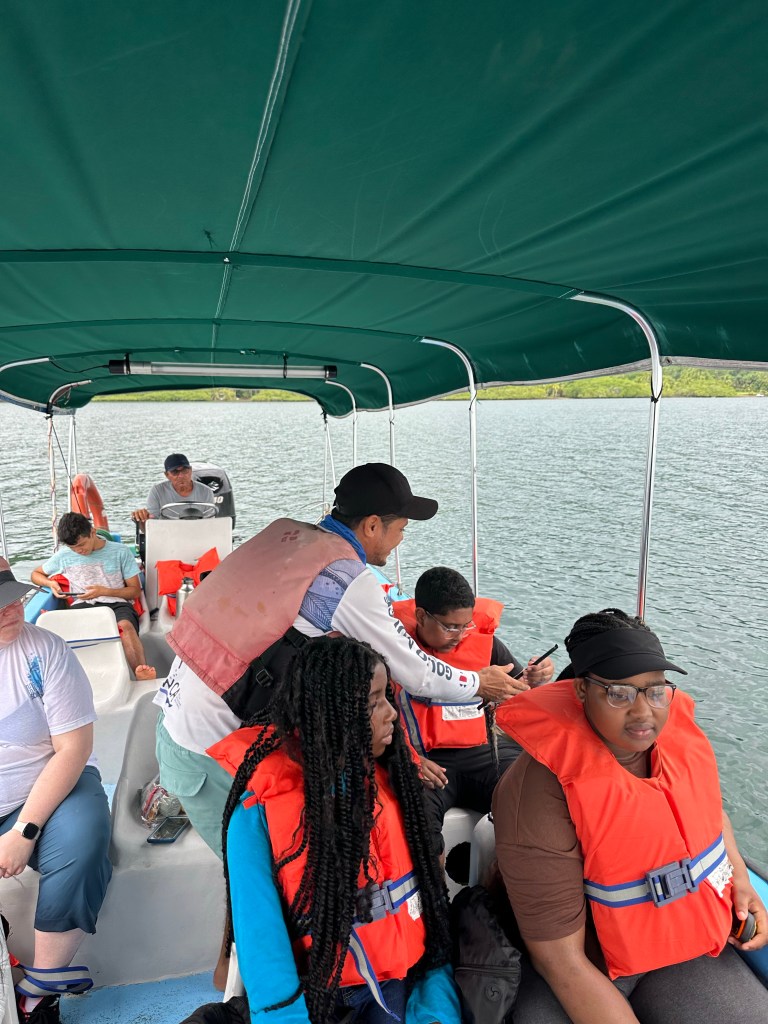
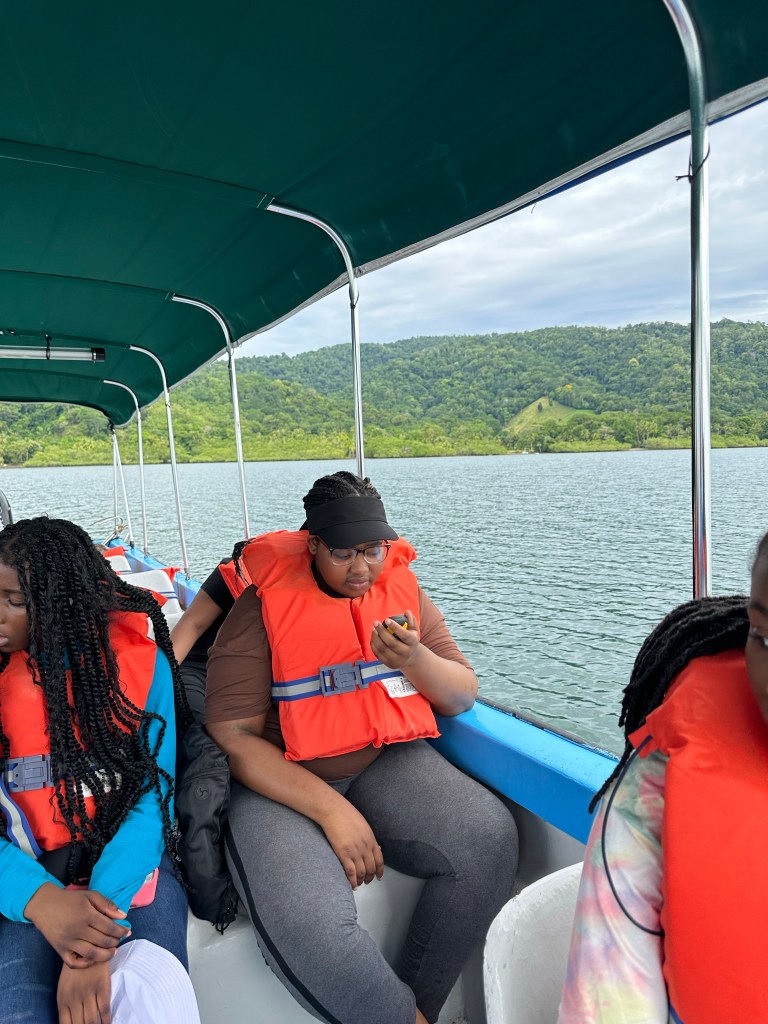
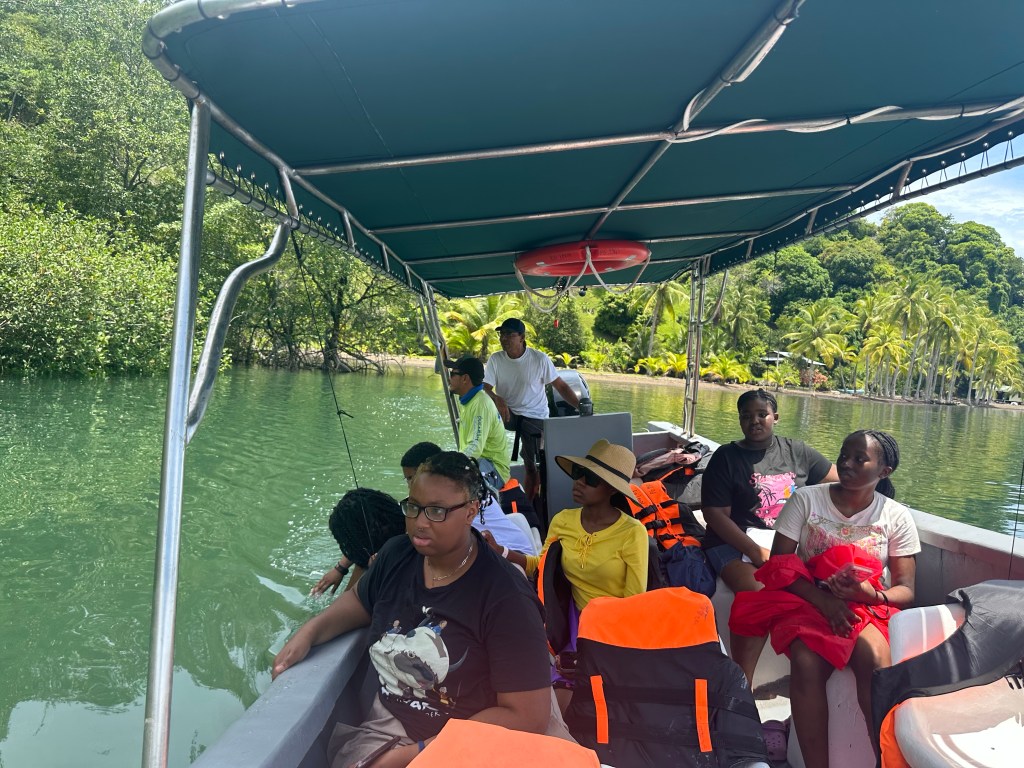
We begin our research every day at 8:00 am, joining the boat (pictured below) with our captain, and our host, David. Research ends around 12:00 pm and lunch is provided at 1:00 pm.

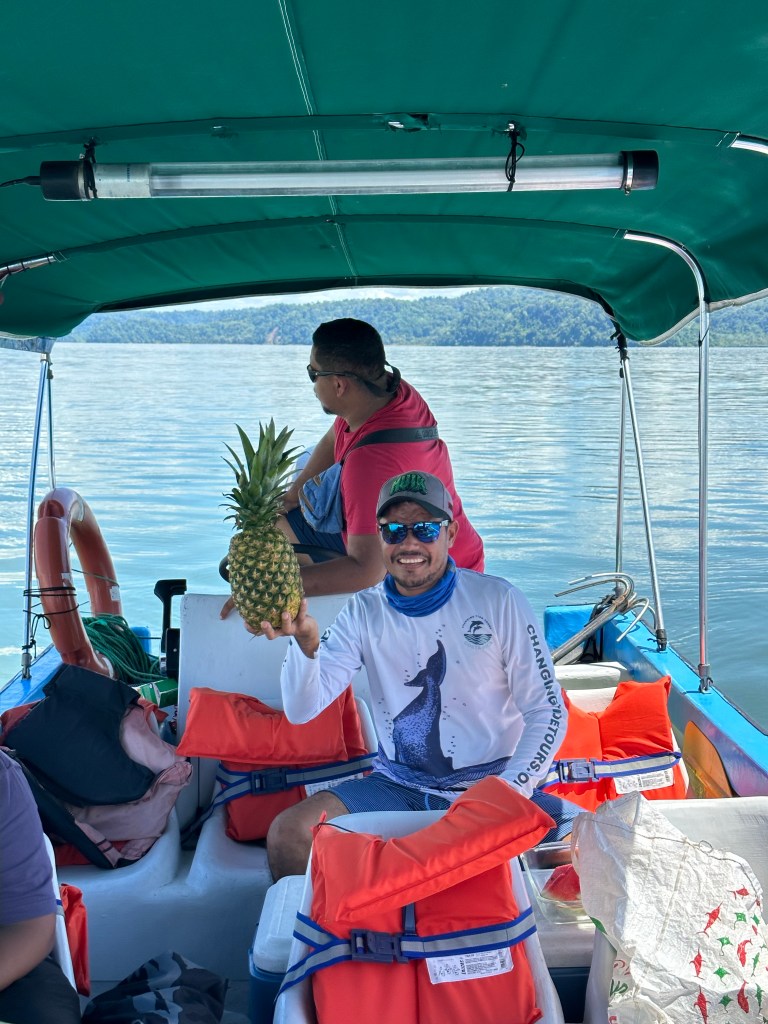
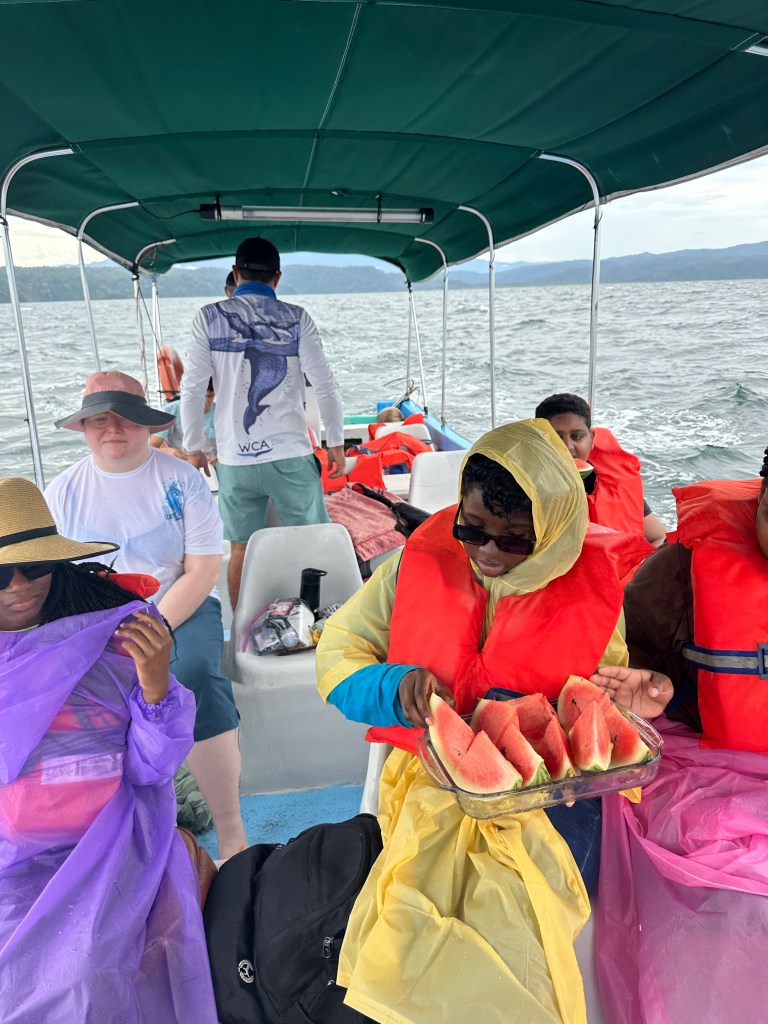
David takes care of us on the boat, while also taking pictures, managing all the data that we have been collecting, and telling the captain where to go for the day. He also takes care to ensure we are all comfortable during the four hours of sea exploration. It is important, when visiting the tropics, that you stay hydrated and David provides us with water and fruits to ensure we get what we need to stay healthy. He cuts fresh, cold, beautiful watermelon and pineapple right on the boat and serves them to us on a nice tray (see pictures below). David is an incredibly polite, thoughtful, and kind host! He shares fun facts and interesting information about the region and waters, as well as details about dolphins, orcas, whales, and other marine life we may encounter. He is very informative and an expert in his field as a Biologist! He manages all of the research by himself, never complaining even when things are difficult. He is a very passionate young scientist for sure!

DATA COLLECTION

In my previous post, I mentioned the photo identification method, which is used to identify individual dolphins. Once a dolphin is sighted, David uses his professional camera to capture photos of all of the dorsal fins in view. At 4:00pm, Dr. Lenin, the lead scientist, joins us from Mexico City via Google Meet, and we match dorsal fins with catalog images from previous boat surveys. If there’s a match, we say we encountered that specific dolphin. Scientists assign names and numbers to each dolphin, and when they are encountered or not using a zero/one coding system. Zeros in this case represent no sighting, while ones represent a sighting. If a dolphin is sighted more than once, this is considered a rate of occurrence that supports the belief that this dolphin is using Golfo Dulce regularly. This information becomes important when expanding research to mating and animal behavior patterns.

We also collect sea surface temperature, GPS location, sea state condition (SSC), whether dolphins are seen or not, and other relevant information. We measured sea surface temperature with a hand held thermometer, submerging the thermometer in the water for one minute and reading the results by eye. For the sea state condition, we look at the condition of the large body of water. There are six sea state conditions. If it is zero that means that the sea is calm and reflective, like a mirror. Scale one means there are small ripples, but no waves. Scale two means small waves and no whitecaps. Scale three means larger waves with the presence of white caps. Scale four is the presence of much larger waves and rough waters. Beyond scale four, we do not want to remain out on the water in the survey boat because conditions are too hazardous. So far, the highest level we have observed is scale two. Most of the time, the condition was either scale zero or one. While our boat surveys Golfo Dulce, it stops every 30 minutes to record all of the data at specific locations.

It’s incredible to see our students engaged in real science, while enjoying the beauty of Golfo Dulce. I must admit, there were times when the students felt hot, tired, and uncomfortable, but in the end, they understood the value of the work they did as citizen scientists. They know that their data will be used by the scientific community to help conserve dolphins in this part of the world. As their reflections showed me on our third day, they started to have more respect for the scientists and the work they do! They began to show more care about the natural world than they had before coming here. I will mention more about that in my future posts.

After lunch, we have about two hours until our science discussion with Dr. Lenin. Personally, I find it too much time to just sit around and relax until 4:00 pm, especially knowing that I am in paradise and may not come back here so, I try to make the most of my time by exploring Costa Rica!

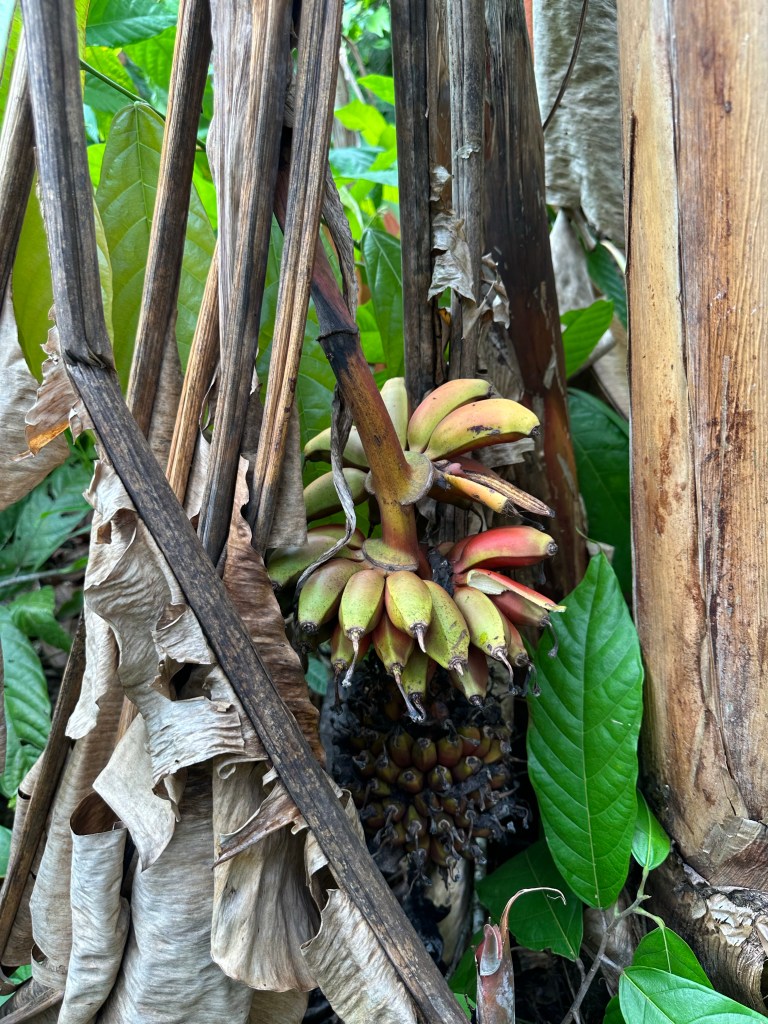
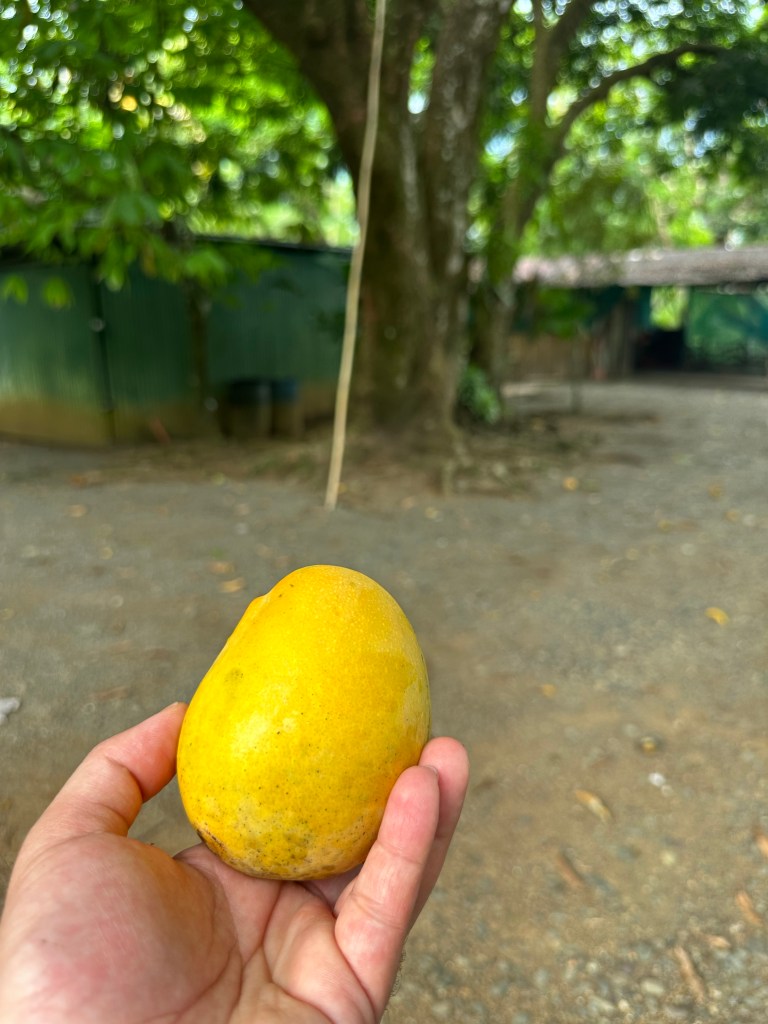
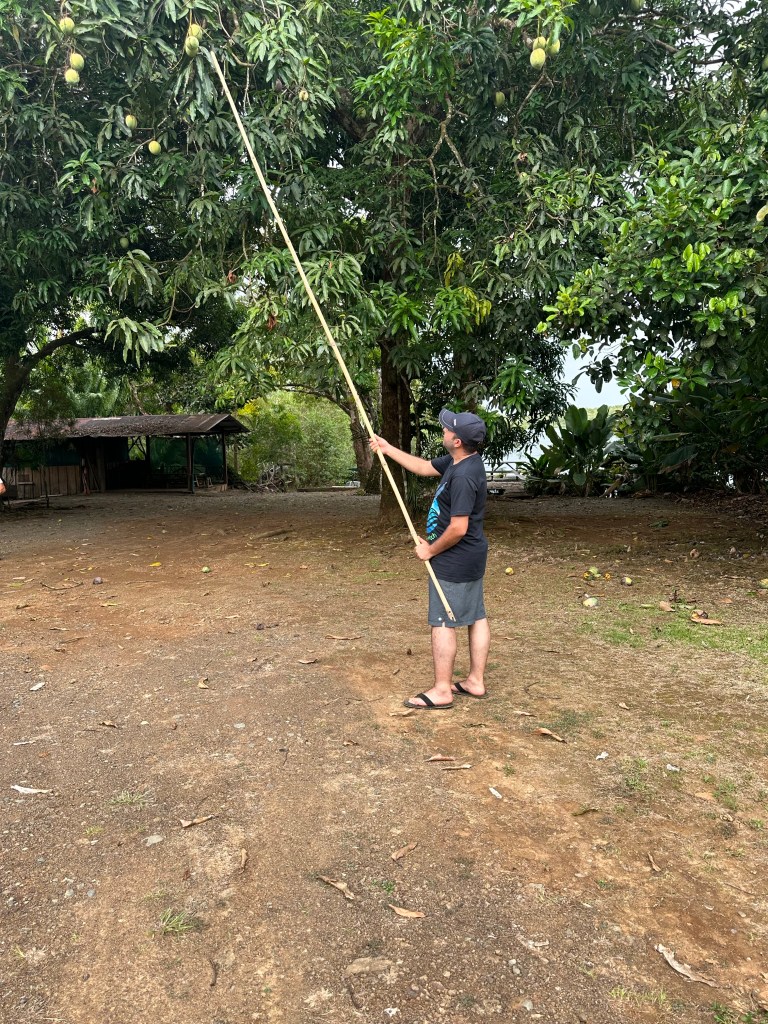
My next adventure was focused on other types of fruits. At our camp, we also have two types of mangoes, cacao trees, and banana trees. One type of mango is smaller in size and has a dark orange color when you cut it open. The other mango is huge, but since it is not ripe, I could not taste or open it. The bigger mango was so huge that everytime I passed under the tree to go to the ocean I was scared that one of them could fall while I was passing under. That could kill anyone if it hits. However, I have been collecting the smaller type mangoes that are scattered around the trees. I pick them up once they fall on the ground since I can’t climb the trees. Anyway, I asked David for a knife to peel the mango so I could eat it. But, he said I don’t need it and showed me how to peel a mango with my front teeth! I tried it, and it was so easy. I once again marveled at the fact that I had never eaten a mango like this before. It was incredibly sweet, juicy, and full of dark orange fiber!

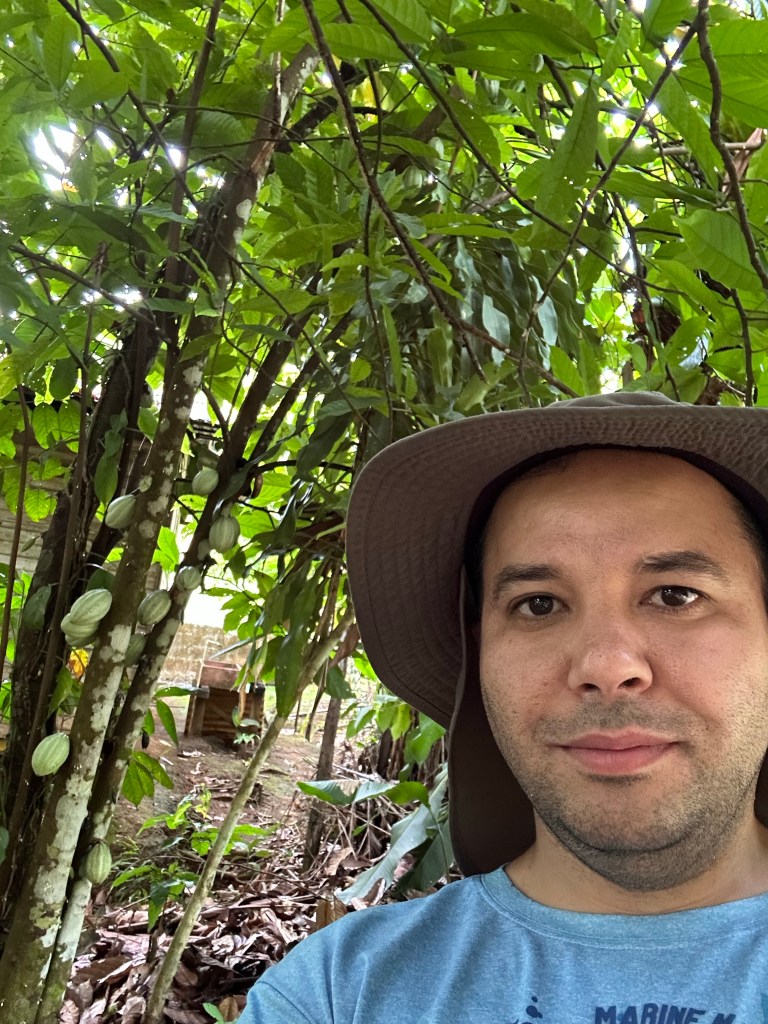
Then I went to the cacao tree to see if I could find a ripe fruit and check out how the chocolate seeds look. I had never tried one before. I looked around, but there were none. David told me that you have to be really quick to pick ripe cacao fruit because squirrels or other wild animals grab them quickly. So, I wasn’t lucky enough to find any ripe cacao yet!

Earthwatch Marine Mammals and Predators in Costa Rica

Captivating Encounters: Dolphin Spotting in Dolfo Dulce

After learning about the ecological significance of Dolfo Dulce and its status as one of the most important places in the world, we were eager to begin our research with this fresh knowledge. We were all excited to see these incredible marine mammals more than ever before.

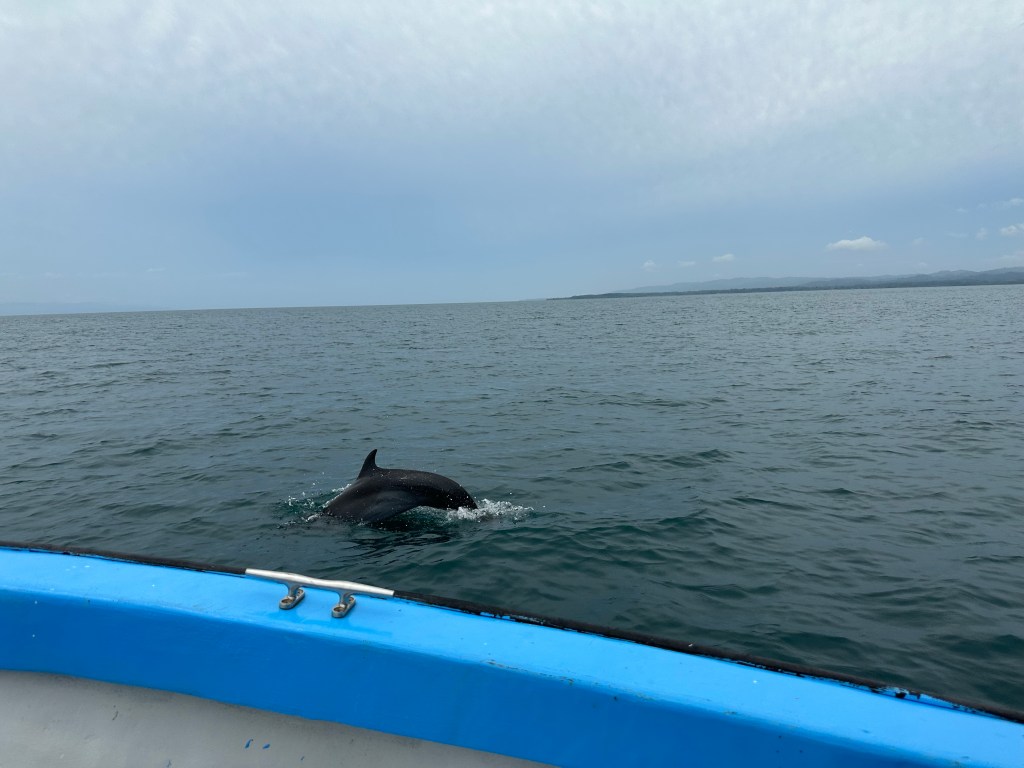
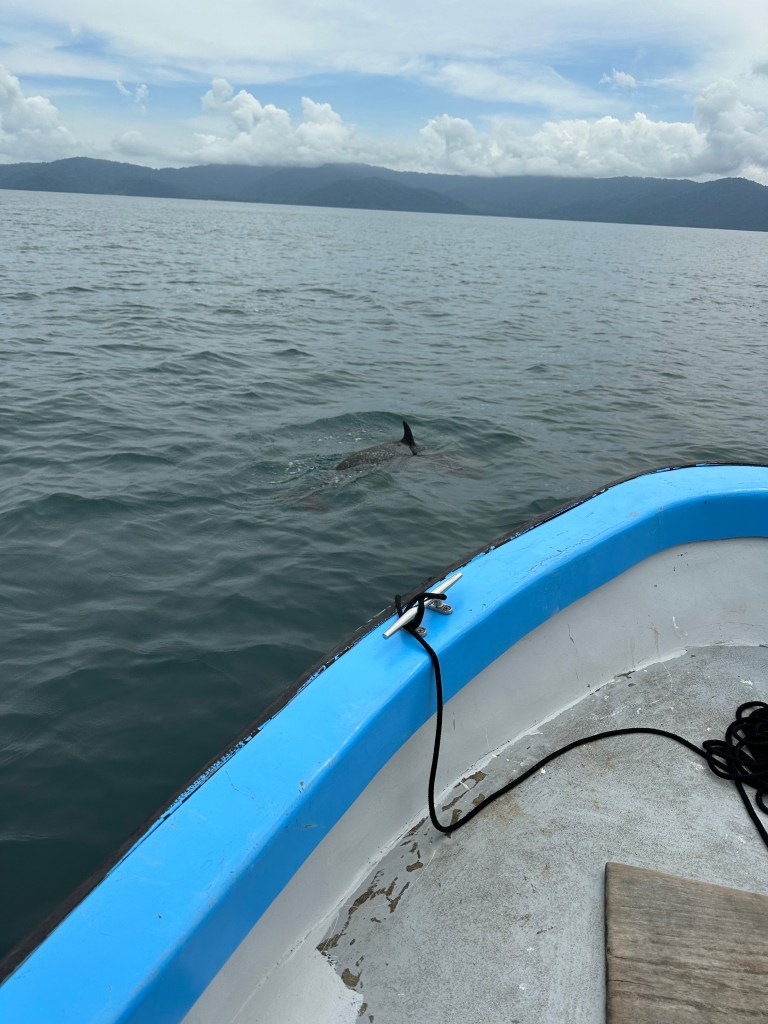
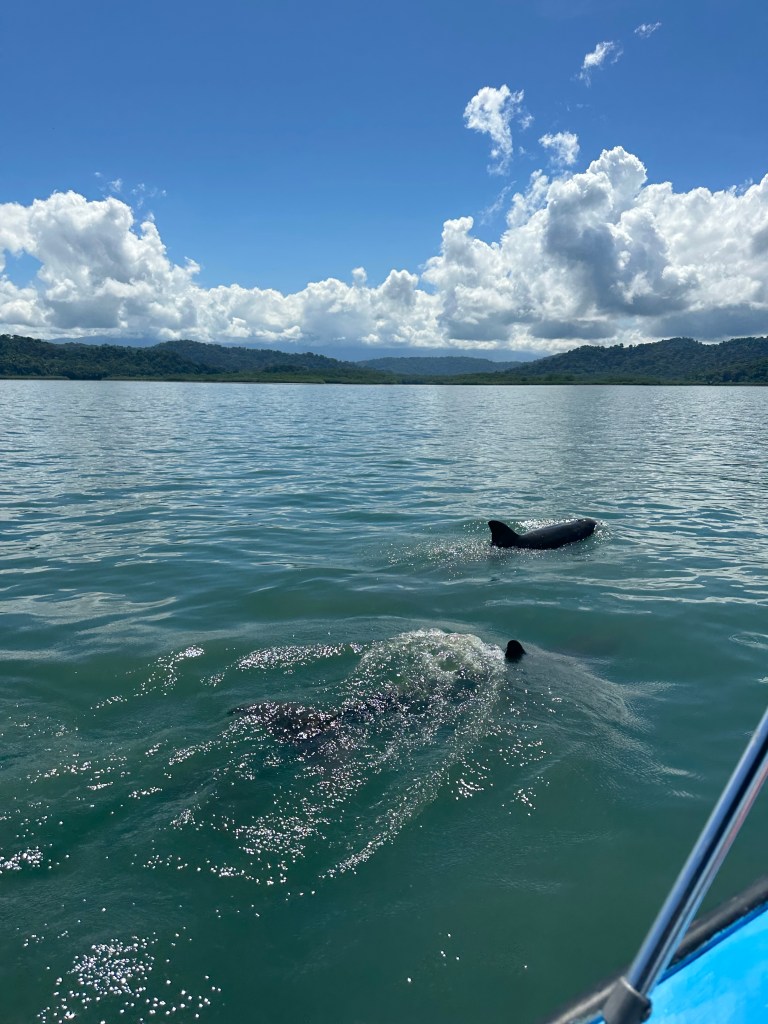
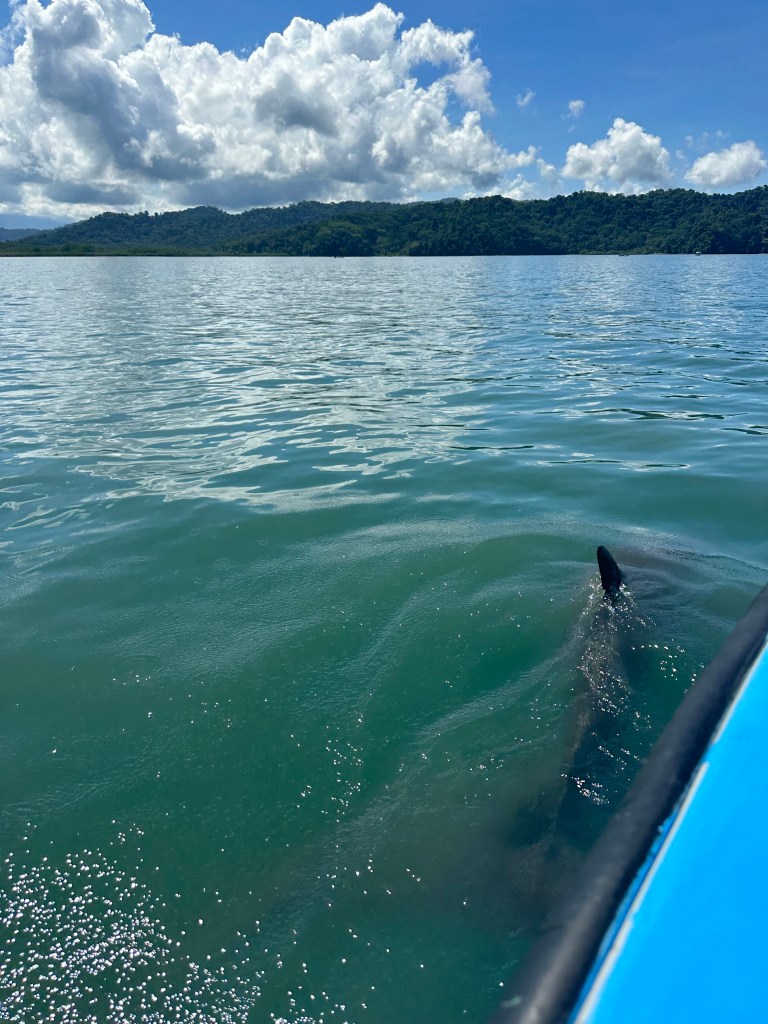
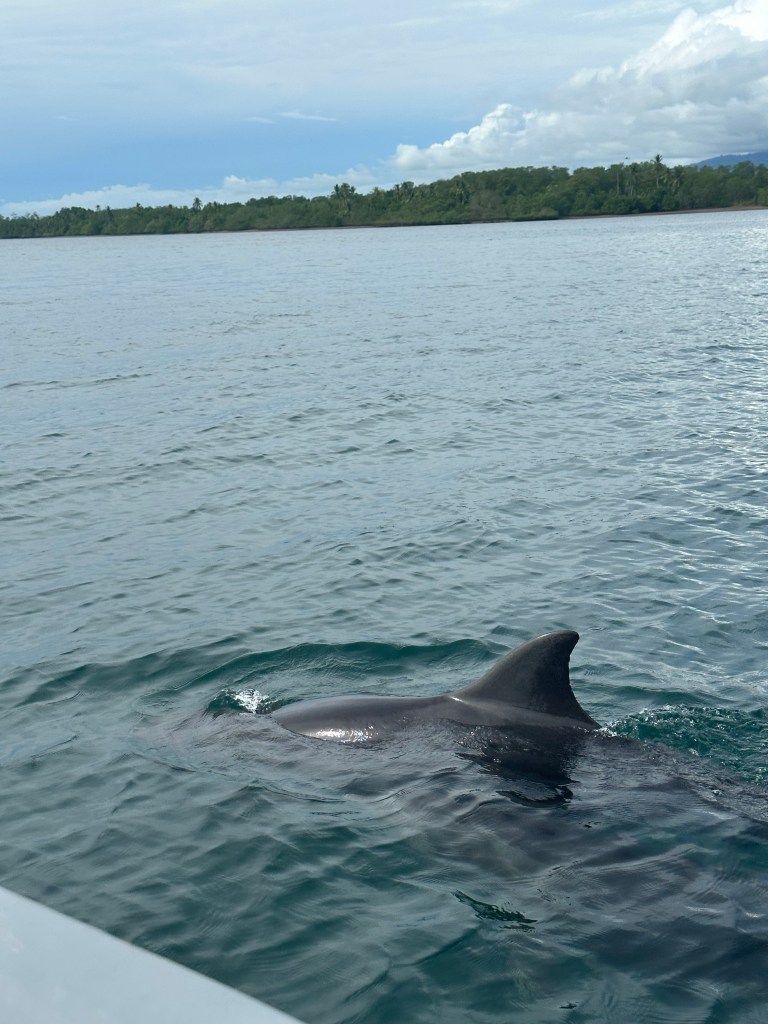
Only 20 minutes after boarding our board, we spotted our first dolphins. We couldn’t stop shouting ! Dolphins! Dolphins! Here! Look!

Everyone on board quickly grabbed their cameras to capture this moment, unaware that there was more to see. In fact, throughout our research, we had the opportunity to observe a total of six dolphins. Among them were two mothers, two babies and one male. The babies swam alongside their mothers while the male dolphin stayed close to them. One of the babies was almost three years old, while the other was just a few weeks old, if my notes are correct.

On the boat, we not only took pictures of the dolphins for photo identification but also recorded their GPS locations, water temperature, and conditions.

Speaking of photo identification, dolphins have unique dorsal fins, similar to human fingertips. Each dolphin has its own distinctive fin structure, making it identifiable as an individual. During our research, we encountered a dolphin that hadn’t been seen in a long time. It was a male dolphin with a white marking on its dorsal fin. Dolphins have melanin pigment in their skin, just like we do, and when they injure, their skin heals, but melanin pigment doesn’t produce color. That’s why our male dolphin had a white color on its dorsal fin.

Although seeing beautiful baby dolphins made us happy for Dolfo Dulce, noticing a fungal infection on our male dolphin was concerning. Dolphins can become infected with a condition known as Lobomycosis-like disease (LLD) when the water is polluted with chemical and organic matter. The risk of fungal infection increases when the water’s salinity decreases. Dr. Lenin mentioned that almost all dolphins outside of Golfo Dulce have been infected with fungal infections, but fortunately, the dolphins here are relatively safe. There are not many dolphins infected by fungus. However, this infection raised concerns among our researchers about the water conditions.

We also learned that female dolphins tend to be more attached to specific locations compared to males. Females find suitable nurseries for their babies, and once they find optimal conditions, such as those in Golfo Dulce, they remain in the area. Of course, this isn’t the case for all dolphins, but many of them follow this pattern.

On average, dolphin calves stay with their mothers for four years, with the mother nursing her baby throughout that entire period. However, this is just an average, as we were told that some dolphins can nurse their babies for up to seven years! I asked what would happen if the mother loses her baby within the first four years, let’s say within a year of the baby’s birth. Dr. Lenin explained that in such cases, the mother dolphin can become sexually receptive to mate and have another baby. They don’t have to wait for the full four years. It’s not genetically predetermined; it’s the dolphin’s choice. Once a mother has a baby, she devotes her energy and time to caring for the baby and ensuring its well-being. She teaches it everything it needs to know.

Subsequently, our discussion led us to orcas, the largest predators in the ocean! To my embarrassment, I always believed orcas are whales, unaware that they are actually the largest and most formidable members of the dolphin family. Orcas are known to prey on dolphins, including those found in Golfo Dulce. I discovered that orca mothers nurse their babies up to eight years.

After eight years, female orca babies separate from their mothers, whereas male babies typically remain with their mothers. When I asked about the reason behind male orcas sticking with their moms, I was told that the answer is still unknown. However, scientists speculate that, similar to many other dolphins, orcas have a strong sense of community and want to appear strong or masculine in the open ocean. This led me to the discovery that within dolphin society, the elder mother assumes the role of the leader, possessing wisdom and guiding the group in the water. This matriarch, often referred to as “Grandma,” possesses knowledge about the society, feeding grounds, predators, raising babies, nursery locations, and more.

While dolphins in open water form large groups due to the presence of predators, the group size in Golfo Dulce is relatively small, as they lack the fear of predators. Nonetheless, they still stick together as a group, albeit not as large as an extended family, so to speak.

Towards the end of our boat ride, we ventured to a coastal area of Golfo Dulce to observe mangroves and encounter stingrays. We were incredibly fortunate not only to witness numerous stingrays but also to catch a rare sighting of an eagle ray, which, according to David, is infrequently seen by people.

Savoring the Flavor of Fresh Coconut Water and Meat

After a long day of research and discussion, we were treated to a satisfying lunch! I won’t delve into the details of the food, but I must say, these tropical fruit juices are absolutely delightful!

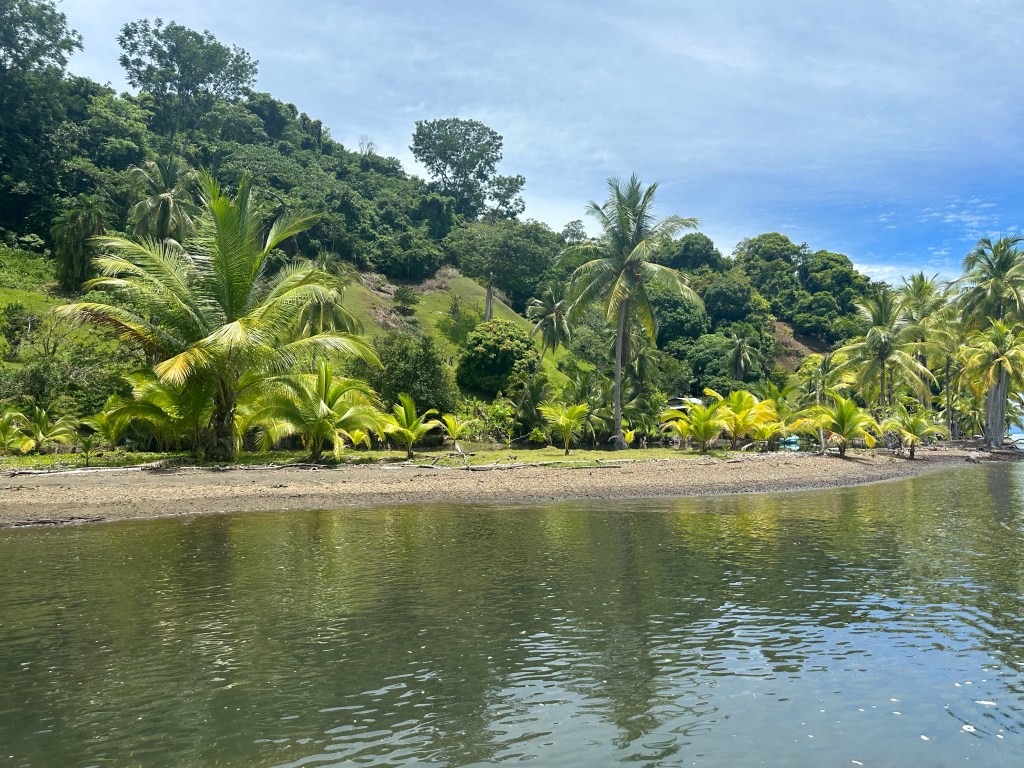
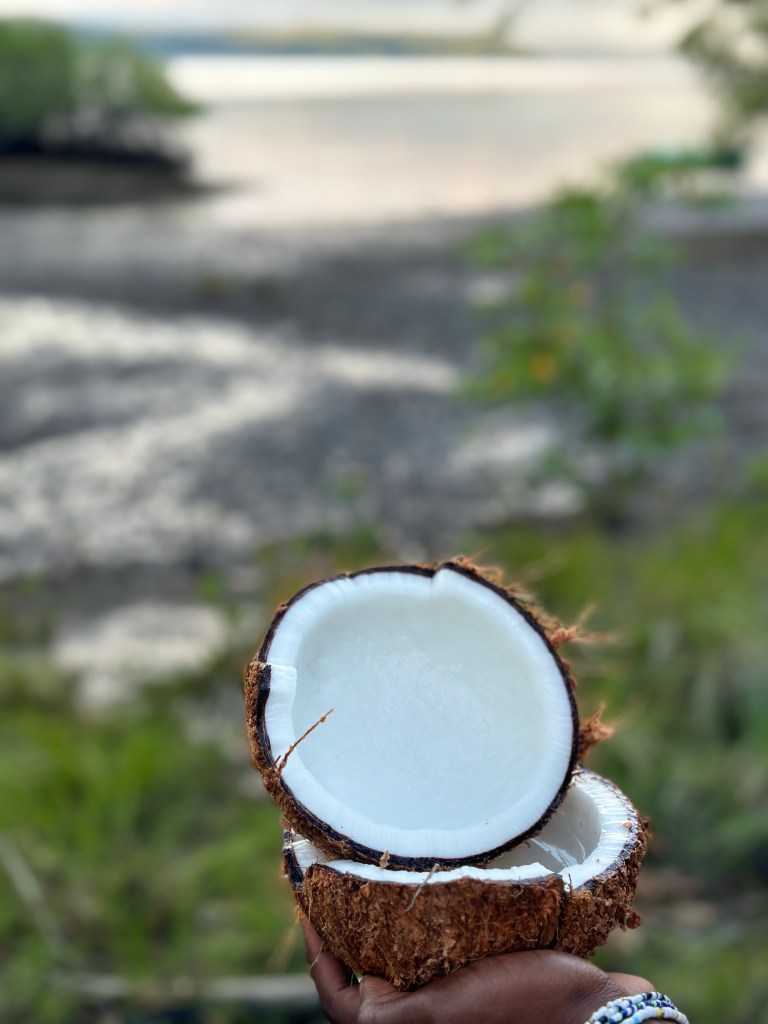
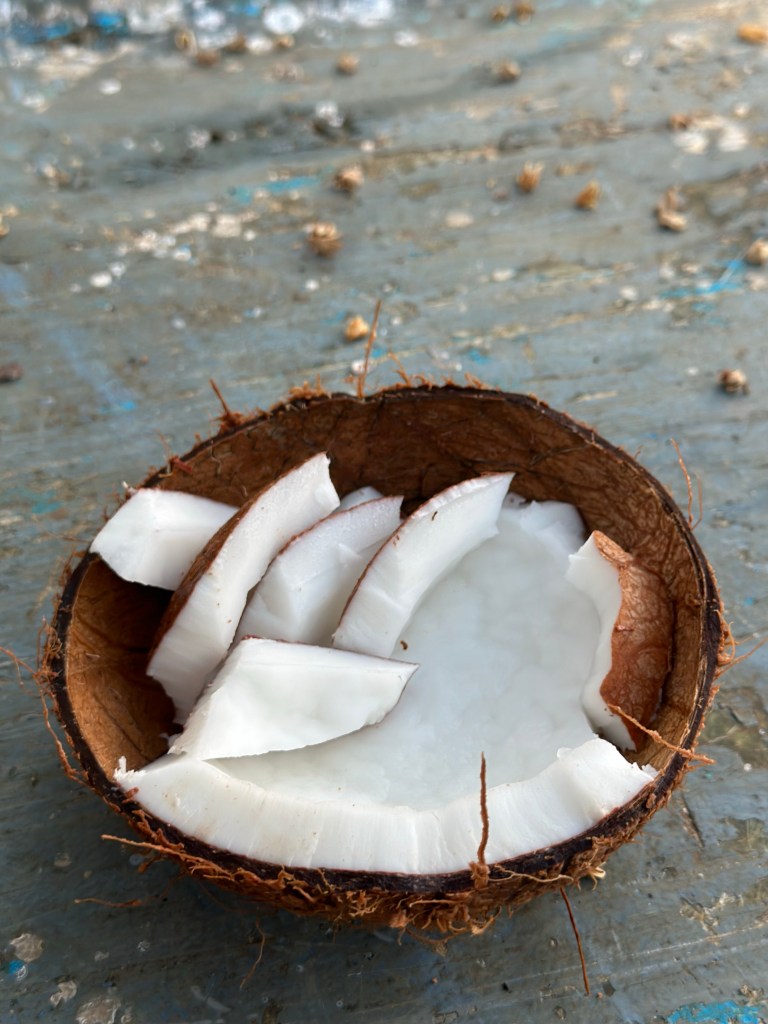
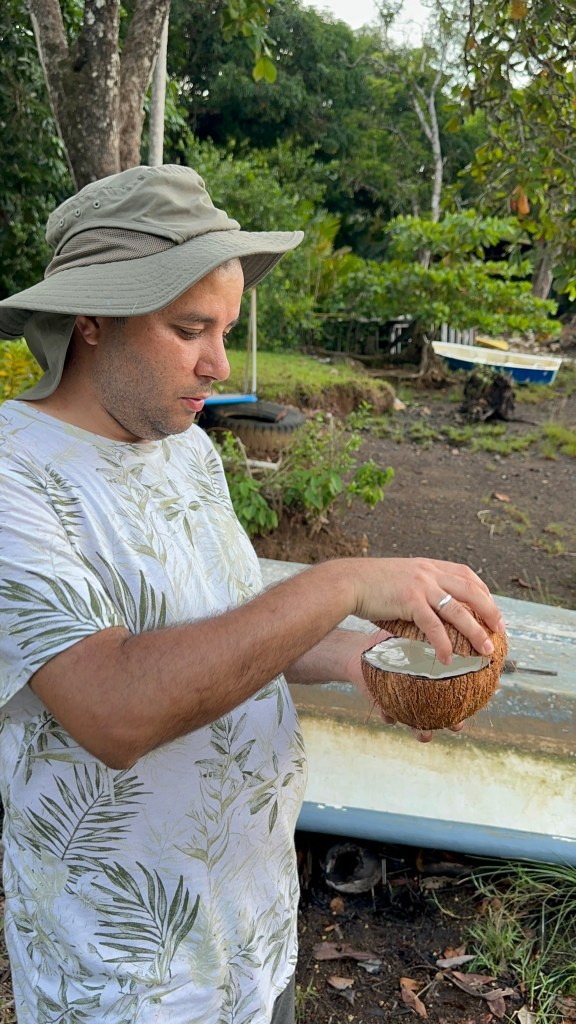
Just before sunset, David took us on a little adventure to explore some local fruits. He led us to the shoreline and guided us into the enchanting mangroves. With the low tide, navigating through the area was easy. There, he picked a couple of large coconuts from the ground and skillfully opened them using a big stick he found. After removing the tough outer husk, he used a machete to crack them open, revealing the refreshing coconut water and delicious meat inside. It was my first time having freshly opened coconut, and I was amazed. The water inside was cool and seemed to bring a sense of tranquility, thanks to its mineral content. After enjoying the water, David expertly sliced out the coconut meat with his small knives. The taste was simply incredible! I wished I could share this experience with my family and let them savor the flavor.

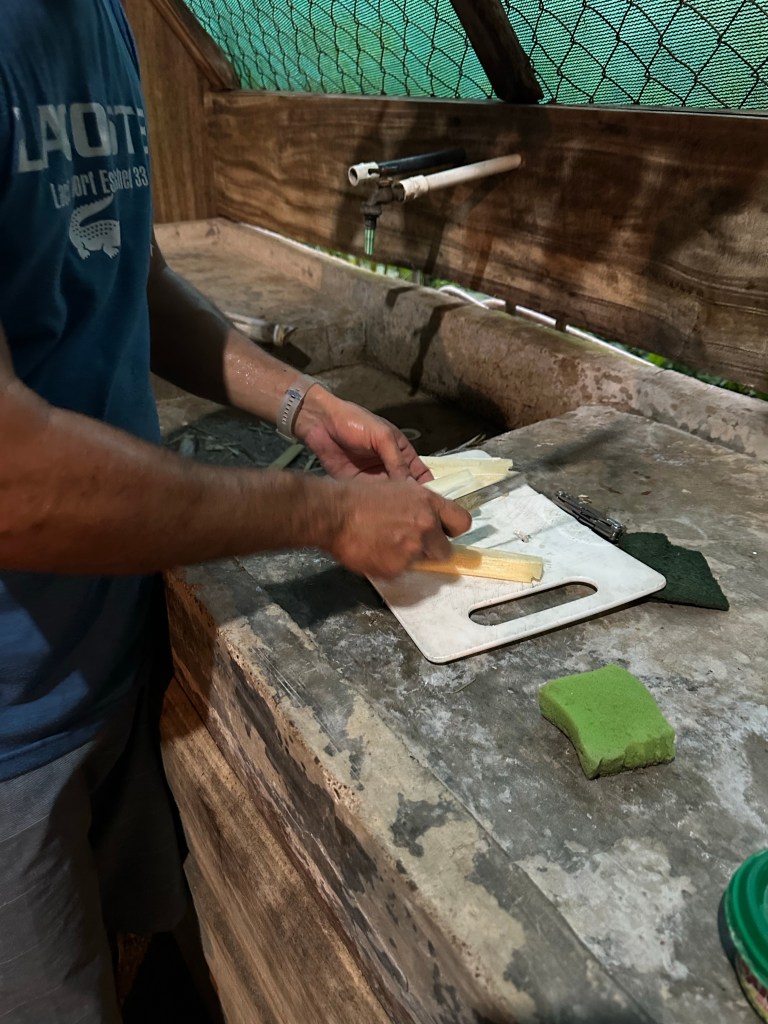
Next, David took us to a spot where sugarcanes grow naturally. He cut off a section of the sugarcane and began peeling it. Then, he made several cuts along the length of the cane. He showed us how to enjoy its juice by sucking the sweet water from its thick fibers. I couldn’t believe that such a humble-looking plant could offer such an intensely sweet flavor. It was truly an extraordinary experience.
Earthwatch Marine Mammals and Predators in Costa Rica

Receiving a Grant from the National Marine Sanctuary Foundation to Support Student Expedition Studying Marine Mammals and Predators in Costa Rica!

It was a day in fall 2022 when I was designing unit plans for my participation in the NOAA Teacher at Sea Program. As part of the program, I had been part of the NOAA’s Thomas Jefferson ship crew, surveying Lake Erie during the summer of 2022. While searching for background information on NOAA’s website, I came across a grant aimed at increasing marine literacy among people from underrepresented populations. I thought this grant would be something worth pursuing for my students, but I was unsure about my chances of securing it. I felt a bit nervous since I had applied for many small grants and fellowships before, but never something of this magnitude. Despite my apprehension, I decided to apply, knowing that the worst outcome would be a rejection. So, I submitted my application.

A month later, I received an email informing me that our proposal had been accepted, and we had been awarded a grant to support our students’ marine expedition in Costa Rica! I was left speechless and couldn’t believe that this was actually happening. Until that moment, I had thought it impossible to take urban kids on an international expedition for 8 days. It was an unprecedented opportunity for our school and district.

Here was Project Proposal Summary:

The “Urban Citizen Scientists Support Preservation of Costa Rican Marine Ecosystem” project will enable 6 minority students and 2 teachers from Columbus, Ohio, to participate in a 10-day immersive experience in Gulfo Dulce, Costa Rica. During this expedition, students and teachers will conduct research on marine mammals and predators in the field. This project aims not only to foster a deeper understanding of ocean literacy through hands-on research to protect marine ecosystems but also to educate students about sustainable marine science programs and raise awareness of future career options.

How did I learn about the Marine Mammals and Predators Research in Costa Rica?

This is a story I believe everyone should hear. Up until the point of receiving the grant from the National Marine Sanctuary Foundation, I had been fortunate enough to receive numerous professional development grants and fellowships for teachers. My summer breaks were typically filled with incredible opportunities to learn and expand my knowledge of STEM education. One such opportunity was the Earthwatch Teach Earth Teacher Fellowship, which I had the privilege of participating in during the summer of 2021. I was fortunate to travel to Acadia National Park in Maine with a group of teachers from across the United States to study its biodiversity and the impact of climate change on the ecosystem. It was an unforgettable nine days during which I learned so much about biodiversity, climate change, and the importance of protecting our planet. It truly was a life-changing experience.

Following that, I applied to become a senior fellow for Earthwatch Teach Earth, hoping to lead a group of teachers experiencing the fellowship for the first time. However, I received an email informing me that I hadn’t been selected for the fellowship. About a month later, I received another email from the program coordinator, inviting me to become a senior fellow as the chosen individual had contracted Covid-19 and was unable to participate. With the expedition less than a week away, I had to make a quick decision, and of course, my response was a resounding yes! Within a week, I found myself in Arizona’s Chiricahua Mountains studying owl ecology and habitat. It was yet another life-changing experience. These two experiences taught me about the incredible work that Earthwatch scientists are doing to protect our Earth while also teaching citizens to become “scientists” themselves through citizen science initiatives. I also became aware of the various expeditions Earthwatch offers worldwide, catering to both adults and teens.

This formed the foundation of my grant proposal. Inspired by my time as a NOAA Teacher at Sea Fellow and an Earthwatch Teach Earth Fellow, I realized I could take my students on one of these Earthwatch teen expeditions to showcase real scientific work happening in the field.

If I hadn’t been a NOAA Teacher at Sea Fellow and an Earthwatch Teach Earth Fellow, I would never have created this proposal for my students. By combining my two fellowship experiences, I am able to provide my students with a unique opportunity to learn more about the world.

I extend my heartfelt gratitude to the NOAA Teacher at Sea, Earthwatch Institute, and the National Marine Sanctuary Foundation for making all of this possible!

Here is the press release for the grant:

Silver Spring, Md. – March 1, 2023 – NOAA Ocean Exploration and the National Marine Sanctuary Foundation have awarded 12 grants to help engage and inspire the next generation of ocean explorers by supporting diversity, equity, inclusion, and accessibility (DEIA) efforts related to ocean literacy and workforce development.

The DEIA Ocean Exploration Education Grants first launched in 2021 with the goal of advancing ocean exploration learning opportunities by investing in projects and partners that support the Science, Technology, Engineering, Arts, and Math (STEAM) workforce development pipeline and engage diverse learners from communities that have been historically underserved and underrepresented in ocean science and exploration. These grants are for use by educators and/or education program implementers working at the intersection of STEAM education and DEIA to support the workforce development pipeline where barriers are most prohibitive to recruitment and retention of diverse learners.

This year, a total of 12 DEIA Ocean Exploration Education Grants were awarded. Nine grantees were each awarded up to $20,000 to fund their projects. Additionally, three grantees from the 2021 funded projects were awarded an additional $7,500 to continue and expand project efforts from the previous year. All projects will take place throughout Spring/Summer 2023.

“Our teams were truly impressed by the innovative methods each project used to address many barriers limiting access and opportunities for youth from historically marginalized communities from entering ocean science and exploration careers,” said Allison Alexander, Vice President, Program Operations for the National Marine Sanctuary Foundation. “We are excited to offer these grants again this year to support additional efforts to knock down barriers and advance the field by making it more inclusive and equitable to all.”

“I am proud that NOAA and the Foundation continue to open doors for the next generation of Ocean Explorers by providing ocean literacy and workforce development opportunities to diverse youth across the country,” said Jeremy Weirich, Director of NOAA Ocean Exploration. “Supporting the next generation of ocean scientists and ocean stewards – the foundation of a new, more equitable workforce – is a critical step in advancing a U.S. Blue Economy for years to come.”

Learn more about the projects, click here.