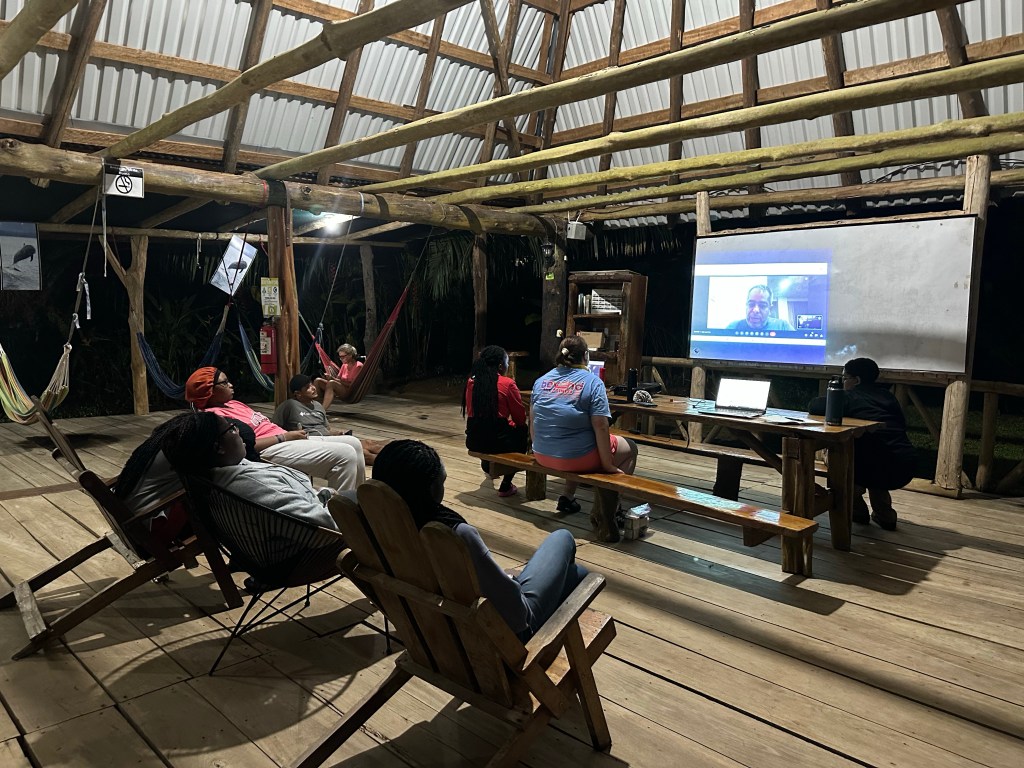
After learning about the ecological significance of Dolfo Dulce and its status as one of the most important places in the world, we were eager to begin our research with this fresh knowledge. We were all excited to see these incredible marine mammals more than ever before.
Only 20 minutes after boarding our board, we spotted our first dolphins. We couldn’t stop shouting ! Dolphins! Dolphins! Here! Look!
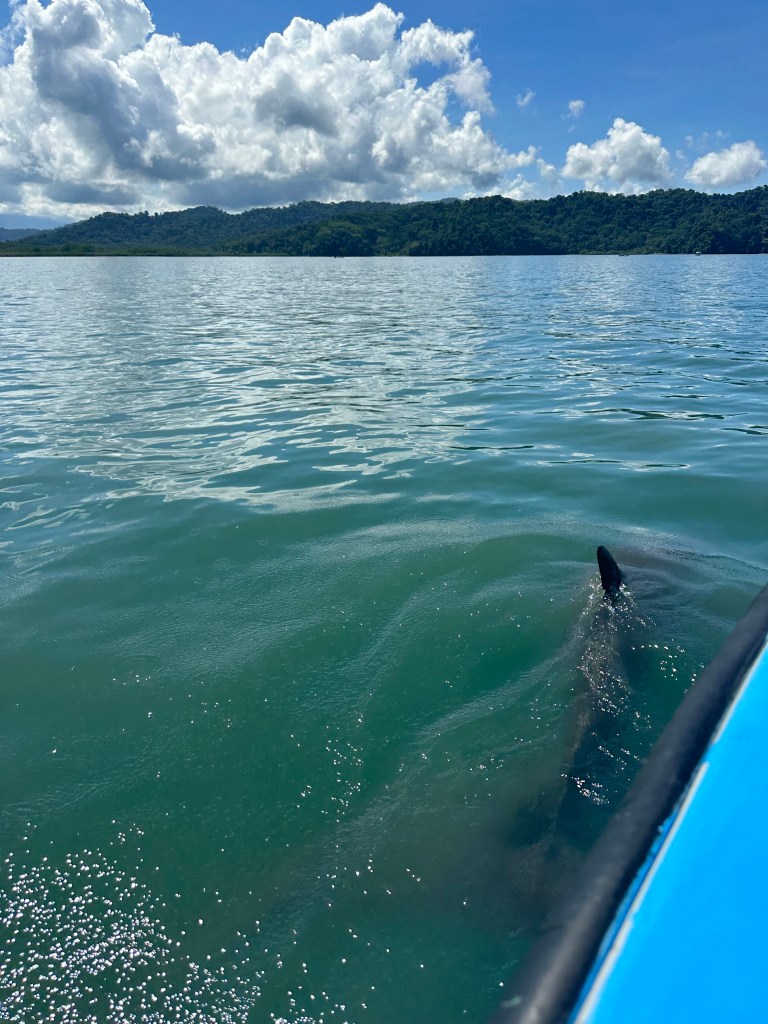


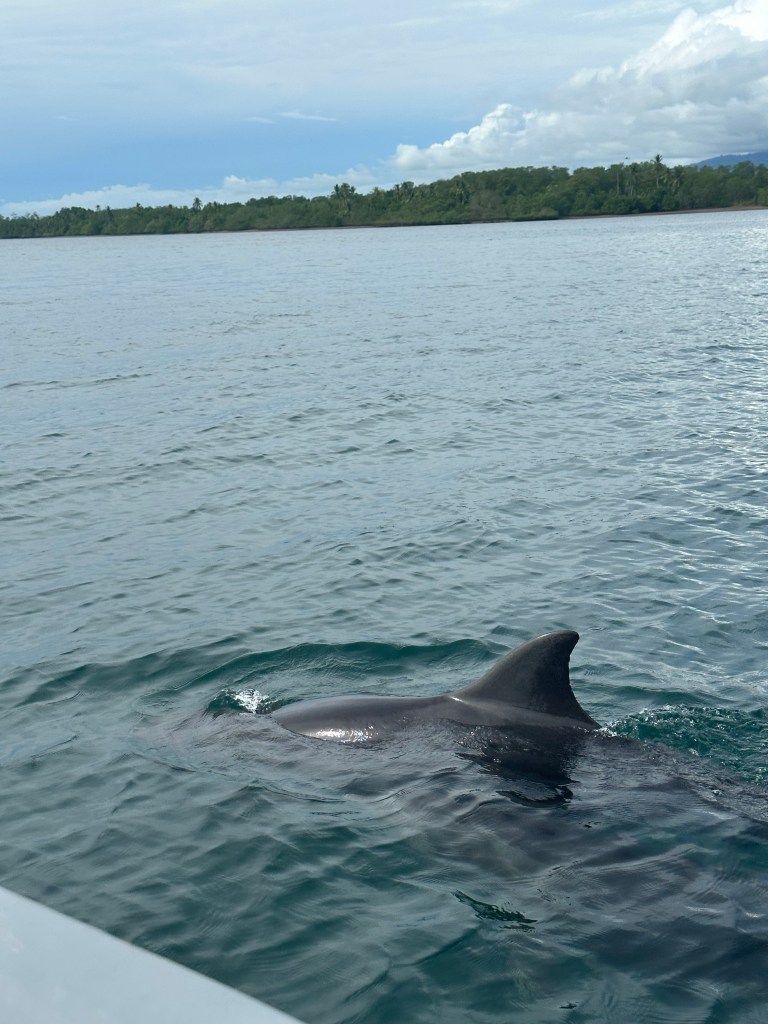


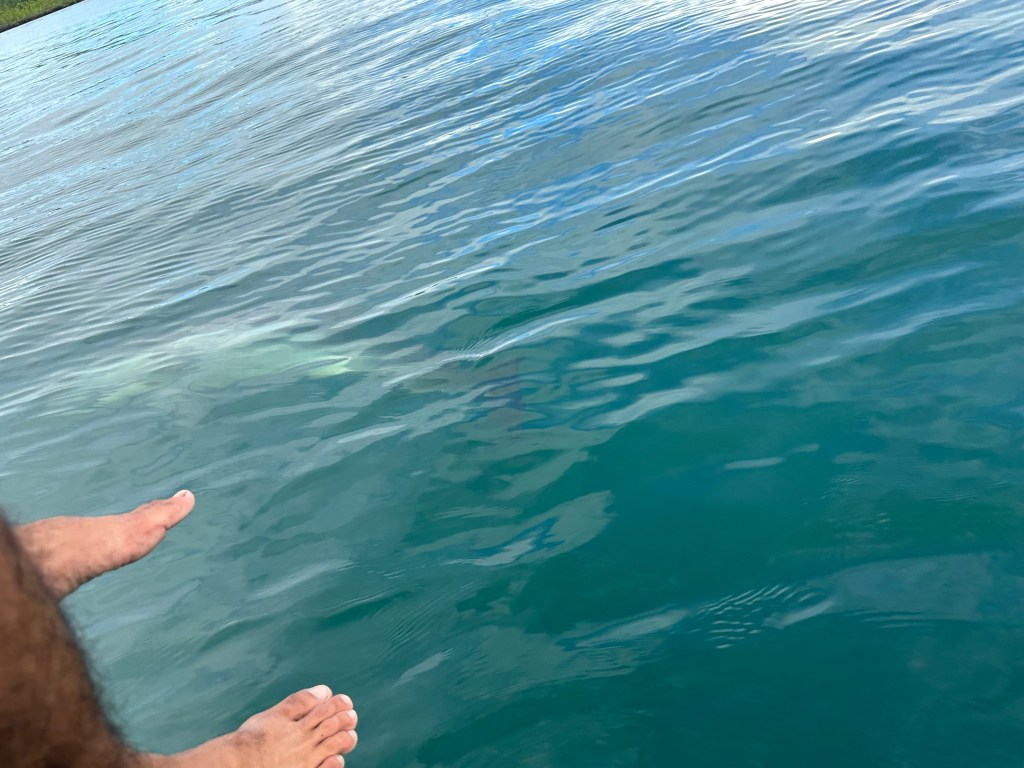

Everyone on board quickly grabbed their cameras to capture this moment, unaware that there was more to see. In fact, throughout our research, we had the opportunity to observe a total of six dolphins. Among them were two mothers, two babies and one male. The babies swam alongside their mothers while the male dolphin stayed close to them. One of the babies was almost three years old, while the other was just a few weeks old, if my notes are correct.
On the boat, we not only took pictures of the dolphins for photo identification but also recorded their GPS locations, water temperature, and conditions.
Speaking of photo identification, dolphins have unique dorsal fins, similar to human fingertips. Each dolphin has its own distinctive fin structure, making it identifiable as an individual. During our research, we encountered a dolphin that hadn’t been seen in a long time. It was a male dolphin with a white marking on its dorsal fin. Dolphins have melanin pigment in their skin, just like we do, and when they injure, their skin heals, but melanin pigment doesn’t produce color. That’s why our male dolphin had a white color on its dorsal fin.
Although seeing beautiful baby dolphins made us happy for Dolfo Dulce, noticing a fungal infection on our male dolphin was concerning. Dolphins can become infected with a condition known as Lobomycosis-like disease (LLD) when the water is polluted with chemical and organic matter. The risk of fungal infection increases when the water’s salinity decreases. Dr. Lenin mentioned that almost all dolphins outside of Golfo Dulce have been infected with fungal infections, but fortunately, the dolphins here are relatively safe. There are not many dolphins infected by fungus. However, this infection raised concerns among our researchers about the water conditions.
We also learned that female dolphins tend to be more attached to specific locations compared to males. Females find suitable nurseries for their babies, and once they find optimal conditions, such as those in Golfo Dulce, they remain in the area. Of course, this isn’t the case for all dolphins, but many of them follow this pattern.
On average, dolphin calves stay with their mothers for four years, with the mother nursing her baby throughout that entire period. However, this is just an average, as we were told that some dolphins can nurse their babies for up to seven years! I asked what would happen if the mother loses her baby within the first four years, let’s say within a year of the baby’s birth. Dr. Lenin explained that in such cases, the mother dolphin can become sexually receptive to mate and have another baby. They don’t have to wait for the full four years. It’s not genetically predetermined; it’s the dolphin’s choice. Once a mother has a baby, she devotes her energy and time to caring for the baby and ensuring its well-being. She teaches it everything it needs to know.
Subsequently, our discussion led us to orcas, the largest predators in the ocean! To my embarrassment, I always believed orcas are whales, unaware that they are actually the largest and most formidable members of the dolphin family. Orcas are known to prey on dolphins, including those found in Golfo Dulce. I discovered that orca mothers nurse their babies up to eight years.
After eight years, female orca babies separate from their mothers, whereas male babies typically remain with their mothers. When I asked about the reason behind male orcas sticking with their moms, I was told that the answer is still unknown. However, scientists speculate that, similar to many other dolphins, orcas have a strong sense of community and want to appear strong or masculine in the open ocean. This led me to the discovery that within dolphin society, the elder mother assumes the role of the leader, possessing wisdom and guiding the group in the water. This matriarch, often referred to as “Grandma,” possesses knowledge about the society, feeding grounds, predators, raising babies, nursery locations, and more.
While dolphins in open water form large groups due to the presence of predators, the group size in Golfo Dulce is relatively small, as they lack the fear of predators. Nonetheless, they still stick together as a group, albeit not as large as an extended family, so to speak.
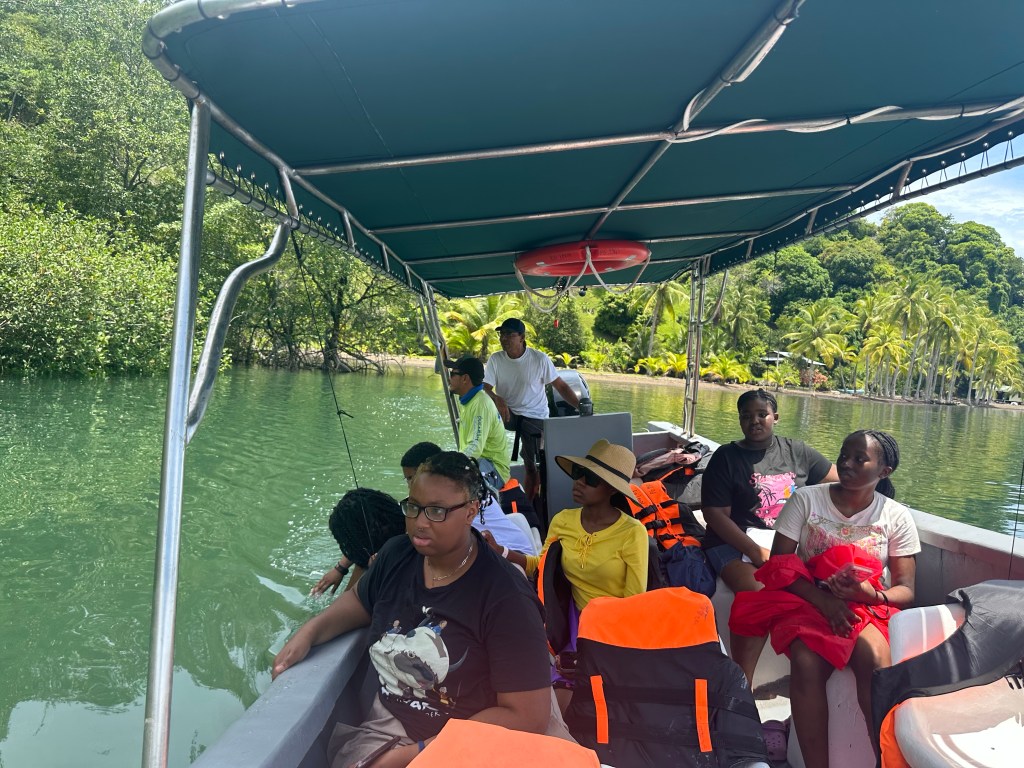
Towards the end of our boat ride, we ventured to a coastal area of Golfo Dulce to observe mangroves and encounter stingrays. We were incredibly fortunate not only to witness numerous stingrays but also to catch a rare sighting of an eagle ray, which, according to David, is infrequently seen by people.


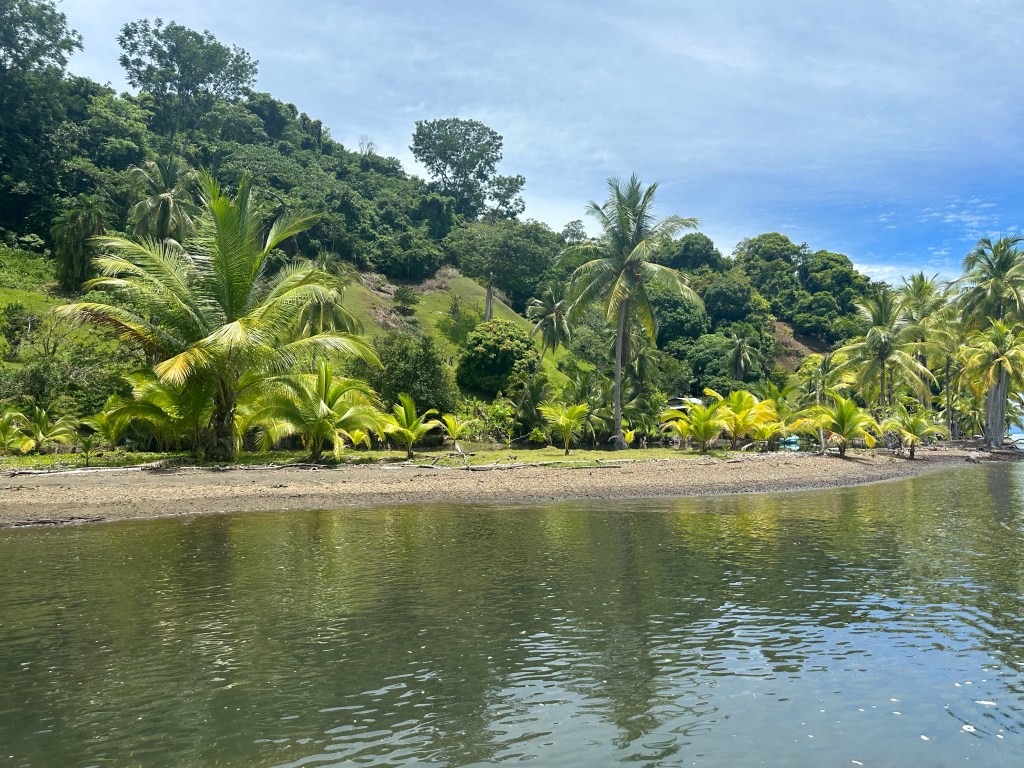


Savoring the Flavor of Fresh Coconut Water and Meat
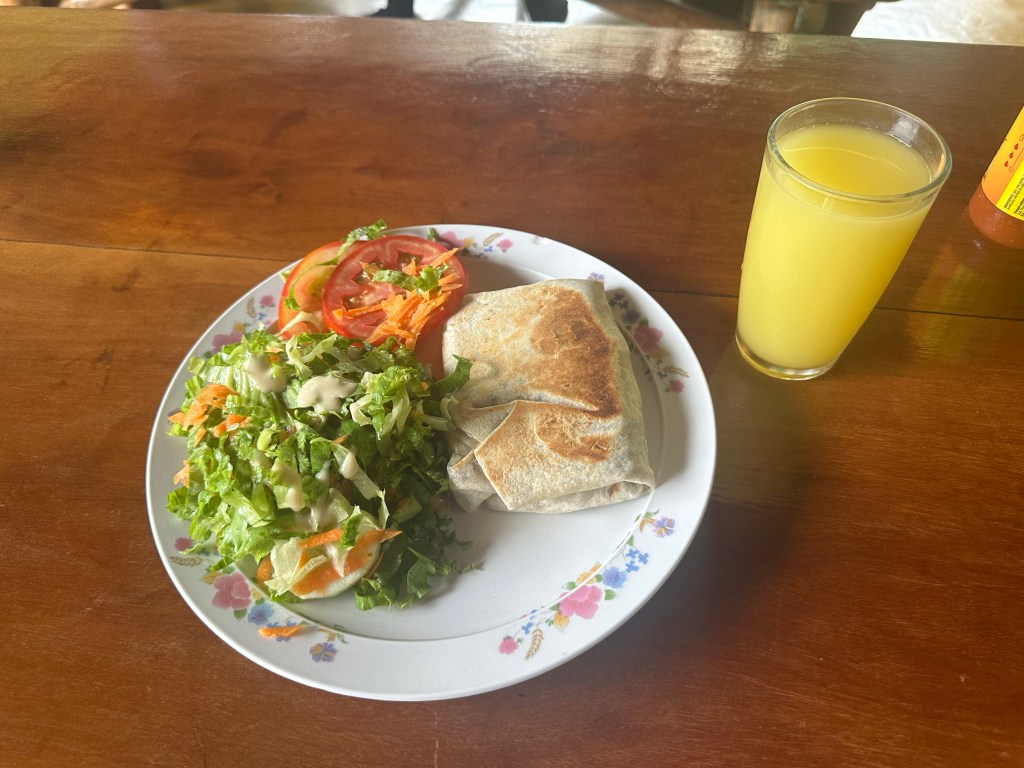
After a long day of research and discussion, we were treated to a satisfying lunch! I won’t delve into the details of the food, but I must say, these tropical fruit juices are absolutely delightful!
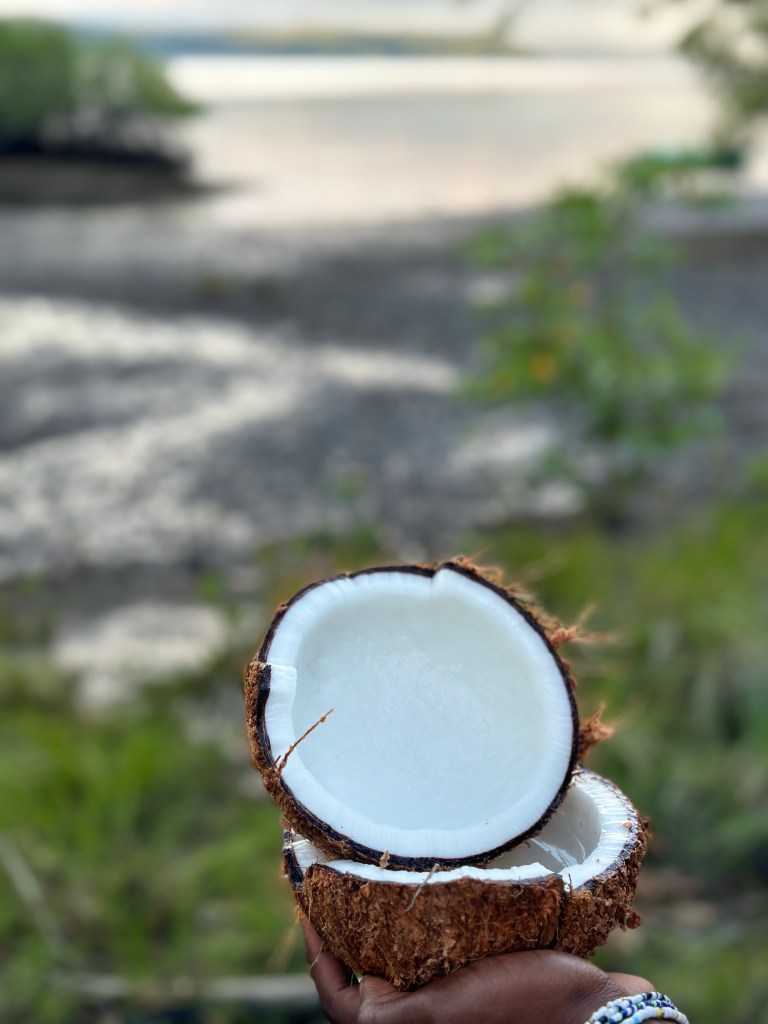
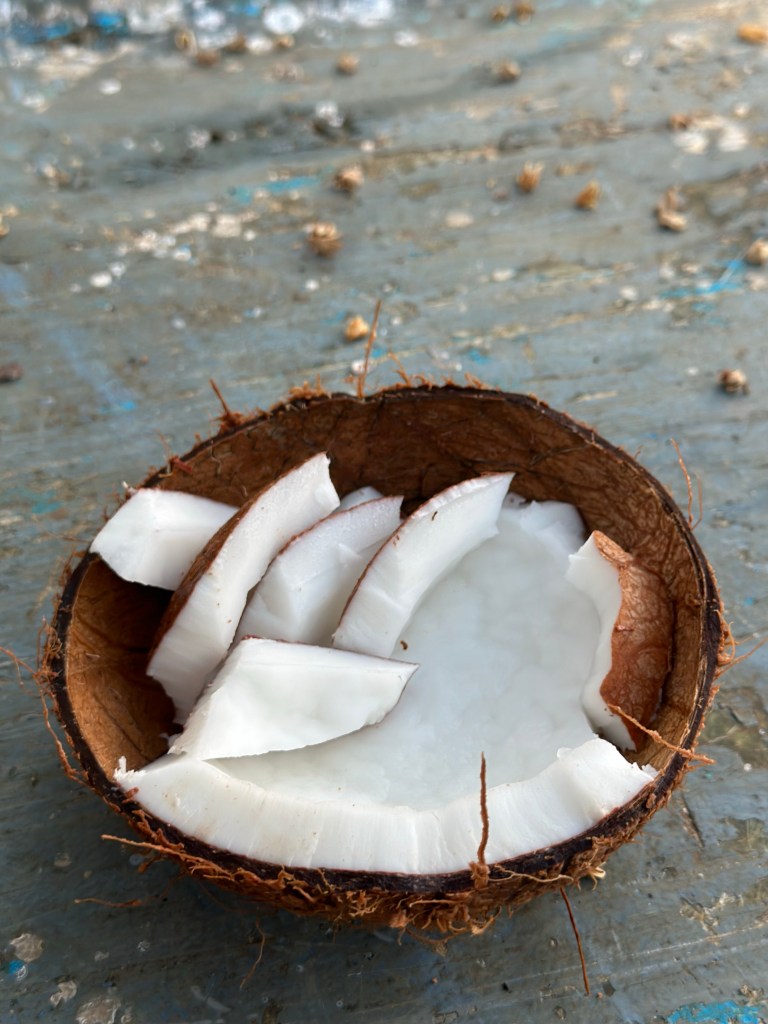
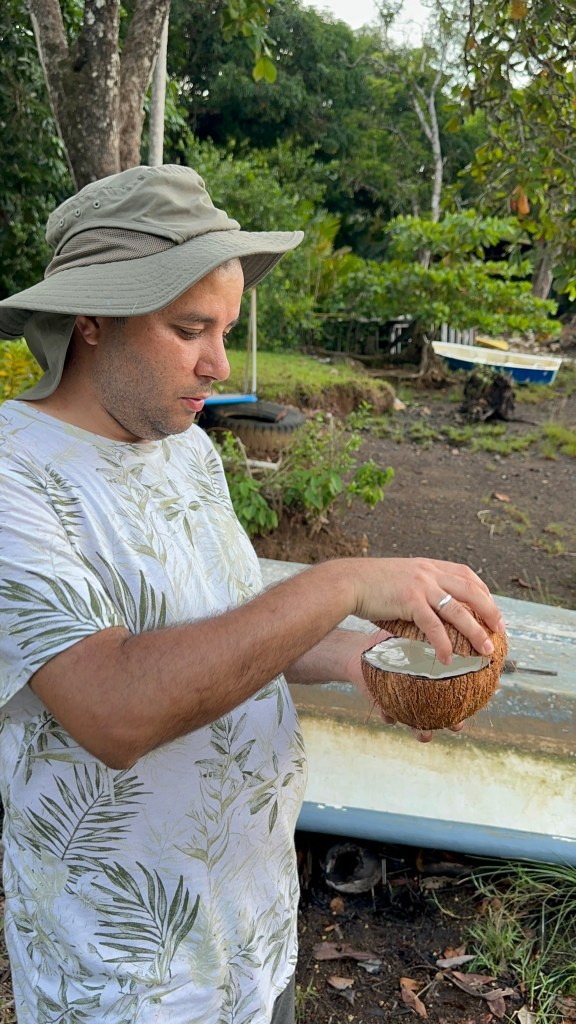
Just before sunset, David took us on a little adventure to explore some local fruits. He led us to the shoreline and guided us into the enchanting mangroves. With the low tide, navigating through the area was easy. There, he picked a couple of large coconuts from the ground and skillfully opened them using a big stick he found. After removing the tough outer husk, he used a machete to crack them open, revealing the refreshing coconut water and delicious meat inside. It was my first time having freshly opened coconut, and I was amazed. The water inside was cool and seemed to bring a sense of tranquility, thanks to its mineral content. After enjoying the water, David expertly sliced out the coconut meat with his small knives. The taste was simply incredible! I wished I could share this experience with my family and let them savor the flavor.


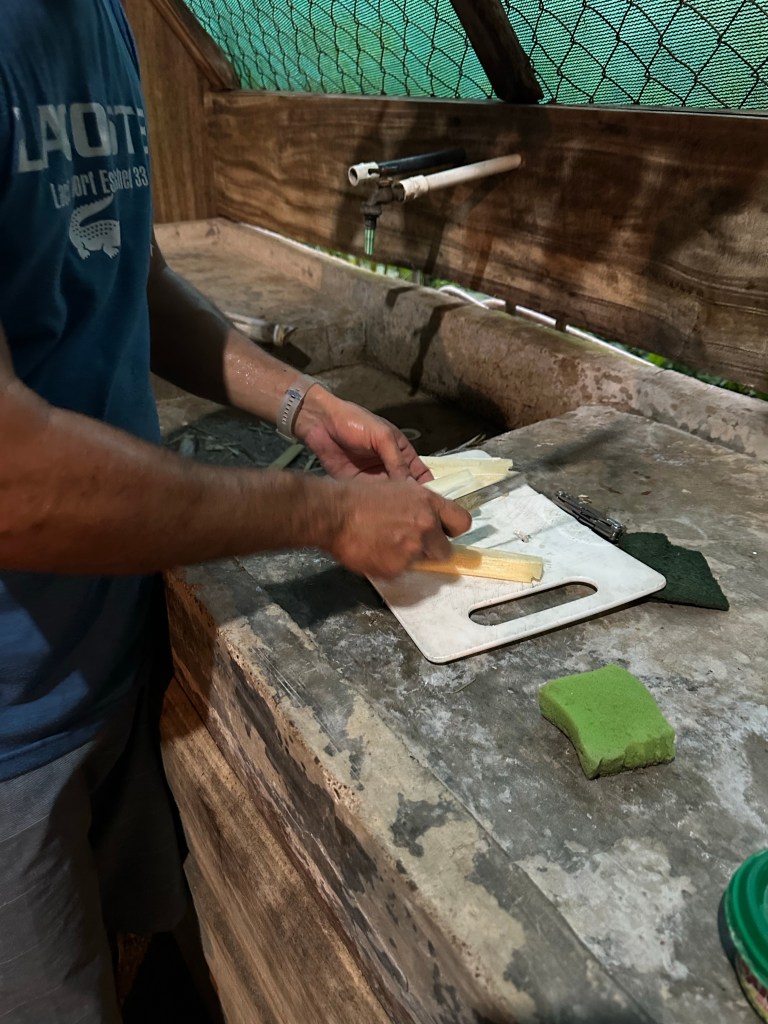
Next, David took us to a spot where sugarcanes grow naturally. He cut off a section of the sugarcane and began peeling it. Then, he made several cuts along the length of the cane. He showed us how to enjoy its juice by sucking the sweet water from its thick fibers. I couldn’t believe that such a humble-looking plant could offer such an intensely sweet flavor. It was truly an extraordinary experience.






































 Expeditionary Learning