This was our last day in El Chontal camp. Today, right after breakfast, we went to an organic chocolate farm called Rancho Raices. It is a family-owned place where they dedicate themselves to showing people the traditional way of making chocolates in an old-fashioned manner. They are passionate about conserving their traditions, plants, and everything around them.

When we first heard that we were going to a chocolate farm, we thought it might be a commercialized process of making chocolate, but it was not at all. This is literally a family ranch, and the entire process of making chocolate is an integral part of their family. There was nothing commercial about it.
Anyway, we were greeted by a guide who spoke English, and she started talking about the history of the ranch farm. She mentioned that before Corcovado National Park became a national park, the owner’s parents lived there. Once it became a national park, they had to move to a new place where the owner started his ranch.
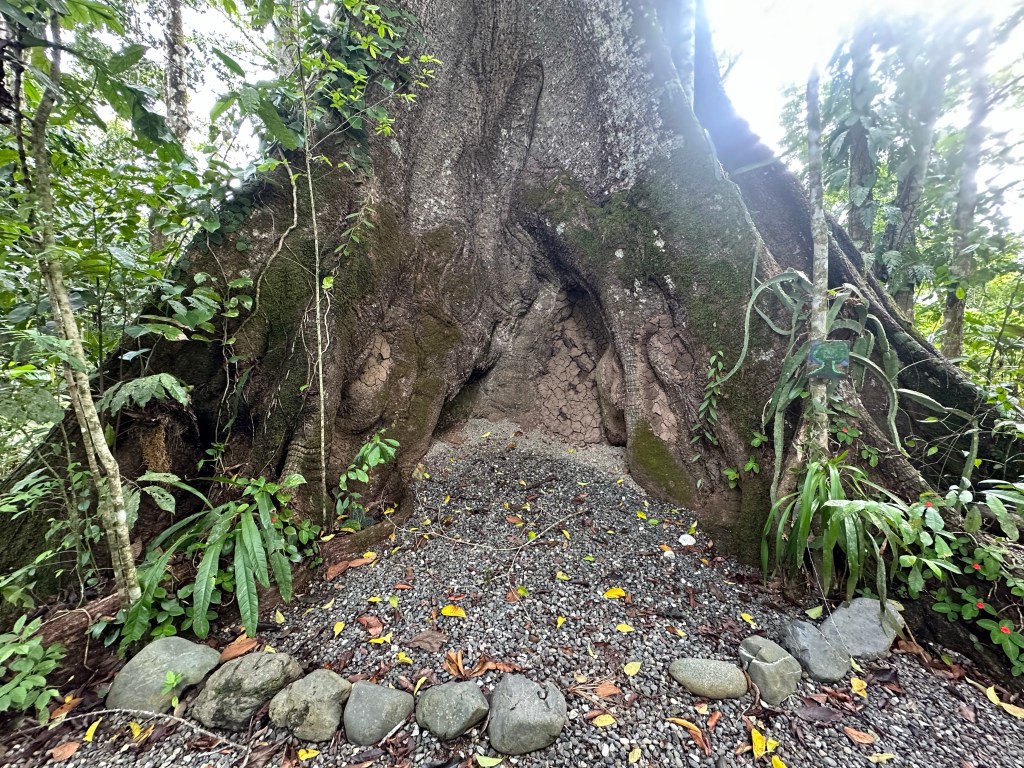
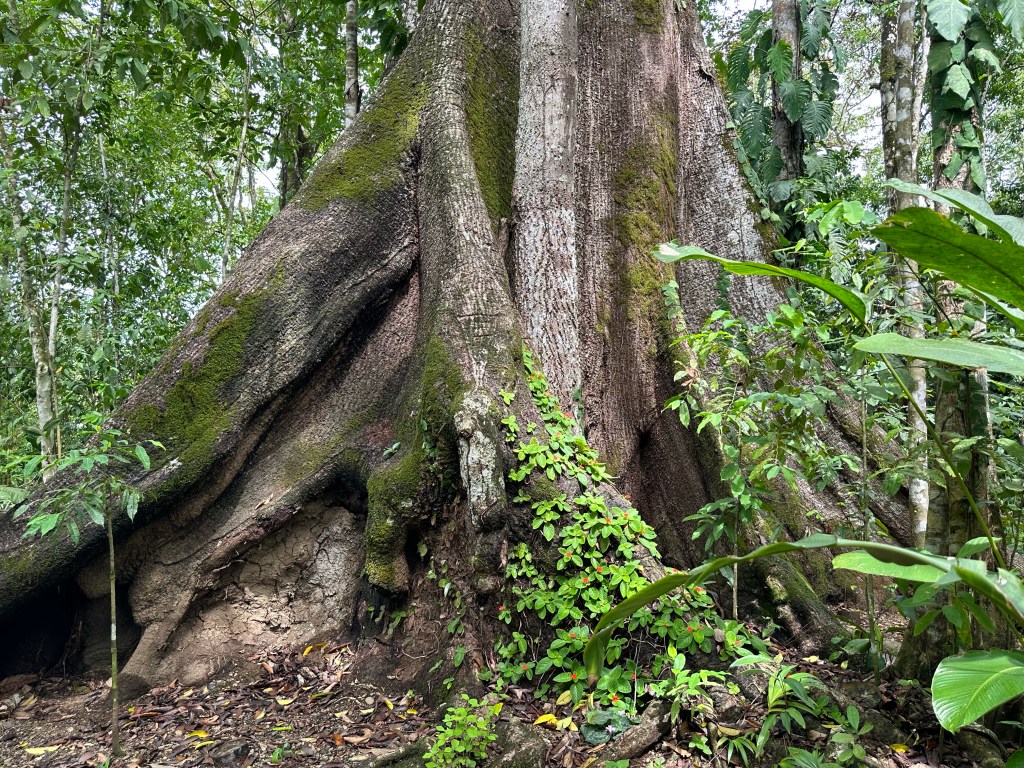
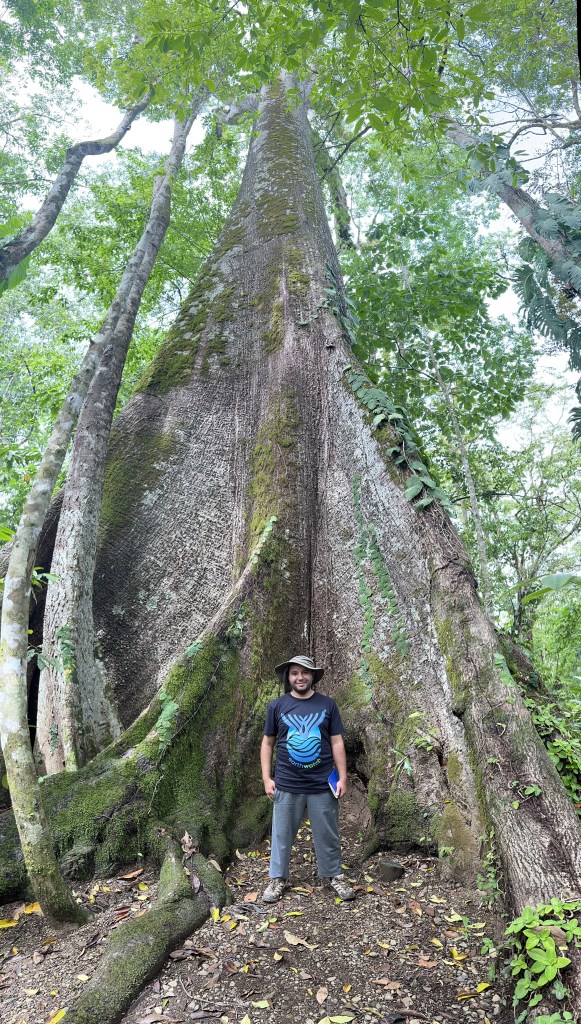
She explained that everything in this place is 100 percent organic, and they don’t use any modern agricultural methods. As we explored his ranch, which was in the middle of the jungle, the guide showed us many medicinal plants and how indigenous people have used them for thousands of years. I was amazed to see a ceiba tree, one of which was almost 300-400 years old. The tree was ancient and enormous. I noticed that some parts of its trunk were covered in mud, so I asked our guide about it. She explained that the tree had been infected by a type of fungus, and the owner created a special mixture of mud with ash, lime, dirt, and some medicinal plants to cover it. Once applied, there were no remnants of the fungi at all. I was so impressed by what he had done for this magnificent tree. The guide mentioned that they treat each plant in their jungle with the same care and respect. She also told us that the owner creates natural “pesticides” from the plants on his ranch and uses the juice mixture in his greenhouse. During our hike, the guide showed us many medicinal plants whose names I didn’t capture since most of them had Spanish or local names, and I didn’t want to interrupt her to ask for the names.
Variety of Cacao Trees
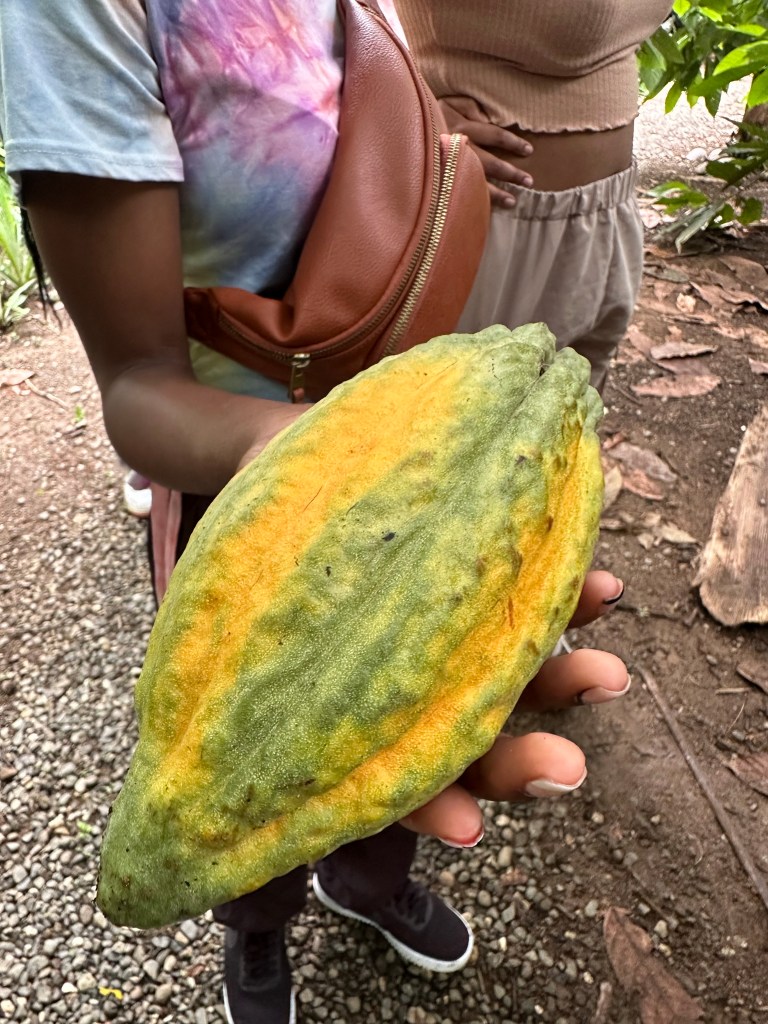
The main purpose of our visit was to see cacao trees and learn about the process of making chocolate, but this place offered so much more. Anyway, let’s talk about cacao. We saw many varieties of cacao trees, and the guide explained that there are four main types of cacao trees in the world: forastero, criollo, trinitario, and nacional. We saw all four types in his ranch, and she mentioned that there are many other varieties derived from these four types.
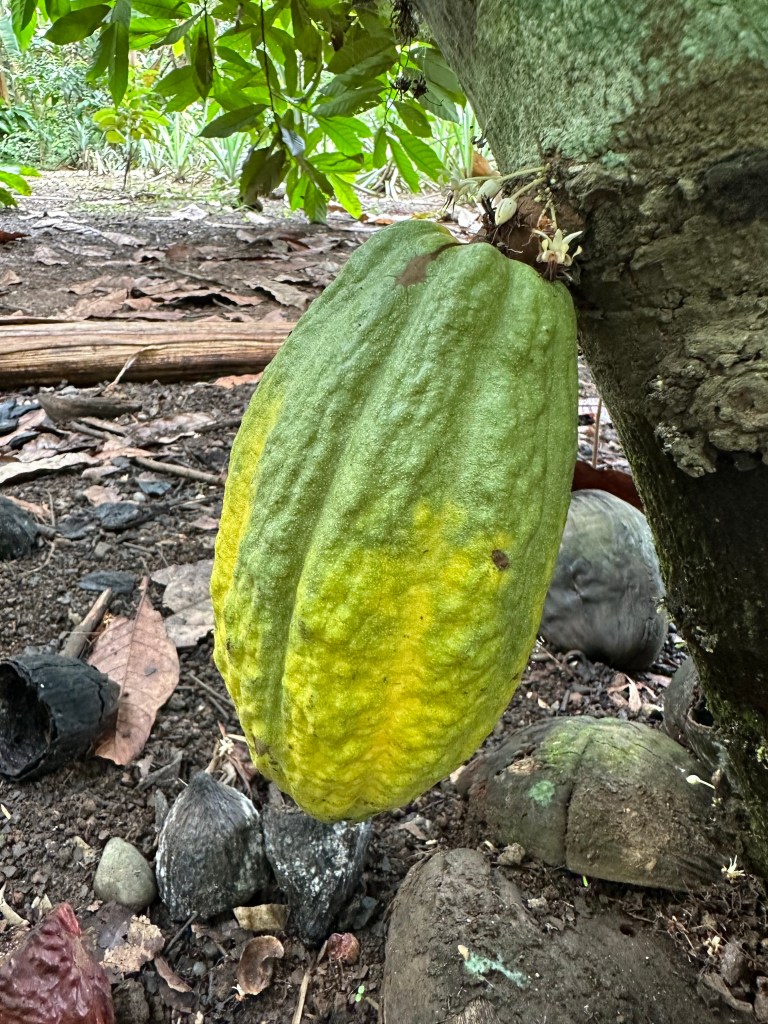

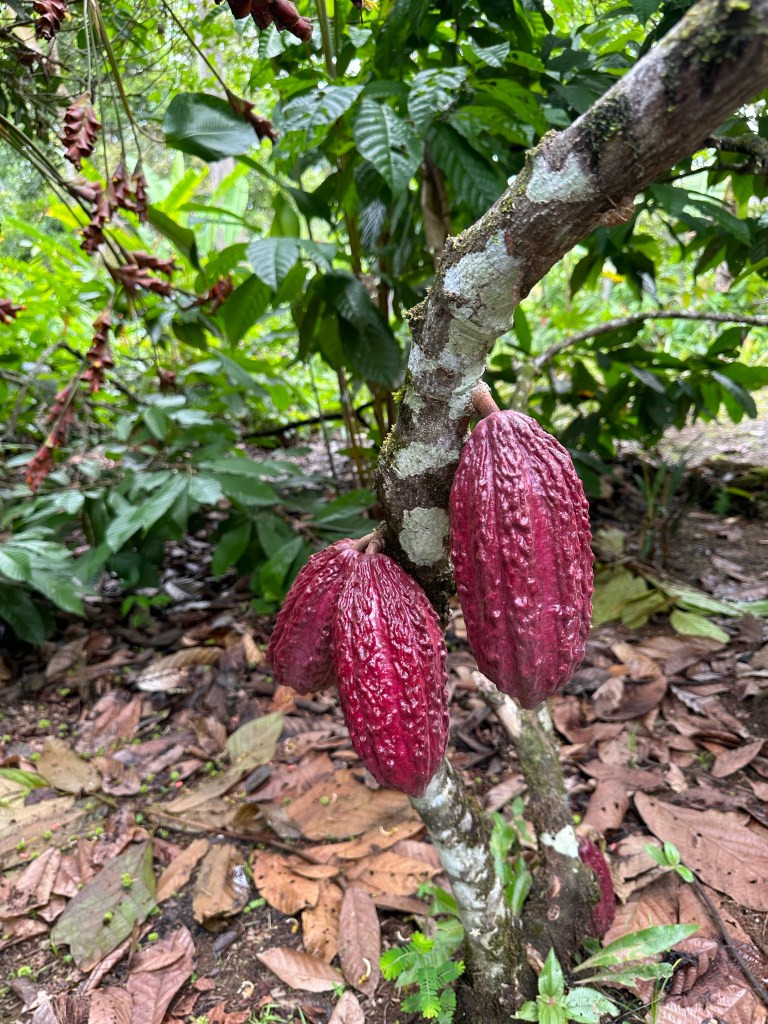
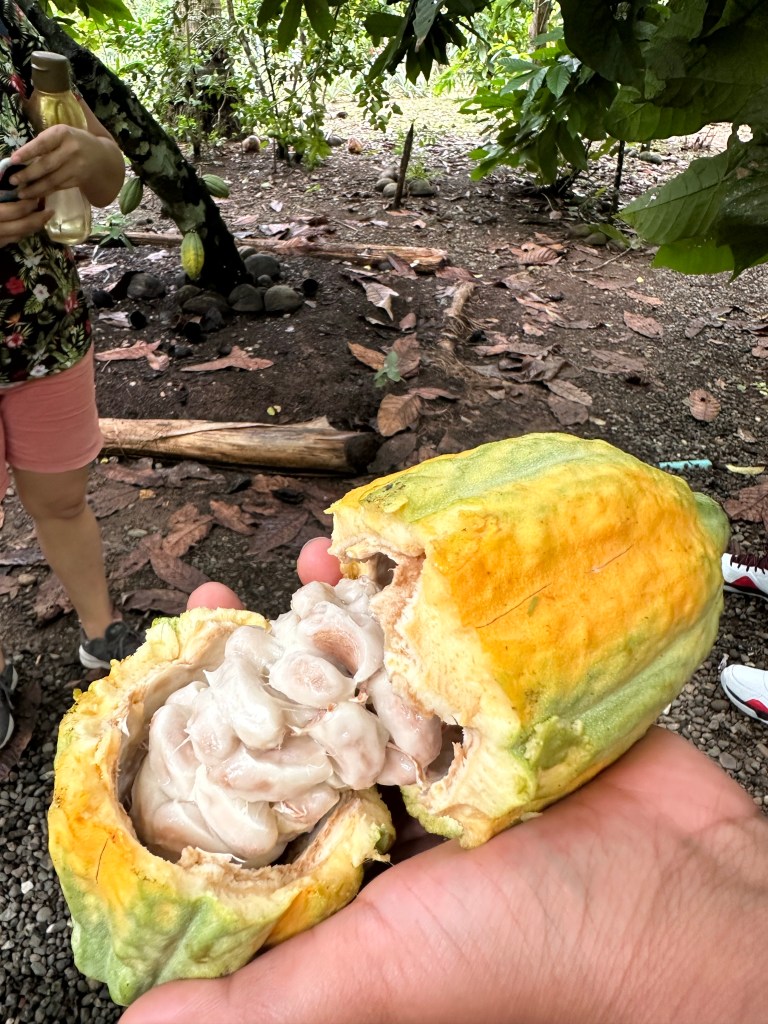
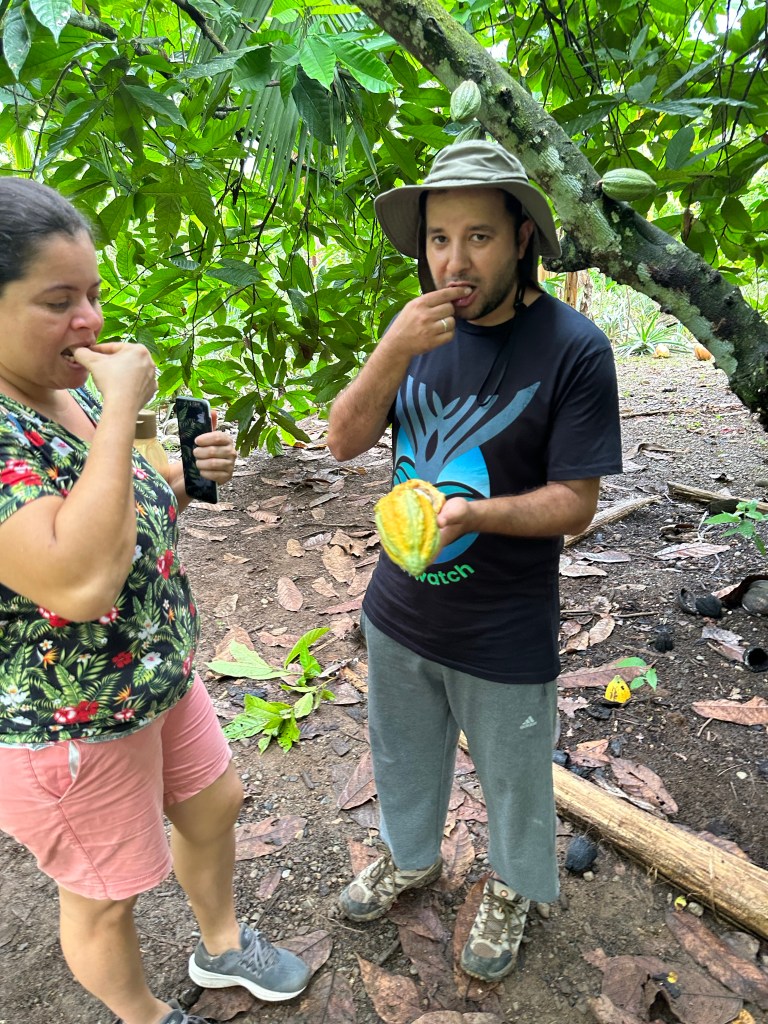
When we stopped at the nacional type, she showed us a ripe one and asked us to open it. Inside, we found cacao beans with white juicy flesh surrounding them. As you may know, chocolates are made from these cacao beans. When our guide said to eat the beans, I ate the whole thing. She corrected me and explained that I was supposed to eat only the white flesh, which is sweet and juicy, and not the cacao beans themselves. Then I asked if we were supposed to eat the cacao beans to taste the chocolate. She smiled and said that the process of making chocolate is not that simple, and she was going to show us the entire process on the ranch.

Fermentation, Drying Process
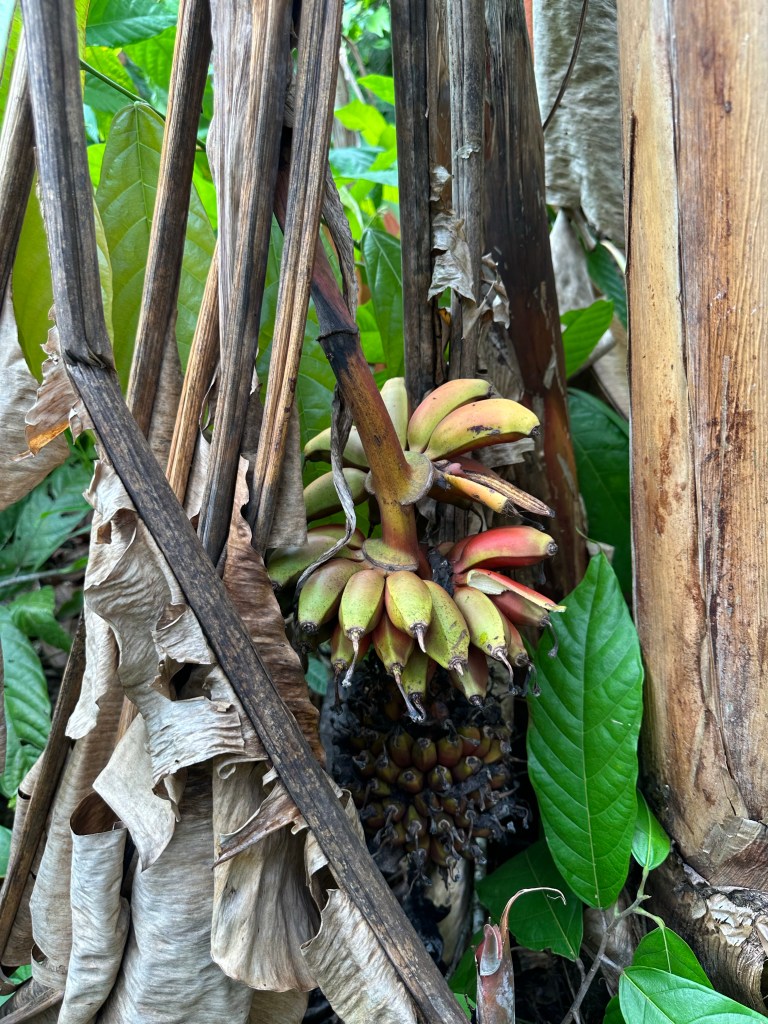
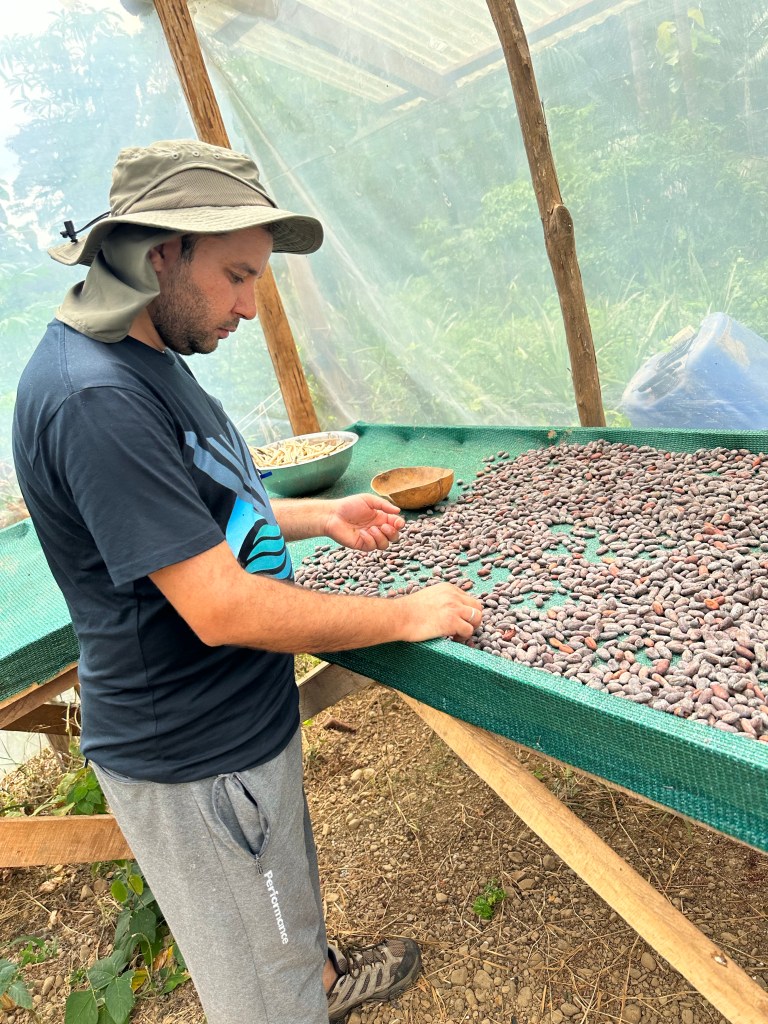
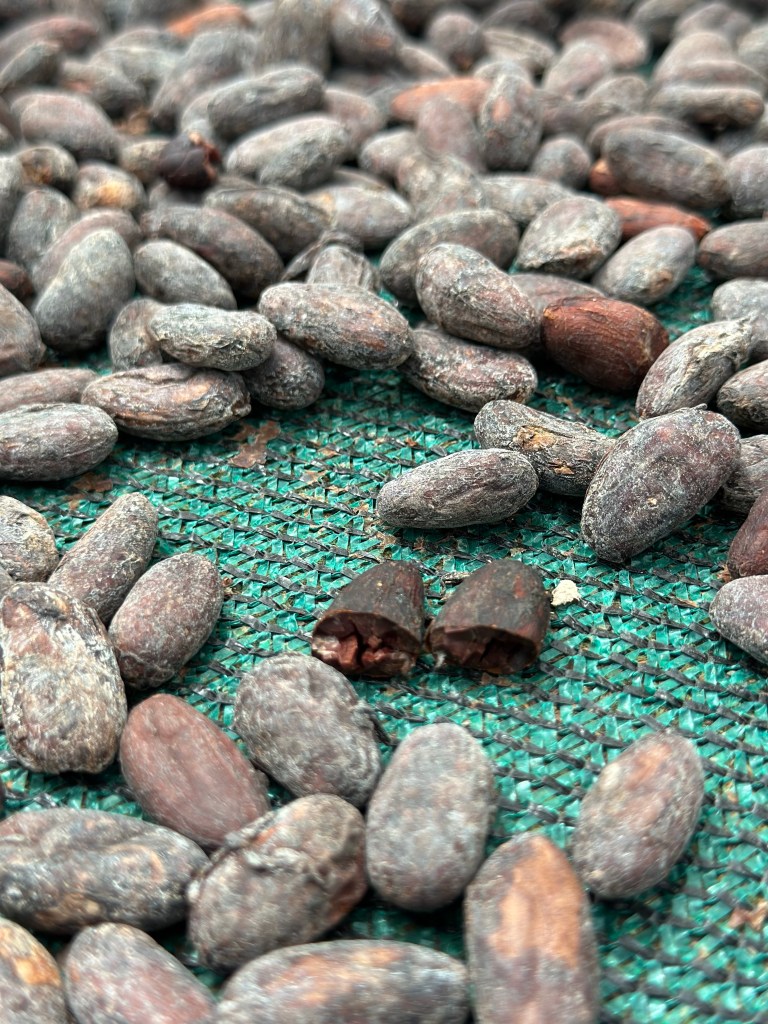
Next, we went to a small greenhouse-like structure with benches filled with cacao beans. Our guide showed us a wooden box and explained that this is where they ferment the cacao beans after removing them from the fruit. First, they put layers of banana leaves at the bottom and place the seeds on top. Then, they add another layer of banana leaves on top of the beans and leave them for seven days to naturally ferment. I realized that I needed to learn more about the fermentation process at this stage. At the end of the fermentation process, they dry out the beans on these benches for several days. She had us try the beans at this stage, and although they tasted slightly bitter since they are 100 percent cacao, they were still good.


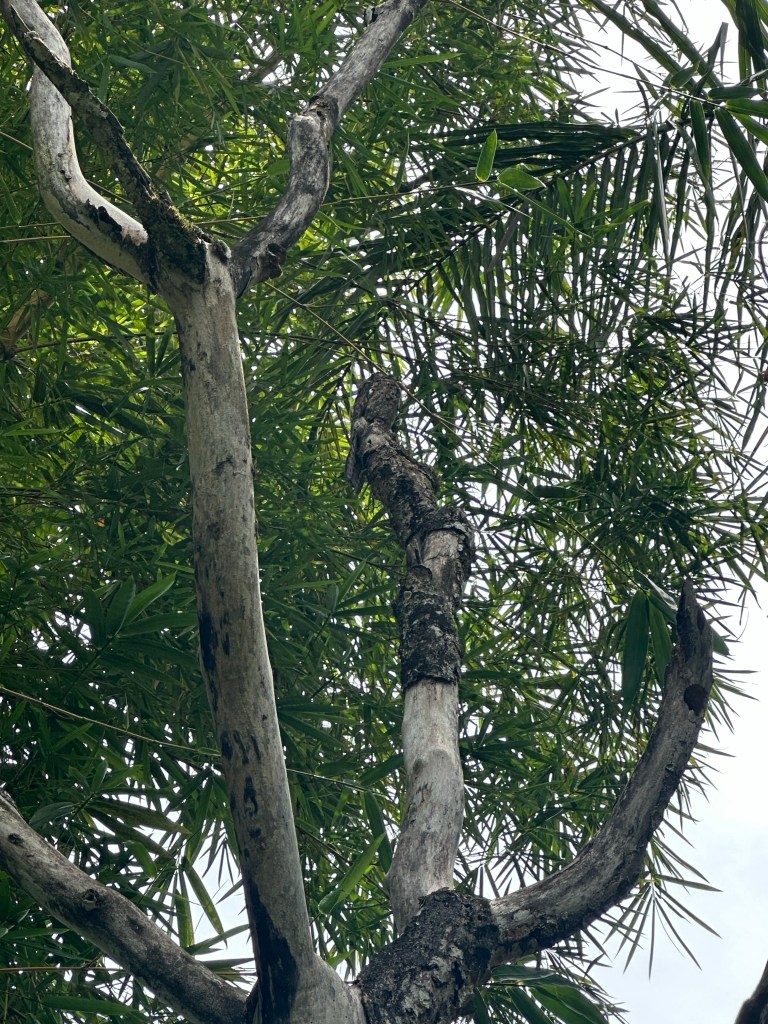
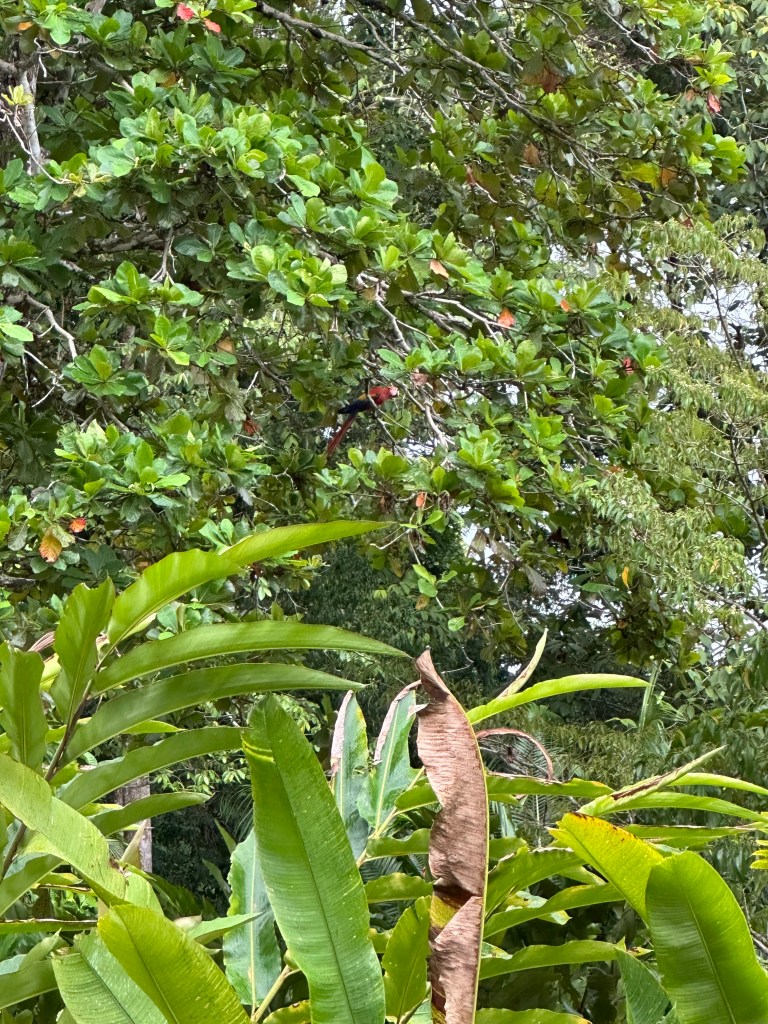
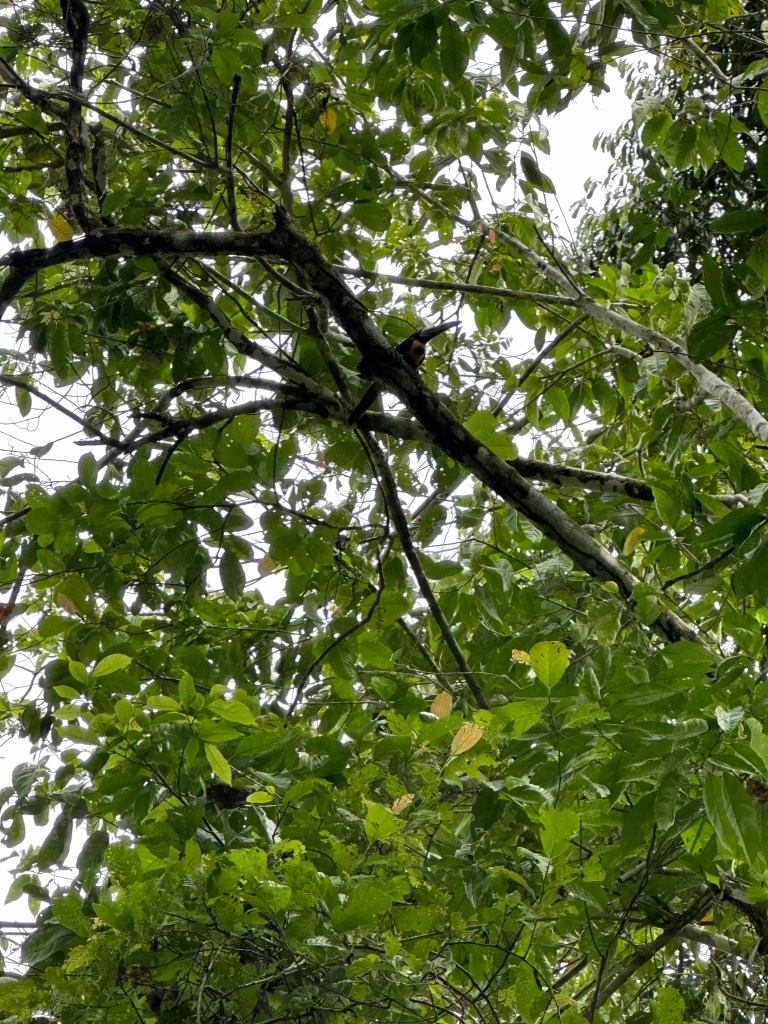
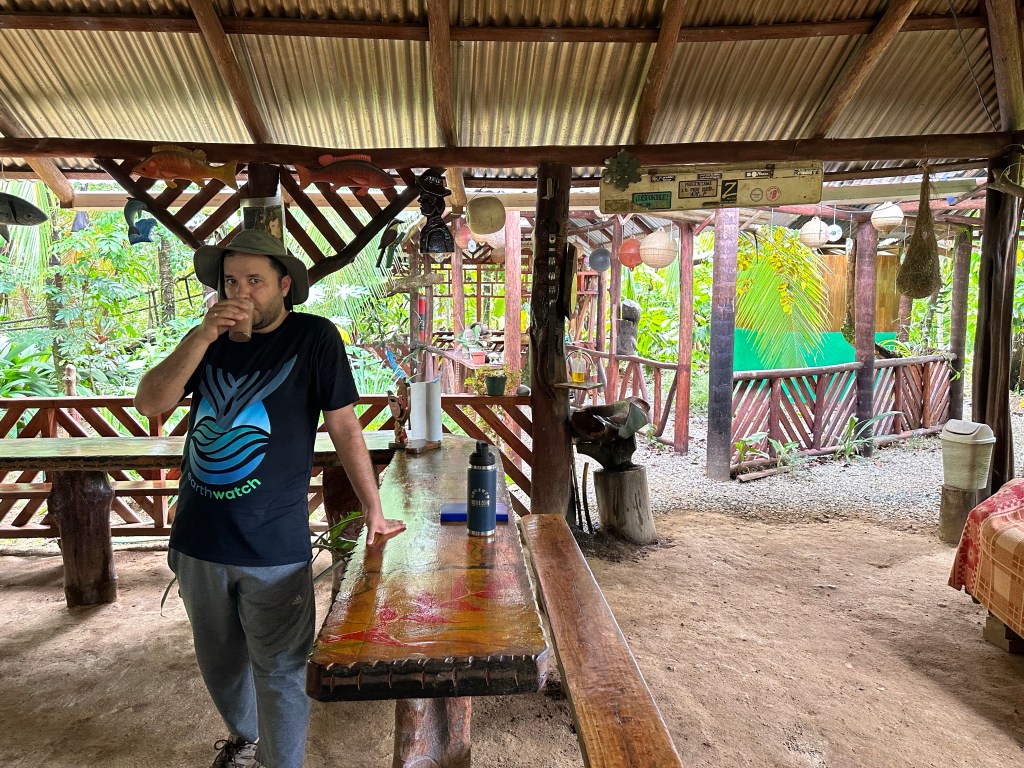
After tasting the cacao beans at this stage, we continued our walk in the jungle. We saw a perfectly camouflaged bird, a young toucan, and scarlet macaws perching on branches. They were so cute. Finally, we reached a seating area that looked like an open house, with benches, a kitchen, tables, and various cool arts and furniture. Our guide told us that we would relax here and experience many great surprises.
Powerful Medicinal Plant
Within 5 minutes, she served us milk chocolate made from the chocolate produced on this ranch. By the way, the entire family was working together to make the whole experience memorable for their guests. They weren’t doing it for money; they did it out of love and passion. This has been an experience for me throughout my time here in Costa Rica.

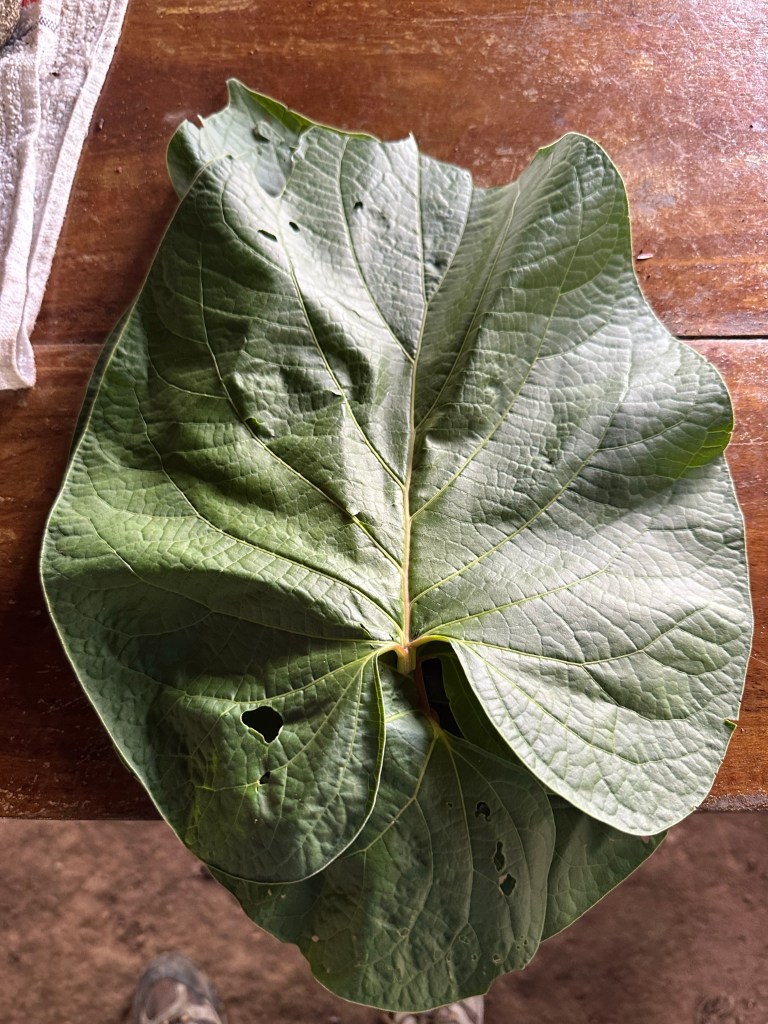
Oh, I need to mention something else. One of our students had a migraine the whole time, and we were trying to figure out what to do for her. The owner immediately said, “Don’t worry, we’ve got her.” I was a bit nervous about using medicine, but I was curious to see what he had in mind. He came back with a bunch of large leaves and said he was going to use them. I immediately thought that we couldn’t give her plants as medicine. However, he clarified that he wasn’t going to give her medicine but instead asked the student to place these leaves on her forehead for about 10 minutes, and her headache would go away instantly. It was amazing! In about 10 minutes, our student was feeling much better and expressed her gratitude. They told us that indigenous people have been using this plant for headaches and migraines for thousands of years, and it’s amazing how effective it is. I was intrigued and wanted to ask more questions. The owner then offered to make me a tea from this medicinal plant, and of course, I wanted to try it. In the next five minutes, he brought a whole tea made from this plant with cups. I drank three cups, and it was delicious. Then I shared with him about my spinal cord injuries and how I have neuropathic pain all the time. I asked him if I could put some leaves on my back as well. He immediately went out, picked a bunch of leaves, and heated them on top of a wood-fired stove. Then he placed them on my lower back. Oh my God! It felt amazing! I left those leaves on my back for at least 8 hours until they were completely wilted. It truly provided relief. I realized that my homework is to learn more about this plant. I didn’t capture the name of the plant, but I will find out soon.


Roasting, Tossing and Grinding Process
Now, let’s get back to the process of making chocolate. After the beans dried out, they roasted them on a pan for 20 minutes. Then, they placed the roasted beans on a stone mortar and ground them with a handheld stone to break them down into small pieces. All of us tried this process. Afterward, they transferred these broken pieces to a wooden tray and began removing the shells by tossing them in the tray. In the end, we were left with only cacao beans without shells. We tried these beans, and they tasted really good, fresh out of the oven.

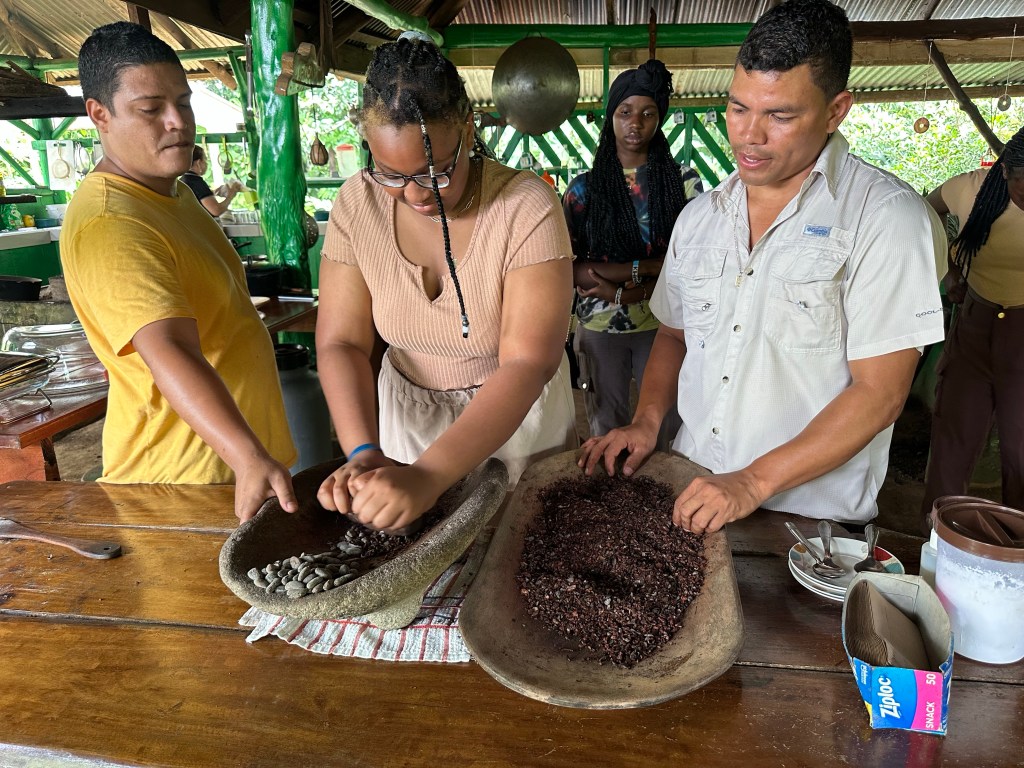
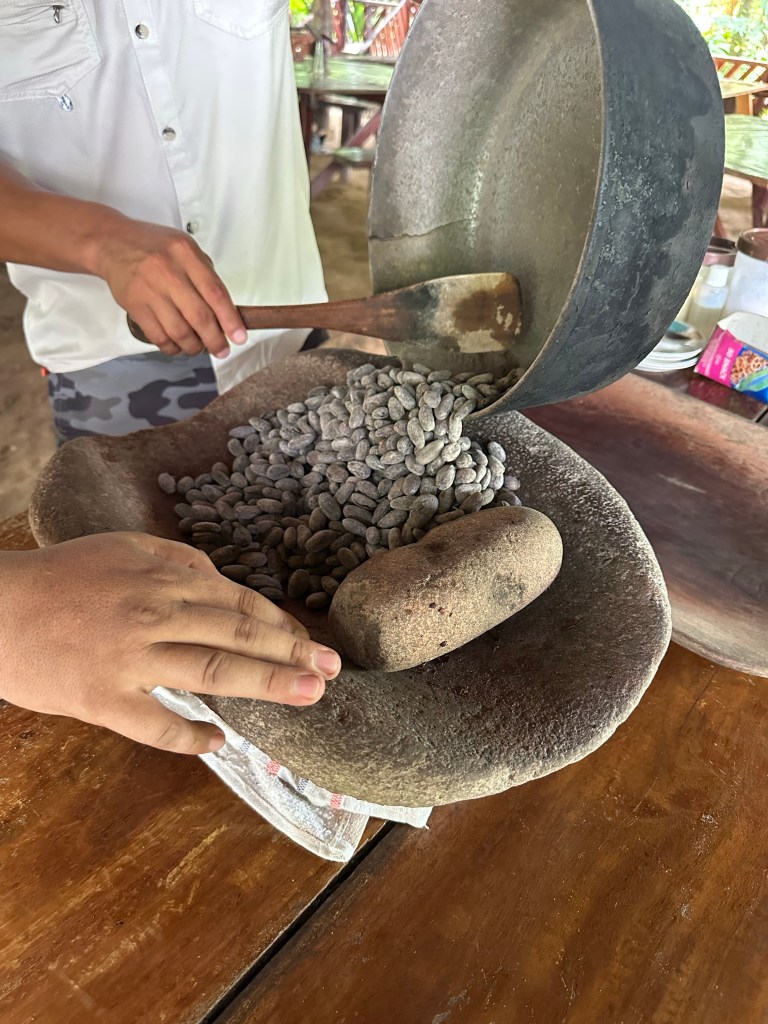


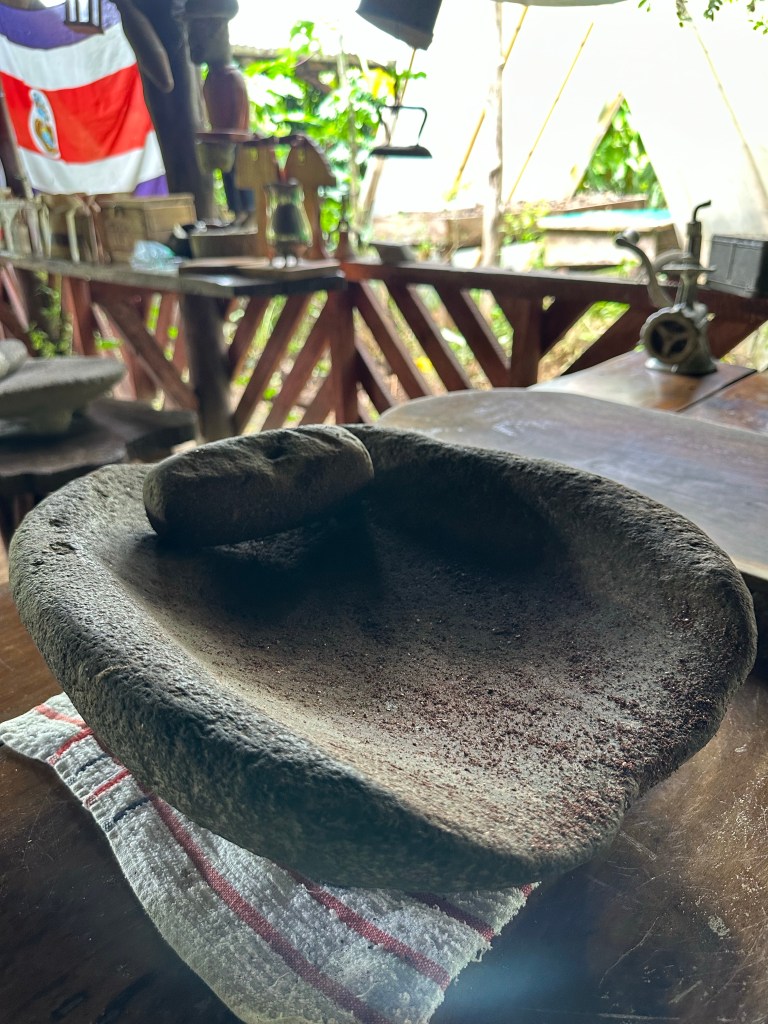
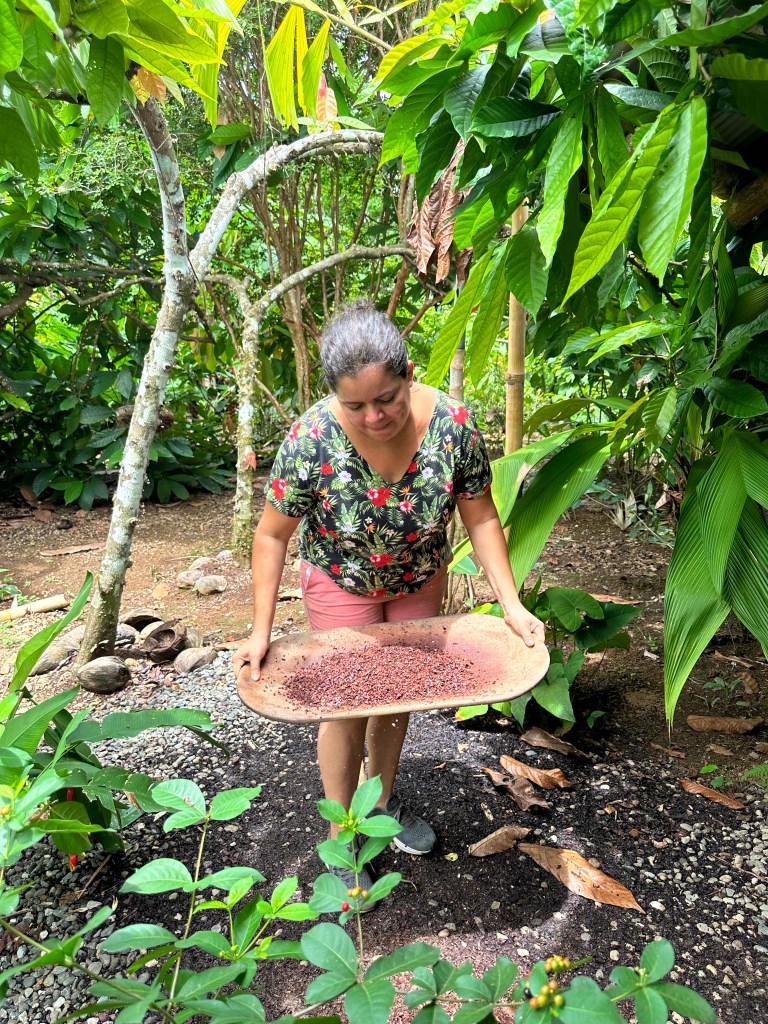
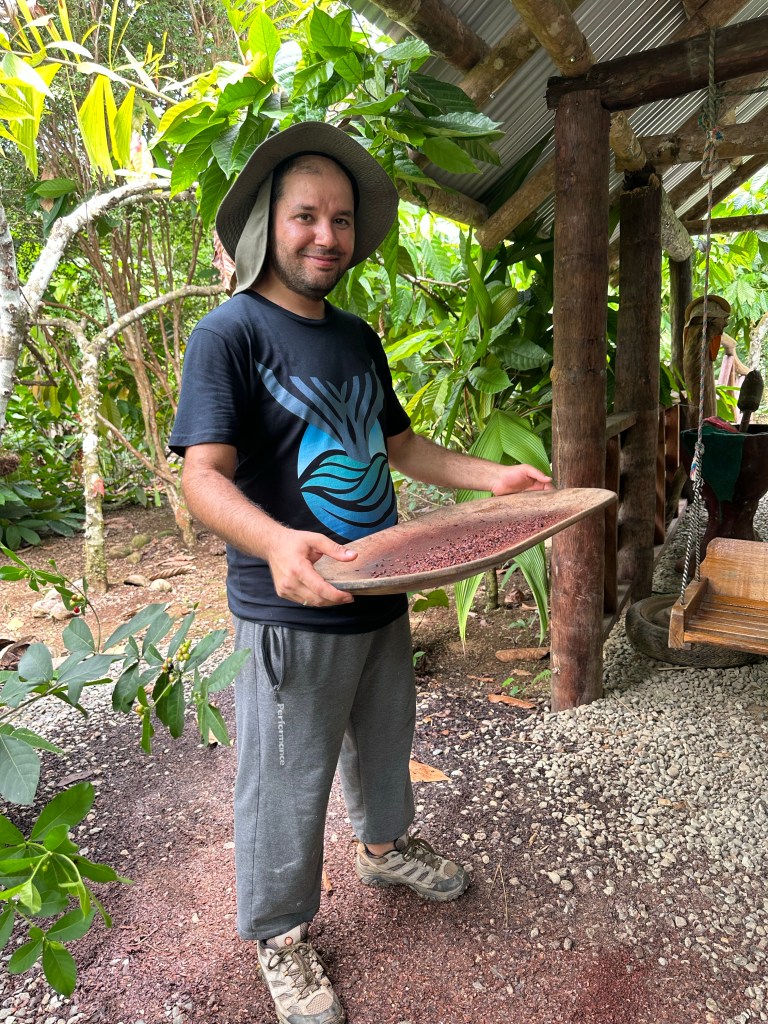
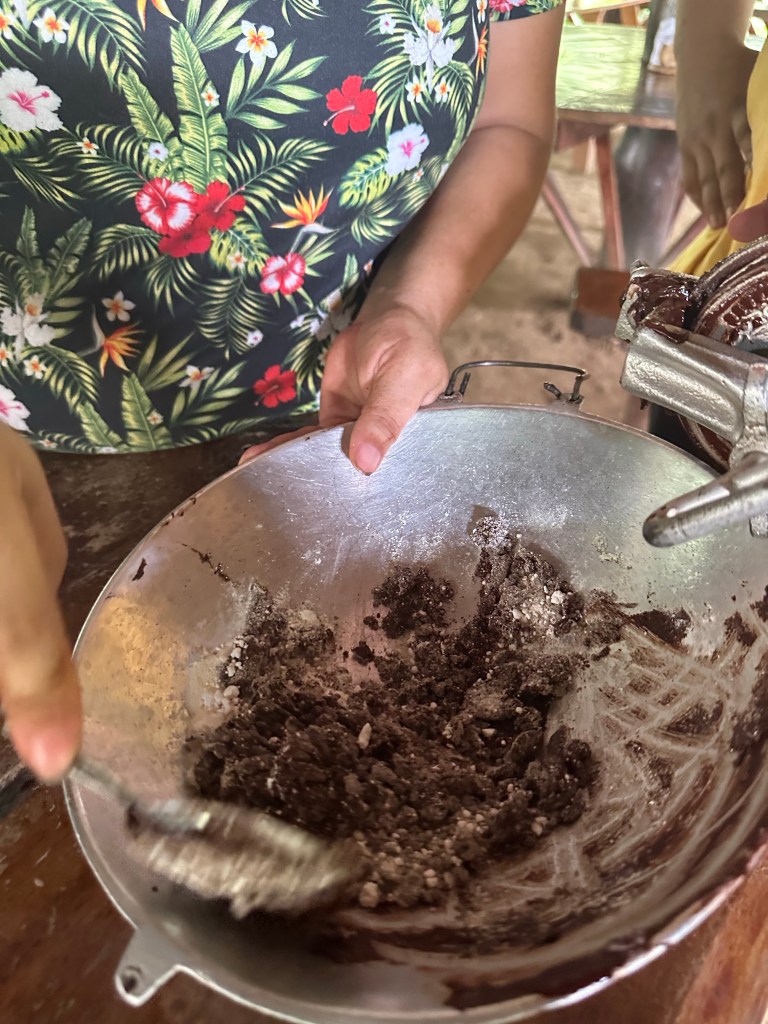
The next step was putting these broken pieces into a handheld grinder to make chocolate butter. I didn’t know that when you put the beans in the grinder, you end up with chocolate butter similar to Nutella. The guide explained that cacao beans contain a lot of oil, which is super healthy. As you may know, cacao is one of the superfoods that you can eat, and I instantly remembered that. However, in commercial chocolate factories, they remove this oil from the cacao beans first, and then whatever is left, they mix with another oil, usually palm oil, to compensate. She emphasized that this is how you lose many of the health benefits of cacao beans. She also mentioned that Africa is the largest producer of cacao in the world, but 80 percent of the high-quality cacao comes from Central America.



Chocolate Facial
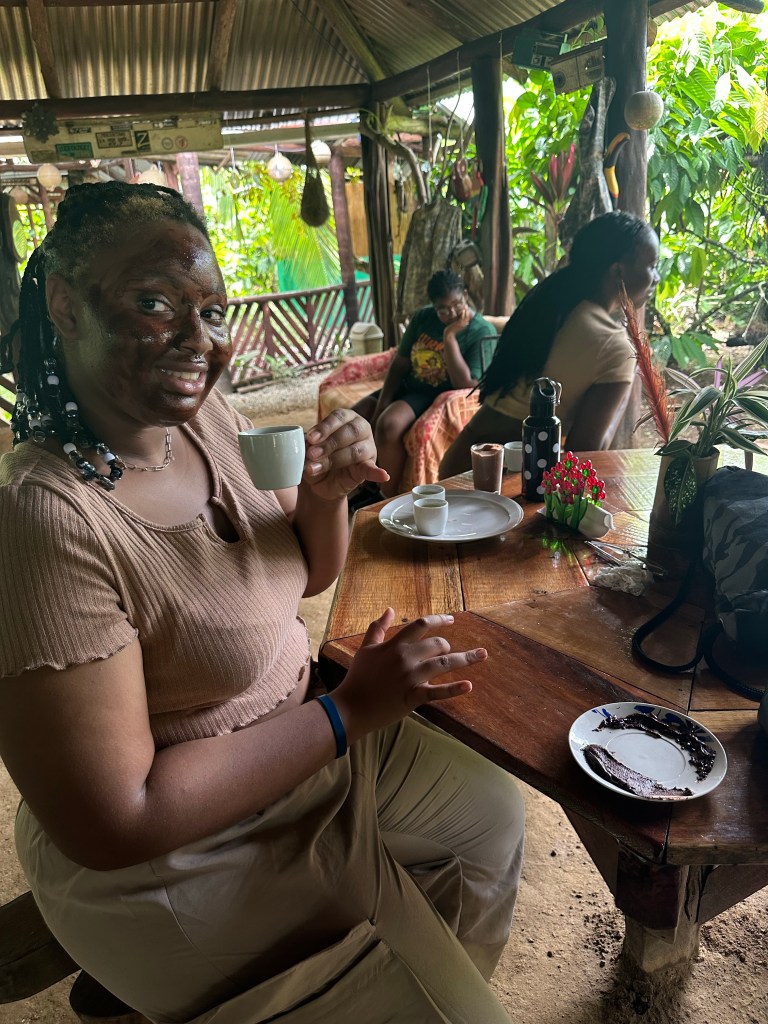
Of course, we also tried the whole chocolate after the grinding process, and it tasted amazing. The guide took some chocolate and mixed it with coconut oil, asking us to apply it to our faces. We all made our organic chocolate facial masks and left them on our faces until we left. It felt wonderful.


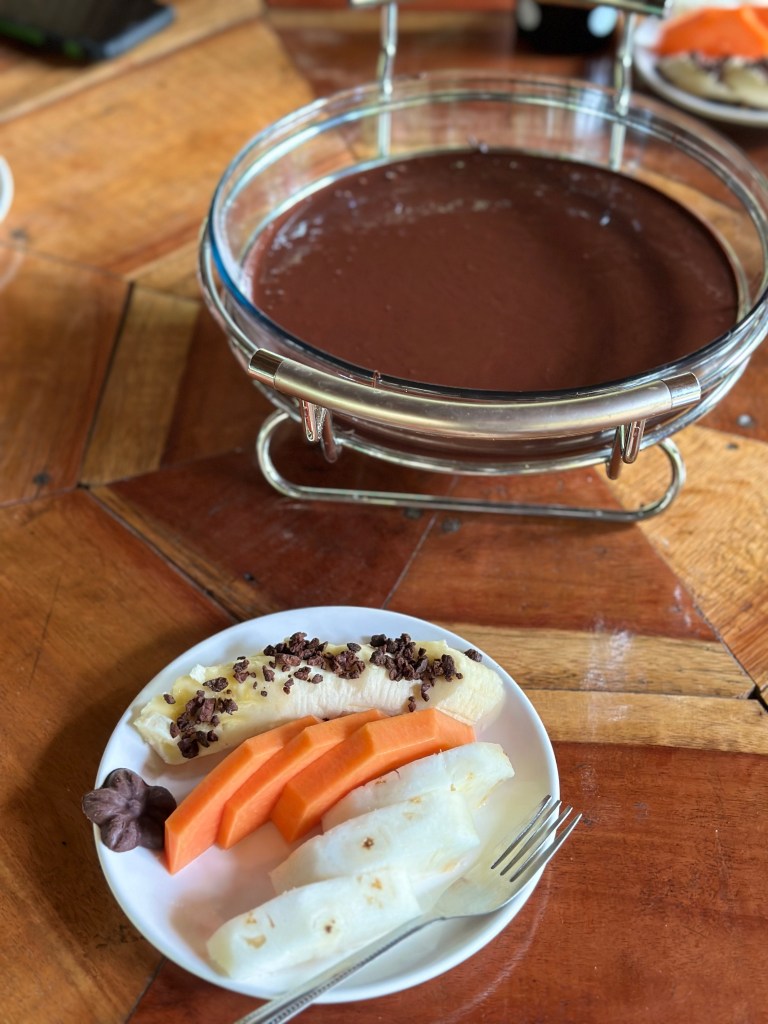
They served us fresh papayas, white pineapples, and bananas topped with caramelized chocolate, used sugar cane during the caramelization process, as well as chocolate fondue. It was beyond delicious. I told the kids that I felt rejuvenated after a long day of research. I was glad that we visited this place on our last day.

A Bit Exploration Around the House
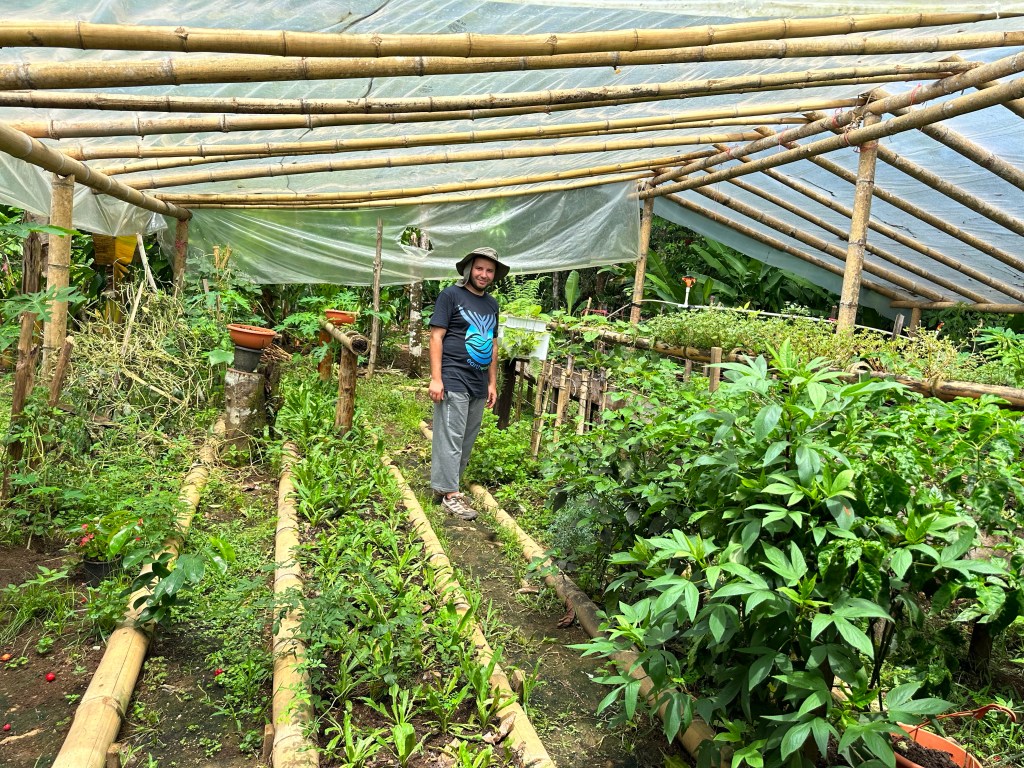
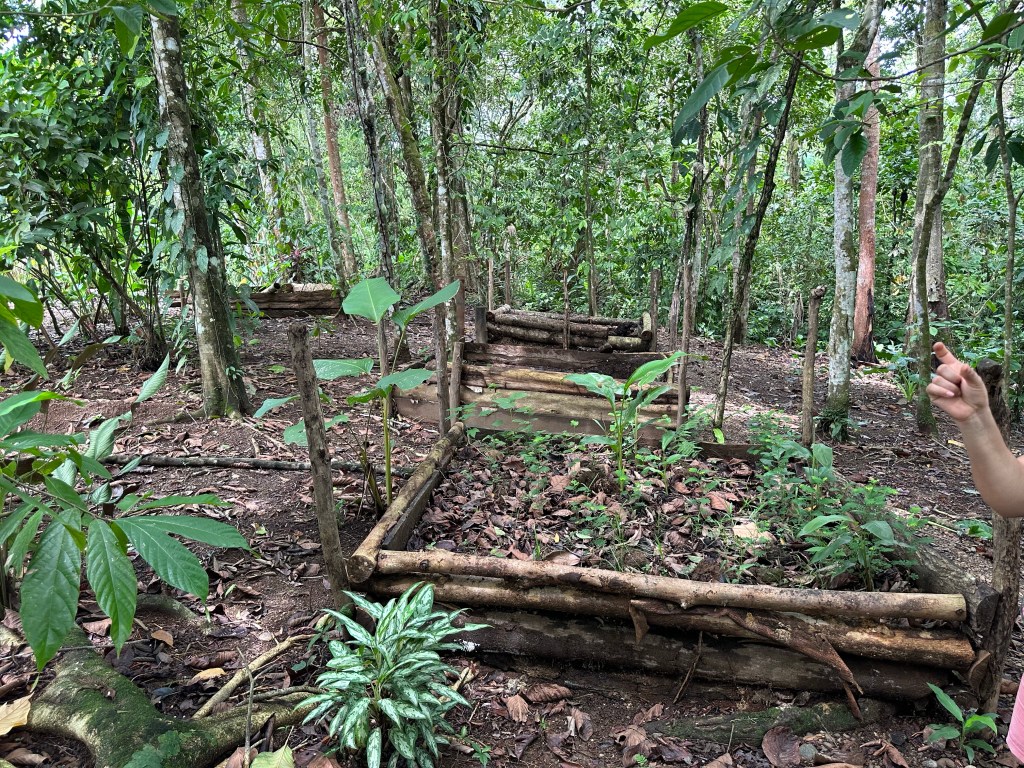
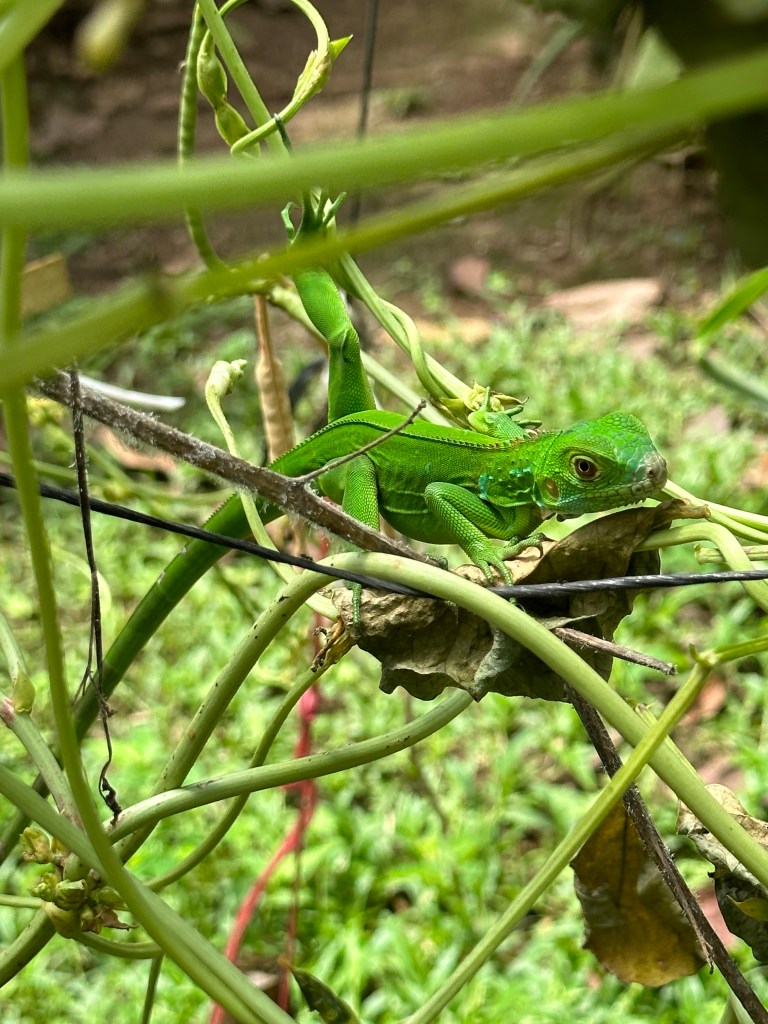
While we were savoring the chocolate, I explored the rest of the house. I saw a greenhouse with tomato and pepper plants, various herbs, lettuce, and much more. I even saw my first green iguana. They were so docile and didn’t move when I approached them. I mentioned my organic garden back home in Ohio to the guide and told her that for the past five years, no organic material from my kitchen has gone to waste. I compost them and use the compost for my garden. I showed her pictures of my lettuce, beets, and cabbages from my phone that my wife sent me recently. She then showed me how they compost behind their greenhouse as well.



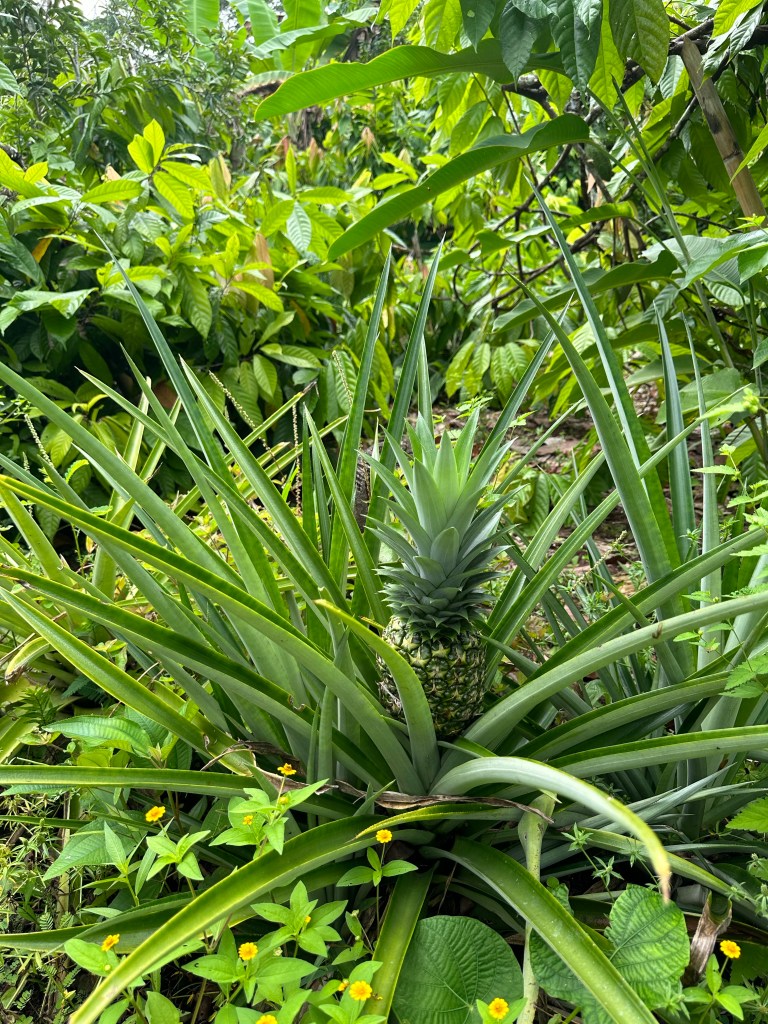
I almost forgot to mention the pineapple industry. The guide told us that it takes two years for a pineapple to grow. However, in commercialized pineapple farming, they grow in only 7 months. When I asked how they make that happen, she explained that they likely use lots of chemicals to expedite the process. I wondered about the effects of these chemicals on humans. It’s no surprise that so many people are experiencing physical, mental, and COGNITIVE health issues nowadays.

Farewell
Overall, visiting the organic chocolate farm was a once-in-a-lifetime experience. We learned so much in a short period of time and left feeling inspired and hopeful for a brighter future. Seeing people who care about the environment and the people around them amidst a society that can be self-centered made me happy for sure.
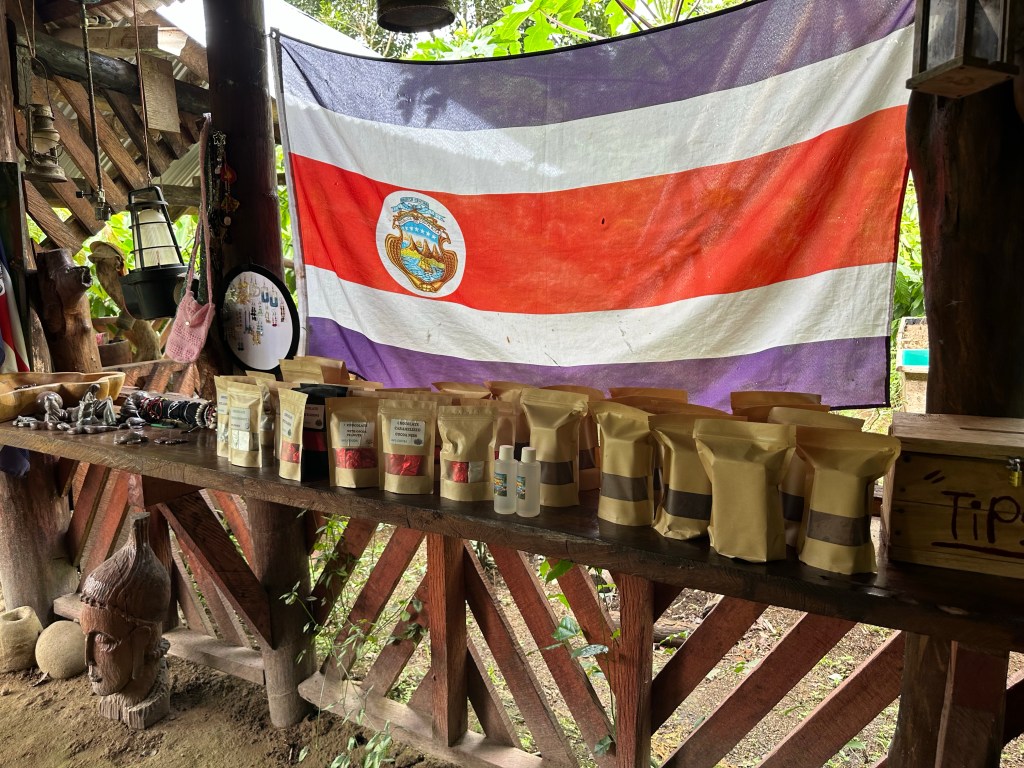

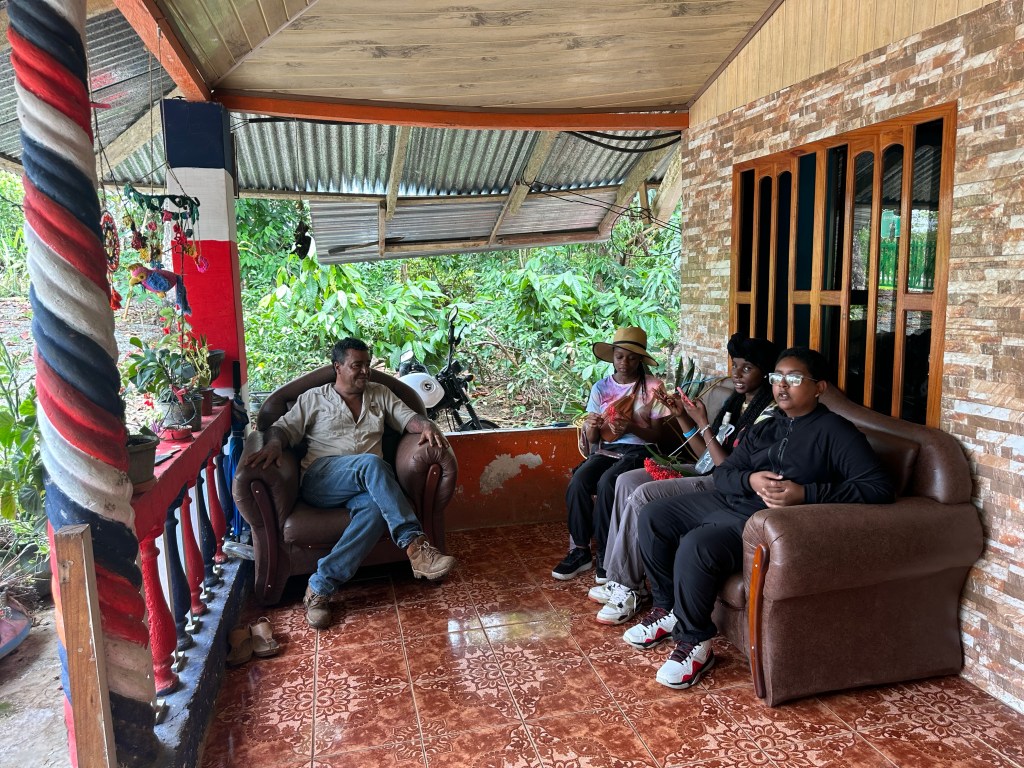


I hope to bring my family and friends to visit this place next time and have the chance to talk more about sustainability, conservation, and nature. Our three hours went by quickly, and we bid farewell to German, the owner, on our way back to our camp.

 Expeditionary Learning
One thought on “Organic Chocolate Farm, Rancho Raices”