Today, we conducted a necropsy on a mullet fish. A necropsy involves examining the body of a deceased animal, while the term “autopsy” is used for human bodies after death.
Mullet fish are a favorite food for dolphins, and studying them provides valuable information about dolphins. We began by examining the fish’s external features to assess its overall condition. We observed its dorsal fins, caudal fin, and lateral fins. Dr. Lenin explained that mullets use their dorsal fins to defend themselves against predators, as they have exceptionally strong bones. They rely on their caudal fins for movement, and scientists also use these fins to classify the fish.

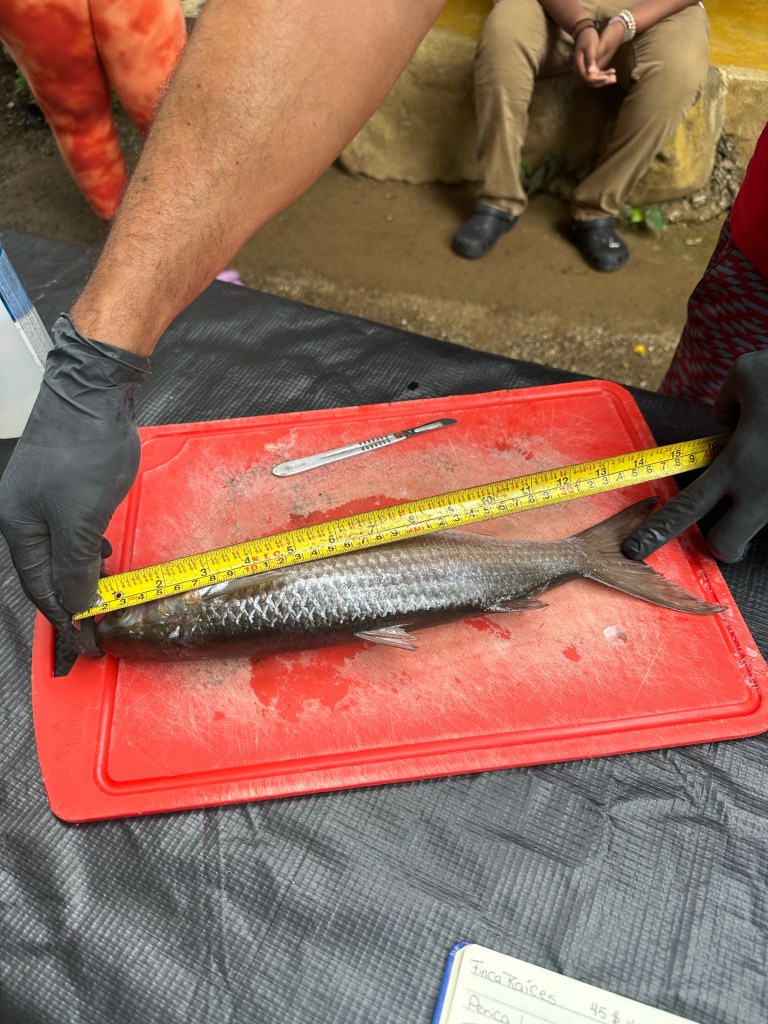
Next, we measured the length of the fish from its head to the lowest point of the caudal fin. This measurement helps scientists determine the life stage of the fish, whether it is young or adult. In this case, it measured 35 cm. We also took another measurement from the head to the tip of the caudal fin, which was 39 cm.
David then proceeded to show us the fish’s heart, liver, and other internal organs. To better locate the stomach, David inserted a stick into the fish’s mouth. Surprisingly, the stomach was completely empty, and David made a note of this in his recording.
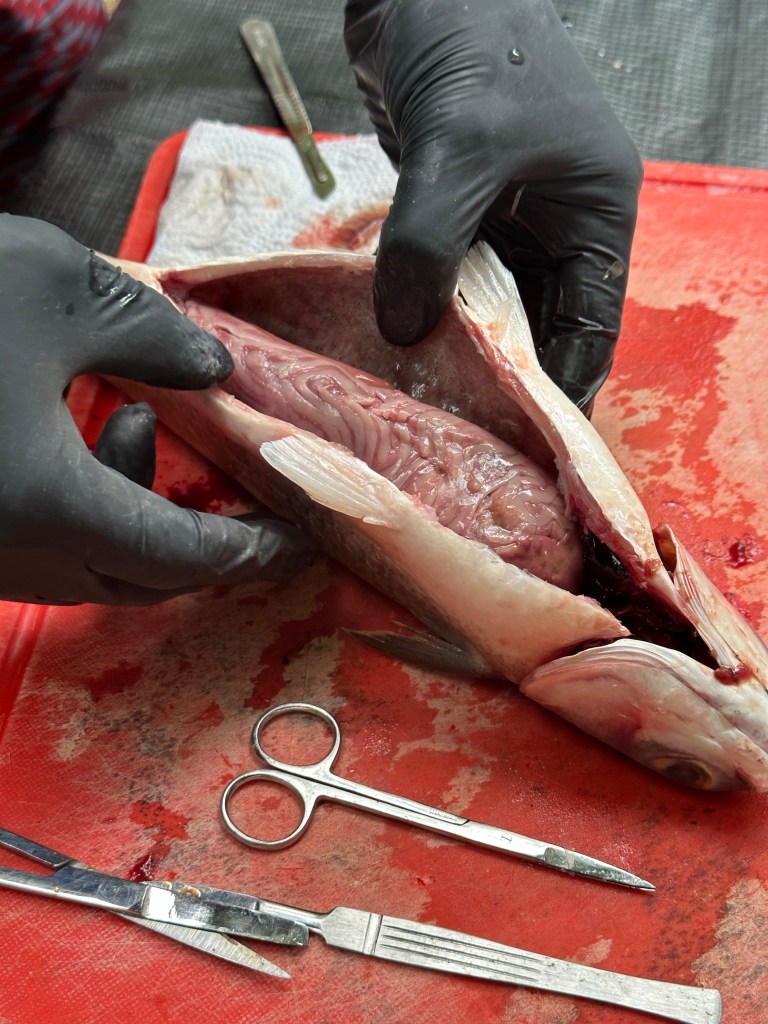
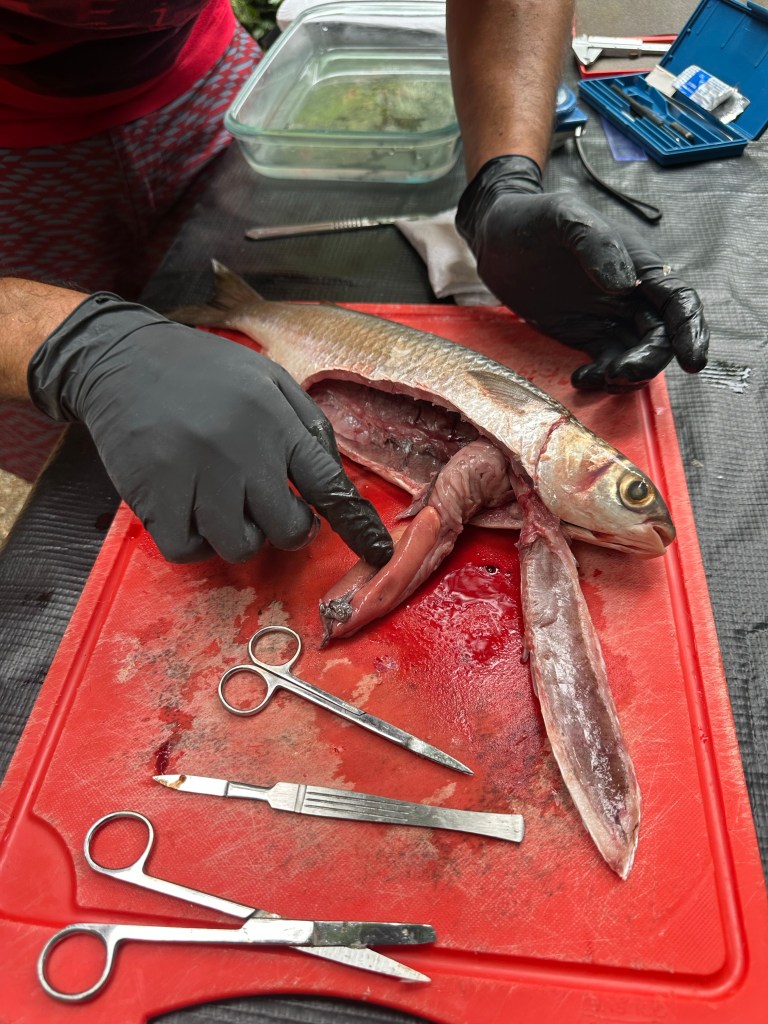


Mullet Fish Have Gizzards
I don’t know about you, but I was unaware that fish could have gizzards. However, mullet fish, along with some other species, do possess gizzards. I was amazed to discover a large-sized gizzard in the mullet fish. Gizzards are unique because they help grind difficult-to-digest foods, making them particularly useful for animals that lack teeth. Birds, earthworms, crocodiles, and alligators also have gizzards. It was astonishing to learn that fish, especially mullet fish, have this organ. Dr. Lenin explained that mullet fish have gizzards because they are bottom feeders and often ingest unwanted substances along with their food. The gizzards aid in the digestion of these indigestible items.
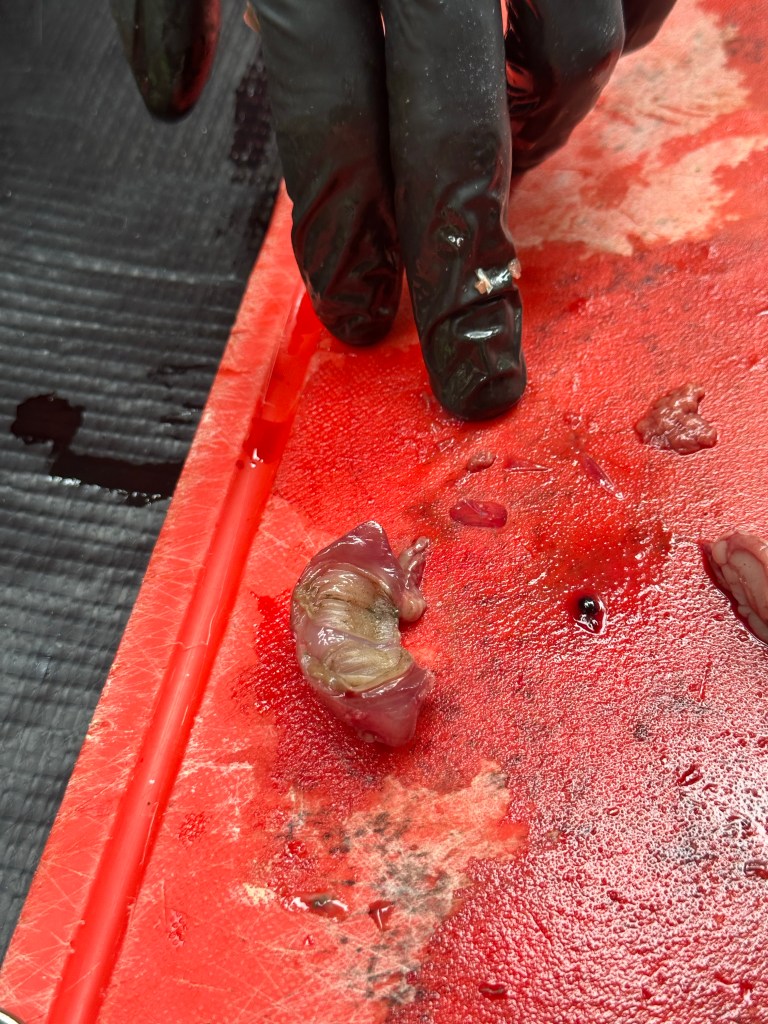
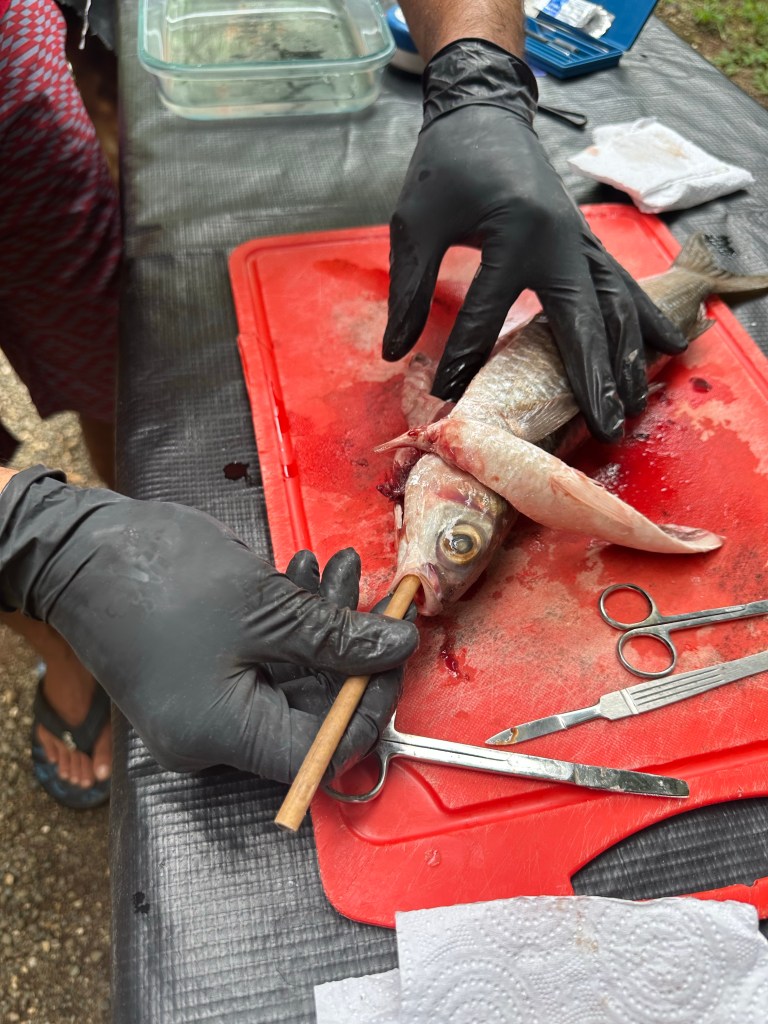
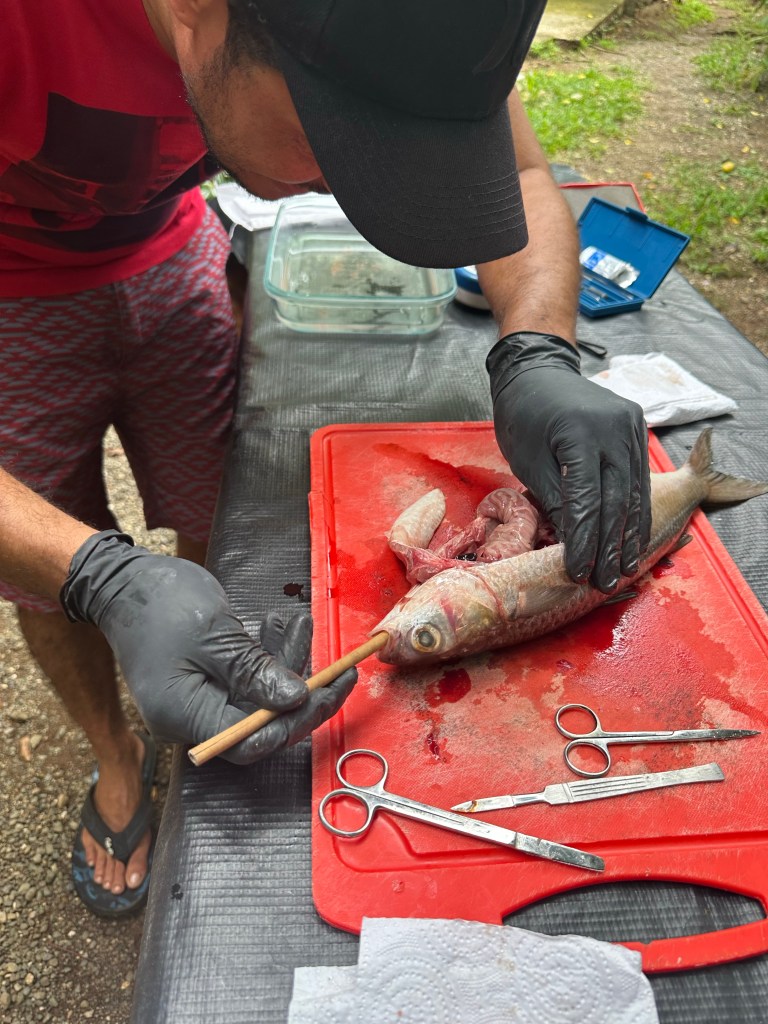

David then pointed out the swim bladder located near the fish’s backbone. This air-filled sac organ allows bony fish to maintain buoyancy in the water. You might be wondering how cartilaginous fish, such as sharks, float. Dr. Lenin said that these fish have enormous livers filled with fat, which enables them to float. Fascinating, isn’t it?
Next, David extracted the mullet fish’s otoliths, also known as “earstones.” These hard, calcium carbonate structures are found directly behind the brain in bony fishes. The significance of these bones lies in the fact that when dolphins consume mullet fish, they do not digest the otoliths. During necropsies on dolphins, scientists can analyze these otoliths to gain insight into their diet. It’s truly amazing how scientists come up with such techniques!
International Union for Conservation of Nature
During our afternoon discussions, Dr. Lenin introduced us to the International Union for Conservation of Nature (IUCN) organization and their efforts to protect the planet’s biodiversity. I must admit, I was not previously aware of this international organization. They offer a wealth of knowledge and tools for anyone interested in preserving the planet and educating others about its species. I highly recommend visiting their website to explore the incredible resources available.
Dr. Lenin presented us with the structure of the IUCN categories, which range from “not evaluated” at the bottom to “extinct” at the top. These categories help assess the conservation status of species. He then showed us the Red List, a list that indicates whether a species is threatened with extinction based on specific parameters.

Dr. Lenin used these examples to highlight the conservation status of bottlenose dolphins in Golfo Dulce. Although they are currently designated as “least concern” according to the IUCN, Dr. Lenin’s data suggests that they are vulnerable and even nearing endangered status. Therefore, Dr. Lenin and his team have been working to convince decision-makers to change the designation of bottlenose dolphins from “least concern” to “vulnerable.”
The Vaquita, the World’s Rarest Marine Mammal
He then shared a heartbreaking story about the Vaquita, the world’s rarest marine mammal, which is on the verge of extinction. This species is endemic to the waters near Baja California and can be found nowhere else in the world. In the past decade, their numbers have drastically declined, with the last count in 2021 estimating less than 10 individuals remaining. Scientists attempted to capture a few individuals to aid in their population recovery through captivity, but unfortunately, this mission failed. The Vaquita is a fragile species that is difficult to capture, and the stress from capture led to the death of the first animal caught, resulting in the suspension of further capture attempts.


Dr. Lenin explained that the Vaquita’s precarious population status is primarily due to their being endemic. If anything happens to their environment, they face the risk of extinction worldwide with no possibility of recovery. This is a universal truth for all species. Dr. Lenin expressed concern that the rapid environmental changes in Baja California have had a severe impact on the Vaquita population. Additionally, there is a fish species in these waters, highly valued in Chinese markets, that the Vaquita depends on for food. Consequently, the Vaquita faces depletion of its food resources and is often caught accidentally in fishing nets. Dr. Lenin’s worry is that we may soon no longer see the Vaquita in the near future if the gillnetting will not stop.
The Vaquita is a porpoise, which belongs to a group of fully aquatic marine mammals known as toothed whales. Although they may resemble dolphins, they are more closely related to narwhals and belugas than to dolphins. Prior to this, I had not been acquainted with the Vaquita, and I sincerely hope to witness their thriving presence in the waters of Baja California in the future.

 Expeditionary Learning
One thought on “Mullet Necropsy”