
One of our discussions with Dr. Lenin was about whales. He played different calls of humpback whales, orcas, blue whales, sperm whales, and bottlenose dolphins.

Marine mammals are classified into four different taxonomic groups: cetaceans (whales, dolphins, and porpoises), pinnipeds (seals, sea lions, and walruses), sirenians (manatees and dugongs), and marine fissipeds (polar bears and sea otters).
Cetaceans are divided into two groups: baleen whales and toothed whales. Humpback whales are a type of baleen whale that has baleen instead of teeth, which they use to collect shrimp-like krill, plankton, and small fish from the sea. Blue whales, the largest animal known to have ever existed, are also a type of baleen whale.

Under the toothed whale category, we have our famous bottlenose dolphins, killer whales (orcas), and sperm whales. I have to admit that I did not know killer whales (orcas) are actually not whales. They are the smartest and largest species under the dolphin family. So, orcas are dolphins.
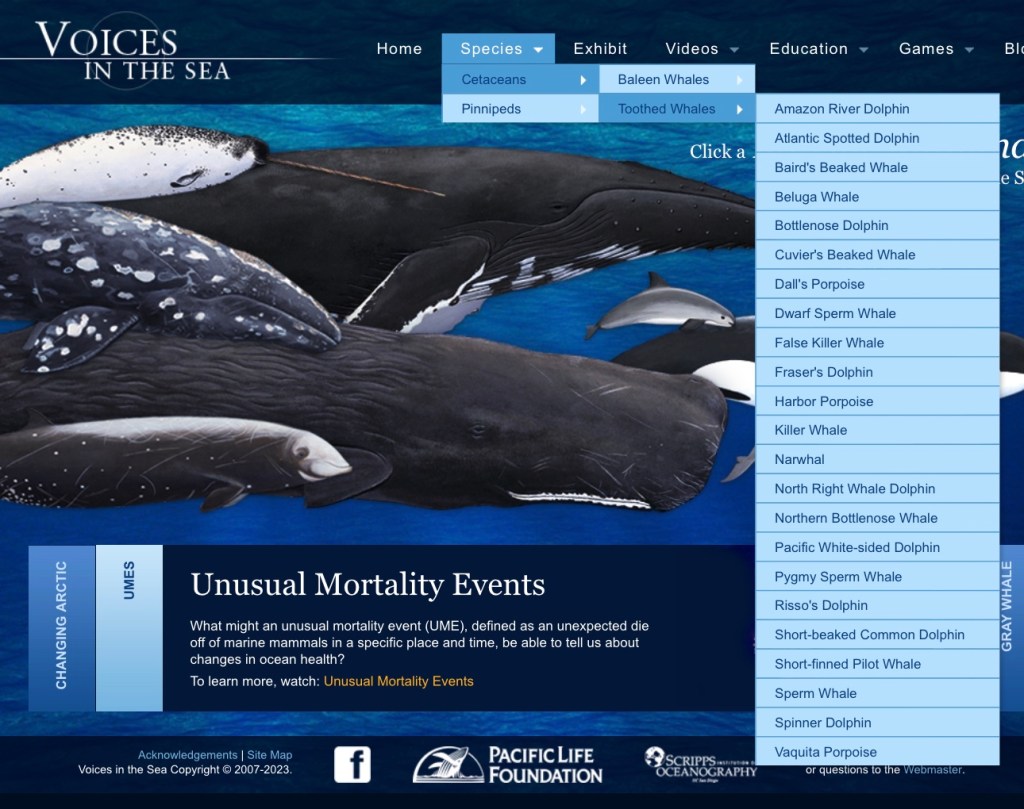
Dr. Lenin presented some of the whale sounds using “Voices in the Sea” from the University of California, San Diego. We first started listening to humpback whale calls. The first call we listened to was their reproductive vocalization. The second call we listened to was their foraging sound, and the third call was mother and calf communication. We were amazed to hear different vocalizations for different situations. Based on these sounds, scientists can predict whale behavior. Humpback whales are endangered species. Humpback whales are migratory animals that typically migrate up to 16,000 km (9,900 mi) each year. They feed in polar waters and migrate to tropical or subtropical waters, such as Golfo Dulce, to breed and give birth. Dr. Lenin told us that listening to the sound of humpback whales is one of the best experiences one could have in their life.

We then listened to the sound of another baleen whale, the blue whale, which is the largest animal that has ever existed. It is fascinating that the largest animal on earth feeds on the smallest creatures on earth, such as krill and plankton. Blue whales are also endangered animals. When we listened to the blue whale’s sound, it wasn’t loud but deep. Dr. Lenin told us that they create infrasound, which is below our hearing frequency, which is why we can’t hear them well. However, it doesn’t mean that they are not loud because we don’t hear their sound well. Their sound actually travels the farthest.

Next, we listened to the sounds of bottlenose dolphins. Dolphins, like other toothed whales, use echolocation to locate food and other objects in the ocean. This is how they “see” in the water through sound. In echolocation, they produce a series of sounds called “clicks.” In front of the dolphin’s blowhole, in the area we call the forehead, there is a structure called the melon. The melon consists of fatty tissue and fluid where the sound is focused like a lens. The sound waves travel through the melon and into the water, bouncing off objects of interest. The sound waves then travel back to the dolphin and are received by their lower jaw, which is also filled with a fatty fluid. The sound waves travel from the jaw to the inner ear, to the nerves connected directly to the brain, where they are translated into an image.
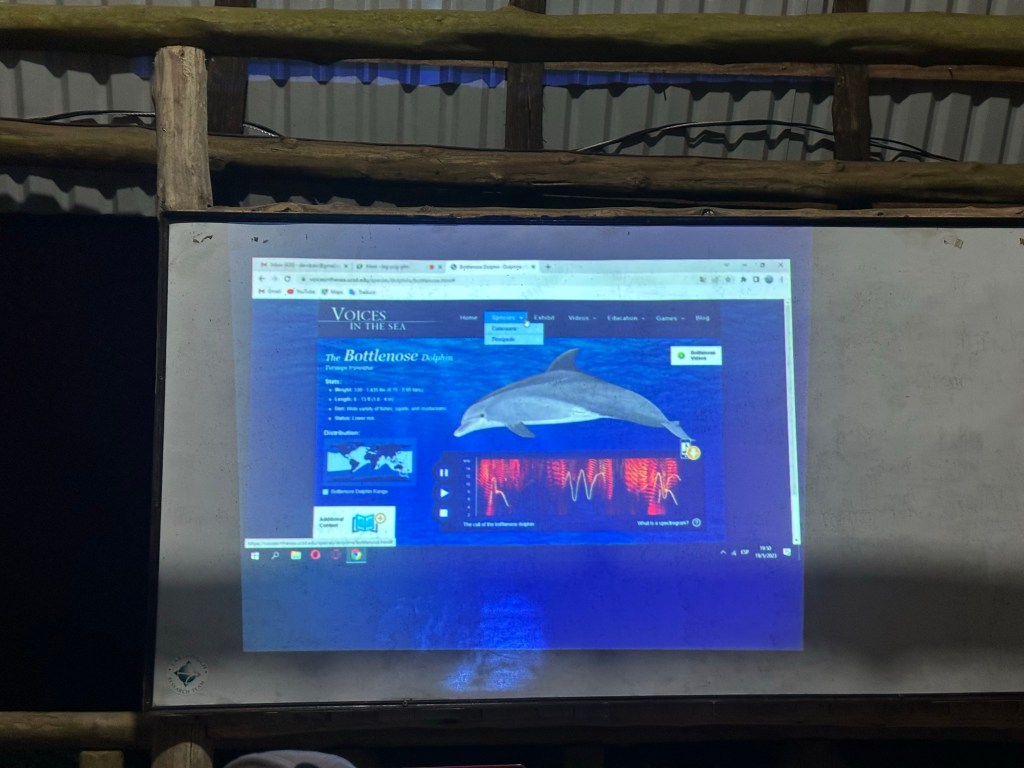
Dolphins also make a second type of sound called a whistle sound. Dr. Lenin told us that each dolphin has its unique whistle sound, which is called “signature whistles.” This is how dolphins recognize each other in the dolphin society, and baby dolphins can identify their mother. Signature whistles are so powerful that they play a crucial role in their social bonds. One interesting fact I learned is that a mother dolphin may whistle to her calf almost continuously for several days after giving birth, so that her calf can learn to identify its mother.
We then listened to the sound of another toothed whale, the sperm whale. Sperm whales have the largest brain in nature and are also listed as endangered animals. They have three different types of calls. The first one is echolocation, the second is their language or dialect, which is how they communicate, and the third one is ultrasound. They use ultrasound when hunting, as it paralyzes the prey with sound. Sperm whales can even stun other sperm whales with their ultrasonic sound. That’s how powerful it is.

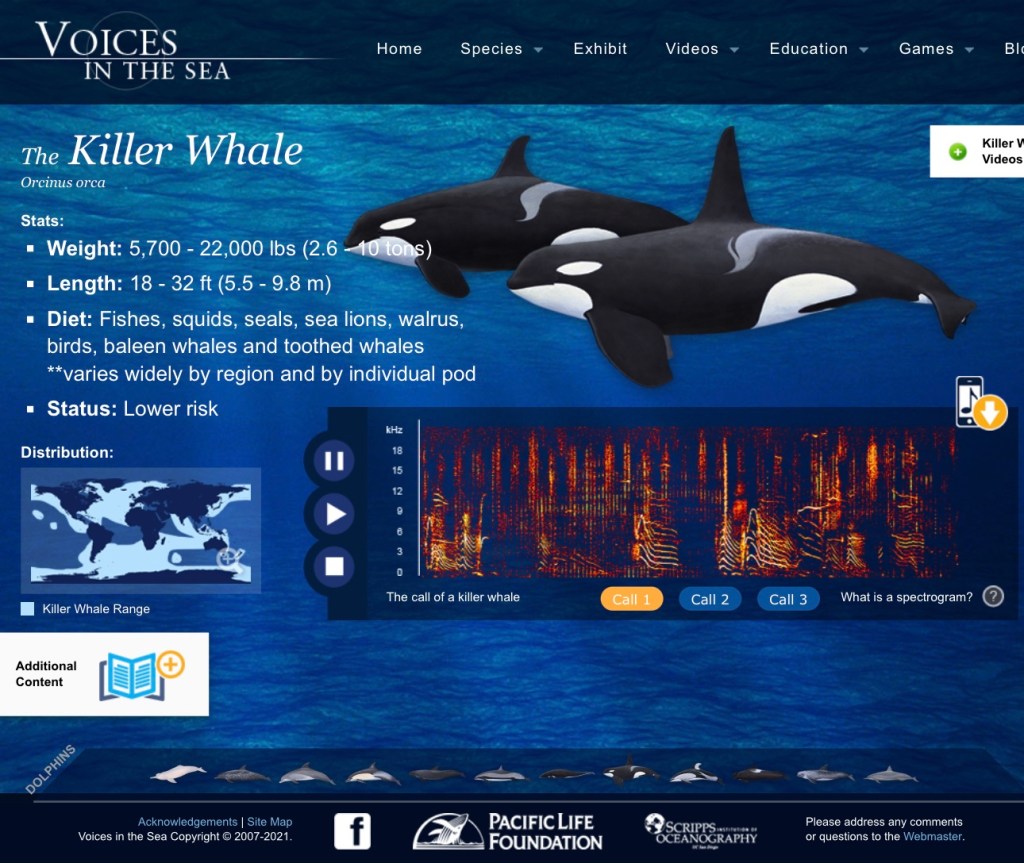
Lastly, we listened to the sound of killer whales (orcas). Their sounds are similar to other dolphins.
Cornfield Exploration
As a passionate gardener, I always like to see how others succeed in their organic vegetable gardening. This time was no different. At our research camp, we have a cornfield that was recently planted, I would say about 3 weeks or a month ago. However, it was different from what I know. First of all, the field has not been tilled. What they did prior to seeding was they put plastic sheeting into the field where they wanted to plant the corn and let it sit for a while until all the weeds were dead. Then, they removed the plastic wrap and started planting the corn seeds. In each hole, they put three seeds, and the distance between two holes was about 3 ft. The distance between rows was also 3 ft. Once the corn germinated, they thinned out one of the weaker corn plants from each hole. I can’t wait to try this method of planting corn when I get back home to Ohio. This way of agriculture is not only good for the environment but also for the plants themselves. When the soil is tilled, a significant amount of carbon is released, which is bad for the environment and for plants that need carbon. Tilling also disrupts the entire ecosystem in the soil, which is beneficial for the plants. Many microorganisms provide nutrients to the plants at a level they can use.

Land Crab (Gecarcinus quadratus) Encounter
When we returned from dinner around 7 pm, which was a dark night, we encountered a land crab near our meeting place. By the way, the sunset in Costa Rica is at 5:47 pm, which is pretty early compared to Columbus, Ohio. However, the sun rises around 5:15 am, which is also pretty early for Ohio. As you may have noticed, the length of day and darkness is almost the same since we are near the equator. Now, let’s go back to our land crab. They were so cute, colorful, and looked docile. After taking its picture, I went straight back to my room to relax because it had been a very tiring day for me.


 Expeditionary Learning
One thought on “Voices of the Sea: Listening to Whales and Dolphins”