Today was our final day of boat research on dolphins. We have conducted a total of five boat surveys so far. Our last destination was a little farther away in the Golfo Dulce, near the open ocean. After that, we planned to return near the shore of the Osa Peninsula, where the Corcovado National Park is located.
During the journey, we had an exciting encounter with a baby manta ray jumping out of the water. It was incredibly adorable. Just then, we received a call from David’s friend informing us about the presence of spotted dolphins in a specific location near the shore of Corcovado National Park. We immediately redirected our attention to that direction. As their name suggests, spotted dolphins have distinctive spots on their skin, while calves do not have spots. These spots increase as they mature. David told us that spotted dolphins usually gather in large numbers, with up to 400 individuals in the open ocean. However, in Golfo Dulce, their group size is much smaller, usually ranging from 5 to 10 individuals. As mentioned in my previous posts, dolphins here don’t fear predators, and food is abundant in Golfo Dulce, which explains the smaller group size.
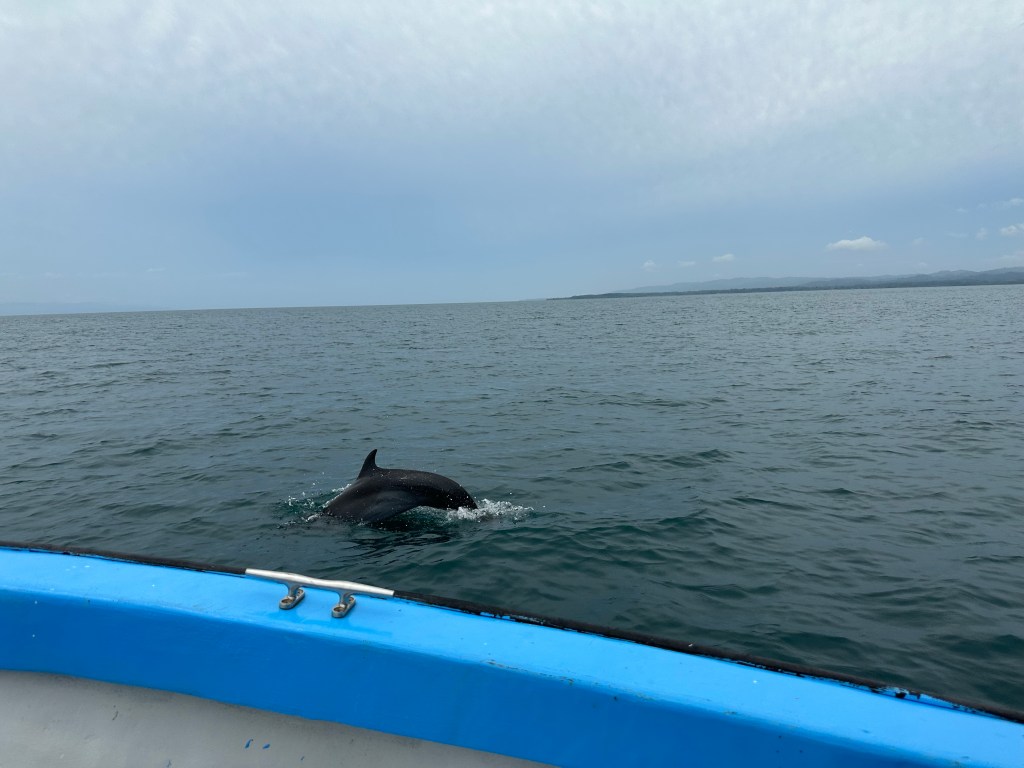
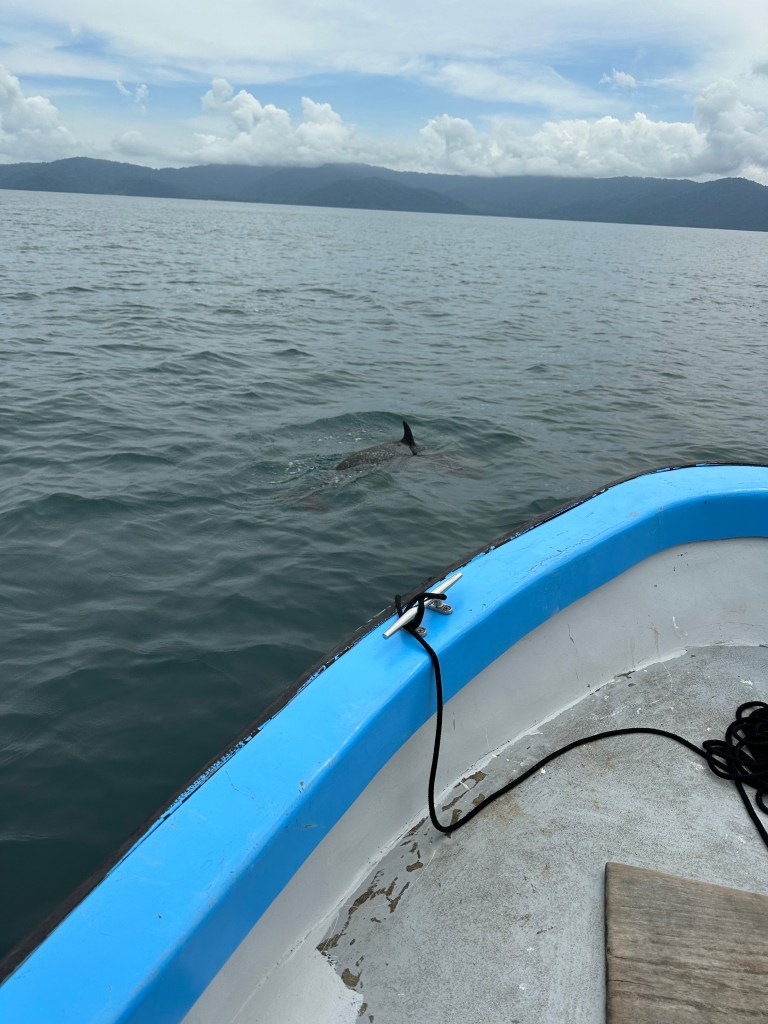
As luck would have it, the best moment awaited us at the very end. We witnessed baby spotted dolphins jumping out of the water multiple times, playfully frolicking around our boat. It was truly fascinating to see them so happy and healthy. Capturing their pictures proved challenging, but I managed to take a couple of shots while they were mid-air.
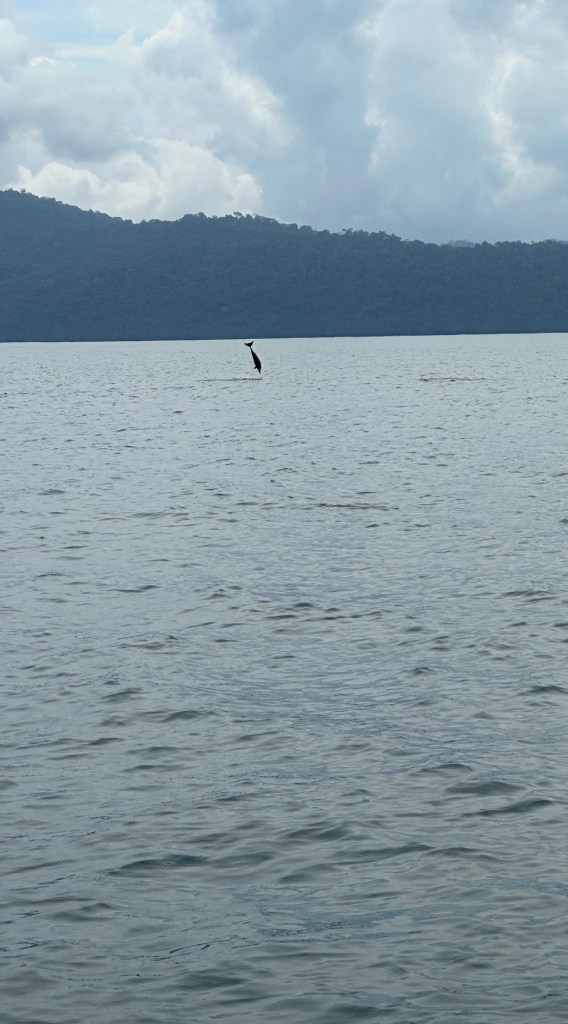
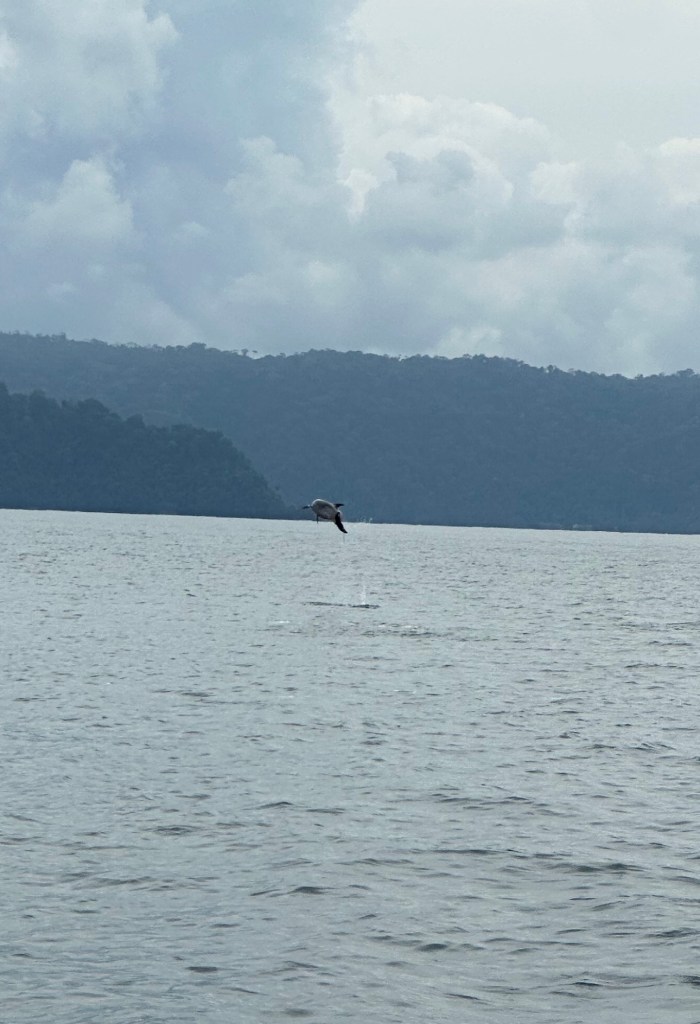

While we were enjoying the scene of baby spotted dolphins, we also caught sight of a green turtle. It briefly emerged from the water, taking a curious look around, before swiftly swimming away as we approached.
Hiking
After lunch, it was my time to embark on a solo exploration. Due to the scorching heat and high humidity, most students preferred to avoid hiking. I couldn’t blame them since the average temperature reached the mid-90s F (33-35 C), and the humidity made it feel like 105 F (40 C). Nevertheless, today our discussion with Dr. Lenin got postponed from 4 pm to 5 pm, leaving me with three hours to spare. I approached David and asked if we could go hiking to explore the jungle. He happily agreed to accompany me, and off we went.
We followed a trail behind David’s house, as he mentioned that his father owned around 9 acres of forest in the area, granting him an intimate knowledge of the surroundings. Our path led us uphill, which turned out to be the hottest and most humid moment of my life. Imagine temperatures exceeding 100 F (38 C) with 90 percent humidity, while hiking uphill and wearing long pants and closed-toe hiking shoes. I must have felt like it was 120 F (49 C) at that time. My clothes were drenched in sweat, with droplets falling from my face like rain. Despite these “hellish” conditions, I felt immense joy being out there. The forest was awe-inspiring, and David proved to be an excellent guide.
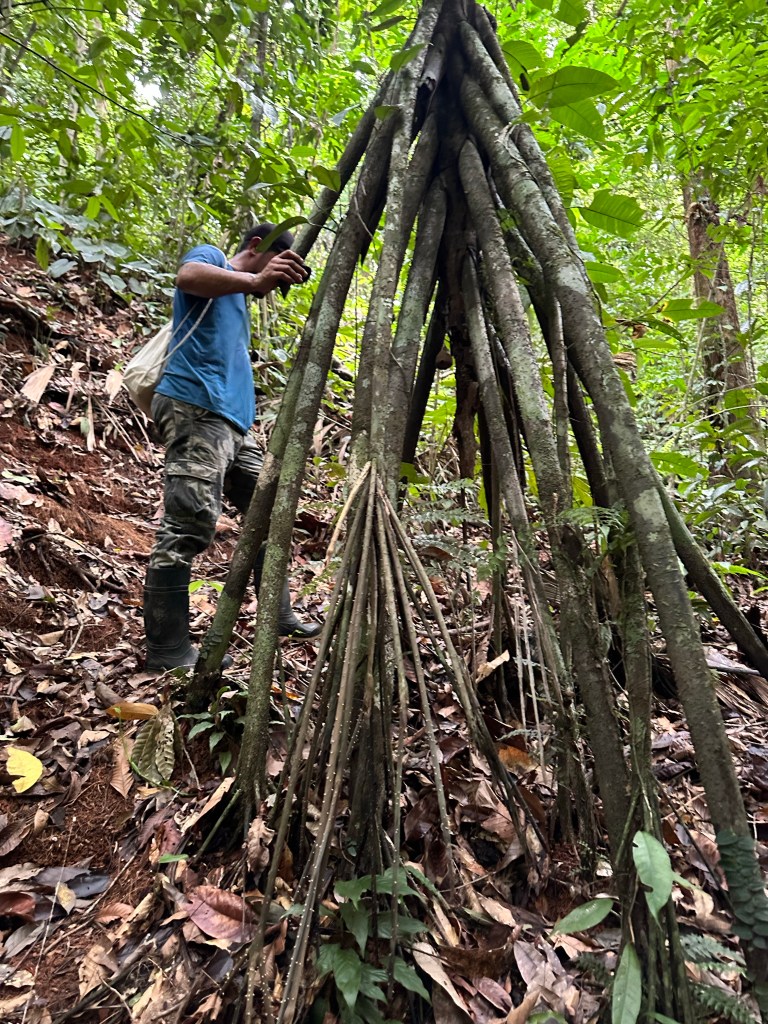
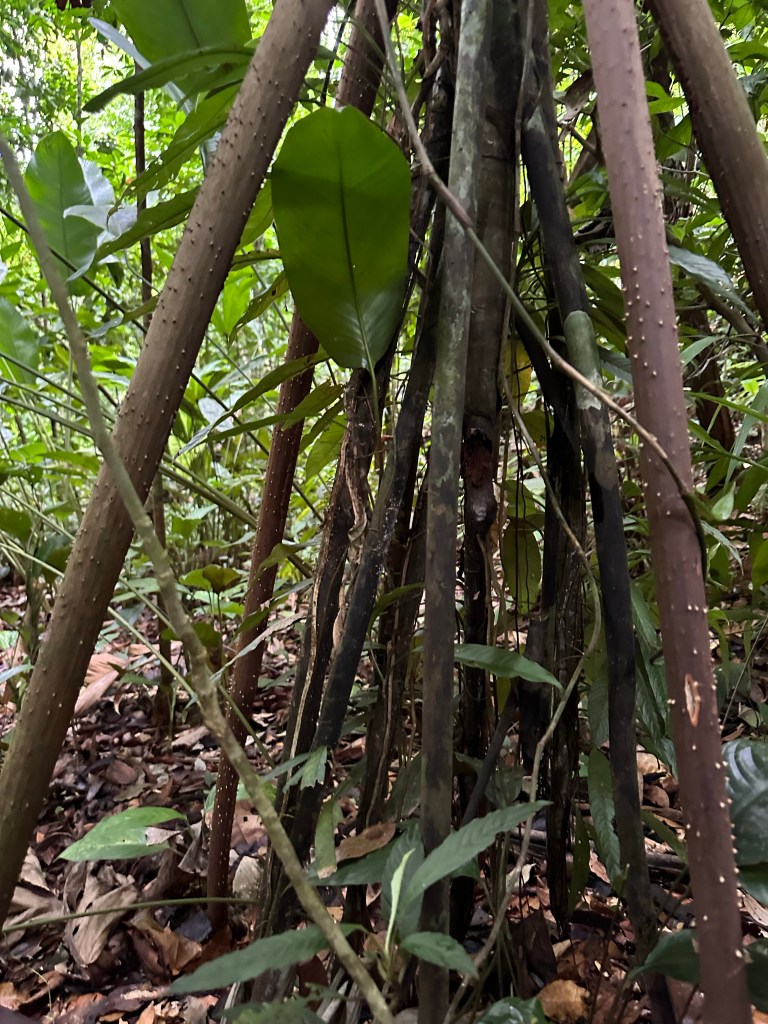
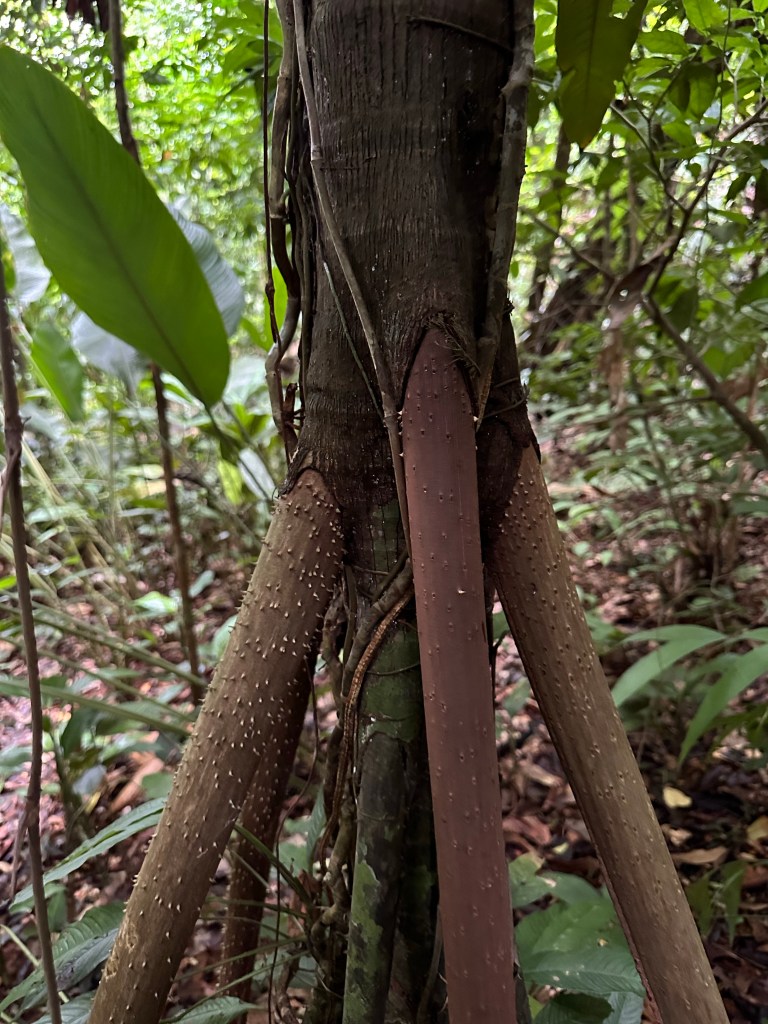
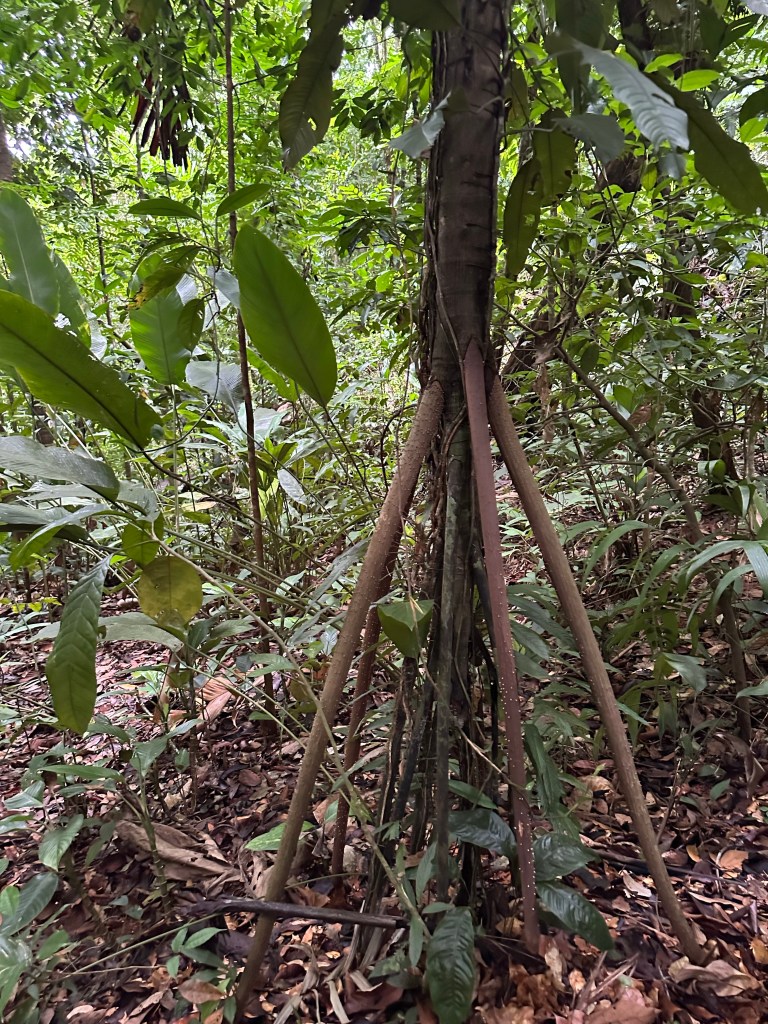
Walking Trees (Socratea exorrhiza)
During our hike, I encountered a fascinating phenomenon: the “walking” trees. I had never seen anything like it before. These enormous trees literally change their location to find the best spot for sunlight. The entire tree stands with its roots in the air, forming a hollow at the center. Here’s how it works: when the tree leans towards a side with more sunlight, it creates new roots in that direction. As these new roots establish themselves, the old ones gradually die, and this process continues. According to an article I read from the BBC, these trees can relocate themselves up to 65 feet (20 meters) per year. It’s mind-blowing! I wished to spend more time observing them, but we had to keep moving.
The Giant Trees, Ceiba
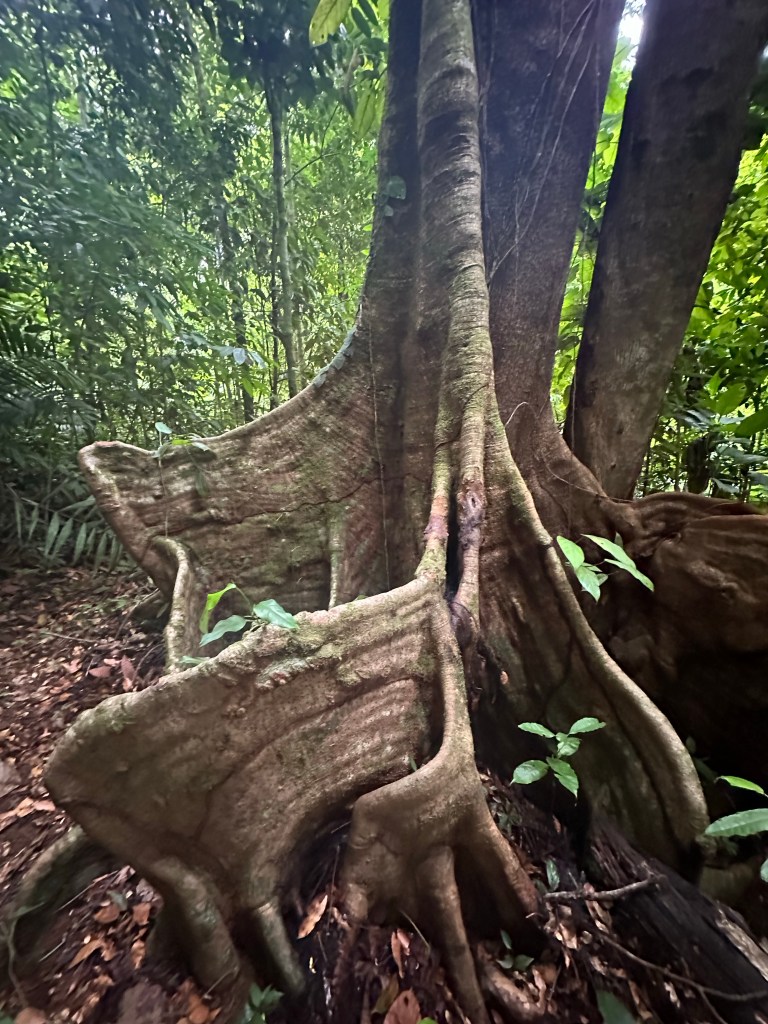
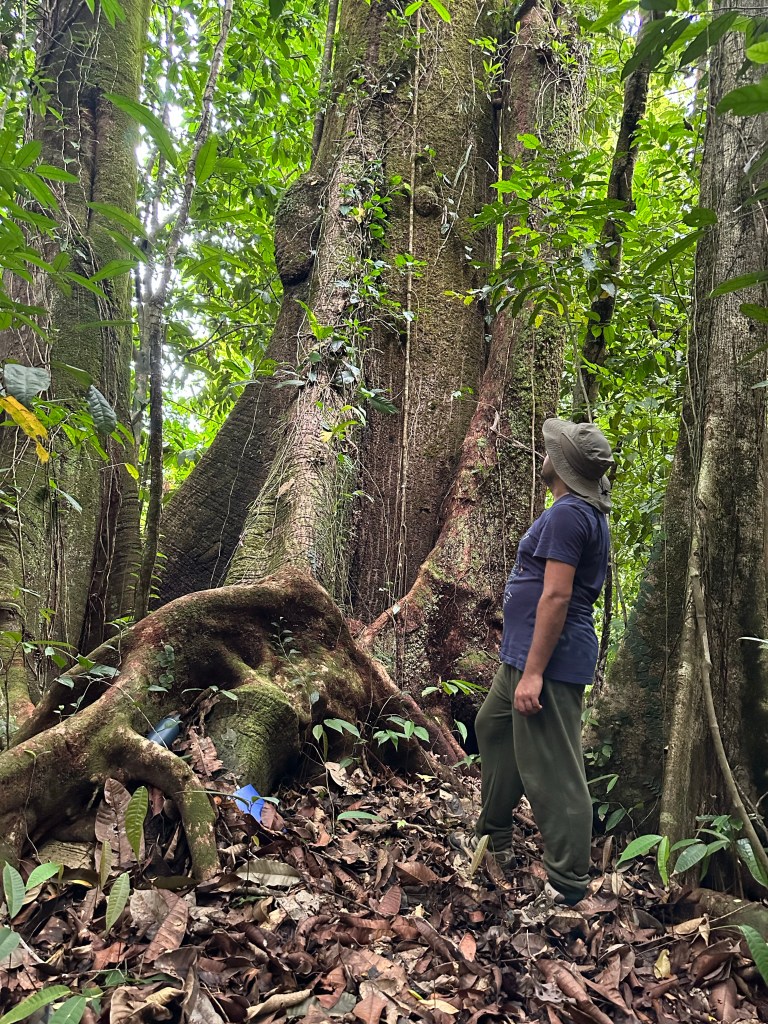
Moving through the jungle, I couldn’t help but be captivated by the giant trees, known as Ceiba. Their trunks had an unusual shape with supportive structures at the bottom, and their visible roots extended close to the ground. David explained that since water isn’t an issue for these trees, their roots don’t need to go deep into the ground. Instead, they remain closer to the surface. However, supporting the immense weight of the trees becomes a challenge. To overcome this, they develop these unusual support structures around their trunks, near the ground. David also mentioned that these shapes serve as nutrient collectors from the jungle and create small water pools that contribute to the thriving of frogs. Truly, these majestic trees left me in awe.


Green and Black Poison Dart Frogs
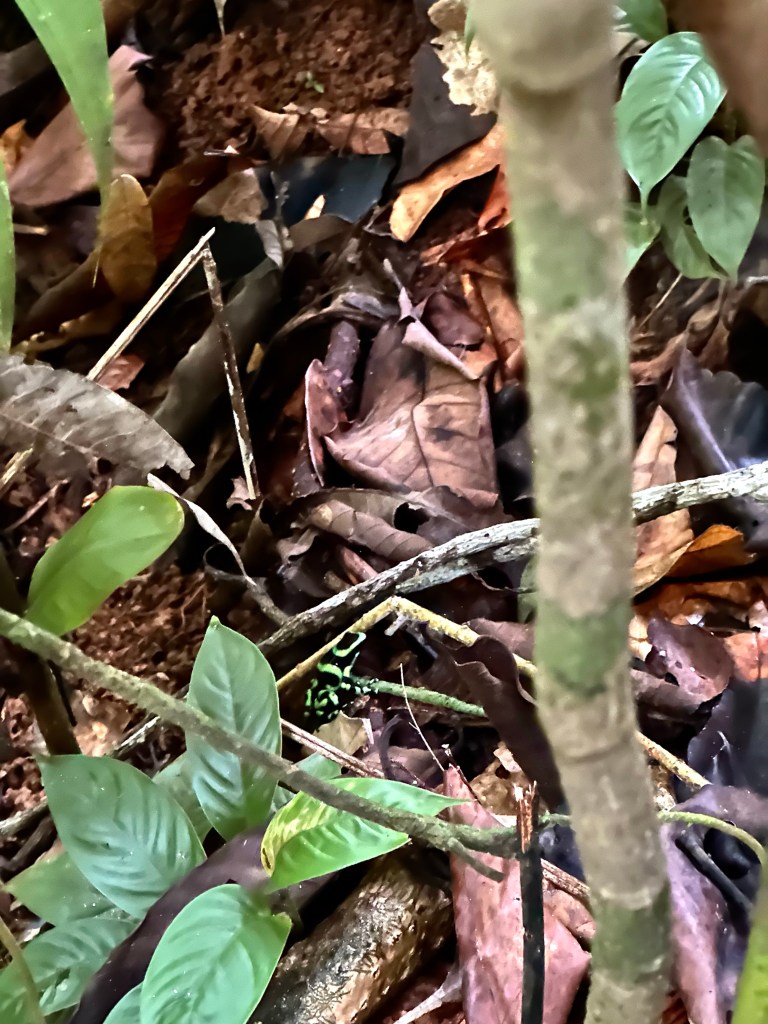
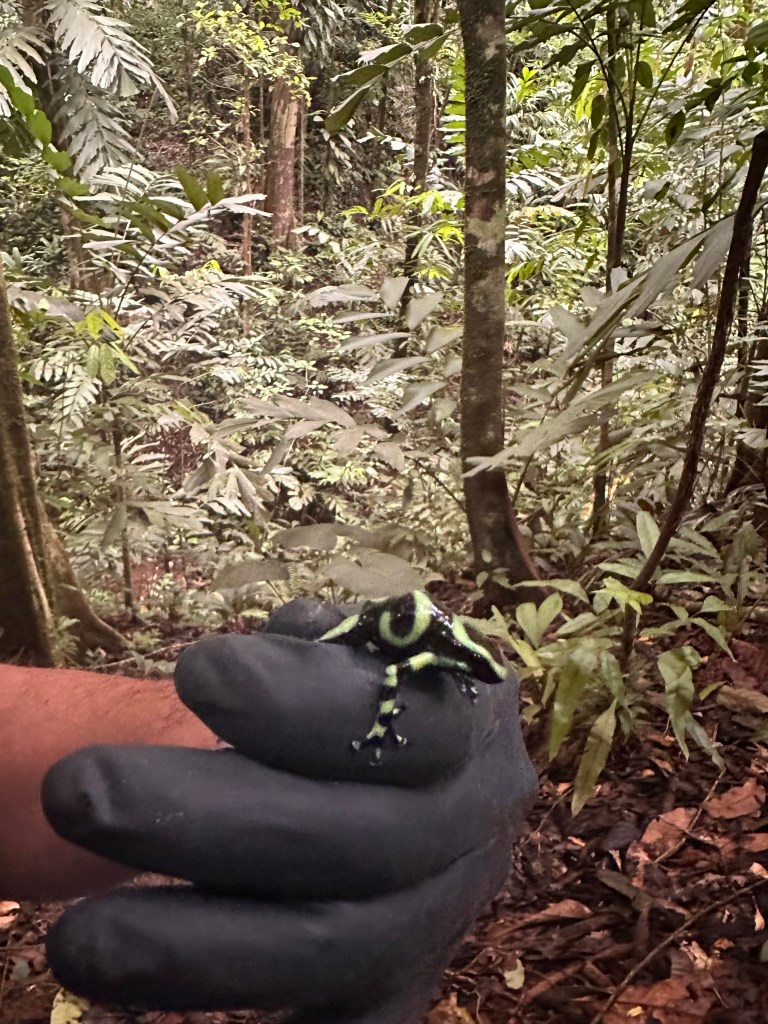
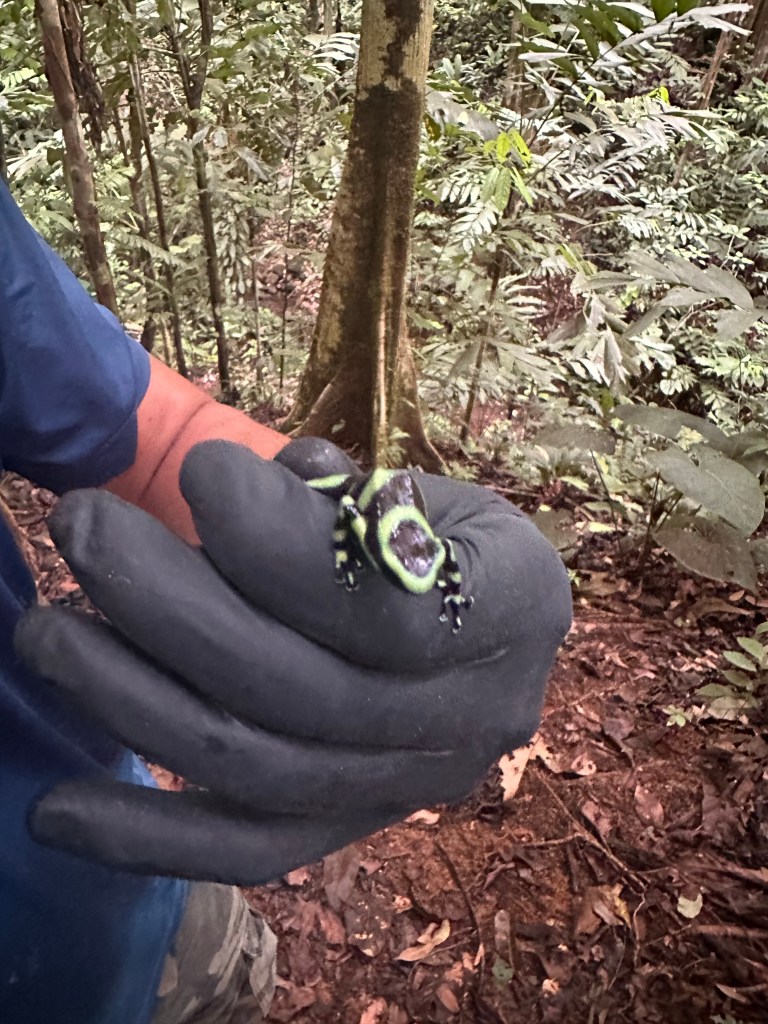
The jungle of Costa Rica is known for its diverse amphibians, and it was impossible to miss the frogs during our expedition. David, who had previously studied amphibians, proved to be an expert guide in this regard as well. He knew exactly where to look and what to do. We encountered Green and Black Poison Dart Frogs (Dendrobates auratus). The vibrant colors of these frogs indicate their poisonous nature. They possess a potent neurotoxic poison that causes muscle contractions. They secrete this poison through their skin as a defense mechanism against predators. Equipped with black gloves, David swiftly caught one of these vibrant frogs. I had never seen a frog with such vivid colors before; it was truly beautiful. David measured its size from the head to the end of its body and explained that females are significantly larger than males. The frog we caught happened to be a male. After observing it for a brief moment, we gently released it back onto the ground and continued our journey. David mentioned that despite the rainy weather of the past week, he hadn’t come across the Green and Black Poison Dart Frog to show the rest of the group. Hence, I considered myself lucky to have encountered them. It was indeed a fortunate sight to behold.


Golfo Dulce Poison Dart Frogs
As we approached a small stream, David informed me that we were likely to find an endemic frog species, one that can only be found in this particular location in the world. While searching for frogs near the stream, I spotted an orange-colored frog near the trunk of a giant tree. I excitedly pointed it out to David, who swiftly captured it. It turned out to be the endemic frog he had mentioned. I asked David if I could touch it, and he agreed, but we made sure to put on fresh gloves before handling it. He explained that the gloves were not only for protection against the frog’s poison, but also to ensure that we didn’t transmit any harmful substances to the gentle creatures, which could potentially be lethal for them. The frog had a vibrant orange color, a characteristic of its poisonous nature, and it was incredibly tiny. After taking a few pictures, I bid farewell to my little friend as it hopped back into the stream.


Fascinating story of Leaf-Cutting Ants
During our hike, I couldn’t help but marvel at the incredible trails that were so neatly constructed for people to walk on. David, noticing my fascination, pointed out that these trails were actually made by leaf-cutting ants. These ants create trails that span miles and miles, resulting in smooth and well-maintained paths. It was truly remarkable!

But that’s not all. Contrary to popular belief, these leaf-cutting ants do not carry pieces of leaves for their own consumption. Instead, they transport the leaves to cultivate a fungus garden. The leaves serve as the substrate for their fungal cultivation, which provides them with sustenance. The ants eat the fungus that grows in their leaf-cutting gardens. The growth of the fungus depends on the leaves, while the ants rely on the fungus for their survival. It’s a fascinating example of a mutually beneficial relationship.
David’s Turkish Heritage
During our conversation, I asked David about his heritage out of curiosity. To my surprise, he revealed that his grandmother is Turkish, while his grandfather is Costa Rican. I was astonished and shared my own Turkish background with him. I was aware that in Spanish, people from the Middle East are sometimes referred to as “Al Turco,” so I clarified whether he was certain about his Turkish heritage. He confirmed it, and I asked him to convey to his mother so that to tell me more about her Turkish roots.

Upon our return from the hike, David immediately approached his mother and told the news that I’m originally from Turkey. She was delighted, and with David’s translation, I asked about her knowledge of her own mother’s heritage. Sadly, she said that she knew very little about her mother’s background. All she could recall was that her mother was a tall, white lady, and her last name was different from that of the locals. I refrained myself asking further questions, as it was clear that she held cherished memories despite the lack of information.
To encounter someone with Turkish heritage from thousands of miles away was truly remarkable. It felt like more than just luck; it was a meaningful connection that transcended borders and brought us closer together. And, by the way, she’s been the one who cooks us all along three times a day which I wondered why I loved her dishes so far!

 Expeditionary Learning
One thought on “Exploring the Dolphins of Golfo Dulce: A Final Day of Boat Research”