Our research and exploration continued in Golfo Dulce, specifically focusing on the coastal area of Piedras Blancas National Park. Our researcher, David, described this as one of the best parts of the entire Golfo Dulce due to its incredible diversity of marine animals. Although we didn’t have the opportunity to explore Piedras Blancas National Park, David told us that it is also one of the most biodiverse places on the planet.

While heading towards the Piedras Blancas National Park side of the gulf, we approached the river mouths. I forgot to mention this in my previous posts, but dolphins are often found hunting near river mouths where fish are abundant. Therefore, it is highly likely to spot them in those areas. Additionally, since we are in the tropical rainforest region, there are numerous rivers and frequent rainfall. These factors contribute to the presence of dolphins. Shortly after we left the river mouths, we once again spotted several dolphins, recorded our data, and continued towards the nearby coast.

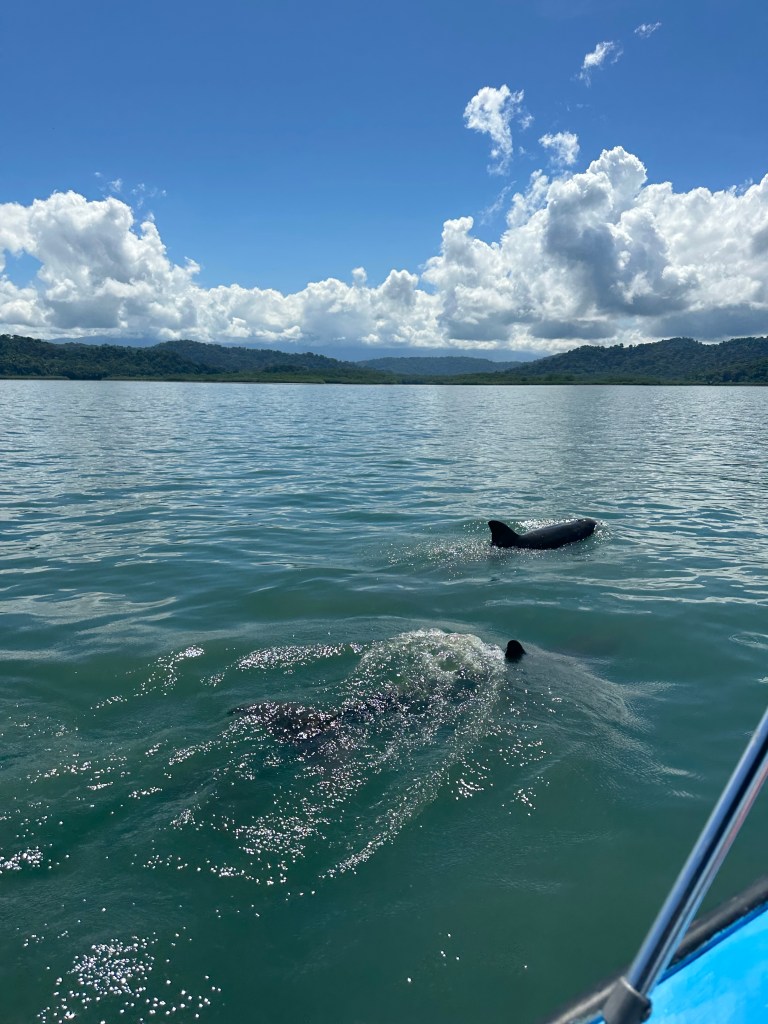
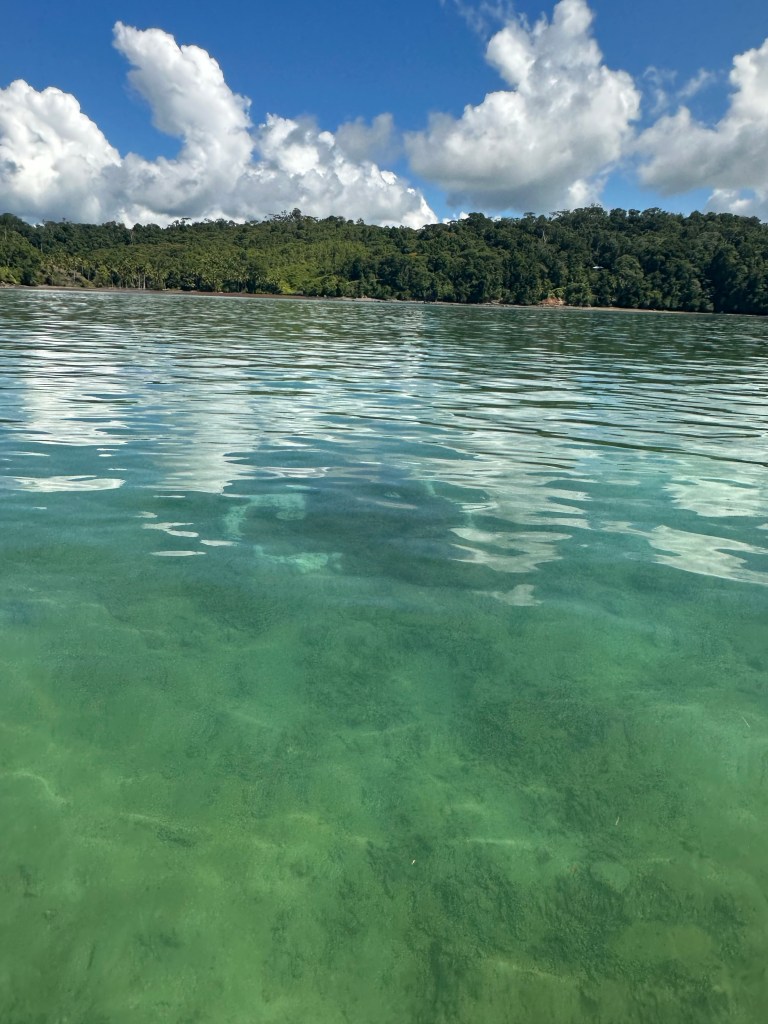
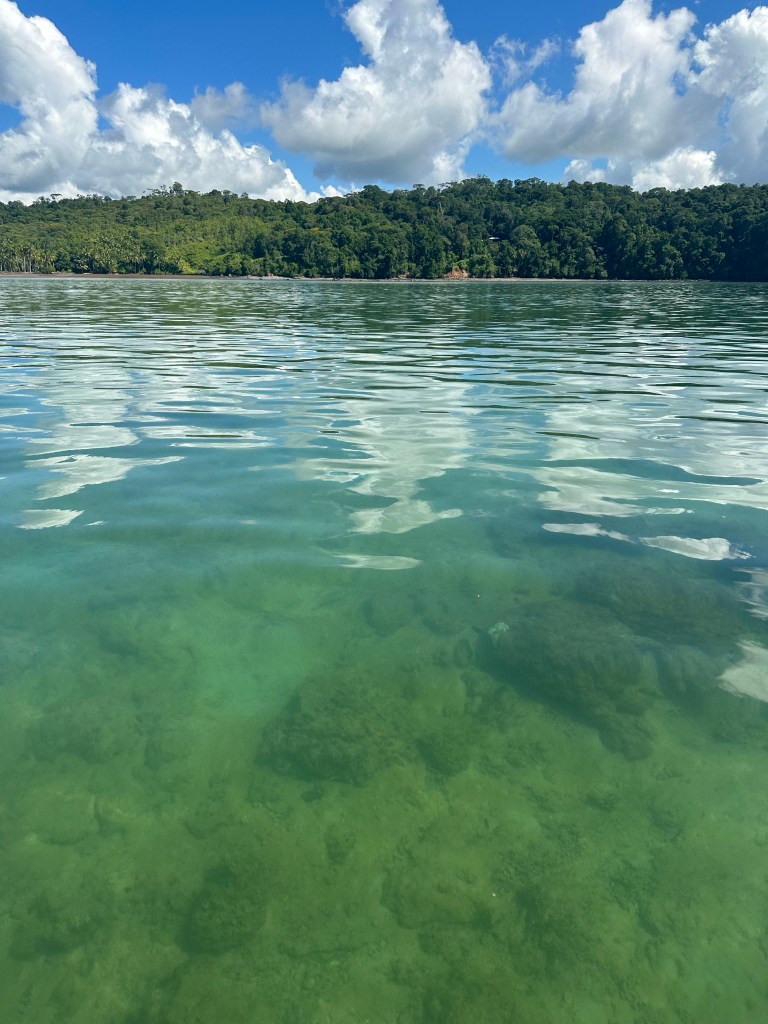
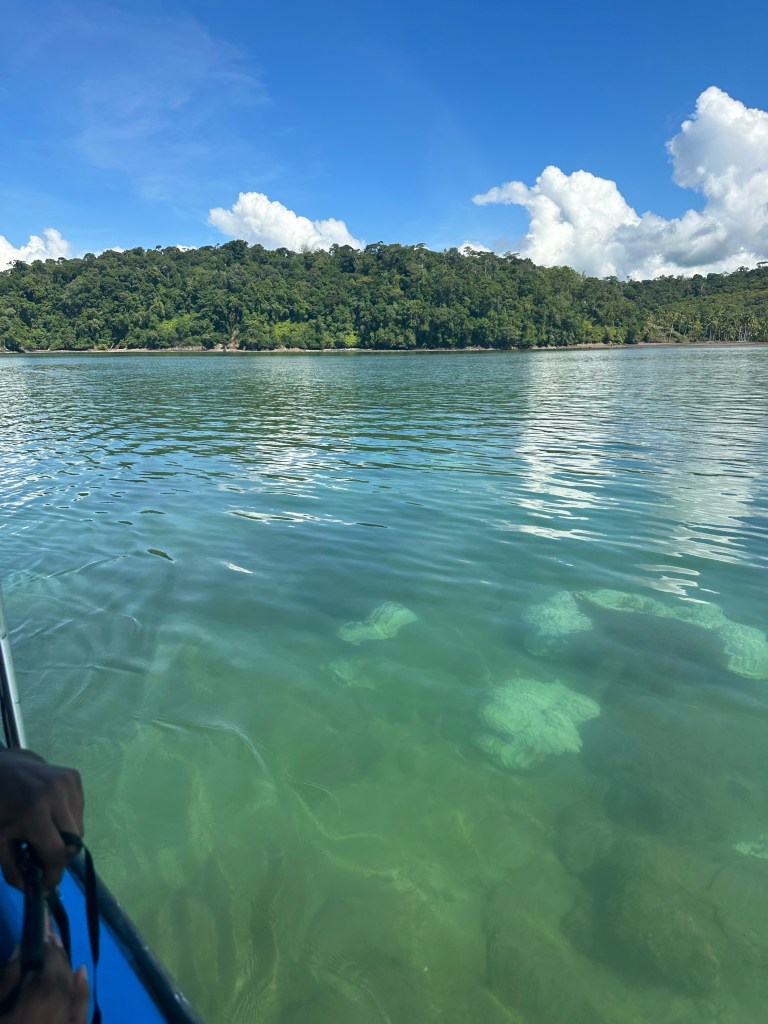
The coastal waters were shallow, allowing us to easily see the sea floor. Due to recent heavy rainfall, the water was slightly muddy, but David told us that during the dry season a couple of weeks ago, the water in this area was very clear. During our observations, we encountered an eagle ray and several mantas. One of the mantas even jumped out of the water, providing a fascinating sight. We also observed snappers and various tropical fish. Additionally, we were fortunate to spot a green turtle and a type of jumping fish called a needlefish. The needlefish uses its tail to propel itself out of the water, covering long distances. After a lengthy jump and sprint, it returns to the water and remains still to confuse potential predators. However, dolphins, being highly intelligent, use their echolocation to easily detect them.
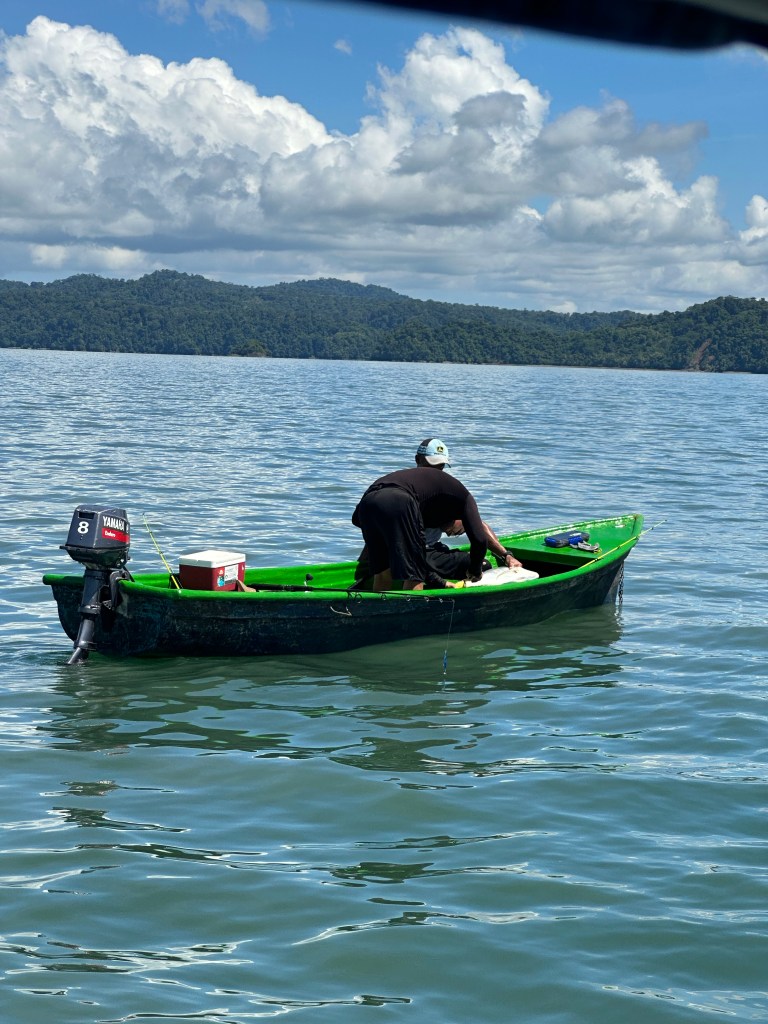
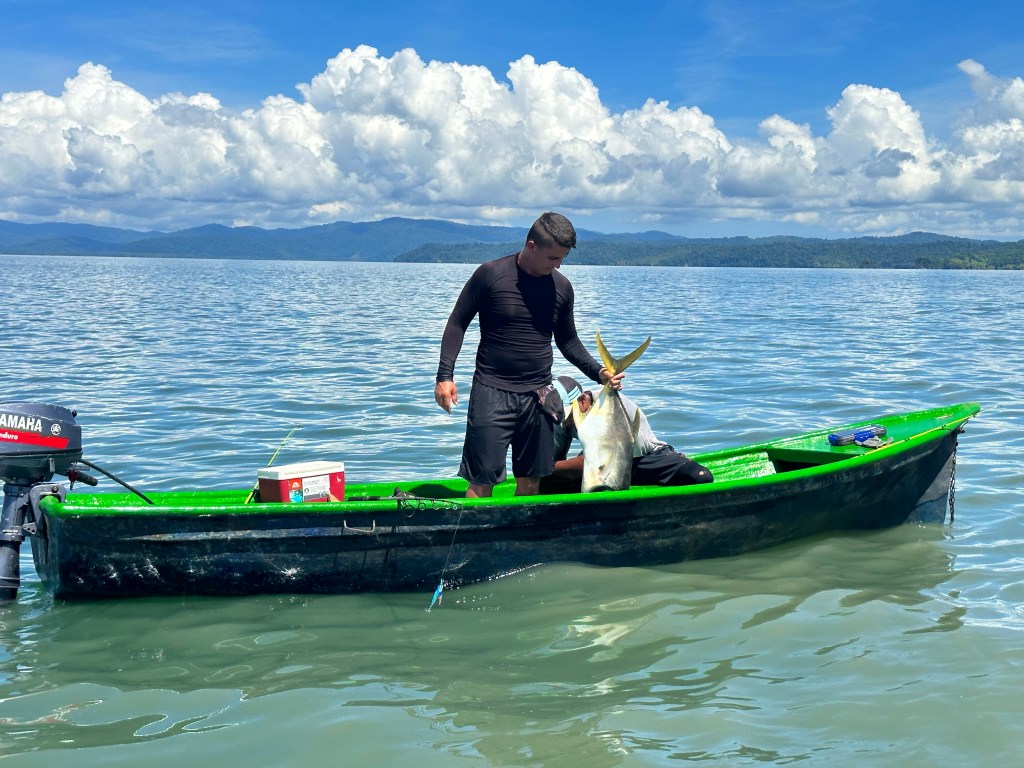
Along our journey, we also encountered fishermen who were fishing near the river mouths. David explained that having dolphins around is not a good sign for fishermen as they tend to scare the fish away. Nevertheless, the abundance of fish in the area means the fishermen do not mind having dolphins accompanying them. We stopped one of the fishermen’s boats and asked if they had caught any fish. They proudly showed us two jackfish they had caught, which were both enormous and appeared delicious. So far, I haven’t had the chance to eat any fish here, but perhaps in the coming days, David will treat us to some.
Continuing from the river mouth, we noticed a distinct division between the river water and the ocean water in Golfo Dulce. I have never seen such a sharp demarcation between fresh and saltwater before.
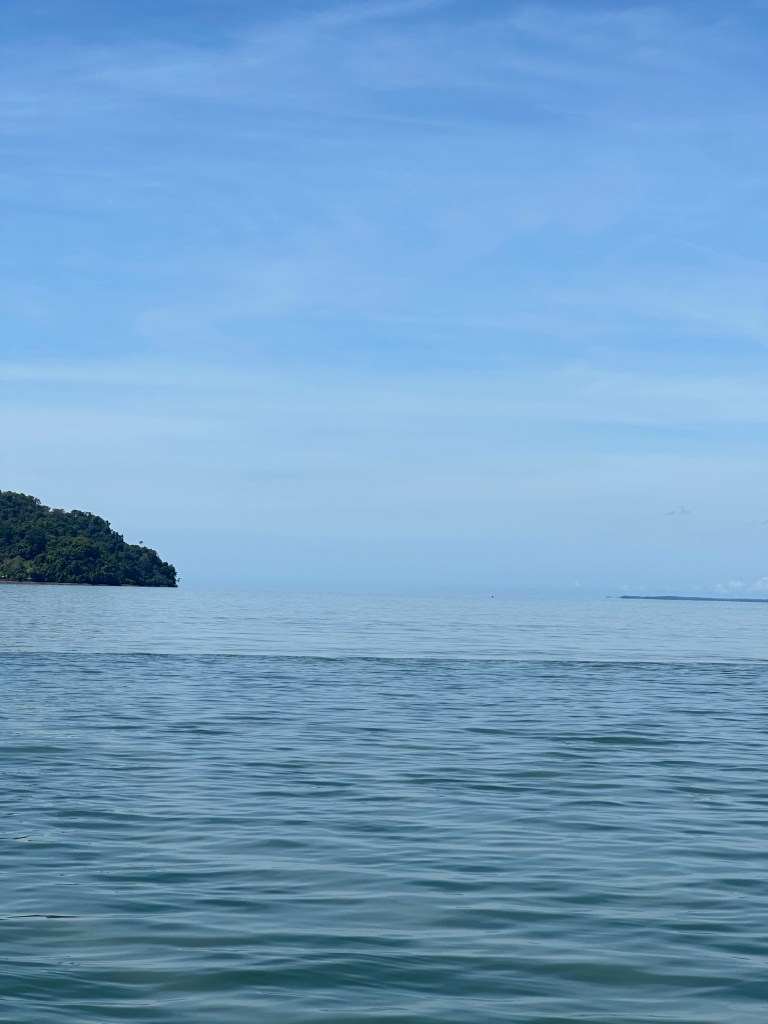
Once we passed the river water, the clarity of the water improved, allowing us to easily see the ocean floor. David shared that around 50-60 years ago, this region had a vibrant coral population. However, the construction of roads to connect the Americas resulted in deforestation, leading to increased mudslides and debris washing into the coast. As a result, the shallow coastal areas became covered in sediment, burying the corals. Presently, there are no visible corals in the region. Nevertheless, there is a promising non-governmental non-profit organization called “raising coral” that aims to reintroduce corals and restore their population along this beautiful coast with an alliance with the Center for Research in Marine Science and Limnology (CIMAR) of the University of Costa Rica (UCR).


Species Exploration
Being in one of the world’s most biodiverse regions, we were eager to document as many species as possible. However, it has been challenging to keep up with the constant diversity we encounter at every turn. At this point, I have concluded my exploration of fruits and wish to focus more on wildlife. To assist me in my endeavors, I rely on two incredibly useful apps: Seek and iNaturalist. For those who have not yet used them, I highly recommend doing so. These apps are powerful tools that aid in species identification. I first learned about them during my initial Earthwatch expedition called “Climate Change: Sea to Trees at Acadia National Park,” where we used them to identify species in the surrounding area. Since then, I have utilized these apps wherever I go. The Seek app helps identify species, and then the data is inputted into iNaturalist, enabling my observations as a citizen scientist to be used by researchers. I also use the Seek app to familiarize myself with the species present in the area before exploring. Once again, I must emphasize the effectiveness and usefulness of these tools.
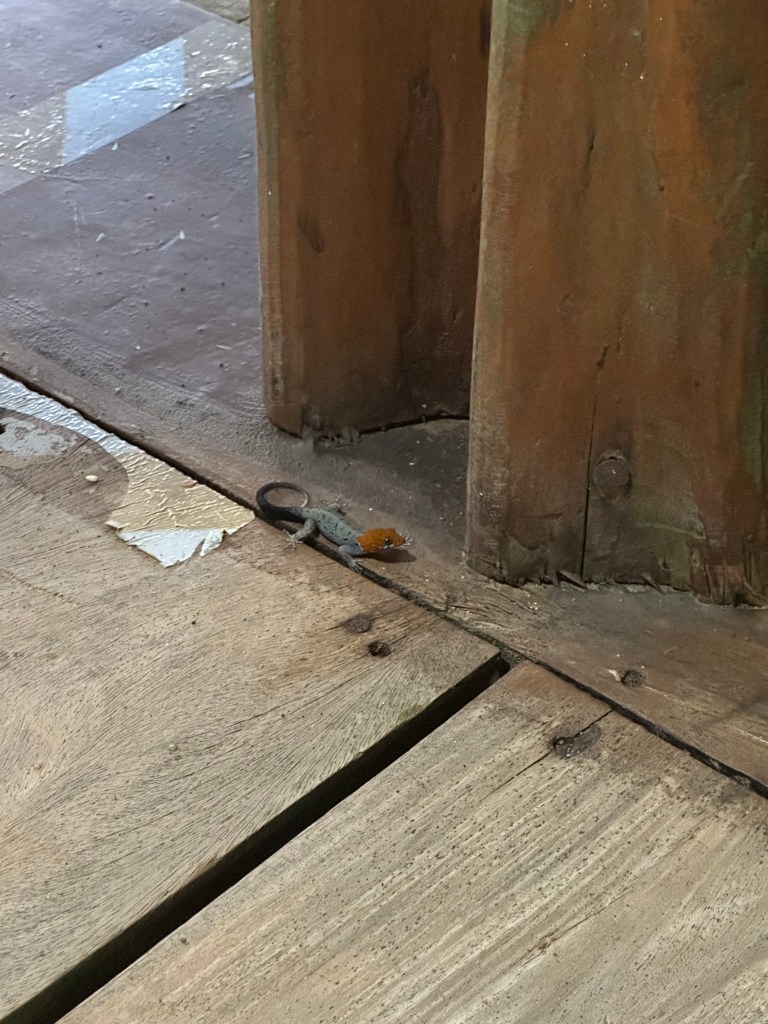
Reptiles have become some of my favorite animals here due to their incredible diversity and uniqueness. Every time I turn around, I encounter a different kind of reptile. Unfortunately, they are often too quick for me to capture in photos or thoroughly analyze before they disappear. However, I have managed to document a few of them, including the Yellow-headed Gecko (Gonatodes albogularis).


During the nighttime near our camp, we spotted numerous bullfrogs. These beautiful creatures were surprisingly docile and did not move when we approached them.
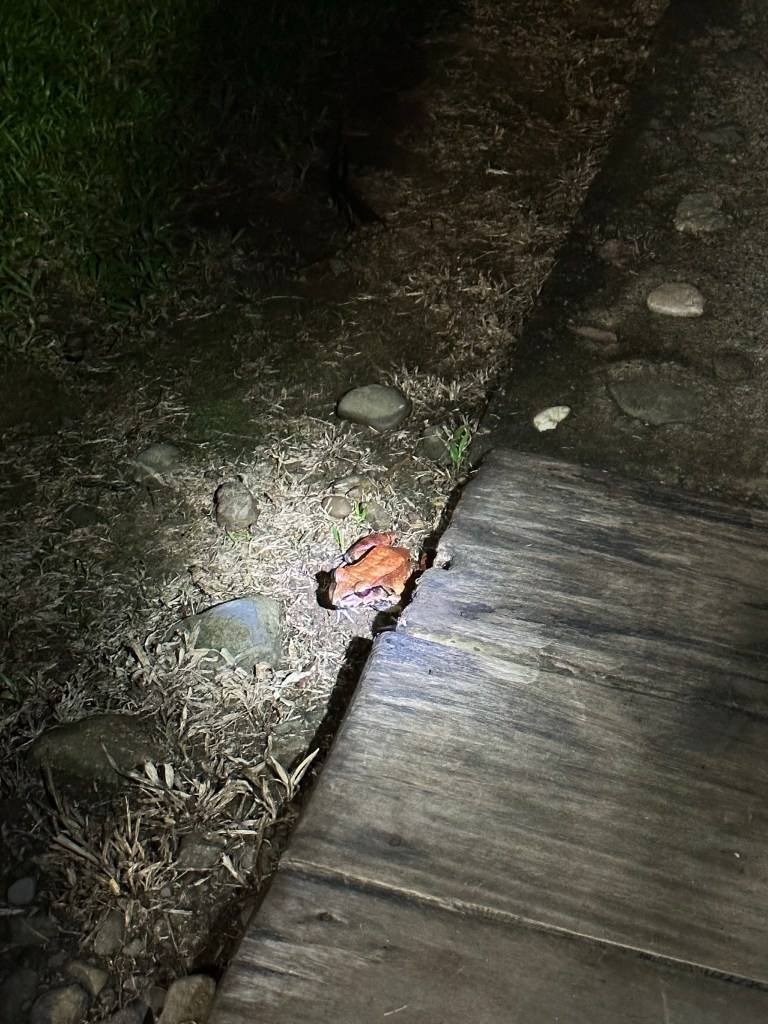
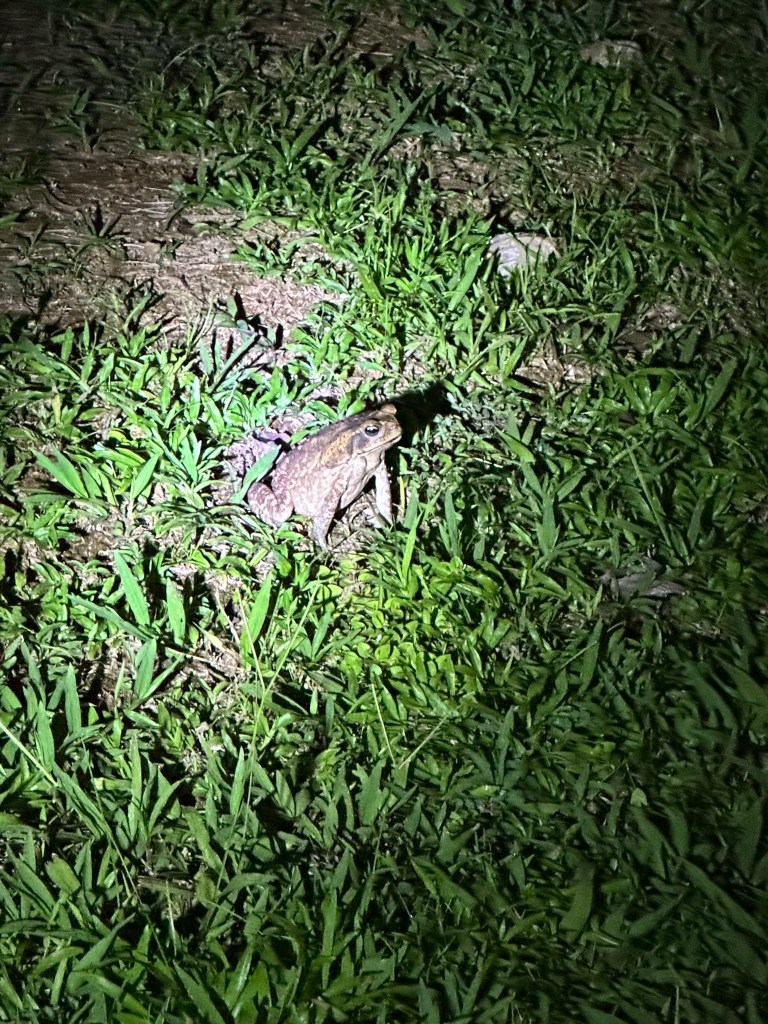

Moreover, iguanas are abundant in the vicinity of our camp; they can be found literally everywhere. I must admit that I felt a bit intimidated by their appearance, as they seemed rather fierce to me.
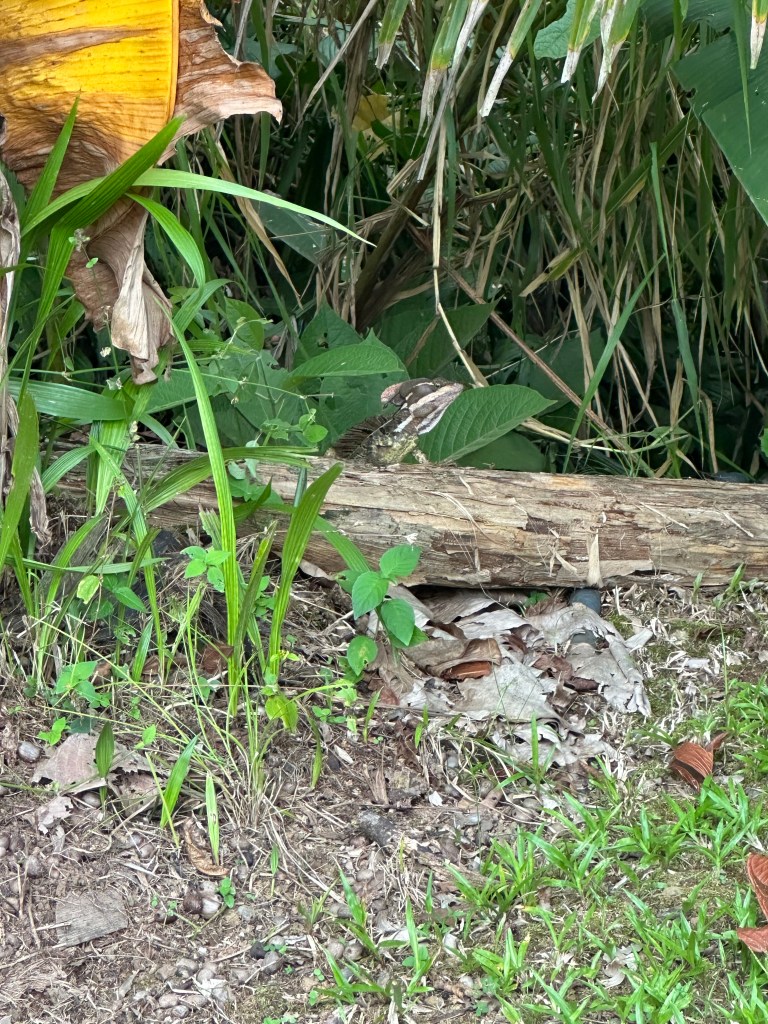
I have also spotted scarlet macaws at our camp. They are beautiful but can be quite loud, especially when they fly in pairs. I often see them perched on almond trees at our camp.

Interesting Fact
It may surprise you, but there are no mosquitoes in this area. One would expect them to be abundant, yet they are entirely absent. Even insects or moths that typically swarm around light bulbs at night are nowhere to be seen. I asked David about this peculiar phenomenon, but he was also unsure of the reason. He mentioned that many guests who visit this place have made similar observations. Although there are bugs on the ground, they do not bother or approach us. Even in the place where we are staying, which has numerous cracks and openings, nothing has emerged thus far. This is something that continues to intrigue me.

 Expeditionary Learning
One thought on “Coastal Part of Piedras Blancas National Park: A Biodiversity Hotspot in Golfo Dulce”